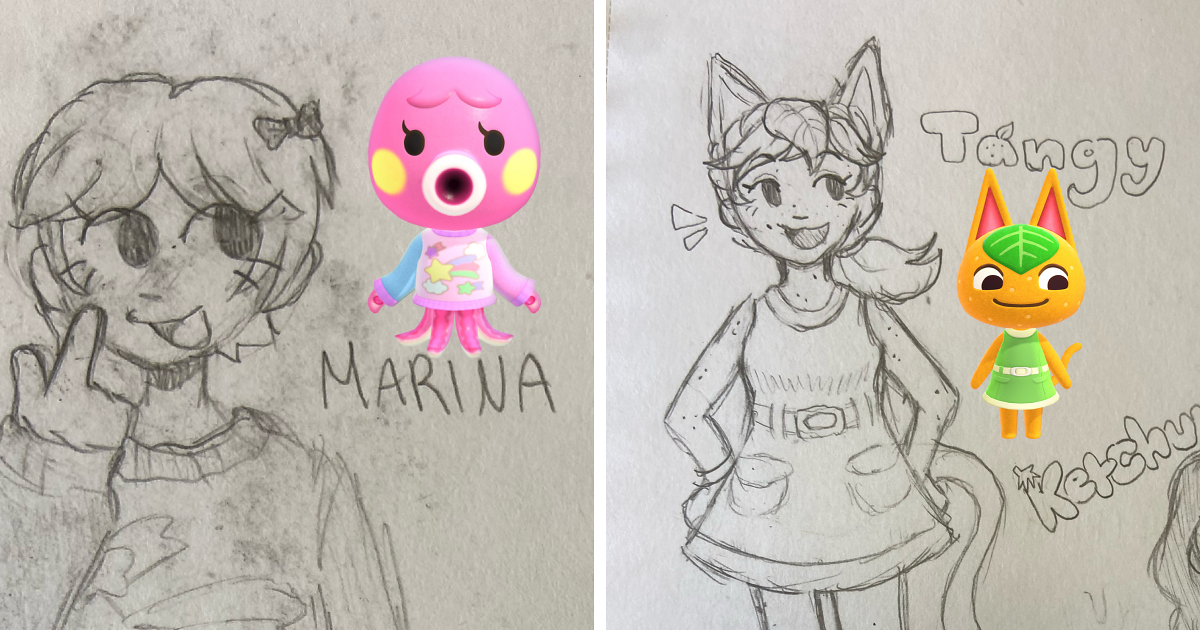
What happens when the cozy villagers of Animal Crossing step out of their paws, feathers, hooves, and tiny sweaters and become fully human characters? Apparently, a lot of charm, a surprising amount of fashion analysis, and at least one sketchbook filled with “just one more drawing” promises.
Turning Animal Crossing Villagers Into Humans: A Cozy Art Experiment
Animal Crossing has always been more than a cute life-simulation game about fishing, decorating, and wondering why a raccoon is somehow better at real estate than most adults. It is a world built around personality. Every villager walks into your island with a tiny catchphrase, a favorite style, a mood, a silhouette, and enough emotional presence to make players say, “Yes, this cartoon duck is my best friend now.”
That is exactly why reimagining Animal Crossing characters as humans is such a fun creative challenge. The goal is not simply to take a wolf villager and draw a person with wolf ears. That would be too easy, and frankly, Tom Nook would still find a way to charge a design consultation fee. The real goal is translation. How do you turn a character’s species, color palette, personality, clothing, posture, and fan perception into a believable human design?
This seven-picture series takes some favorite villagers, plus Isabelle, and imagines how they might look if they walked out of the Nintendo Switch and into everyday life. The results feel like a mix of character design, fashion illustration, fan art, and affectionate visual storytelling. Each drawing asks the same question: if this Animal Crossing character were human, what details would still make fans recognize them instantly?
Why Animal Crossing Characters Are Perfect for Human Redesigns
The Animal Crossing series gives artists a generous playground. Animal Crossing: New Horizons invites players to create a personal island paradise, collect bugs, fish, craft tools, decorate spaces, and build a community of residents. That community is the secret ingredient. Players do not just remember villagers because they are cute; they remember them because they become part of a daily routine.
In New Horizons, villagers are not background decorations. They are neighbors who send letters, give questionable gifts, comment on your outfit, and sometimes sit exactly where you were trying to terraform. Across the wider Animal Crossing series, there are hundreds of villagers spanning dozens of species and multiple personality types. That variety is gold for fan artists. A peppy cat, a cranky wolf, a lazy bear, and a snooty duck all demand different design choices.
Humanizing these characters works because Animal Crossing already gives them human-like social cues. They have homes, hobbies, fashion preferences, routines, friendships, and recognizable emotional patterns. The animal features are iconic, but the personalities are what make them memorable. A good human redesign keeps the soul of the character while changing the outer form.
The Art Is in the Translation
When drawing an Animal Crossing character as a human, the first temptation is to copy the most obvious traits: ears, tails, horns, snouts, and fur patterns. But a stronger redesign asks deeper questions. What hairstyle could echo the original silhouette? What jacket, sweater, or accessory could reflect the villager’s colors? What facial expression captures their personality? Would this character stand with perfect confidence, shy awkwardness, sleepy softness, or chaotic little-gremlin energy?
For example, Isabelle is instantly recognizable because of her warm expression, office-worker energy, yellow color palette, and signature bell-like hair shape. A human version does not need dog ears to be Isabelle. She might become a cheerful assistant with a yellow cardigan, a neat updo, round features, and the exhausted smile of someone who has handled 37 town announcements before lunch.
The Creative Process Behind the 7 Pics
A seven-piece fan art series sounds small, but anyone who draws knows the truth: seven finished character designs can quietly become a full-time job with snacks. Each drawing needs research, sketching, refinement, and enough second-guessing to power a small wind farm. The challenge is to make each human version feel fresh while keeping the whole set stylistically consistent.
The process usually begins with observation. I look at the original character’s face shape, colors, default outfit, species, and posture. Then I start making design notes. Is the character soft and rounded? Sharp and elegant? Sporty? Sleepy? Dramatic? Do they feel like someone who would run a boutique, teach art, front an indie band, or show up at brunch with a perfectly organized planner?
Color Palette Comes First
Animal Crossing designs are famous for strong, readable color palettes. The game’s visual language is simple, friendly, and instantly recognizable. When translating a villager into a human, color often becomes the bridge between animal and person. Fur colors can become hair tones, clothing accents, makeup choices, accessories, or background details.
If a villager has soft pastel colors, the human version might lean into gentle clothing, rounded shapes, and warm expressions. If the character has bold contrast, the design can become more fashionable or graphic. A striped animal pattern might become a scarf, sweater trim, socks, earrings, or a patterned jacket. The trick is to avoid making the human design look like a costume. It should feel like a person inspired by the character, not a mascot on casual Friday.
Silhouette Makes the Character Recognizable
Silhouette is one of the most important tools in character design. Animal Crossing villagers are small, rounded, and extremely readable, which is why fans can recognize many of them from a tiny icon. Human redesigns need that same clarity. A hairstyle can replace animal ears. A coat shape can echo a fluffy body. Glasses, bows, hats, or collars can carry details from the original model.
For a confident villager, I might choose a strong shoulder line or a fashionable pose. For a lazy villager, I might use oversized clothing, relaxed posture, and sleepy eyes. For a cranky character, sharper brows and a more structured outfit can do the work. Every line should say something.
Why Fans Love Animal Crossing Fan Art
Animal Crossing fan art thrives because the game itself encourages creativity. Players design outfits, decorate homes, build themed islands, trade items, photograph scenes, and share their creations online. The Happy Home Paradise DLC expanded that creative language even further by letting players design vacation homes, customize interiors and exteriors, work with larger furniture inventories, and share designs through in-game systems.
That design-first spirit makes Animal Crossing one of the most fan-art-friendly franchises in gaming. The game does not push players through a dramatic plot with explosions, boss fights, and tragic orchestral music. Instead, it gives them a soft world and says, “Here, make something.” Naturally, players do exactly that. They create cottagecore islands, horror towns, museum cafes, fashion runways, album-cover parodies, and human versions of their favorite villagers.
The franchise also became a major cultural comfort point during the early pandemic years. Many players used New Horizons as a social space, a daily ritual, and a creative outlet when real-world routines were disrupted. That emotional connection explains why fan projects still resonate. Drawing a villager as a human is not just a style exercise; it is a way of saying, “This character mattered to me.”
From Game Design to Fashion Design
Animal Crossing’s customization tools even attracted attention from the fashion world. Major designers and fashion communities experimented with in-game outfits, virtual runway concepts, and downloadable looks. That matters because human redesigns of villagers often borrow the same fashion logic. A character becomes recognizable through clothing, color, attitude, and styling.
When I draw Animal Crossing characters as humans, I think like a character designer and a stylist at the same time. What would this person wear to express their personality? What shoes would they choose? Would their bag be practical, fancy, tiny, enormous, or filled with turnips? These details make the artwork feel alive.
Breaking Down the Humanization Approach
1. Keep the Personality, Not Just the Species
The biggest mistake in animal-to-human fan art is focusing only on biology. A cat villager does not need whiskers to be recognizable. A wolf villager does not need a tail. What matters more is the personality. Animal Crossing personalities include familiar types such as peppy, lazy, normal, smug, snooty, cranky, jock, and big sister. These categories influence how villagers talk and how players perceive them.
A peppy character can become a bright, energetic human with expressive eyes and playful accessories. A lazy character can become cozy, relaxed, snack-friendly, and maybe dressed like they definitely own three hoodies named “the good hoodie.” A snooty character can become elegant and polished without becoming cold. The best redesigns keep affection in the interpretation.
2. Use Accessories as Easter Eggs
Accessories are small, but they can carry a lot of meaning. A bell hair tie for Isabelle, leaf-shaped earrings for a nature-loving villager, a fossil pin for a museum fan, or a patterned tote bag inspired by a character’s original markings can reward viewers who know the game. These details do not need to shout. They can whisper, which is usually more charming.
That is one reason fan art spreads so well online. Fans enjoy recognizing the hidden references. The artwork becomes a tiny puzzle: “Oh, I see what you did with the ears,” or “That sweater pattern is from the original design.” Recognition creates delight.
3. Let the Drawing Style Stay Clean
A clean, uncluttered style helps humanized character art succeed. Animal Crossing itself is visually gentle. It uses simple shapes, soft colors, and inviting designs. A human redesign can be detailed, but it should not lose that readable charm. Too many accessories, patterns, and references can turn a sweet design into a visual yard sale. And not the good kind of yard sale where you find a vintage lamp for four dollars.
For this series, a clean approach allows the character inspiration to come through clearly. The viewer can focus on expression, pose, and personality instead of searching through a mountain of unnecessary details.
What Makes These 7 Pics Stand Out
The appeal of this series is its restraint. It does not try to redesign every Animal Crossing character ever created. That would be brave, ambitious, and possibly a threat to wrist health. Instead, it focuses on a small set of favorites and gives each one room to breathe.
Seven drawings create enough variety to show range without overwhelming the viewer. Each picture becomes a small character study. Fans can compare how different traits are handled: one design may emphasize softness, another style, another humor, another elegance. The set feels personal because it is personal. These are not random villagers picked from a spreadsheet. They are favorites, and favorite characters always carry extra emotional weight.
The Magic of Familiar Characters in New Forms
Humanized fan art works because it creates a double reaction. First, viewers recognize the character. Then they reconsider the character. A villager who once looked like a tiny animal neighbor suddenly looks like someone you might pass at a coffee shop, see in an art class, or accidentally sit next to on a bus while they explain their island rating strategy.
That shift is playful, but it also reveals how strong the original designs are. If a character can survive a complete species change and still feel recognizable, that character was well-designed from the beginning.
Tips for Drawing Your Own Animal Crossing Characters as Humans
If you want to create your own Animal Crossing human redesigns, start with a character you genuinely like. Fan art is much easier when you care about the subject. Pick a villager whose colors, attitude, or personal history on your island makes you smile. Then study the design before you sketch.
Build a Character Design Checklist
Before drawing, write down the character’s main traits:
- Species and original silhouette
- Main colors and accent colors
- Personality type and overall mood
- Default clothing or fashion style
- Memorable facial features
- Possible human hairstyle
- Accessories that could reference the original design
Once you have those notes, create two or three thumbnail sketches. Do not marry the first design immediately. The first sketch is often just your brain clearing its throat. Try different hairstyles, body shapes, clothing styles, and expressions. A good redesign usually appears after a few messy attempts.
Do Not Be Afraid to Modernize
Human versions do not need to wear exact copies of the original outfits. Sometimes a villager’s shirt pattern works better as a jacket lining, tote bag, skirt, hair clip, or sneaker detail. Modernizing the design can make it feel more believable. Ask yourself: if this character were a person today, what would they actually choose from their closet?
The answer might be streetwear, cottagecore, business casual, art-school layers, vintage denim, athletic gear, or a cardigan collection that says, “I know where every item in my planner is.” Let the personality guide the wardrobe.
Personal Experiences From Reimagining Animal Crossing Characters as Humans
Drawing this kind of series feels like inviting old neighbors into a new universe. At first, I thought the project would be simple: pick seven characters, sketch human versions, clean them up, and post them. Easy, right? Absolutely adorable mistake. The moment I started drawing, every small design choice became a debate. Should this character’s ears become a hairstyle shape? Should the fur markings become freckles, fabric patterns, or makeup? Would this villager wear boots, loafers, sneakers, or the kind of sandals that make you say, “They definitely own a ceramic mug collection”?
The most enjoyable part was discovering how much personality could survive without the animal features. When I removed the ears, paws, and tails, I had to rely on posture, expression, and clothing. That made the drawings feel more intentional. I could not hide behind the original design. I had to understand why the character felt charming in the first place.
Some designs came together quickly. A cheerful character with a bright palette almost draws themselves, bouncing onto the page like they already had three cups of coffee and a side quest. Other designs were stubborn. A few sketches looked too generic at first, like random people wearing themed outfits. That is when I learned to pull back and search for one strong idea. Maybe the key was a hairstyle. Maybe it was a coat shape. Maybe it was a tiny accessory that made the whole design click.
There was also a funny emotional side to the process. Animal Crossing villagers can become weirdly personal. You remember who moved onto your island first. You remember who gave you medicine after wasps attacked your face. You remember who gifted you a shirt so ugly it felt like a personality test. Drawing them as humans brought those memories back. It felt less like redesigning game characters and more like making portraits of imaginary friends who helped decorate a small digital corner of life.
The series also reminded me that fan art is a conversation. You create something because a character already means something to you, and then viewers bring their own memories to it. Someone might look at a humanized villager and say, “That is exactly how I imagined them.” Someone else might disagree completely, which is fine. Animal Crossing is personal. Every player has their own island history, favorite neighbors, and dramatic betrayal involving a villager who moved away too soon.
By the end, the seven pictures felt like a small celebration of the game’s design language. Animal Crossing makes simplicity feel expressive. It proves that a few colors, a distinct shape, and a consistent personality can create characters people remember for years. Translating that into human form helped me appreciate how thoughtful these designs really are. It also made me want to draw more of them, which is dangerous, because there are hundreds of villagers and I do need to sleep eventually.
Conclusion: A Cozy Tribute to Animal Crossing Creativity
Reimagining Animal Crossing characters as humans is more than a cute drawing trend. It is a character design exercise, a fan tribute, and a love letter to a game that has inspired millions of players to create, decorate, share, and connect. The seven pictures in this series show how recognizable these villagers can remain even when their animal forms are translated into human fashion, expressions, and body language.
The reason this idea works so well is simple: Animal Crossing characters already feel alive. They have routines, moods, styles, and relationships with players. Humanizing them does not erase their identity. Instead, it highlights the details that made fans love them in the first place. Whether you are an artist, a longtime island resident, or someone who still feels personally judged by your Happy Home Academy score, this kind of fan art proves that cozy games can spark serious creativity.