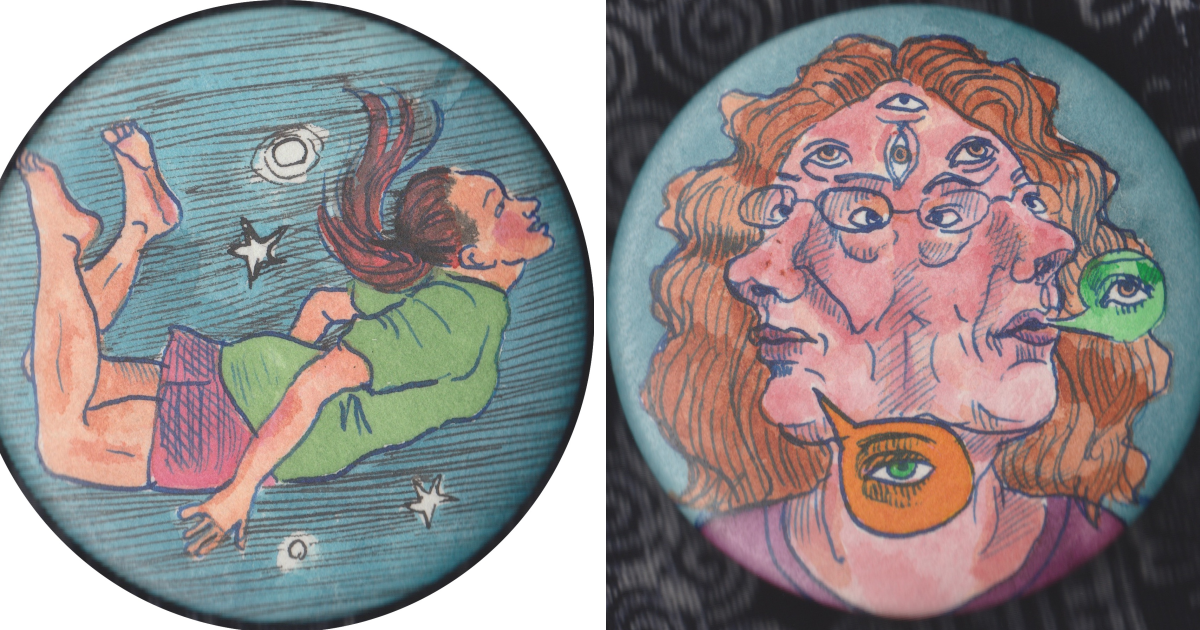
There are many ways to make money with art. You can paint murals, sell prints, design stickers, open an online shop, take commissions, or dramatically announce to your family that you are now “building a brand” while eating cereal at 1:17 a.m. My personal favorite? Art buttons.
Yes, tiny round pinback buttons. The cheerful little circles people attach to jackets, tote bags, backpacks, lanyards, denim vests, convention badges, camera straps, and occasionally their emotional support hoodie. They are small, affordable, collectible, lightweight to ship, and weirdly powerful. A good button can say, “I love frogs,” “I read banned books,” “I am tired but cute,” or “Please do not perceive me today” in less space than a cookie.
“I Make Art Buttons For Money (13 Pics)” is not just a quirky title. It is a surprisingly practical business idea for artists who want to turn illustrations into sellable products without needing a giant studio, a warehouse, or a business loan that makes your eye twitch. Art buttons sit at the intersection of handmade crafts, indie illustration, fan culture, gift shopping, and personal expression. They are impulse-buy friendly, easy to display at markets, and perfect for building a recognizable creative style.
In this article, we will look at how art buttons are made, why people buy them, how to price them, how to sell them online and offline, and what the “13 pics” can teach us about product variety. Think of this as part maker diary, part small-business guide, and part love letter to tiny wearable art.
What Are Art Buttons?
Art buttons are illustrated pinback buttons, badges, or wearable mini prints made from original artwork. Most are created by printing a design on paper, cutting it to size, pressing it with a metal shell, adding a protective mylar layer, and attaching a pinback. The result is a durable little product that feels polished but still handmade.
Some artists make them at home with a button press. Others outsource production to a print shop. Both methods can work. Making them yourself gives you control over inventory, experiments, and small batches. Outsourcing saves time and can be useful when you need larger quantities or specialty finishes.
Buttons usually come in sizes such as 1 inch, 1.25 inches, 1.5 inches, 2.25 inches, and 3 inches. Smaller buttons are cute and collectible. Larger buttons show more artwork and can feel more like statement pieces. The best size depends on the art style, the selling price, and whether the customer wants subtle charm or “yes, my backpack is now a billboard for raccoons.”
Why Art Buttons Sell So Well
Art buttons sell because they are affordable, personal, and easy to understand. A customer does not need to measure a wall, choose a frame, or debate whether a $200 original painting matches the couch. They simply see a button, laugh, point, and say, “That one is aggressively me.”
For artists, buttons are a smart entry-level product. They cost less to produce than many forms of merchandise, take up very little storage space, and can be packed in a small envelope. They also work well as add-on items. Someone buying a print may add two buttons. Someone buying a sticker may grab a matching button. Someone who only came to “look around” may leave with a $4 button because resistance is difficult when the button has a frog wearing a wizard hat.
Handmade marketplaces, artist alleys, craft fairs, pop-up shops, comic conventions, book festivals, and local art events are all natural homes for art buttons. They fit into modern handmade shopping trends because buyers increasingly look for gifts that feel unique, personal, and created by an actual human being rather than a faceless factory named Warehouse Unit 9.
The 13 Pics: Button Ideas That Can Become a Product Line
A strong button collection usually needs variety, but not chaos. The goal is to create enough options that shoppers enjoy browsing while still making the booth or shop look like it belongs to one artist. Here are 13 art button concepts that can work as a cohesive mini collection.
1. The Tiny Coffee Goblin Button
A sleepy creature hugging an enormous mug is instantly relatable. Coffee, tea, and “do not speak to me before caffeine” themes perform well because they are personality statements disguised as accessories.
2. The Book Nerd Badge
A stack of books, a dramatic bookmark, or a tiny dragon guarding a library can appeal to readers, teachers, students, writers, and anyone who has ever said, “I’m just going to read one chapter,” and then accidentally met the sunrise.
3. The Cat With Opinions
Cats are button royalty. A grumpy cat, loaf cat, cosmic cat, or “I tolerate you” cat can become a best-seller because cat people are both loyal and easily activated by tiny whiskers.
4. The Mushroom Forest Pin
Cottagecore, woodland, and nature-inspired designs continue to attract buyers who love soft colors, cozy fantasy, and little worlds that look like they smell faintly of moss and adventure.
5. The Space Explorer Button
Moons, stars, planets, astronauts, and cosmic animals work beautifully in circular formats. The round button naturally becomes a planet, portal, or tiny galaxy.
6. The Motivational-but-Not-Cringe Button
Instead of “You can do anything,” try something warmer and more human, like “Still here,” “Tiny steps count,” or “Soft but stubborn.” People love encouragement that does not sound like a gym poster yelling at them.
7. The Angry Vegetable
A furious carrot, suspicious onion, or dramatic tomato gives the collection humor. Funny food art is easy to gift and makes people stop at a booth because they need to know why the broccoli looks betrayed.
8. The Custom Pet Portrait Button
Custom pet buttons can command higher prices because they are personal. A simple stylized pet portrait can become a memorable keepsake, especially for dog moms, cat dads, rabbit people, and proud lizard guardians.
9. The Retro Diner Button
Milkshakes, roller skates, neon signs, cherry pie, and jukebox colors create a vintage vibe. Retro designs work especially well for shoppers who like nostalgic accessories.
10. The Rainy Day Frog
A frog in a raincoat is scientifically difficult to resist. Okay, maybe not scientifically, but emotionally? Absolutely. Animals in tiny outfits are basically the economy.
11. The Crafty Chaos Button
Designs that say “covered in glue but thriving” or show a raccoon with scissors can speak directly to makers. Selling craft-themed buttons at craft fairs is wonderfully meta, like putting a mirror inside a glitter jar.
12. The Local Pride Button
City skylines, state flowers, regional jokes, and neighborhood landmarks can sell well at local markets. People enjoy affordable souvenirs that feel more artistic than a plastic keychain from a gas station.
13. The Limited Edition Mystery Button
A surprise button bag or seasonal design creates urgency. Limited drops can encourage repeat customers and make the buying experience feel like opening a tiny treasure chest.
How I Turn a Drawing Into a Sellable Button
The process starts with artwork. A button design must be clear at a small size, so I avoid packing in too many tiny details. A design that looks amazing on a tablet can become visual soup when squeezed into a one-inch circle. Bold shapes, readable expressions, strong contrast, and clean lines usually perform better.
After creating the design digitally, I place it into a circular template that includes bleed space. Bleed is the area that wraps around the edge of the button. Without it, the final product may have awkward white slivers at the sides, which is the button equivalent of spinach in your teeth.
Next comes printing. Many button makers use quality paper with a smooth finish. The printed design is cut into circles with a punch cutter or circle cutter. Then the metal shell, printed art, clear mylar, and pinback are pressed together in a button machine. A good press should feel smooth and consistent. A bad press makes you question all your life choices and possibly the laws of physics.
Quality control matters. I check each button for centered art, scratches, dents, loose backs, and crooked pins. Small products still need professional standards. Customers may forgive handmade charm, but they should not receive a button that looks like it fought a stapler and lost.
Pricing Art Buttons Without Underpaying Yourself
Pricing handmade products can feel awkward because many artists are secretly three raccoons in a coat when it comes to business math. But pricing matters. If the price only covers supplies and ignores labor, packaging, fees, taxes, equipment, and marketing time, the artist is not making money. The artist is hosting a very colorful donation program.
A practical pricing method begins with the true cost of each button. That includes the metal shell, pinback, mylar, paper, ink, packaging, machine wear, shipping supplies, marketplace fees, booth fees, and the time spent designing, producing, photographing, listing, packing, and selling.
For example, if materials cost $0.45 per button, packaging costs $0.20, selling fees average $0.40, and labor adds $1.50, the real cost may be around $2.55 before profit. Selling that button for $2 may feel “affordable,” but it is not a business; it is a tiny financial leak with cute artwork on top.
Many artists sell small buttons for $3 to $5 each, larger buttons for $5 to $8, and bundles such as “3 for $10” or “5 for $15.” Bundles work because they raise the average order value while still giving the customer a deal. The trick is to make sure the bundle price remains profitable.
Where to Sell Art Buttons
Online Marketplaces
Online marketplaces can help new artists reach buyers who are already searching for handmade goods, accessories, gifts, and art merch. The advantage is built-in traffic. The challenge is competition. Good photos, clear titles, useful tags, and detailed descriptions are essential.
A listing title should describe what the buyer is actually searching for. Instead of naming a product “Milo,” use a title like “Cute Frog Pinback Button, Rainy Day Frog Badge, Cottagecore Backpack Pin.” The name can still appear in the description, but search-friendly wording helps the right people find the product.
Your Own Website
A personal shop gives more control over branding, customer experience, email marketing, and long-term growth. It also makes the artist less dependent on marketplace algorithm changes. The downside is that the artist must bring traffic through social media, SEO, email lists, collaborations, or ads.
Craft Fairs and Artist Alleys
In-person selling is where buttons shine. A bowl, grid wall, cork board, spinning rack, or tabletop display can show dozens of designs in a small space. Customers enjoy picking them up, comparing designs, and building little sets. Buttons are also easy for shoppers to buy on impulse while they are waiting for a friend who is still deciding whether to buy a ceramic ghost.
Wholesale and Consignment
Local bookstores, gift shops, coffee shops, museum stores, and boutiques may carry art buttons if the designs match their audience. Wholesale pricing must be planned carefully because retailers need room to mark up the product. If the retail price is $4, the wholesale price may need to be around $2, which means production costs must be low enough to leave profit.
How Product Photography Helps Buttons Sell
Because buttons are small, photography has to do extra work. A flat product photo is useful, but lifestyle photos are often more persuasive. Show the button on a denim jacket, canvas tote, backpack, beanie, cork board, pencil pouch, or convention lanyard. Help the customer imagine using it.
Good lighting is more important than expensive equipment. Natural light near a window can work beautifully. Avoid glare from the mylar cover by adjusting the angle. Use a clean background, crop close enough to show details, and include at least one image that shows scale. A buyer should not have to wonder whether the button is the size of a quarter or a pancake.
For a “13 pics” article or product post, the photos should show variety: individual close-ups, group shots, work-in-progress images, packaging, display setup, and the buttons being worn. People love seeing the process because it proves the product has a real maker behind it.
Branding: Why Style Matters More Than Random Trends
Trends can help, but a strong art button business needs a recognizable style. That may be cozy and whimsical, bold and punk, spooky and cute, retro and colorful, sarcastic and minimalist, or soft and emotional. The exact style matters less than consistency.
When customers recognize your work, they are more likely to follow, return, and collect. A button line should feel like a tiny universe. Maybe your world is full of anxious frogs, gentle ghosts, cosmic cats, and snack-based emotional support. That is a brand. A strange brand, perhaps, but the internet was built for strange brands.
Marketing Art Buttons Without Feeling Like a Sales Robot
Marketing handmade products does not have to mean shouting “BUY NOW” into the digital void. The best marketing often feels like storytelling. Share sketches, failed prototypes, packaging sessions, booth displays, customer favorites, behind-the-scenes moments, and polls about future designs.
Short videos can work especially well: pressing a button, peeling back packaging, arranging a display, packing an order, or revealing a new collection. People enjoy satisfying processes, and button-making has a built-in “click-and-press” charm.
Email lists are also useful. Social platforms change constantly, but an email list lets fans know when new buttons drop, when limited editions return, or when market dates are coming up. Even a small list of loyal buyers can outperform a giant social account full of people who only liked one raccoon meme in 2021.
Common Mistakes New Button Sellers Make
The first mistake is making too many designs before testing demand. It is tempting to create 80 buttons immediately because creativity has no brakes. Start with a smaller collection, track what sells, and expand based on real customer response.
The second mistake is ignoring packaging. Buttons do not need luxury boxes, but they should arrive safely and look intentional. A backing card with your logo, website, and social handle can turn a tiny product into a polished gift.
The third mistake is copying popular designs too closely. Inspiration is normal; imitation is dangerous. Original work protects your reputation and gives buyers a reason to choose you instead of a cheaper duplicate.
The fourth mistake is forgetting taxes, fees, and recordkeeping. Even a fun creative side hustle needs basic bookkeeping. Track expenses, sales, inventory, mileage for markets, booth fees, supplies, and platform fees. Your future self will thank you instead of hissing at a spreadsheet in April.
Experience Notes: What Making Art Buttons for Money Has Taught Me
The biggest lesson is that small products can teach big business skills. Before making buttons, I thought selling art meant waiting for someone to buy a large print or commission. Buttons changed that. They gave me a product that was accessible, playful, and easy to test. If a design did not sell, I learned quickly. If a design sold out, I knew I had found something that connected.
I also learned that customers often buy feelings, not objects. A button is not just metal and paper. It is identity. It is a joke. It is a badge of belonging. When someone buys a button that says “introvert but trying,” they are not buying a circle. They are buying a tiny public service announcement for their social battery.
In-person selling taught me even more. Watching customers react in real time is priceless. Some designs get a quick smile. Some get ignored. Some make people drag their friends over and say, “This is literally you.” That reaction is better than any analytics dashboard. It tells you which ideas have emotional electricity.
Display matters too. At my first table, I placed buttons in a shallow bowl because I thought it looked casual and cute. It did, but customers had to dig through them like raccoons searching for treasure. Later, I organized them on cards and boards by theme. Sales improved because people could see everything quickly. A clear display does not just look professional; it respects the customer’s attention.
Pricing was uncomfortable at first. I worried that if I charged fairly, people would walk away. Some did. That is fine. Not every person is your customer. The people who value original art understand that handmade work costs more than mass-produced trinkets. When I stopped apologizing for my prices, I started treating the work like a real business.
Another useful experience: bundles are magic when done correctly. A single button is cute, but three buttons feel like a collection. Customers enjoy choosing combinations for friends, siblings, coworkers, or themselves. Bundles also make checkout smoother at markets. Instead of debating one design, buyers start building a set.
Packaging became part of the brand. A simple backing card, a thank-you note, and neat presentation made each order feel more special. It also encouraged repeat purchases. People remember small details, especially when buying from independent artists.
I learned not to chase every trend. Trendy designs can sell, but they can also expire quickly. Evergreen themes such as animals, books, coffee, plants, space, local pride, and gentle humor tend to last longer. The best designs combine a recognizable theme with a personal twist. A frog is nice. A frog having an existential crisis under a mushroom? Now we have a customer.
Finally, making art buttons reminded me that creative money does not always come from one dramatic breakthrough. Sometimes it comes from small products, repeated consistently, improved over time, and shared with the right people. One button may not change your life. But a product line, a loyal audience, a strong display, smart pricing, and steady marketing can turn tiny art into real income.
Conclusion
Making art buttons for money is not a get-rich-quick scheme, unless your uncle is secretly a button magnate and has been waiting for you to join the family empire. But it is a realistic, beginner-friendly way for artists to sell original work, test designs, build a brand, and connect with buyers.
Buttons are small, but they carry personality. They are affordable enough for impulse purchases, flexible enough for online shops and craft fairs, and expressive enough to become collectible. With thoughtful design, fair pricing, good photos, smart SEO, and consistent branding, art buttons can become more than a fun side project. They can become a dependable part of a creative business.
The secret is to treat them seriously without losing the joy. Make the weird frog. Draw the dramatic tomato. Photograph the process. Price for profit. Package with care. Keep learning from customers. And remember: sometimes the path to making money from art is not a massive canvas or a fancy gallery. Sometimes it is a tiny round button that makes a stranger laugh and reach for their wallet.