Note: This original article was synthesized from current FAA recreational drone guidance, Remote ID and B4UFLY information, National Park Service and U.S. Forest Service public-land guidance, NOAA wildlife-viewing guidance, DJI small-drone specifications, and established drone photography advice from Adobe and B&H. It is informational, not legal advice; pilots should always verify local rules before flying.
There is something wonderfully ridiculous about standing in a muddy field, holding a controller, and watching a small drone rise into the sky like a very expensive hummingbird with a camera addiction. One minute, the world looks ordinary from eye level: trees, rocks, water, hills, maybe a suspiciously confident squirrel. The next minute, the same place becomes a living map of curves, shadows, textures, and patterns. That is why I love capturing breathtaking landscapes with my small drone.
Small drone landscape photography has changed how everyday creators see the outdoors. You no longer need a helicopter, a film crew, or a bank account that cries quietly at night. A compact camera drone can fit in a backpack, launch from a safe legal location, and reveal mountain ridges, coastlines, rivers, forests, farms, beaches, desert roads, and lakes from angles that feel almost cinematic. The trick is not simply flying higher. The real magic happens when planning, light, composition, safety, and patience decide to cooperate like a well-rehearsed band.
Why Small Drones Are Perfect for Landscape Photography
Small drones are popular because they are portable, capable, and less intimidating than larger aircraft. Many modern mini drones weigh under 249 grams, yet still offer features such as stabilized cameras, 4K video, vertical shooting, intelligent flight modes, and strong wind resistance for their size. That combination makes them ideal for hiking, road trips, camping, beach walks, sunrise shoots, and spontaneous “pull over, the sky looks dramatic” moments.
The biggest advantage is mobility. A small drone can go where a tripod cannot: above a winding river, over a rocky shoreline, along a ridge, or straight down over a forest canopy. It turns familiar landscapes into abstract artwork. A dirt road becomes a leading line. A sandbar becomes a brushstroke. A lake reflection becomes a giant mirror that apparently went to art school.
However, “small” does not mean “toy.” A drone is still an aircraft. It can distract wildlife, disturb people, and create safety risks when flown carelessly. The best drone photographers are not the ones who fly the highest; they are the ones who know when to fly, where to fly, and when to keep the drone in the bag and enjoy the view like a normal human for once.
Start With the Rules Before You Start the Motors
Before capturing aerial landscapes, always check current drone regulations in your area. In the United States, recreational pilots must follow FAA rules, take the TRUST safety test, keep proof of completion, maintain visual line of sight, and register drones that weigh 250 grams or more. Registered drones must also meet Remote ID requirements unless an exception applies. Apps and services connected to B4UFLY and LAANC can help pilots understand where recreational flying is allowed and whether controlled airspace authorization may be needed.
Public lands require extra attention. Most National Park Service units prohibit launching, landing, or operating drones without written approval. Some national forests and Bureau of Land Management areas may allow recreational drone use, but local closures, wilderness designations, wildlife protections, fire restrictions, and privacy rules can change what is permitted. In other words, “but it looked amazing on Instagram” is not a legal defense. Sadly, it is not even a very good sentence.
Scout the Scene Before the Drone Leaves the Ground
A breathtaking drone landscape usually begins before takeoff. Good planning saves battery, reduces stress, and improves the final image. Study the location using maps, satellite views, trail information, weather forecasts, and sun-position tools. Look for natural lines: rivers, roads, fences, coastlines, shadows, rows of trees, or mountain ridges. These elements guide the viewer’s eye through the frame.
When I scout a location, I ask three simple questions: What is the subject? Where is the light coming from? What could make this scene look different from above? A field may look plain from the ground, but from 150 feet up, tractor lines may form a beautiful pattern. A beach may look crowded at eye level, but a straight-down view can turn waves and sand into minimal art. The drone rewards curiosity, but it punishes laziness with 47 nearly identical photos of “nice trees, I guess.”
Golden Hour Is Still the Undisputed Champion
Light is the personality of a landscape photo. Midday light can work for bright beaches, snow, desert textures, and graphic shadows, but golden hour often gives drone photography its most emotional look. Shortly after sunrise and before sunset, the sun sits low, colors become warmer, shadows stretch across the land, and texture becomes more visible. Hills look sculpted. Trees gain depth. Water turns reflective. Even a humble parking lot may start acting like it has a movie contract.
Blue hour can be just as powerful, especially near lakes, cities, harbors, or misty valleys. The softer light helps balance sky and land while creating a calm, polished mood. For small drones with smaller sensors, low light can be challenging, so shoot carefully, keep ISO low when possible, and avoid pushing the camera beyond what it can cleanly capture.
Composition: Do Not Just Fly High and Hope
The beginner mistake in aerial landscape photography is flying as high as possible and assuming altitude equals greatness. It does not. Too much height can flatten the scene and make everything look busy. Sometimes the strongest drone photo comes from a modest altitude, where trees, rocks, water, and shadows still have shape. Try different heights and angles before committing to a shot.
Use Leading Lines
Leading lines are powerful from the air. Roads, rivers, shorelines, hiking trails, bridges, docks, and crop rows naturally pull attention through the image. Position the drone so these lines enter from a corner or curve toward the main subject. This gives the photo movement instead of making it feel like a random screenshot from a flying security camera.
Look for Patterns and Repetition
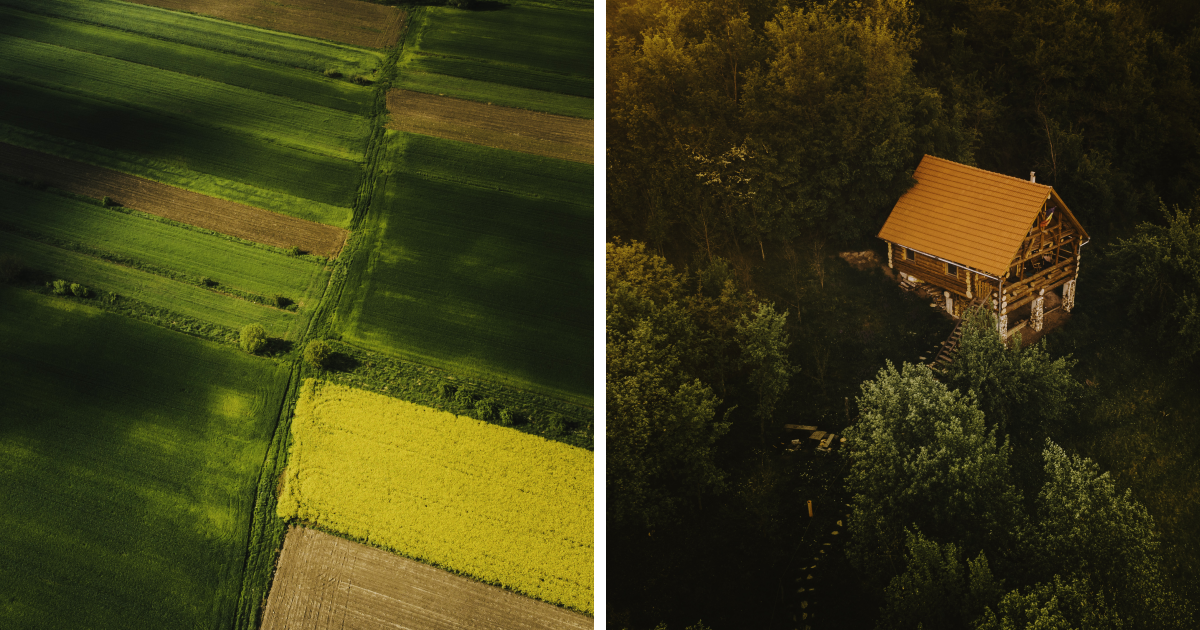
Small drones are excellent at revealing patterns: waves rolling in sets, trees spaced across a hillside, snow patches on dark rock, boats in a marina, or shadows crossing a field. Repetition creates rhythm, and rhythm makes the viewer stay longer. If one element breaks the pattern, such as a lone red cabin in a green forest, you may have found your hero subject.
Try Top-Down Shots
The straight-down angle is one of the most distinctive drone photography techniques. It removes the horizon and turns the landscape into design. Beaches, rivers, waterfalls, roads, forests, farms, and rocky coastlines all look different from this perspective. It is especially useful when the sky is dull but the ground is full of texture.
Camera Settings for Cleaner Drone Landscapes
For still photos, shoot in RAW when possible. RAW files preserve more information, which helps with recovering highlights, opening shadows, and adjusting color later. Keep ISO as low as conditions allow, usually ISO 100 or close to it, because small drone sensors can show noise quickly. Use exposure bracketing for high-contrast scenes such as sunsets, snowy mountains, or bright beaches with dark foregrounds.
For video, motion matters. ND filters can help reduce light in bright conditions so shutter speed stays more natural. This is especially useful when filming smooth cinematic movement over water, roads, or rolling hills. Do not overuse dramatic moves. A slow push forward, gentle rise, or sideways reveal often feels more professional than spinning around like the drone just heard shocking gossip.
Weather: The Invisible Co-Pilot
Weather can make or break a drone landscape session. Wind is the main concern for small drones. Even if the ground feels calm, wind can be stronger at altitude, near cliffs, over water, or along mountain ridges. Mist, rain, heavy humidity, and condensation can ruin images and damage equipment. Always check forecasts, watch the sky, and land early if conditions change.
Clouds, however, are not always bad news. Broken clouds can create moving patches of light across the land, adding drama and depth. Fog can turn ordinary valleys into dream scenes. Stormy skies can look spectacular from a safe distance. The key phrase is “safe distance.” No photo is worth chasing dangerous weather, and drones are not heroic. They are plastic, electronics, and optimism.
Respect Wildlife, Privacy, and Quiet Places
Beautiful landscape photography should not come at the expense of wildlife or other people’s peace. Avoid flying close to animals, nests, herds, marine life, or any creature that reacts to the drone. Noise and proximity can cause stress, and in many areas wildlife harassment is illegal. If animals look alert, move away or land.
Privacy matters too. Do not hover near homes, campsites, backyards, windows, or people who did not ask to become extras in your aerial masterpiece. Public landscapes feel more enjoyable when everyone respects space. A considerate drone pilot keeps flights short, avoids crowds, chooses quiet launch spots, and remembers that not everyone loves the sound of four tiny propellers doing their best mosquito impression.
Tell a Story, Not Just “Here Is a Place From Above”
The best drone landscape images have a clear idea. They show scale, isolation, movement, contrast, or mood. A tiny person on a trail can show the size of a canyon. A winding road through autumn trees can suggest travel. A boat crossing a lake can create calm. A shadow stretching across desert sand can add mystery.
Before pressing the shutter, decide what the image is about. Is it about color? Texture? Size? Weather? Symmetry? A journey? Once you know the story, composition becomes easier. You stop collecting random aerial views and start making photographs with intention.
Editing Drone Landscapes Without Making Nature Look Radioactive
Editing should enhance the scene, not turn it into a neon postcard from another planet. Start with exposure, white balance, contrast, highlights, and shadows. Then refine color carefully. A little vibrance can help, but too much saturation makes grass look like it has been drinking energy drinks.
Use cropping to strengthen composition. A wide 16:9 crop can emphasize coastlines and ridges. A square crop can make top-down patterns feel modern and graphic. Vertical crops are useful for social platforms, especially when the drone supports vertical shooting or when the scene has a strong path, river, or road running through it.
My Field Experience: What I Learned From Flying a Small Drone for Landscapes
My favorite drone memories are not always the most technically perfect ones. They are the mornings when I left before sunrise with a backpack, a charged battery, and the kind of sleepy optimism only coffee can legally support. Small drone photography has taught me that landscapes reward patience. The best shot often appears five minutes after I almost give up, when the sun finally slips through a cloud or the wind relaxes just enough for a steady frame.
One lesson I learned quickly is that a small drone makes you more observant on the ground. I started noticing curves in roads, the direction of tree shadows, the color of shallow water, and the way hills overlap in layers. Even when I am not flying, I catch myself thinking, “That would look incredible from 120 feet.” This is both a creative skill and a mild social problem, especially when someone is trying to have a normal conversation about lunch.
I also learned to fly lower than my excitement wants me to. In the beginning, I sent the drone up high and captured wide views that looked impressive for about three seconds. Later, I realized the memorable images often came from lower, more deliberate angles. A low diagonal view along a river showed depth. A top-down shot above a rocky shore revealed shapes I could not see from the beach. A slow sideways movement past a row of trees created more emotion than a dramatic climb into empty sky.
Battery management became another quiet teacher. Small drones are efficient, but flight time disappears fast when you are experimenting. I now plan my first shot before takeoff, keep an eye on wind direction, and return with plenty of power left. Landing calmly is much better than landing with your heart performing a drum solo.
Weather has humbled me more than once. I have packed for golden hour and received gray soup. I have reached a viewpoint just as the wind decided to audition for a disaster movie. I have watched perfect light happen while the drone stayed grounded because the rules, conditions, or nearby people made flying a bad idea. Strangely, those moments made me a better photographer. They reminded me that respecting the place is part of the craft.
My small drone also changed how I think about scale. A person walking across a bridge, a car on a mountain road, or a tiny cabin near a lake can make a landscape feel enormous. Without that scale, a grand scene may look flat. With it, the viewer understands the size of the world in a single glance.
The most satisfying part is the surprise. You launch expecting one composition, then discover another: a hidden sand pattern, a reflection, a curve in the shoreline, a patch of sunlight moving across a valley. That sense of discovery is addictive in the best way. A small drone does not replace traditional landscape photography; it adds another language. The ground view says, “I was here.” The aerial view says, “Look what this place becomes when the sky gets involved.”
Conclusion
Capturing breathtaking landscapes with a small drone is part photography, part planning, part aviation responsibility, and part childlike wonder. The equipment is compact, but the creative possibilities are enormous. With good light, thoughtful composition, legal awareness, respect for wildlife, and careful editing, a small drone can turn ordinary outdoor scenes into images that feel cinematic, emotional, and fresh.
The goal is not to fly everywhere or photograph everything. The goal is to see better. A small drone gives us a new perspective, but the real art still comes from patience, timing, restraint, and curiosity. Fly safely, respect the places you visit, and let the landscape do what it does best: make you feel very small in the most beautiful way possible.