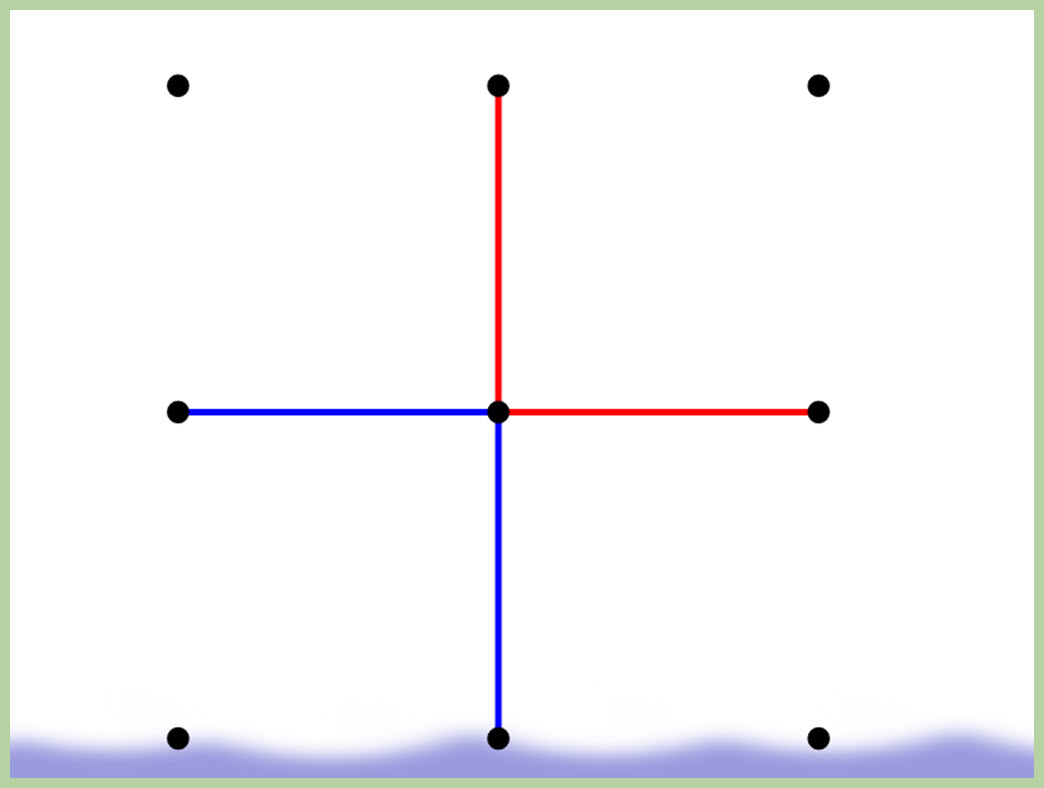
Note: In this article, “the dot game” refers to Dots and Boxes, the classic pencil-and-paper game where players connect dots to complete squares. It looks innocent, almost adorable, like a math worksheet that wandered into game night. But do not be fooled. Under that cute little grid is a sneaky strategy game that punishes greedy players, rewards patience, and turns one careless line into a full-scale square-based disaster.
If you have ever played Dots and Boxes and thought, “I was winning until suddenly I lost by ten boxes,” congratulations: you have experienced the game exactly as intended. The truth is that winning the dot game is not about grabbing every square you see. It is about control. The best players think ahead, build chains, avoid bad gifts, and know when to sacrifice a little to win a lot. Once you understand that, the game changes from random doodling to calculated mischief.
This guide breaks down how to win at the dot game with beginner-friendly rules, smart strategy, practical examples, and advanced endgame ideas. By the end, you will know how to stop handing free boxes to your opponent and start setting traps like the suspiciously polite mastermind you were always meant to be.
What Is the Dot Game?
Dots and Boxes is played on a grid of dots. Players take turns drawing one horizontal or vertical line between two adjacent dots. Whenever a player draws the fourth side of a square, that player claims the box and immediately gets another turn. When the board is full, the player with the most completed boxes wins.
That is the whole ruleset. Simple enough to explain in under a minute. Hard enough to make smart people stare at graph paper like it personally insulted them.
Rules in Plain English
- Draw one line per turn.
- Only connect adjacent dots.
- No diagonal lines.
- Complete a square and you claim it.
- Claim a square and you move again.
- Most boxes at the end wins.
If you only remember one extra thing, remember this: getting a box also gets you another move. That extra turn is why one mistake can snowball into your opponent grabbing half the board while you sit there pretending you definitely had a plan.
Why Most Players Lose the Dot Game
Most beginners lose for one very common reason: they focus on the next box instead of the whole board. They see a chance to complete a square, take it, feel brilliant for two seconds, and then accidentally open a long chain that gives the opponent a giant scoring run.
In Dots and Boxes, greed is often a trap. Winning is less about taking the first available box and more about deciding who will be forced to open the dangerous parts of the board. That is the big mental shift. When you start thinking that way, your results improve fast.
The First Big Rule: Never Give Away the Third Side for Free
The most important beginner strategy is wonderfully simple: avoid drawing the third side of a box unless you absolutely have to. If you add a third side, your opponent can usually draw the fourth side, claim the box, and keep moving. In other words, you are not making a harmless line. You are wrapping a present.
Early in the game, look for “safe moves.” A safe move is a line that does not create a box with three sides. If you keep making safe moves while your opponent gets careless, they will eventually be the one who has to crack open the first bad box.
This is the stage where patient players pull ahead. Casual players often think nothing is happening. Skilled players know everything is happening.
How to Spot a Safe Move
Before drawing a line, quickly inspect the two boxes that touch that line. If adding the line would create a third side on either box, treat it like a suspicious sandwich at a gas station. Maybe fine. Probably not. Usually avoid.
Safe moves tend to appear on the outer edges early, but not always. The real habit to build is checking consequences instead of playing automatically.
The Second Big Rule: Think in Chains, Not Boxes
Once the easy safe moves disappear, the board starts forming chains. A chain is a sequence of boxes linked together so that when one gets opened, a player can often take several in a row. Chains are where games are won and lost.
Here is the shocker for new players: sometimes the best move is to avoid taking every available box in a chain. Yes, really. Dots and Boxes is rude like that.
The strongest players try to create a position where the opponent is forced to open a long chain first. If your opponent opens it, you often get the choice to take most of it while still keeping control of the game.
Short Chains vs. Long Chains
A short chain may be manageable. A long chain is a gold mine. If you hand a long chain to the other player at the wrong moment, the game can flip instantly. That is why advanced strategy revolves around chain management, not random square-snatching.
So when you look at the board, ask yourself: “If I play here, what chain structure am I helping create?” That question is much smarter than “Can I get one box right now?”
Control Beats Greed
Control is the central idea behind winning the dot game. The player in control is the one who can decide when a chain gets opened and whether to keep that control through the endgame. Sometimes that means sacrificing two boxes now to win eight later.
That sacrifice feels weird at first. Human nature says, “Take the points.” Dots and Boxes says, “Take the points and you may also take the blame.” If grabbing everything hands the initiative to your opponent, it is often the wrong move.
Experienced players use a tactic sometimes described as a double-cross or a hard-hearted handout. The simple version is this: when given a long chain, you do not always take every box in it. Instead, you may take all but two, leaving those two for your opponent so that they are forced to open the next chain. That way, you keep control of the board.
Cold-blooded? Yes. Effective? Also yes.
How to Win the Endgame
The endgame is where Dots and Boxes reveals its sneaky little soul. By now, there are usually no safe moves left. The board is mostly chains and sometimes loops. This is when planning matters more than speed.
1. Force Your Opponent to Open the First Long Chain
If you can make your opponent be the first person to open a long chain, you usually gain a major advantage. That player loses control and often hands over a large run of boxes.
2. Do Not Automatically Take Everything
When you receive a long chain, pause. Ask whether taking all of it would force you to open an even bigger gift for your opponent. If so, the better move is often to take most of the chain and leave a couple of boxes behind, so your opponent must move next in the bad area.
3. Save the Last Big Chain for Yourself
A classic winning pattern is to keep control across several chains and then claim the entire final chain. In plain English: be generous with tiny leftovers early so you can be gloriously selfish later.
4. Watch for Loops
Some endgames contain loops rather than open chains. Loops can change the best move, especially in advanced positions. You do not need a graduate course in game theory to improve, but you should know that loops make the endgame trickier and reward players who think one move deeper than usual.
Does the Opening Move Matter?
Yes, but not in the way most people think. There is no magical first move that wins every board against every opponent. The opening matters because it influences the eventual chain structure. Your goal is to keep the position flexible, create safe lines, and avoid becoming the player who breaks the board open first.
On small boards, especially when both players know what they are doing, parity and chain count can matter a lot. On larger casual boards, the biggest edge usually comes from cleaner tactical play: fewer careless third sides, better chain reading, and smarter sacrifices in the endgame.
A Practical Example of Smart Play
Imagine a midgame where only a few safe moves remain. You notice that one region is forming a chain of four boxes. A beginner may panic and take the first available square they can find. A stronger player tries to keep the board quiet a little longer and make the opponent run out of safe options first.
Now suppose your opponent finally opens that chain of four. You take two boxes, then instead of grabbing all four, you leave the last two. Your opponent takes those two, but now they must open the next chain somewhere else on the board. You capture that next chain, repeat the pattern, and save the final large group for yourself. Suddenly the scoreboard tells a very satisfying story.
This is the emotional arc of Dots and Boxes: confusion, denial, enlightenment, and then an unhealthy desire to demand a rematch.
Common Mistakes That Cost Games
- Drawing third sides too early: This is the classic beginner error.
- Thinking one move at a time: Always ask what your move gives your opponent.
- Taking every box automatically: More is not always better if it loses control.
- Ignoring the whole board: A good move in one corner may ruin the structure somewhere else.
- Panicking in the endgame: Slow down and count chains before making the “obvious” move.
How to Practice and Improve Fast
If you want to get good quickly, do not just play more. Play with a purpose.
Practice Method 1: Play Small Boards
Smaller boards make chain patterns easier to see. They are perfect for training your eye to notice safe moves and danger zones.
Practice Method 2: Review the Turning Point
After each game, find the moment where the first long chain got opened. That moment often explains the result. If you study only one thing, study that.
Practice Method 3: Count Before You Move
Before any risky move, count how many boxes may become available afterward. This turns the game from impulse into calculation.
Practice Method 4: Learn to Sacrifice Calmly
Train yourself not to flinch when the best move gives away a couple of boxes. In Dots and Boxes, mature strategy often looks temporarily foolish. That is part of the charm.
Winning Mindset: Patience, Vision, and a Tiny Bit of Evil
To win at the dot game consistently, combine three habits. First, be patient enough to avoid bad third sides. Second, be strategic enough to think in chains instead of isolated squares. Third, be ruthless enough to sacrifice a little when it helps you keep control.
That last part is what separates decent players from dangerous ones. Strong Dots and Boxes play is not flashy. It is quiet, careful, and mildly sinister. You are not just drawing lines. You are arranging the future.
Experiences and Lessons From Real Dot Game Play
One of the funniest things about learning how to win at the dot game is how predictable the experience becomes. Almost everyone starts the same way. At first, the game feels random. Players draw lines wherever there is space, grab any square they can, and assume the winner is the person who gets lucky. Then comes the first painful lesson: someone loses not by one or two boxes, but by a landslide. That is usually the moment the game stops being “just a doodle game” and starts becoming a strategy obsession.
A common experience is the shock of realizing that the move that looked kind actually started the collapse. You draw a harmless-looking line, your opponent takes one box, then another, then another, and somehow your innocent little stroke has turned into a scoring avalanche. After a few games like that, players start noticing patterns. They become suspicious of the third side of a box. They begin hovering over the pen like they are defusing a bomb. That change in attitude is real progress.
Another frequent experience is emotional whiplash. Early in a game, patient play can feel boring. You are not scoring. Nothing dramatic is happening. Then suddenly the endgame arrives, and all those quiet choices matter. Players who stayed disciplined feel brilliant. Players who chased quick boxes feel betrayed by their past selves. Dots and Boxes has a special talent for making you argue with decisions you made three minutes earlier.
There is also a very real skill jump when players discover sacrifice. The first time someone intentionally leaves boxes behind to keep control, it feels wrong. Almost criminal. But once you see that move work, your whole relationship with the game changes. You stop judging moves by how many points they score immediately. You start judging them by what they force later. That shift is the moment casual play turns into strategic play.
People who get better at Dots and Boxes also tend to talk differently about the game. Beginners say, “I got three boxes there.” Better players say, “I forced you to open the chain.” That language reveals the real lesson. Winning is not only about collecting squares. It is about controlling the order in which bad choices appear. The best experiences in the game come from setting up a board where your opponent sees the trap a split second too late.
And finally, there is the universal dot game truth: once you learn the strategy, you can never fully go back to casual play. Every grid becomes a tiny battlefield. Every third side looks suspicious. Every endgame feels like a test of nerve. The game is still simple, still portable, still perfect for paper and pencil, but it becomes much richer. That is why people keep coming back to it. Dots and Boxes is easy to learn, hard to master, and weirdly satisfying when your plan works exactly the way you hoped. Which, to be fair, is also how villains describe their hobbies.
Final Thoughts
If you want to win at the dot game, stop thinking like a collector and start thinking like a controller. Avoid easy giveaways, create and manage chains, force your opponent to open the danger first, and do not be afraid to sacrifice a little to own the endgame. That is the real path to winning.
In other words, the secret is not drawing more lines. It is drawing the right line at the right time. Preferably while your opponent is still convinced they are doing great.