Ground ivy has a talent for appearing where grass struggles, spreading across the lawn, and behaving as thougs, survives casual pulling, and often returns just when you think the battle is over.
Borax is frequently promoted online as a homemade solution for killing ivy. There is some science behind the idea: borax contains boron, a micronutrient that plants require in tiny amounts but that becomes toxic at higher concentrations. Ground ivy, commonly called Creeping Charlie, is particularly sensitive to excess boron.
However, that does not make household borax a safe, reliable, or universally recommended weed killer. University research has found inconsistent control, damaged turf, yellowed plants, and the possibility of long-term boron buildup in soil. The safest answer is therefore not simply “mix borax and start spraying.” It is to identify the ivy correctly, understand the risks, and choose a method that will not turn your lawn into a chemistry experiment with poor adult supervision.
First, Identify Which “Ivy” You Have
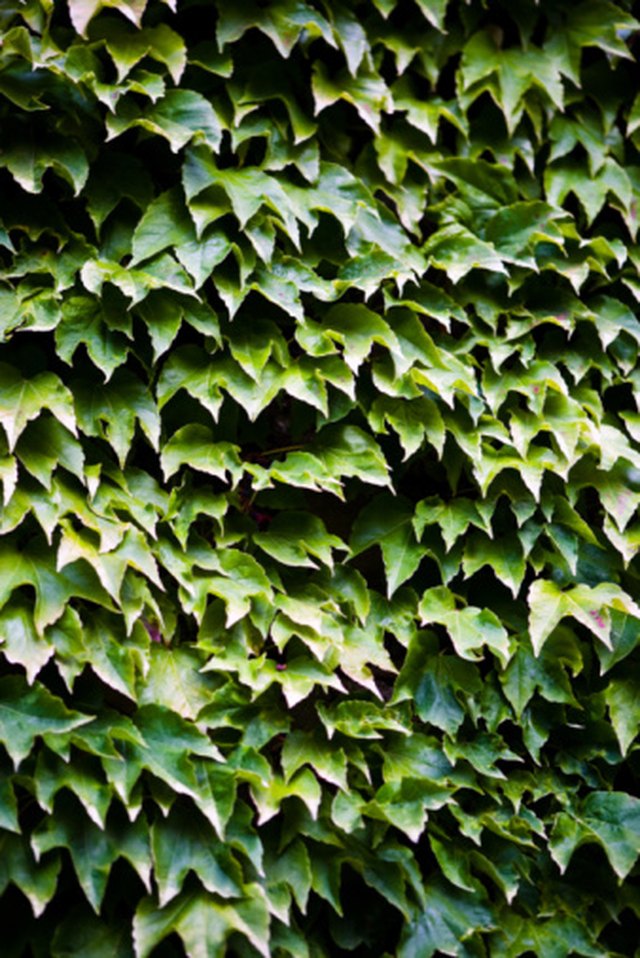
The word ivy is used for several unrelated plants. Borax discussions generally concern ground ivy, not English ivy and definitely not poison ivy. Treating the wrong plant wastes time and may create additional safety problems.
Ground Ivy or Creeping Charlie
Ground ivy, botanically known as Glechoma hederacea, is a low-growing perennial weed in the mint family. It commonly invades lawns, flower beds, shady corners, and damp areas where turfgrass is thin.
Look for these characteristics:
- Rounded or kidney-shaped leaves with scalloped edges
- Square stems, a common feature of mint-family plants
- A minty odor when the foliage is crushed
- Small blue or purple flowers in spring
- Long creeping stems that root wherever a node touches soil
This is the plant historically targeted by borax treatments. Even then, agricultural extensions generally recommend other control methods because the difference between a helpful and harmful amount of boron is remarkably small.
English Ivy
English ivy, or Hedera helix, is a woody evergreen vine that climbs trees, fences, walls, and buildings. It can also form dense mats across the ground. Borax is not a practical treatment for established English ivy.
English ivy is more effectively managed by pulling young growth, repeatedly cutting groundcover, or severing climbing vines near the base. When removing it from a tree, cut a complete band around the trunk without damaging the bark. Leave the upper vines to die naturally rather than ripping them down and showering yourself with branches, bark, insects, and regret.
son Ivy
Poison ivy, or Toxicodendron radicans, contains urushiol, an oil that can cause a serious allergic skin reaction. It may grow as a vine, shrub, or groundcover and is recognized by groups of three leaflets. Do not casually pull, mow, weed-whack, or burn poison ivy. Burning it can release urushiol-containing particles into the air and cause dangerous respiratory exposure. Wear protective clothing, use an appropriate labeled control method, or hire a professional when the infestation is extensive. Borax can injure ground ivy because it delivers boron. Plants need boron for cell development and other growth processes, but only in trace quantities. When too much enters plant tissue, growth becomes stunted, leaves may yellow or scorch, and the plant can die. Ground ivy appears more sensitive to elevated boron than some turfgrasses. That sensitivity inspired experiments and homemade borax recipes intended to suppress Creeping Charlie without killing the entire lawn. The problem is consistency. Results depend on soil type, existing boron levels, rainfall, drainage, application accuracy, turf species, temperature, and the condition of the weed. A mixture that damages ground ivy in one yard may barely annoy it in another. In a third yard, the weed survives while the grass turns yellow and begins composing a farewell letter. Boron also does not behave like many conventional post-emergent herbicides. Excessive or repeated applications can cause soil toxicity, and the affected area may remain difficult to replant. Trees, shrubs, vegetables, and ornamental plants can be especially vulnerable when the treatment reaches their root zones. Important note: Most household borax products are sold and labeled as laundry or cleaning products, not lawn herbicides. Never assume that a household product is approved for outdoor weed control. Follow federal, state, and local pesticide rules and use only products whose labels permit the intended application. The most responsible approach is not to invent a homemade dilution. Use a borate-based product only when it is specifically labeled for outdoor weed control, and follow that product’s application rate exactly. The labelnot a social media post written by someone named “LawnDestroyer87”is the controlling instruction. Examine its leaves, stems, flowers, growth pattern, and odor. Compare the plant with photographs from a university extension service or submit a sample to a local extension office. Do not apply borax to English ivy, poison ivy, Virginia creeper, Boston ivy, or an unidentified vine. Check whether the product is labeled for herbicidal use, whether ground ivy is listed, where it may be applied, what protective equipment is required, and how much product should be used. If the label mentions only laundry, cleaning, deodorizing, or indoor pest control, do not use that product as a lawn herbicide. “Natural mineral” does not mean “sprinkle freely until the yard submits.” Avoid boron treatments near vegetable gardens, fruit trees, ornamental beds, wells, storm drains, ponds, streams, and areas where runoff could carry the material downhill. Consider having the soil tested before applying a boron-based treatment. This is especially important when the property has previously received borax, boric acid, micronutrient fertilizers, or other boron-containing products. Wear the protective equipment required by the label. At a minimum, avoid breathing airborne powder and prevent contact with your eyes and mouth. Keep children and pets away while mixing or applying the product and for the interval stated on the label. Choose a calm, dry day. Wind can carry fine powder or spray droplets into desirable plants, while immediate rainfall can move the treatment away from its intended location. Before treating a larger area, apply the labeled rate to a small, inconspicuous patch containing both ground ivy and the surrounding grass. Mark the location so you can evaluate it accurately. Observe the test area for at least two to four weeks. Watch for: Do not assume that a few wilted leaves mean the roots are dead. Ground ivy is a perennial and may recover from nodes outside the treated area. Measure the area before applying anything. Estimating by eye is one of the easiest ways to overdose a lawn. A patch that looks like 100 square feet while you are holding a sprayer can mysteriously become 300 square feet when the grass starts turning brown. Use dedicated measuring equipment and do not reuse kitchen utensils. Apply uniformly to the target foliage without soaking the ground. Prevent drift, splashing, and runoff. Repeated borax applications are particularly risky because boron can accumulate. Never add another treatment simply because results are slow. Follow the label’s retreatment interval and annual application limits. If the first application fails, switching to a proven mechanical or labeled herbicide method is usually safer than increasing the borax concentration. Older lawn advice sometimes includes a recipe that dissolves household borax in warm water and dilutes it for application over a measured lawn area. The formula sounds wonderfully precise, but it cannot account for local soil chemistry, prior boron exposure, uneven spraying, turf sensitivity, rainfall, or nearby root systems. The distance between boron deficiency and boron toxicity is narrow. A small measuring error, overlapping spray passes, or treating the same area in multiple seasons can produce a concentration that damages grass and persists in the soil. Dry broadcasting is even harder to control. Fine powder rarely lands evenly, and heavy deposits can create isolated dead spots. Watering afterward may move the boron into neighboring areas rather than distributing it neatly. For those reasons, several university extension programs explicitly discourage homemade borax treatments for Creeping Charlie. The method is neither reliably selective nor easy to reverse. Manual removal works best when the infestation is young and the soil is moist. Loosen the soil with a hand fork, follow each runner, and remove every rooted node you can find. Throw the material away or dispose of it according to local yard-waste rules. Do not simply grab the center and pull upward. The stems break easily, leaving rooted sections behind. Ground ivy interprets careless pulling as free pruning. A sturdy metal rake can lift long runners from moist soil. Follow up by hand to remove broken stems and roots. Inspect the area every week during the growing season and remove new growth before it rebuilds the mat. rove Lawn Conditions
Ground ivy commonly thrives where turf is weak, especially in moist or shaded locations. Killing the weed without correcting those conditions creates an excellent vacancy for the next ground ivy plant. Improve competition by: A dense lawn is not an impenetrable fortress, but it gives ground ivy fewer places to establish. a Labeled Selective Herbicide
For extensive ground ivy growing in turf, extension specialists commonly recommend selective broadleaf herbicides containing triclopyr. Products combining ingredients such as triclopyr, 2,4-D, dicamba, or mecoprop may also provide control when labeled for the lawn species and target weed. Fall is generally the best treatment period because perennial weeds are moving carbohydrates toward their roots. Herbicide absorbed by actively growing leaves can move with those reserves. More than one application may be required, with timing and intervals determined by the product label. Do not use a nonselective herbicide in a lawn unless you intend to kill the grass as well. Spot treatment is preferable when the infestation is limited. ovate Severely Infested Areas
When ground ivy covers most of a thin lawn, complete renovation may be more efficient than years of spot treatment. Remove or kill the existing vegetation with a labeled method, correct shade and drainage problems, prepare the soil, and establish turf suited to the site. In locations too shady for healthy grass, consider replacing the lawn with shade-tolerant native groundcovers. Repeatedly trying to grow sun-loving turf under dense trees is less lawn care and more an annual reenactment of disappointment. Borax can damage ground ivy because Creeping Charlie is sensitive to excess boron. That scientific fact is real. Unfortunately, it does not translate into a dependable homemade lawn treatment. Household borax may injure desirable grass, harm nearby plants, and raise soil boron to levels that are difficult to correct. It is also unsuitable for English ivy and does nothing to eliminate the contact hazard associated with poison ivy. For a small ground ivy patch, careful pulling and repeated inspection are usually the safest choices. For a widespread lawn infestation, improve the growing conditions and use a selective herbicide specifically labeled for ground ivy and your turf species. Use borax only when you have a properly labeled outdoor product, a clearly identified target, and exact application instructions. The goal is to remove the ivynot to create a patch of soil where even weeds look around and say, “No thanks.” The following example combines common homeowner experiences with research-based lawn-care practices. It illustrates why ground ivy control is usually a process rather than a one-afternoon miracle. Imagine a homeowner discovering a wide patch of ground ivy beneath two mature maple trees. The lawn stays damp after rain, receives only a few hours of filtered sunlight, and has been mowed very short for years. Ground ivy has occupied nearly 400 square feet, weaving through thin grass and rooting every few inches. The homeowner initially considers a popular household borax recipe. Before treating the entire area, however, a small test patch is selected. The ground ivy begins yellowing after about a week, which looks promising. By the third week, portions of the surrounding grass are yellow too. Several ivy runners outside the treated square remain green and begin growing back into the damaged area. The test reveals the central problem: injuring the visible leaves is not the same as fixing the site. The ground ivy already has a network of rooted stems, while the existing turf is too weak to reclaim the space. A stronger borax treatment might produce more browning, but it would also increase the risk of persistent soil damage. The homeowner changes strategy. After a soaking rain, long runners are lifted with a metal rake. Every rooted node receives attention, and several buckets of plant material are removed. The process is not glamorous. There are no dramatic clouds of smoke, triumphant orchestral music, or neighborhood children requesting autographs. There is only a rake, damp knees, and the gradual satisfaction of seeing actual soil again. Next, the mowing height is raised to approximately three inches. The tree canopy is selectively pruned by a qualified professional to allow more filtered light, and a compacted section is aerated. A soil test shows that fertilizer should be applied modestly rather than dumped on the lawn with the enthusiasm of someone seasoning movie-theater popcorn. In early fall, surviving ground ivy is spot-treated with a selective broadleaf herbicide labeled for the existing turf. The application follows the label, including weather restrictions and the required interval before mowing. A second treatment is applied only where permitted and necessary. By the following spring, the ground ivy is not completely gone, but the infestation is substantially smaller. Bare areas are reseeded with a more shade-tolerant grass mixture. New runners are pulled as soon as they appear, before they can form another dense mat. The most important lesson from this experience is that the successful approach does not depend on a single secret ingredient. It combines correct identification, limited testing, mechanical removal, better turf management, careful herbicide selection, and follow-up. Another lesson is that patience prevents expensive mistakes. A homeowner who tests one square foot can observe unintended damage before affecting the entire lawn. Someone who measures the area accurately is less likely to overlap applications. Someone who waits for results is less likely to keep adding chemicals to soil that cannot send a notification saying, “Please stop.” After one full growing season, the homeowner continues checking the shaded edges every two weeks. A few ground ivy stems still appear, especially after rainy weather, but they are removed while young. The grass is thicker, drainage has improved, and the weed no longer controls the neighborhood. That outcome is less exciting than a mythical overnight borax cure, but it is more realistic and sustainable. Ground ivy wins by spreading patiently. Homeowners usually beat it the same way: accurate identification, steady maintenance, and fewer impulsive trips to the laundry cabinet.Does Borax Really Kill Ground Ivy?
How to Use Borax to Kill Ivy Responsibly
Step 1: Confirm That the Weed Is Ground Ivy
Step 2: Read the Entire Product Label
Step 3: Evaluate the Treatment Area
Step 4: Protect Yourself
Step 5: Test a Very Small Patch
Step 6: Apply Only the Labeled Amount
Step 7: Do Not Reapply Automatically
Why Homemade Borax Recipes Are Risky
Better Ways to Remove Ground Ivy
Hand-Pull Small Patches
Rake Out Dense Mats
Common Borax Mistakes to Avoid
Conclusion: Should You Use Borax to Kill Ivy?
Extended Experience Notes: What a Ground Ivy Control Project Really Looks Like