Suede shoes have a special talent: they can make an outfit look expensive even when your bank account is quietly eating instant noodles. But when they are too tight, that soft, velvety dream can turn into a tiny foot prison. The good news? Suede is more flexible than many people think. With patience, the right tools, and a little common sense, you can stretch suede shoes enough to reduce pinching, rubbing, and that “why did I buy these?” feeling.
The not-so-good news is that suede is also delicate. It does not love water, harsh heat, rough scrubbing, or dramatic experiments involving the freezer and your favorite loafers. Stretching suede shoes is less like forcing open a stuck drawer and more like convincing a cat to move off your keyboard: gentle pressure, smart timing, and absolutely no panic.
This guide explains how to stretch suede shoes safely at home, when to use a professional cobbler, what mistakes to avoid, and how to keep your shoes looking sharp after they finally stop bullying your toes.
Can Suede Shoes Really Stretch?
Yes, suede shoes can stretch, especially if they are made from genuine suede leather. Suede is created from the underside of animal hide, which gives it that soft, fuzzy nap. Because it is still leather, it has natural give. That makes suede more stretch-friendly than stiff synthetic materials, patent leather, or plastic-like faux suede.
However, there is a limit. Stretching can usually improve a snug fit by a small amount, especially across the toe box, sides, or instep. It will not turn a size 7 into a size 9, nor will it magically correct a shoe shape that is completely wrong for your foot. If your toes are curled like shrimp, the shoes are not “almost perfect.” They are plotting against you.
Before You Stretch: Check the Fit Problem
Before reaching for thick socks, sprays, or a shoe stretcher, figure out where the shoe hurts. Different pressure points need different solutions.
Common Suede Shoe Fit Issues
- Tight toe box: Pressure across the toes or the ball of the foot.
- Pinching at one spot: Often caused by a seam, bunion area, or narrow side panel.
- Tight instep: Pressure on the top of the foot, common in loafers and boots.
- Heel rubbing: May require breaking in, heel grips, or different socks rather than stretching.
- Overall too small: Usually not fixable with stretching alone.
A good candidate for stretching is a suede shoe that generally fits but feels tight in one or two areas. A bad candidate is a shoe you can barely get on, a shoe that causes numbness, or a pair that makes you walk like you are crossing hot pavement barefoot.
Method 1: Wear Thick Socks Around the House
This is the easiest and lowest-risk way to stretch suede shoes. It works best for mild tightness and new shoes that need a little breaking in.
How to Do It
- Put on one thick pair of socks. If the shoes are only slightly snug, do not overdo it.
- Slip into the suede shoes carefully.
- Walk around indoors for 20 to 30 minutes.
- Flex your feet gently while sitting, especially around tight spots.
- Repeat for several short sessions over a few days.
The key is gradual pressure. Your foot acts like a natural mold, and the socks add just enough extra width to encourage the suede to loosen. This method is especially useful for suede loafers, flats, moccasins, and ankle boots.
Do not wear the shoes outside during the first few sessions. If they start rubbing or causing pain, take them off. Breaking in shoes should not feel like a survival challenge.
Method 2: Use a Suede-Safe Shoe Stretch Spray
A shoe stretch spray can soften the fibers and help suede relax where it feels tight. Look for a product that specifically says it is safe for suede, nubuck, or leather. Do not grab random household sprays and hope for the best. Your shoes are not a science fair volcano.
How to Use Stretch Spray Safely
- Test the spray on a hidden area first, such as the inner side or lower heel.
- Lightly spray the inside of the tight area. Avoid soaking the suede.
- Put on thick socks and wear the shoes while they soften.
- Walk indoors for 20 to 30 minutes.
- Let the shoes air dry naturally at room temperature.
- Brush the nap gently with a suede brush after drying.
Stretch spray works well when combined with either your feet or a shoe stretcher. The goal is to soften, not saturate. Suede and excess moisture are not best friends; they are more like coworkers who tolerate each other during meetings.
Method 3: Use a Shoe Stretcher
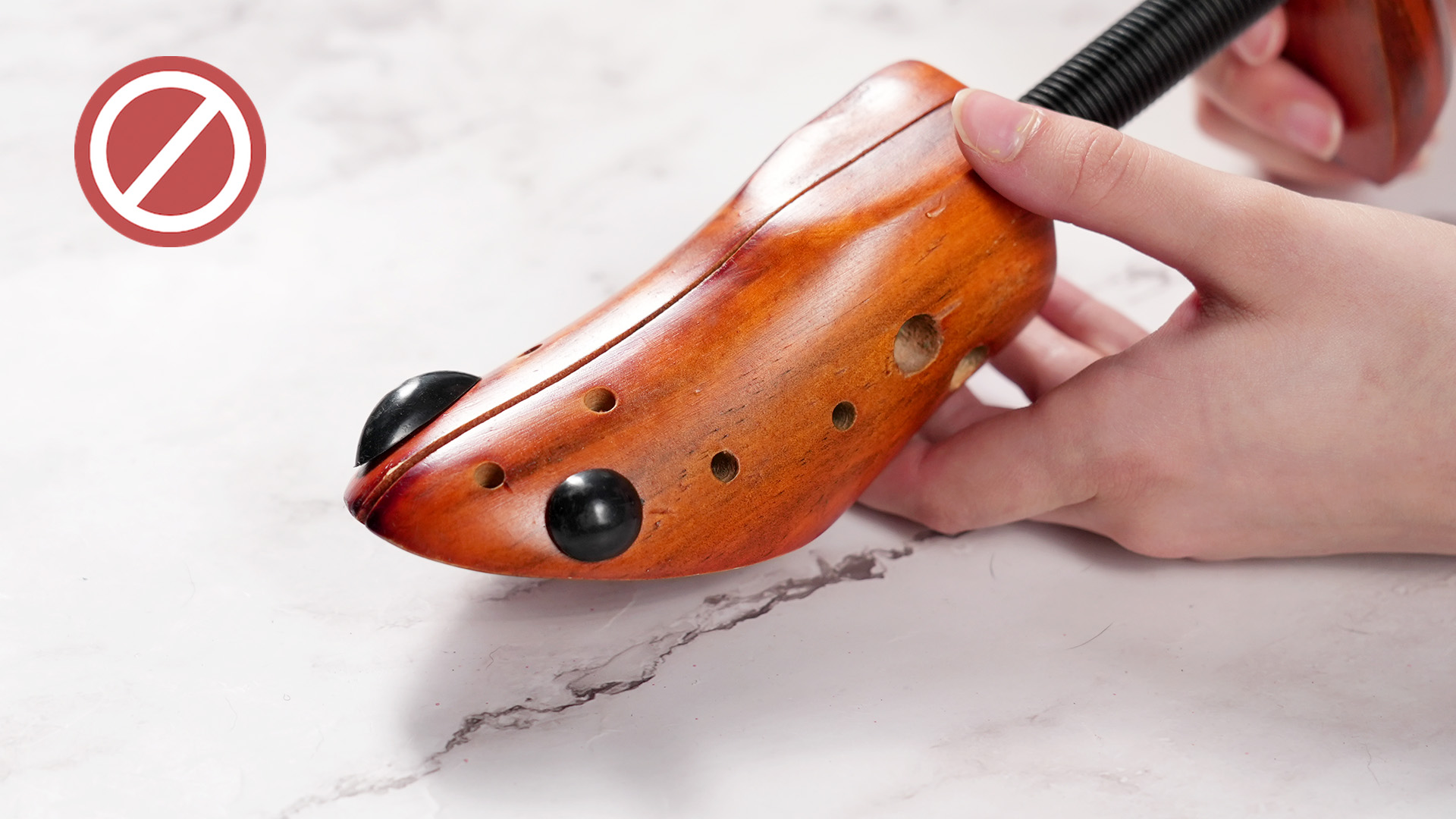
A shoe stretcher is one of the most reliable ways to stretch suede shoes at home. It is especially helpful if your shoes are tight across the front or sides. Many stretchers also come with small plugs that can target specific problem areas, such as bunions or pressure near the little toe.
What You Need
- A two-way shoe stretcher for length and width, or a one-way stretcher for width only
- Suede-safe stretch spray
- Bunion plugs or pressure-point attachments, if needed
- A suede brush
Step-by-Step Instructions
- Lightly mist the inside of the tight area with suede-safe stretch spray.
- Insert the shoe stretcher into the shoe.
- Turn the handle slowly until the stretcher feels snug.
- Do not crank it like you are opening a stubborn pickle jar. Gentle pressure is enough.
- Leave it in place for 6 to 12 hours.
- Remove the stretcher and try on the shoe.
- Repeat if needed, increasing pressure only slightly each time.
For expensive suede shoes, start with the least aggressive setting. You can always stretch more, but you cannot easily un-stretch a shoe that suddenly fits like a decorative canoe.
Method 4: Target One Tight Spot
Sometimes the whole shoe is fine except for one annoying pressure point. In that case, you do not need to stretch the entire shoe. You need spot stretching.
Use a shoe stretcher with a pressure plug, or apply gentle pressure from inside the shoe with a rounded object wrapped in a soft cloth. Focus only on the tight area. This is useful for suede shoes that rub near a bunion, pinky toe, or side seam.
Be careful around stitched areas, decorative overlays, and glued seams. These parts may not stretch evenly and can become misshapen if pushed too hard.
Method 5: Ask a Cobbler for Professional Stretching
If the shoes are expensive, designer, vintage, or emotionally important, a cobbler is often the smartest choice. Professional shoe repair shops have stretching machines, spot-stretching tools, and experience with different materials.
A cobbler can usually help when the shoe fits overall but pinches in a specific place. They may also be able to stretch boot shafts, widen toe boxes, or relieve pressure at the instep. Professional stretching is not magic, but it is much safer than attacking suede boots with a hair dryer and optimism.
Methods to Avoid With Suede Shoes
The internet contains many shoe-stretching hacks. Some are useful. Some sound like they were invented by a raccoon with Wi-Fi. Be careful with the following methods.
Do Not Soak Suede in Water
Water can stain suede, flatten the nap, cause uneven texture, and leave marks that are harder to fix than the original tightness. A light mist from a suede-safe product is very different from soaking the shoe.
Be Careful With Heat
Heat can make leather more flexible, but suede is sensitive. Direct heat from a hair dryer, radiator, dryer, or heater can dry, shrink, warp, or discolor suede. If you use warmth at all, keep it mild, keep the dryer moving, and never blast one spot. For valuable suede shoes, skip heat completely.
Avoid the Freezer Method
The freezer method involves placing bags of water inside shoes and freezing them so the expanding ice stretches the material. This may work on some sturdy shoes, but it is risky for suede. Leaks, condensation, and uneven pressure can damage the upper, stain the lining, or distort the shape.
Do Not Use Oils or Regular Leather Conditioner
Suede is not smooth leather. Products made for polished leather can darken, mat, or permanently stain suede. Use suede-specific care products only.
How Much Can You Stretch Suede Shoes?
In most cases, expect a modest improvement. Stretching can relieve pressure and create a more comfortable fit, but it is not a full resizing service. A realistic goal is to gain a little extra room in the toe box, soften a tight instep, or reduce pressure on one side.
If a shoe is too short, stretching is harder. Length stretching is more limited than width stretching because the sole, heel counter, and toe structure resist expansion. If your toes hit the front with every step, stretching may not solve the problem.
How to Keep Suede Looking Good After Stretching
Once the shoes feel better, protect the win. Suede needs routine care, especially after stretching because the fibers may have been softened or disturbed.
Brush the Nap
Use a suede brush after each stretching session. Brush gently in one direction to lift the nap and remove surface dust. If the suede looks flattened, use short, light strokes to revive the texture.
Use a Suede Protector Spray
After stretching and drying, apply a suede protector spray according to the product directions. Test it first on a hidden area. Protector spray helps guard against light moisture and stains, but it does not make suede invincible. Suede shoes still should not be your first choice for puddle-jumping.
Store With Shoe Trees
Cedar shoe trees can help maintain shape and absorb some moisture from regular wear. They also reduce creasing and help the shoe hold its improved fit. If you do not have shoe trees, use acid-free tissue paper or clean packing paper. Avoid newspaper if the lining is light-colored because ink can transfer.
When Stretching Is Not the Answer
Stretching is helpful, but it is not always the right fix. If your shoes cause numbness, sharp pain, toe cramping, or blisters every time you wear them, consider replacing them with a better size or shape.
Foot comfort starts with proper fit. A roomy toe box, secure heel, and supportive structure matter more than squeezing into a stylish pair that makes you negotiate with your own feet. Pointed shoes, narrow toe boxes, and stiff construction can create pressure that stretching only partly improves.
Also remember that feet can change over time. Pregnancy, aging, weight changes, activity level, and medical conditions can affect foot width and shape. The shoes that fit five years ago may no longer be loyal members of your closet.
Real-World Experience: What Actually Works Best
In real life, the best way to stretch suede shoes is usually a combination of patience and small adjustments. The thick-sock method is the most beginner-friendly because it lets the shoe adapt to your actual foot shape. It is not glamorous, but neither is limping across a parking lot because your new suede loafers decided to become medieval torture devices.
For example, imagine buying a pair of tan suede loafers for work. In the store, they feel “snug but fine,” which is shoe-shopping language for “future problem.” After one day at the office, the outside of your little toe feels irritated. Instead of wearing them for eight more hours and pretending everything is okay, start with a short home session. Put on medium-thick socks, wear the loafers for 20 minutes while doing ordinary things, then take them off before pain starts. Repeat for three evenings. Often, that is enough to soften the upper and reduce the hot spot.
For suede ankle boots, a shoe stretcher usually gives better results. Boots can be harder to stretch evenly because your foot does not always apply pressure exactly where needed. If the tightness is across the ball of the foot, a width stretcher with a light mist of suede-safe spray can make a noticeable difference overnight. The secret is restraint. Turn the stretcher until it is firm, not extreme. If you hear creaking, groaning, or your inner voice saying “this seems aggressive,” stop.
Spot stretching is another practical trick. Many people do not need more room everywhere; they need relief at one tiny villainous spot. A bunion plug on a shoe stretcher can create a small pocket without making the heel loose. This matters because overstretching the entire shoe can lead to heel slipping, which creates new friction and blisters. Congratulations, you solved one problem and adopted another.
One lesson worth learning early: do not rush suede. Smooth leather can sometimes tolerate more assertive stretching, but suede shows mistakes quickly. Too much liquid can create marks. Too much heat can change the texture. Too much force can warp the shape. The most successful approach is to stretch, rest, test, and repeat. Think of it as training the shoe, not defeating it.
Another experience-based tip is to stretch shoes at the time of day when your feet are naturally a little larger. Many people’s feet swell slightly by late afternoon or evening. Trying on stretched shoes at that time gives a more realistic comfort test than slipping them on first thing in the morning when your feet are fresh, optimistic, and possibly lying to you.
Finally, know when to call a cobbler. If the suede shoes cost serious money, have delicate stitching, or need more than a small adjustment, professional stretching is usually worth it. A good cobbler can target pressure points more accurately and reduce the chance of damage. Home methods are great for minor tightness, but there is no shame in handing the problem to someone with proper tools. Your feet do not award medals for unnecessary suffering.
Conclusion
Stretching suede shoes is absolutely possible, but the winning formula is gentle pressure, suede-safe products, and patience. Start with thick socks for mild tightness. Use a shoe stretcher for more controlled widening. Add a suede-safe stretch spray when the material needs softening. Avoid soaking, harsh heat, oils, and freezer experiments unless you are secretly trying to retire the shoes forever.
The best results happen when the shoes already fit reasonably well and only need a little extra room. If they are painfully small, poorly shaped, or causing ongoing foot problems, stretching may not be enough. Comfortable shoes should support your day, not become the main character in your personal drama.
With the right technique, your suede shoes can go from “beautiful but brutal” to “stylish and wearable.” And really, that is the dream: shoes that look good, feel good, and do not make you consider walking barefoot through a restaurant.