Grocery shopping used to be simple: grab bread, milk, cereal, maybe a suspiciously cheerful bunch of bananas, and go home. Today, walking through a supermarket can feel like entering a tiny advertising theme park. Every aisle is shouting. “Natural!” “Healthy!” “Family size!” “Now with real fruit!” “Limited-time deal!” “Only $2.99!” The cereal box is basically wearing a motivational speaker headset.
The problem is not that every grocery ad is false. Many labels, shelf tags, and promotions are perfectly legitimate. The real issue is that some grocery store ads are designed to make you assume more than they actually prove. A claim may be technically true but still misleading. A “sale” may not save you much. A “natural” label may sound better than it is. A “made with organic ingredients” claim may not mean the whole product is organic. And “fruit flavored” may mean the fruit waved at the product from across the parking lot.
Learning how to spot false ads at the grocery store helps you protect your budget, your health goals, and your patience. You do not need a law degree, a nutrition Ph.D., or a magnifying glass the size of a frying pan. You just need to know where the tricks hide.
What Counts as a False or Misleading Grocery Ad?
A false grocery ad says or strongly implies something that is not true. A misleading grocery ad may use wording, images, pricing, or packaging design that causes shoppers to form the wrong impression. In plain English: if the ad makes your brain fill in a happier story than the facts support, be careful.
Examples include a shelf tag that suggests a big discount when the “regular price” was rarely charged, a front label that says “made with whole grains” while refined flour is the first ingredient, or a juice drink covered in berry pictures even though the main ingredients are water and sugar. These are not always illegal in every situation, but they are warning signs that the marketing department is doing jazz hands.
Start With the Shelf Tag: The Tiny Sign That Can Cost You Money
Before you study the front of the package, look at the shelf tag. Grocery store advertising often begins right there, in the small print next to the price.
Watch for “sale” prices that are not real bargains
A sale should compare today’s price with a genuine former price. If a product says “Was $6.99, Now $4.99,” the old price should not be a decorative fairy tale. Be skeptical when every item in a section seems permanently “on sale.” If the same granola bars have been “reduced” for six months, congratulations, you have met the grocery store’s version of a never-ending farewell tour.
False reference pricing is a classic advertising trick. It creates the feeling of savings by comparing the current price to an inflated or unrealistic former price. Your defense is simple: compare the price with nearby brands, check unit prices, and remember that “discounted” does not automatically mean “best value.”
Use unit price like a shopping superpower
The unit price tells you how much something costs per ounce, pound, quart, count, or other standard measurement. It is often the fastest way to compare two sizes or brands. A large bottle of olive oil may look cheaper than a small one, but the unit price reveals whether you are actually saving money or just buying a heavier future arm workout.
When comparing unit prices, make sure the measurement is the same. One tag may list price per ounce while another lists price per pound. That is not a comparison; that is math wearing roller skates. Also check whether the sale price requires a loyalty card, app coupon, or minimum purchase.
Read BOGO deals carefully
“Buy One, Get One Free” sounds simple until the fine print joins the conversation. Some stores require you to buy two items. Others allow one item at half price. Some deals apply only to a specific flavor, size, or brand variety. If the shelf tag says “select varieties,” it means the bargain may be hiding like a raccoon in a pantry.
Before you toss six jars of pasta sauce into your cart, ask yourself: Do I need this? Will I use it before it expires? Is the unit price still better than the store brand? A false bargain is still expensive if it ends up in the back of your cabinet until the next presidential administration.
Decode Front-of-Package Claims
The front of a food package is where marketing lives. The Nutrition Facts label and ingredient list are where reality keeps its paperwork. Always check both.
“Natural” does not mean what many shoppers think it means
Many consumers read “natural” and imagine a product was raised by woodland animals, watered by mountain mist, and blessed by a grandmother in an apron. In grocery labeling, the word can be much narrower. On meat and poultry, “natural” generally refers to no artificial ingredients and minimal processing. It does not automatically mean organic, grass-fed, antibiotic-free, low-calorie, more nutritious, or raised on a tiny farm with excellent manners.
For packaged foods, “natural” can be especially slippery. If a product says “natural,” flip it over and inspect the ingredients. If the ingredient list looks like a chemistry spelling bee, the front label deserves a raised eyebrow.
“Made with” is not the same as “mostly made of”
One of the sneakiest grocery advertising phrases is “made with.” A cracker can be “made with whole grains” and still be mostly refined flour. A snack can be “made with real fruit” and still contain only a small amount of fruit puree or juice concentrate. A cereal can be “made with honey” while sugar or corn syrup does most of the sweetening.
The fix is easy: check the first three ingredients. Ingredients are listed by weight, from most to least. If the ingredient being advertised is buried near the end, the product may be using that ingredient more as a celebrity cameo than a main character.
“No added sugar” does not mean low sugar
“No added sugar” means sugar was not added during processing. It does not mean the food is sugar-free, low-carb, low-calorie, or automatically healthy. Fruit juice, dried fruit, and some dairy products can contain naturally occurring sugars. That may be fine, but you should know what you are buying.
Look at the Nutrition Facts label for total sugars and added sugars. A label can be honest and still surprise you. This is the grocery-store version of a plot twist.
“Sugar free,” “fat free,” and “low sodium” have rules
Some nutrient claims are regulated, which is good news. But shoppers still need to understand them. “Sugar free” does not mean zero molecules of sugar in all cases; it can refer to a very small amount per serving. “Low sodium” has a specific threshold. “Fat free” may still contain calories. And “reduced” means lower than a reference food, not necessarily low overall.
For example, “reduced sodium” soup may still be too salty for your personal goals. “Fat free” candy may still be mostly sugar. “Low calorie” cookies may encourage you to eat twice as many, at which point the cookies have successfully negotiated a hostile takeover.
Check the Nutrition Facts Label Before Trusting the Halo
A “health halo” happens when one positive-sounding claim makes the whole product seem healthier than it is. Common halo words include “protein,” “keto,” “plant-based,” “gluten-free,” “organic,” “ancient grain,” and “superfood.” These words may describe something real, but they do not automatically make a product a smart choice.
Start with serving size
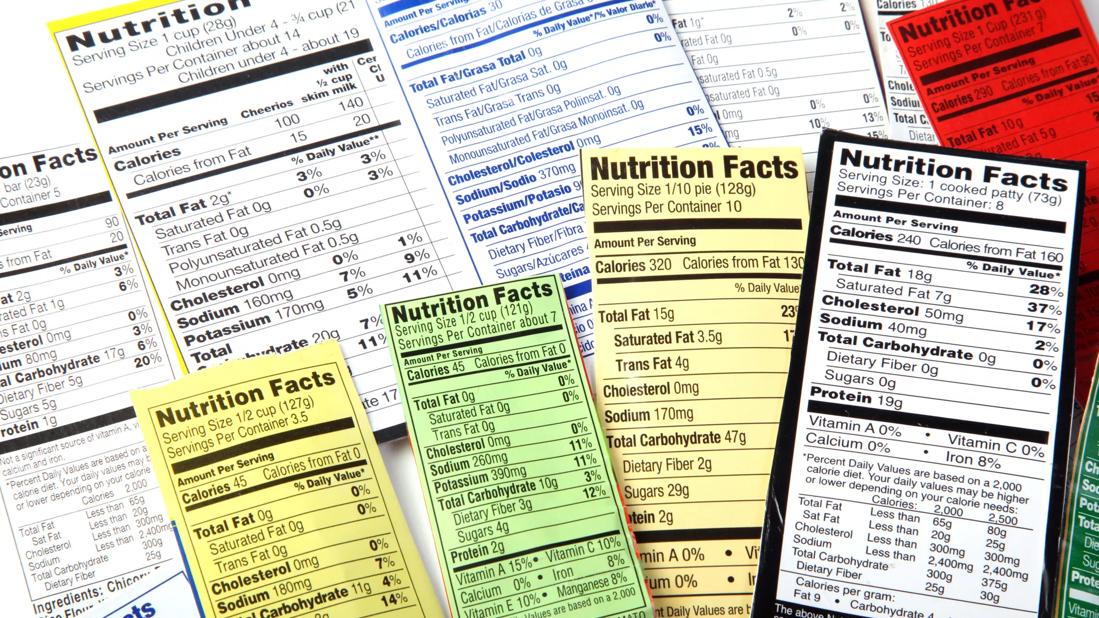
Serving size controls everything else on the Nutrition Facts label. Calories, sodium, sugar, fiber, and fat are all listed per serving. If a tiny muffin has two servings, the label may make it look more innocent than it is. The muffin is not two snacks. It is one muffin with commitment issues.
Compare calories and nutrients per container
Some packages now include calories per serving and per container, which is useful when the package is realistically eaten in one sitting. If you know you will finish the whole bottle, bag, or cup, use the full-container numbers. Your body does not care that the label imagined you would eat one-third of a snack pouch and then calmly practice self-control.
Look for fiber, protein, added sugars, saturated fat, and sodium
Depending on your goals, focus on the numbers that matter most. For many shoppers, fiber and protein can help identify more filling foods, while added sugars, saturated fat, and sodium are worth watching. Do not let a single positive claim distract from the full picture. A cereal may be “high in vitamins” because vitamins were added back in, but it may still be low in fiber and high in added sugar.
Understand Organic Labels Without Getting Played
Organic labels are more meaningful than vague claims like “natural,” but the exact wording matters.
“100 percent organic”
This means all ingredients, excluding water and salt, are certified organic. You will usually see this on simple foods such as produce or single-ingredient products.
“Organic”
This means the product contains at least 95 percent organic ingredients, excluding water and salt. The remaining ingredients must meet specific rules.
“Made with organic ingredients”
This is not the same as “organic.” It generally means at least 70 percent of the product is organic, and it cannot use the USDA Organic seal in the same way as fully organic products. The phrase may be perfectly legitimate, but it is also easy to misunderstand when you are shopping fast.
Bottom line: do not pay a premium for the word “organic-ish” in your imagination. Read the exact phrase.
Be Careful With Meat, Poultry, and Egg Claims
Meat and poultry labels can be especially confusing because many claims sound similar but mean different things.
“No hormones” can be redundant
Hormones are not allowed in raising poultry or hogs in the United States. So when chicken or pork is advertised with a big “no hormones” claim, it may be true, but it is also something all comparable products should already meet. That is like a banana advertising itself as “peel included.”
“Grass-fed” is not the same as organic
Grass-fed claims relate to what the animal was fed, but they do not automatically mean the meat is organic, antibiotic-free, or raised under a particular animal welfare program. If those details matter to you, look for specific additional claims or certifications.
“Free range” and “pasture raised” need context
These phrases can sound idyllic, but the details vary. Some claims are verified more strongly than others. If a package includes a third-party certification, learn what that certification requires. A pretty farm picture on the label is not a certification. It is a picture. Chickens cannot legally sign affidavits from a sunset meadow.
Do Not Let Pictures Do the Lying for the Words
Grocery ads often use images to create an impression. A drink carton may show blueberries, raspberries, and pomegranates dancing together like a fruit parade. But the ingredient list may reveal apple juice concentrate as the main fruit ingredient, with “natural flavors” doing the heavy lifting.
Look for phrases like “flavored,” “with other natural flavors,” “juice drink,” “cocktail,” or “beverage.” These words can signal that the product is not 100 percent juice or not primarily made from the fruit shown on the front.
The same applies to bread. A loaf can be brown and sprinkled with seeds but still be made mostly from refined flour. Check for “whole wheat” or another whole grain as the first ingredient. “Multigrain” only means multiple grains are present. It does not guarantee they are whole grains.
Question Environmental and Ethical Claims
Many shoppers care about sustainability, animal welfare, local sourcing, and packaging waste. Brands know this, which is why green-sounding claims are everywhere.
Beware of vague green words
Words like “eco-friendly,” “earth smart,” “green,” “planet safe,” and “sustainable” should come with clear details. What exactly is better? The packaging? The farming method? The shipping? The company’s energy use? If the label does not say, the claim may be more mood lighting than meaningful information.
Look for specifics and verification
A stronger claim gives details: “made with 100 percent recycled paperboard,” “certified organic,” “Fair Trade Certified,” or “Non-GMO Project Verified.” Even then, read carefully. A package may be recyclable only where facilities exist. A “compostable” item may require industrial composting, not your backyard pile next to the sad tomato plant.
Spot Online Grocery Ad Traps
False grocery advertising is not limited to physical stores. Online grocery apps and delivery platforms can add another layer of confusion.
Check whether prices are the same as in-store prices. Look for service fees, delivery fees, small-order fees, and automatic subscription offers. “Free delivery” may not mean the final order is fee-free. Also watch for substitutions. A sale item may be out of stock, and the replacement may cost more or fail to qualify for the promotion.
Before checkout, review the final price line by line. Your cart total is the only number that gets to meet your bank account.
Practical Checklist: How to Spot False Ads at the Grocery Store
1. Read the exact words
Do not let your brain upgrade “made with organic oats” into “organic granola.” Exact wording matters.
2. Compare unit prices
The biggest package is not always the best deal. The loudest sale tag is not always the lowest price.
3. Check serving size
Nutrition claims can look better when the serving size is smaller than what people actually eat.
4. Read the first three ingredients
If the advertised ingredient is not near the top, the front label may be overselling it.
5. Be skeptical of vague claims
Words like “natural,” “wholesome,” “premium,” “artisan,” and “farm fresh” may sound nice but often need proof.
6. Verify certifications
Official seals and credible third-party certifications are usually more meaningful than pretty packaging.
7. Keep receipts
If a shelf tag says one price and checkout charges another, ask for a correction. Mistakes happen, but your wallet should not have to sponsor them.
Specific Examples of Grocery Ad Claims to Question
“Now with real fruit!” Check whether the product contains fruit pieces, puree, juice concentrate, or just flavoring.
“Family size!” Compare the unit price. Sometimes family size is a value; sometimes it is just a bigger box with confidence.
“No cholesterol!” This may be irrelevant on plant-based foods, which naturally do not contain cholesterol.
“Gluten-free!” Important for people avoiding gluten, but not automatically healthier. A gluten-free cookie is still a cookie, even if it has excellent public relations.
“Locally grown!” Ask what “local” means. Some stores define it by state, region, or distance. The word can be useful, but it should not be mysterious.
“Limited time only!” This creates urgency. Slow down and compare. Pasta sauce does not need you to panic.
My Real-World Grocery Store Experience: Lessons From the Aisles
After years of reading labels, comparing prices, and occasionally being personally betrayed by snack packaging, I have learned one important truth: grocery stores reward shoppers who pause for ten seconds. Not ten minutes. Not a full documentary investigation. Just ten seconds.
One common experience happens in the cereal aisle. A box screams “whole grain” on the front, often with a golden field, a sunrise, and the emotional energy of a wellness retreat. But when you turn the box around, the first ingredient may be refined grain, followed by sugar. The whole grain is there, yes, but not always in the starring role. That taught me to treat the front label as the commercial and the ingredient list as the contract.
Another lesson came from buying “family size” snacks. I used to assume the bigger bag was cheaper. Then I started checking unit prices and discovered that sometimes the medium bag on sale beat the giant bag. This felt illegal to my sense of grocery justice, but it was right there on the shelf tag. Since then, I compare unit prices whenever I buy coffee, cereal, detergent, olive oil, pet food, or anything sold in multiple sizes. Unit price is boring until it saves you money. Then it becomes thrilling in a very adult way.
I have also learned to respect the power of tiny fine print. Digital coupons are a perfect example. A bright tag may say “$1.99,” but only if you clip the coupon in the store app, buy exactly four, choose the correct flavor, scan your loyalty card, and possibly solve a riddle from a bridge troll. The checkout screen is where truth arrives. I now review the receipt before leaving the store, especially when buying sale items. If the price is wrong, customer service can usually fix it quickly.
Meat labels taught me another lesson: some claims sound impressive because shoppers do not know the baseline. “No hormones” on chicken looks like a premium feature, but hormones are not allowed in poultry production in the United States. That does not mean the product is bad; it means the claim may not be worth extra money. Now I look for claims that match what I actually care about, such as organic certification, verified animal welfare standards, or antibiotic-related claims.
The biggest personal rule I follow is simple: never pay extra for a feeling unless the facts support it. Packaging is designed to create feelings: comfort, health, nostalgia, savings, environmental virtue, and sometimes the sudden belief that a $7 jar of almond butter will transform your life. Maybe it will. But first, check the unit price, ingredients, serving size, and claim wording.
Smart grocery shopping is not about being cynical. It is about being awake. Brands can advertise. Stores can promote. But you get to decide what is actually worth buying. A good shopper is not fooled by the loudest label in the aisle. A good shopper flips the package over, checks the shelf tag, and lets the facts do the talking.
Conclusion
False ads at the grocery store often work because they move faster than we do. We are busy, hungry, distracted, and trying to remember whether there is still rice at home. Marketers know this. That is why the smartest defense is a simple routine: read the exact claim, check the unit price, compare serving sizes, scan the ingredient list, and question vague words.
You do not have to become suspicious of every label. Many products are honestly advertised, and many claims are useful. But when a package sounds too perfect, a sale looks too dramatic, or a health claim feels too magical, slow down. The truth is usually on the same package, just not always on the front.
In the end, spotting misleading grocery ads is less about catching companies doing something wrong and more about buying with confidence. Your cart should be filled with food you actually understand, not marketing poetry with a barcode.