Your feet do a ridiculous amount of work for parts of your body that never ask for overtime pay. They carry you through commutes, workouts, errands, long workdays, and the occasional “I thought these shoes were cute” decision. A good self-foot massage can help ease tension, improve circulation, and make tired feet feel more alive again. It can also be surprisingly calming, which is one reason massage is often associated with relaxation, stress relief, and better sleep.
The best part is that you do not need a spa appointment, a fancy chair, or mystical background music. You need a few minutes, your hands, and a little patience. A foot massage at home can be as simple as rubbing the whole foot, pressing into the arch, stretching the toes, and using a roller or ball when your hands need a break. And despite what some wellness marketing would like to imply, traditional foot massage is not magically inferior to reflexology; Cleveland Clinic notes there is no evidence reflexology provides more benefits than a regular foot massage.
Why a Foot Massage Works So Well
Foot massage tends to feel so satisfying because it does a few useful things at once. It encourages blood flow, loosens muscles, and reduces the sensation of tightness in the feet and lower legs. Johns Hopkins Medicine describes massage as a way to rub and manipulate soft tissue to reduce pain and create a calmer, less stressed feeling, while Harvard Health says a foot massage can improve circulation, stimulate muscles, reduce tension, and often alleviate pain.
If you spend a lot of time standing, walking, or wearing shoes that have a personal grudge against your arches, the foot itself often carries that stress. Cleveland Clinic recommends simple self-care like using your hands, a foot massager, a tennis ball, or even a frozen water bottle when the feet are sore. That combination of pressure and movement can be enough to turn a grumpy pair of feet into something closer to cooperative.
What You Need Before You Start
You can keep this ultra-minimal: a chair, a towel, and either lotion, massage oil, or a plain moisturizer that gives your hands a smooth glide. Harvard Health recommends sitting comfortably, resting one foot on the opposite thigh, applying lotion or oil, and massaging the whole foot from toes to heel. A foot roller, tennis ball, or frozen water bottle can also be helpful if your hands get tired or you want a firmer massage under the arch.
If your feet feel hot, inflamed, or swollen, cold is usually the smarter first move. Harvard Health advises using ice when the skin feels warm to the touch and says not to apply warmth to an inflamed area, because that can make swelling worse. Johns Hopkins Medicine also notes that cold therapy can reduce pain and swelling, especially when inflammation is part of the problem.
How to Give Yourself a Foot Massage Step by Step
1. Start with clean, relaxed feet
Wash and dry your feet first. This is not just about being neat; it gives you a better chance to notice calluses, blisters, cracks, redness, or anything unusual before you start pressing on the area. Harvard Health points out that a foot massage is also a chance to examine your feet so you can catch problems early.
2. Warm up with light strokes
Begin with gentle, broad strokes across the top, sides, arch, and heel. Use your thumbs or palms and keep the pressure light for the first minute or two. This is the “hello, feet” phase, not the “I have something to prove” phase. Harvard Health recommends rubbing the entire foot before moving into deeper pressure.
3. Work the arch with your thumbs
The arch is where a lot of everyday tension hides. Use both thumbs to press slowly along the arch, pausing on any tight spots without grinding into them like you are trying to erase them from existence. Cleveland Clinic suggests pressing along the arch as part of a simple foot massage, and Harvard Health recommends pressing thumbs into the skin and muscles for a deeper massage.
4. Knead the sole and heel
After the arch, use your knuckles, thumbs, or the heel of your hand to knead the sole and heel. Think steady pressure, not punishment. Harvard Health describes a deeper massage as pressing the knuckles into the foot and kneading it like bread. That may sound oddly culinary, but the metaphor works.
5. Stretch the toes gently
One of the easiest ways to make the massage feel more complete is to stretch the toes. Gently pull them back and forth, or spread them apart one at a time. Cleveland Clinic includes toe stretching in its at-home foot massage routine, and Harvard Health also recommends pulling the toes back and forth or apart to stretch the muscles underneath.
6. Use your thumbs on the top of the foot
The top of the foot often gets ignored, which is a shame because it can hold a lot of tension. Glide your thumbs from the ankle toward the toes, then back again, with light to medium pressure. Keep it slow. The goal is not speed; the goal is to make your feet feel like they finally got invited to the meeting.
7. Repeat on the other foot
Do the same sequence on the other side. Most people notice that one foot feels tighter, crankier, or more tender than the other. That is normal. Treat both feet individually instead of assuming they want the same pressure. Harvard Health recommends repeating the massage on the other foot after finishing the first.
Best Techniques for Different Situations
For tired feet after standing all day
If your feet are just tired, not injured, a warm soak followed by massage can feel great. Harvard Health says warm water can soothe feet that are tired and sore when the skin feels normal or cool to the touch. After the soak, use lotion and work through the arch, heel, and toes with moderate pressure.
For plantar fasciitis-style heel tightness
If you feel tightness under the heel or along the plantar fascia, combine massage with stretching. The American Academy of Orthopaedic Surgeons recommends a plantar fascia stretch in a seated position, with the toes gently pulled back until you feel a stretch in the sole, and notes that stretching the calf and plantar fascia is one of the most effective ways to relieve plantar fasciitis pain. Harvard Health also suggests gently massaging the stretched plantar fascia.
For extra relief, try rolling the sole of your foot over a tennis ball or a frozen water bottle. Cleveland Clinic says this can help, and it notes that combining cold and massage is especially helpful if you have plantar fasciitis.
For swelling or an overheated foot
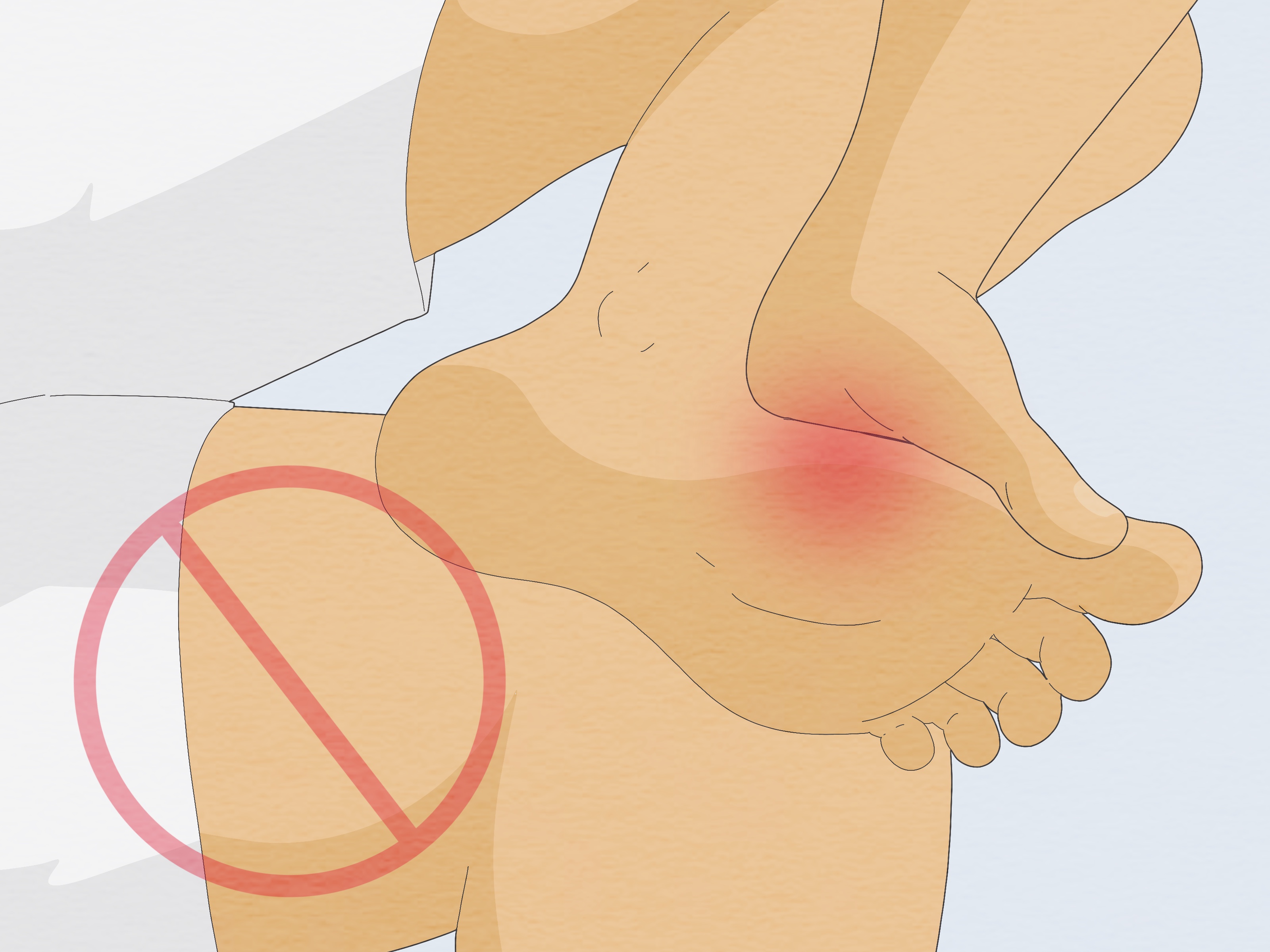
When a foot is swollen, hot, or clearly inflamed, choose ice instead of heat and go easy on massage. Harvard Health advises not to massage a foot that is inflamed or that you think might be injured. Johns Hopkins Medicine explains that cold therapy reduces pain and swelling, which is exactly what you want when the area feels angry.
For relaxation and stress relief
Sometimes the point is not just foot relief; it is nervous-system relief. Cleveland Clinic says massage may help improve mood, stress, energy level, and sleep. Johns Hopkins Medicine also notes that massage can create a sense of calm and reduce stress. That is why a foot massage at the end of the day can feel less like a chore and more like a tiny off-switch for your brain.
Common Mistakes to Avoid
The biggest mistake is pressing too hard too soon. A foot massage should feel like relief, not a punishment from an ancient discipline of wellness monks. Another mistake is skipping the inspection step and massaging over a blister, sore, hot spot, or obvious irritation. Harvard Health explicitly warns not to massage an inflamed or possibly injured foot.
It is also easy to overdo it with tools. A tennis ball, roller, or water bottle should help you modulate pressure, not turn the session into a medieval foot interrogation. If a tool causes sharp pain, stop. Simple, slower pressure usually works better than aggressive force. Cleveland Clinic and Harvard both frame these tools as gentle home options, not pain contests.
When You Should Skip the Massage and Call a Professional
If you have diabetes, foot numbness, poor circulation, or nerve damage, be especially careful. The National Institute of Diabetes and Digestive and Kidney Diseases warns that diabetes can cause nerve damage and poor blood flow, which can make it hard to notice cuts, sores, or other problems and can slow healing. NIDDK recommends daily foot care and regular foot checks for people with diabetes.
That does not mean massage is forbidden forever, but it does mean your feet deserve a more cautious approach. If you have unexplained pain, significant swelling, warmth, redness, or a foot problem that is getting worse instead of better, get it checked by a healthcare professional. A foot massage should support healing, not become a replacement for diagnosis.
How to Make It a Daily Habit
The easiest way to keep doing self-massage is to attach it to something you already do. Put it after your shower, before bed, or while watching one episode of something you have already seen twice. AARP notes that self-massage can be a practical at-home way to ease soreness and stiffness, and it works best when it becomes a repeatable habit instead of a random act of self-care.
You do not need a 45-minute ritual. Even five to ten minutes can be enough if you are consistent. A short massage at night can be especially helpful if your feet feel better once the day’s standing, walking, or gym time is over. If you like structure, use the same order each time: warm up, arch, heel, toes, stretch, and finish with the other foot. Repetition makes it easier, and easier makes it more likely you will actually do it tomorrow.
Real-World Experience: What People Notice After a Few Sessions
Many people expect a foot massage to feel nice in a vague spa-like way and are surprised by how practical it feels instead. The first noticeable change is often immediate: the feet feel warmer, looser, and less clenched. That sensation can be small but satisfying, like taking off a ring that has been stuck on your finger all day. When you press into the arch or heel, you may discover exact places where stress has been quietly camping out for weeks. Those tight spots are not always dramatic, but they are often very specific. One corner near the heel may feel like a pebble under the skin. Another patch across the ball of the foot may feel oddly tender, even though you did not notice it while walking around. That is one reason self-massage is useful: it tells you where your body has been coping instead of complaining out loud.
After a few sessions, the experience usually changes from “this is a nice treat” to “oh, this is part of why I feel better.” People often notice that the feet respond faster once they learn the routine. The first minute is the awkward minute, when your hands are figuring out where to go and the foot is deciding whether to cooperate. By the second or third session, the rhythm starts to settle in. The pressure feels more natural. The toes relax sooner. The arch seems less stubborn. In practical terms, that means the massage stops feeling like a one-time indulgence and starts feeling like maintenance, the same way stretching, brushing your teeth, or drinking water all quietly keep life running.
Another common experience is that foot massage has a strange way of improving the rest of the evening. Your feet are far away from your face, but the calming effect is not. Once the rubbing, rolling, and toe stretching begin, the whole body seems to get the memo. Breathing slows down. Shoulders drop. The day becomes less loud. That is probably why so many people end up doing foot massage before bed. It does not just aim at the feet; it helps create a softer landing for the mind. This is also why a light massage can feel more useful than an aggressive one. When you push too hard, the nervous system stays alert. When you use slow, steady pressure, the body tends to settle.
There is also a practical side that people appreciate after they have done it for a while: you start noticing foot problems earlier. A rough patch that seemed harmless suddenly looks more like a callus. A red spot near a toe tells you your shoes may be rubbing. A heel that feels different from yesterday is no longer just “a little sore”; it is data. Harvard Health points out that massage gives you a chance to examine your feet, and in real life that can matter more than the massage itself. The feet are easy to ignore because they are always downstairs, literally and figuratively. Self-massage forces a check-in. That check-in can save you from a bigger problem later.
Some people also find that foot massage becomes a tiny ritual of control on chaotic days. The world may be full of deadlines, notifications, and inconvenient parking, but for five minutes you can do one thing well. You can press slowly into the arch. You can circle the ankle. You can stretch each toe and actually finish what you started. That matters more than it sounds like it should. The act of caring for your feet can feel grounding because it is physical, simple, and visible. You do the work and immediately feel the result. Not every form of self-care is that honest.
Over time, the experience gets even better when you learn your own preferences. Some feet love lotion. Some prefer oil. Some like a firm thumb press; others only want a featherlight touch. Some days the heel wants more attention. Other days the ball of the foot complains first. The best self-massage routine is the one that listens. That is the real secret: your feet are not trying to be dramatic. They are trying to communicate. Once you stop treating them like an afterthought, they usually calm down and return the favor.
Conclusion
A good self-foot massage is simple, cheap, and worth doing. Use light pressure first, work from toes to heel, stretch gently, and bring in a roller or frozen bottle when that fits the problem better. Keep the focus on relief, not brute force. And if the foot is hot, swollen, injured, numb, or tied to a medical condition such as diabetes, slow down and get proper medical guidance. Done correctly, a foot massage can be one of the easiest ways to give your body a small but very welcome reset.