Finding the area of a parallelogram sounds like one of those math tasks that might require a tiny wizard, three pencils, and a dramatic sigh. Good news: it does not. Once you understand the formula, the whole process becomes surprisingly friendly. In fact, the area of a parallelogram is found with one of the simplest formulas in geometry:
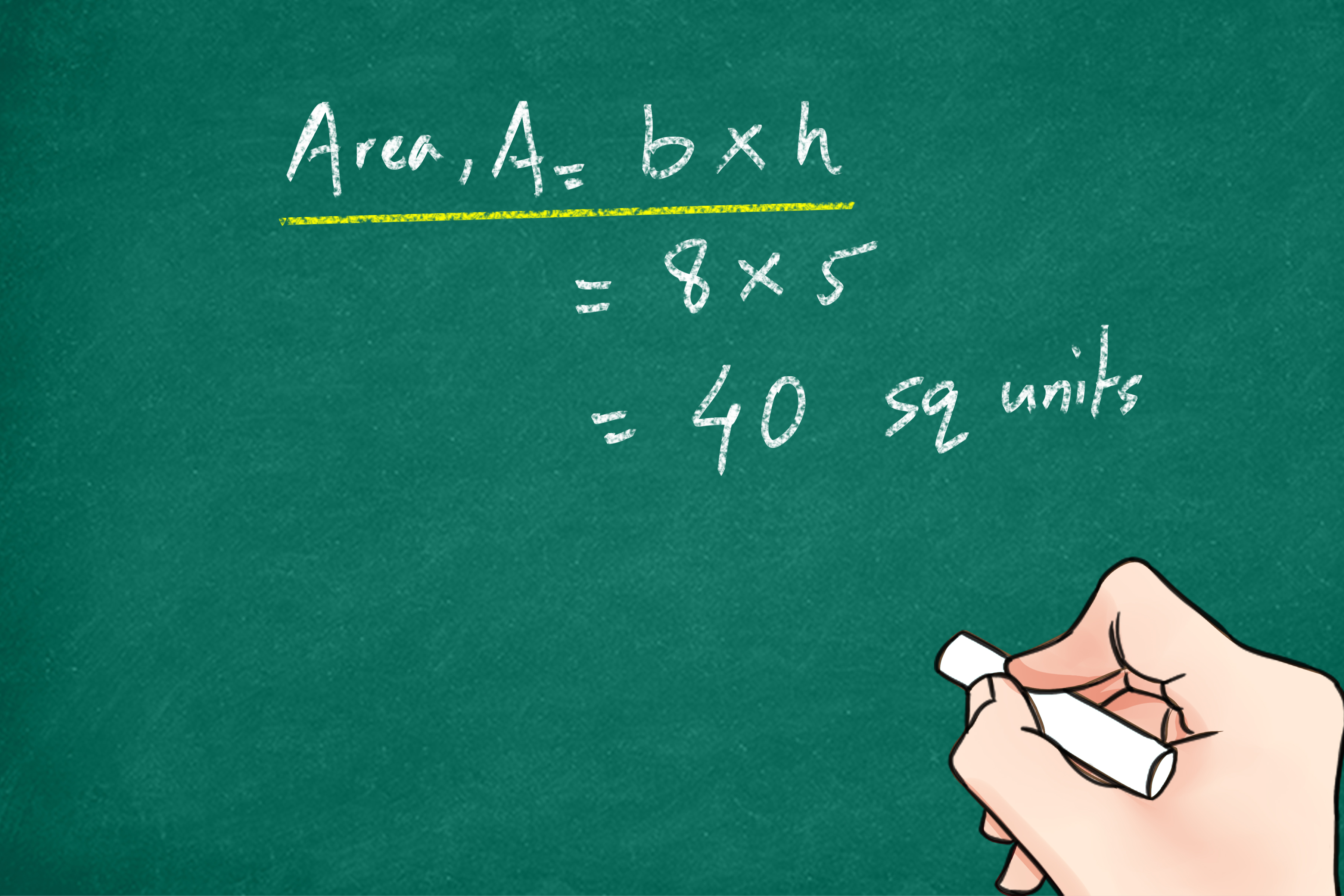
Area = base × height
That is it. No secret handshake. No complicated geometry spell. Just multiply the base by the perpendicular height, and you have the area. The key, however, is knowing what “base” and “height” really mean, because this is where many students, parents, and late-night homework heroes get tripped up.
In this guide, you will learn how to find the area of a parallelogram with a formula, why the formula works, how to use it in different situations, and how to avoid common mistakes. We will also walk through examples with whole numbers, decimals, missing measurements, and real-world situations. By the end, parallelograms should feel less like slanted rectangles with attitude and more like useful shapes you can measure with confidence.
What Is a Parallelogram?
A parallelogram is a four-sided shape, or quadrilateral, with two pairs of opposite sides that are parallel. That means the top and bottom sides run in the same direction and never meet, while the left and right sides also run in the same direction and never meet.
Common examples of parallelograms include rectangles, squares, rhombuses, and the classic slanted parallelogram you often see in math textbooks. A rectangle is actually a special type of parallelogram because its opposite sides are parallel. The difference is that a rectangle has four right angles, while a typical parallelogram may lean to one side like it is trying to dodge a pop quiz.
The important thing to remember is that a parallelogram covers a flat surface. Area measures how much space is inside that shape. When you calculate the area, your answer is always written in square units, such as square inches, square feet, square meters, or square centimeters.
The Formula for the Area of a Parallelogram
The standard formula for finding the area of a parallelogram is:
A = b × h
In this formula:
- A means area.
- b means base.
- h means height.
The base is the side you choose to measure along the bottom, top, or even another side of the parallelogram. The height is the perpendicular distance from the base to the opposite side. “Perpendicular” means the height must meet the base at a 90-degree angle.
This detail matters a lot. The height is not always the slanted side. In many parallelograms, the slanted side is longer than the true height. If you accidentally multiply the base by the slanted side, your answer may look impressive, but it will be wrong. Math is polite, but it is not that forgiving.
Why Does the Parallelogram Area Formula Work?
The formula works because a parallelogram can be rearranged into a rectangle without changing its area. Imagine cutting a triangle from one side of the parallelogram and sliding it to the other side. The shape becomes a rectangle with the same base and the same height.
Since the area of a rectangle is length × width, and the rearranged parallelogram has a base and height that match the rectangle’s dimensions, the parallelogram area formula becomes base × height.
This is why the formula feels familiar. A parallelogram is basically a rectangle that leaned over and got comfortable. Its area is still based on how wide it is and how tall it is, not how slanted it looks.
Step-by-Step: How to Find the Area of a Parallelogram
Step 1: Identify the Base
Start by finding the base of the parallelogram. The base is usually shown as the bottom side, but it does not have to be. Any side can be used as the base as long as you use the matching perpendicular height.
For example, if the bottom side is labeled 12 inches, you can use 12 inches as the base.
Step 2: Identify the Height
Next, find the height. The height is the straight-line distance from the base to the opposite side, measured at a right angle. It may be drawn inside the parallelogram, outside the parallelogram, or shown as a dotted line.
Be careful: the slanted side is not the height unless it forms a 90-degree angle with the base. In most standard parallelogram problems, the slanted side is just there to test your patience.
Step 3: Multiply Base by Height
Once you know the base and height, plug them into the formula:
A = b × h
If the base is 12 inches and the height is 5 inches, then:
A = 12 × 5 = 60 square inches
Step 4: Write the Answer in Square Units
Area is always measured in square units. If the measurements are in inches, the answer is square inches. If the measurements are in meters, the answer is square meters. Forgetting square units is a common mistake, and yes, teachers notice.
Example 1: Finding Area with Whole Numbers
Suppose a parallelogram has a base of 10 centimeters and a height of 7 centimeters.
Use the formula:
A = b × h
Substitute the numbers:
A = 10 × 7
A = 70
The area is 70 square centimeters.
This is the most straightforward type of problem. You are given the base, you are given the height, and all you need to do is multiply. It is geometry’s way of handing you a snack.
Example 2: Finding Area with Decimal Measurements
Now let’s say a parallelogram has a base of 8.5 feet and a height of 4 feet.
A = b × h
A = 8.5 × 4
A = 34
The area is 34 square feet.
Decimals do not change the formula. You still multiply the base by the height. The only difference is that you may need to be a little more careful with the arithmetic.
Example 3: Finding the Height When Area Is Given
Sometimes a problem gives you the area and base, then asks you to find the height. In that case, you can rearrange the formula.
Original formula:
A = b × h
To find height, divide the area by the base:
h = A ÷ b
Suppose the area of a parallelogram is 96 square inches, and the base is 12 inches.
h = 96 ÷ 12
h = 8
The height is 8 inches.
This method is especially useful when solving word problems, construction problems, or test questions that try to hide the missing measurement like it owes them money.
Example 4: Finding the Base When Area Is Given
You can also rearrange the formula to find the base. If you know the area and height, divide the area by the height.
b = A ÷ h
Suppose a parallelogram has an area of 45 square meters and a height of 5 meters.
b = 45 ÷ 5
b = 9
The base is 9 meters.
This version of the formula is helpful when you are planning a layout, checking dimensions, or solving a geometry worksheet that looks innocent but clearly has plans.
Base and Height Must Match
One of the most important rules is that the base and height must correspond to each other. If you choose one side as the base, you must use the height that is perpendicular to that side.
A parallelogram may have more than one possible base-height pair. For example, one side might be 6 inches with a corresponding height of 4 inches. Another side might be 5 inches with a corresponding height of 4.8 inches. Both pairs can produce the same area if they are matched correctly:
6 × 4 = 24 square inches
5 × 4.8 = 24 square inches
The area stays the same because you are measuring the same shape. What changes is the base-height pair you choose.
Common Mistakes When Finding the Area of a Parallelogram
Mistake 1: Using the Slanted Side as the Height
This is the superstar of parallelogram mistakes. Many students see a slanted side and use it as the height. But height must be perpendicular to the base. If the side is leaning, it is usually not the height.
Mistake 2: Adding Instead of Multiplying
Area is found by multiplying base and height. If you add the sides, you are moving toward perimeter, not area. Perimeter measures distance around the shape. Area measures space inside the shape.
Mistake 3: Forgetting Square Units
If the base and height are measured in feet, the area is square feet. If they are measured in centimeters, the area is square centimeters. A number without units is like a sandwich without filling: technically present, but not very satisfying.
Mistake 4: Mixing Units
If the base is in inches and the height is in feet, convert one measurement before multiplying. For example, change feet to inches or inches to feet so both measurements use the same unit.
How the Formula Applies in Real Life
The area of a parallelogram is not just a classroom topic. It appears in flooring, landscaping, architecture, art, design, sewing, tiling, and construction. Any time a slanted four-sided shape needs to be measured, the formula can help.
For example, imagine you are installing a decorative tile section shaped like a parallelogram. If the base is 6 feet and the height is 3 feet, the area is:
A = 6 × 3 = 18 square feet
That tells you how much tile you need to cover the space. You might still buy a little extra because tile has a magical ability to crack at the worst possible moment, but the formula gives you the starting point.
Area of a Parallelogram vs. Perimeter
Area and perimeter are related to shapes, but they measure different things. Area measures the space inside the parallelogram. Perimeter measures the total distance around the outside.
For a parallelogram, the perimeter formula is:
P = 2(a + b)
Here, a and b are the lengths of two neighboring sides. This is different from the area formula, which uses base and height:
A = b × h
If you are covering a surface, use area. If you are placing a border, fence, frame, or trim around it, use perimeter. Choosing the wrong one can lead to some very interesting shopping trips.
Practice Problems
Problem 1
A parallelogram has a base of 14 inches and a height of 6 inches. What is the area?
A = 14 × 6 = 84 square inches
Problem 2
A parallelogram has a base of 9 meters and a height of 3.5 meters. What is the area?
A = 9 × 3.5 = 31.5 square meters
Problem 3
A parallelogram has an area of 72 square feet and a base of 12 feet. What is the height?
h = 72 ÷ 12 = 6 feet
Problem 4
A parallelogram has an area of 120 square centimeters and a height of 10 centimeters. What is the base?
b = 120 ÷ 10 = 12 centimeters
Helpful Tips for Remembering the Formula
The easiest way to remember the formula is to connect it to a rectangle. A parallelogram can be rearranged into a rectangle, so it uses the same basic idea: multiply the horizontal measurement by the vertical measurement.
You can also remember this phrase:
“Base times height gives area just right.”
Is it cheesy? Absolutely. Does it work? Also absolutely.
Another helpful trick is to draw the height as a dotted line. When you see the dotted line meeting the base at a right angle, it becomes much easier to choose the correct number. Visual clues are powerful, especially when a diagram includes extra measurements designed to distract you.
Real Experience: Learning the Parallelogram Formula the Practical Way
One of the best ways to understand how to find the area of a parallelogram with a formula is to stop treating it like a memorization chore and start treating it like a measuring tool. In real learning situations, the formula becomes much clearer when you connect it to something you can see, touch, cut, fold, or build.
For example, many students first understand the formula when they cut a paper parallelogram. If you draw a slanted parallelogram on graph paper, cut off the triangle from one side, and move it to the other side, the shape becomes a rectangle. Suddenly, A = b × h is not just a rule written in a textbook. It becomes a “wait, that actually makes sense” moment. And in math, those moments deserve a tiny celebration.
Another useful experience comes from working with floor plans or craft projects. Suppose you are designing a simple pattern for a bulletin board, quilt, poster, or garden bed. If one section is shaped like a parallelogram, you need to know how much material will cover it. Measuring the slanted side may feel natural at first, but it does not tell you the true height. Once you measure the straight vertical distance between the base and the opposite side, the formula becomes practical.
Teachers often notice that students improve quickly when they label diagrams carefully. Writing “base” under the selected side and drawing a right-angle mark beside the height can prevent most mistakes. It sounds simple, but it works. Geometry is much less scary when every number has a job title.
Parents helping with homework can use everyday objects, too. A leaning stack of sticky notes, a tilted picture frame, or a parallelogram drawn on a napkin can turn the formula into a quick conversation. Ask: “What is the base?” Then ask: “What is the straight-up-and-down height?” Once those two measurements are clear, multiplying them feels natural.
In test situations, the biggest practical tip is to slow down before multiplying. Many parallelogram problems include a slanted side length that is not needed for area. It may be useful for perimeter, but not for area. The correct height must form a right angle with the base. That one check can save an entire problem.
In real life, this formula also shows up when estimating paint coverage, tile layouts, fabric pieces, roof sections, and landscaping designs. A parallelogram may not always announce itself loudly, but its shape appears in patterns, structures, and designs more often than people realize. Learning the formula gives you a simple way to measure those spaces accurately.
The experience-based lesson is this: do not just memorize A = b × h. Understand what the base and height represent. Once you see that a parallelogram can act like a rearranged rectangle, the formula becomes easy to remember and even easier to use. Geometry may still have its dramatic moments, but this formula is one of the friendly ones.
Conclusion
Finding the area of a parallelogram with a formula is simple when you know what to look for. The formula is A = b × h, which means area equals base times height. The base is the side you choose, and the height is the perpendicular distance from that base to the opposite side.
The most important rule is to use the true height, not the slanted side. Once you avoid that common mistake, solving parallelogram area problems becomes much easier. Whether you are working on homework, preparing for a test, measuring a craft project, or estimating materials for a real-world design, this formula gives you a reliable way to calculate space inside a slanted four-sided shape.
So the next time a parallelogram leans into your math assignment looking suspicious, do not panic. Find the base, find the perpendicular height, multiply, add square units, and move on with the quiet confidence of someone who just defeated geometry before lunch.