Note: This guide is for lawful, privacy-conscious family searches. If someone may be in immediate danger, contact local law enforcement or emergency services first. For a missing child in the United States, report the situation to law enforcement immediately and contact the National Center for Missing & Exploited Children.
Finding a lost relative online can feel like opening a closet that has not been cleaned since 1997: there may be treasure inside, but first you have to work through a few mystery boxes. Maybe you are searching for a sibling you lost touch with after a family move, a biological parent you have never met, an aunt who disappeared from the holiday card list, or a cousin whose last known address was written on the back of a restaurant receipt.
The internet has made family searches more possible than ever, but it has also made bad information easier to find. A person with the same name may live three states away, have the same birthday month, and own suspiciously similar patio furniture. That does not make them your uncle.
The best approach is patient, organized, and respectful. Instead of chasing every social media profile that shares a last name, build a fact-based search plan. Use trusted public records, genealogy databases, social platforms, DNA tools, and official missing-person resources when appropriate. Most importantly, remember that locating someone and contacting them are two different things. A relative may welcome reconnecting, need time, or prefer privacy.
First, Decide What Kind of Family Search You Are Conducting
Before you start typing names into search engines like a detective in sweatpants, define your goal. Different situations require different tools.
Searching for a long-lost relative
This category includes relatives you once knew, relatives mentioned in family stories, or family members separated by divorce, migration, adoption, military service, estrangement, or an old-fashioned family disagreement that began over potato salad and somehow lasted 30 years.
In these cases, your goal is usually to confirm identity, locate a respectful way to reach out, and avoid making assumptions about why contact ended.
Searching for biological family members
People searching for a birth parent, sibling, or extended biological family often need a combination of adoption records, genealogy research, DNA matching, and emotional preparation. Results can be meaningful, surprising, and sometimes complicated. A family tree may reveal a biological connection, but it does not automatically reveal every person’s readiness for a relationship.
Searching for someone who may be missing or endangered
This is not a casual internet-search project. If a child, vulnerable adult, older adult with dementia, person with a disability, or anyone at risk has disappeared, contact law enforcement immediately. In the United States, official missing-person systems and nonprofit organizations can help families work with investigators, share accurate information, and access support.
Online research can support an official search, but it should never replace reporting a serious disappearance. Social media can spread information quickly, yet it can also spread rumors at Olympic speed. Stick to verified facts and coordinate with law enforcement whenever possible.
Build a Search Profile Before You Search
The internet rewards specificity. Searching for “John Smith uncle Chicago” is like asking a grocery store employee where the food is. You may get somewhere, but it will take a while.
Create a simple search profile with every detail you know. Even small facts can become useful later.
- Full legal name, including middle name
- Maiden names, previous married names, nicknames, and alternate spellings
- Date and place of birth, even if only approximate
- Last known city, state, school, employer, or military branch
- Names of parents, siblings, spouses, former spouses, and children
- Graduation year, profession, religious community, club, or organization
- Old phone numbers, email addresses, usernames, or mailing addresses
- Photos with dates, handwritten notes, and family documents
Keep these details in a spreadsheet or research notebook. Record where each detail came from. For example, write “birth year from Aunt Linda, possibly inaccurate” instead of treating every family memory like it was carved into a marble courthouse wall.
Start With Search Engines, but Search Smarter
A standard web search can reveal obituaries, school newsletters, business biographies, local newspaper mentions, alumni pages, professional profiles, and community organization records. The key is to search in combinations rather than relying on one broad query.
Use quotation marks and location clues
Search the person’s full name in quotation marks, then add a location, school, employer, or relative’s name. For example:
- “Maria Elena Torres” “Phoenix”
- “David R. Johnson” “Ohio State University”
- “Karen Mitchell” “formerly Karen Lopez”
- “Robert Allen Carter” obituary
Try name variations. A person listed as “William” in a census record may use “Bill” professionally, “Will” on social media, and “Bubba” in the family group chat. Search engines are clever, but they are not psychic.
Search relatives around the person
When someone’s name is common, search the people connected to them. A parent’s obituary may list surviving children. A sibling’s wedding announcement may include a hometown. A cousin’s public professional profile may mention a family business. Think of family research as building a web, not following one straight line.
It is often easier to locate a person through a confirmed sibling, spouse, or parent than through the person directly. Just avoid contacting random relatives with a dramatic message such as, “Hello, are you related to me?” That may sound less like a heartfelt reunion and more like the opening scene of a scam documentary.
Use Social Media With Care and Common Sense
Social media platforms can help you find lost relatives, especially when a person has changed addresses but kept a recognizable name, school connection, hobby, or friend network. Facebook, Instagram, LinkedIn, X, TikTok, and neighborhood-based platforms can all provide clues.
Look for public signals that support identity rather than depending on one photo. Check hometowns, schools, mutual connections, public posts, career details, and family names. A profile photo alone is not proof. People change hairstyles, gain glasses, lose glasses, discover baseball caps, and occasionally become unrecognizable through the mysterious power of profile-picture filters.
How to send a respectful first message
Once you believe you have found the right person, keep your first message short, calm, and easy to ignore. Do not demand an immediate reply or overwhelm them with a 14-page family history.
A simple message might say:
Hello, my name is Jordan. I believe we may be related through the Martinez family in San Antonio. I am researching our family history and wanted to reach out respectfully. There is absolutely no pressure to respond, but I would be glad to share what I know if you are open to connecting.
This gives the other person room to process the information. Written contact is often gentler than an unexpected phone call, especially in adoption, estrangement, or DNA-discovery situations.
Explore Genealogy Websites and Historical Records
Genealogy sites are especially useful when you are searching for relatives connected to older generations, immigration, military service, marriage, or family moves. They can help you trace the paper trail that leads toward living relatives.
Start with records, not guesses
Reliable family-history research usually begins with documents. Census records, birth certificates, death certificates, marriage records, obituaries, immigration records, naturalization documents, military records, yearbooks, and city directories can all reveal relationships and locations.
The National Archives, Library of Congress collections, state archives, county clerk offices, and state vital-records agencies are valuable places to explore. Many historical records have been digitized, while others may require a formal request or an in-person visit.
A useful strategy is to begin with the newest confirmed record and work backward. If you know that your grandmother lived in Detroit in the 1950s, search later records first, then trace earlier addresses, marriages, and family members. Working backward can feel less glamorous than starting with a mysterious handwritten photograph from 1912, but it usually produces fewer wrong turns.
Use family tree platforms carefully
Family tree websites can connect you with historical documents, shared trees, photographs, and other researchers. They are useful for gathering leads, but treat user-created family trees as clues rather than courtroom evidence.
Anyone can accidentally attach the wrong spouse, duplicate a person, or connect two families simply because both had a man named Thomas living in Pennsylvania. Verify important details with original records whenever possible.
Consider DNA Testing for Biological Family Searches
DNA testing can be a powerful tool for people searching for biological relatives, unknown parents, siblings, or extended family. Consumer DNA databases may identify genetic matches across multiple family lines and help researchers build a genetic family tree.
However, DNA testing deserves serious thought before you begin. A test can reveal unexpected parentage, previously unknown siblings, donor conception, adoption information, or relatives who did not know they were connected to you. The emotional impact can be large, even when the news is positive.
Before uploading or sharing DNA information
- Read the company’s privacy policy and matching settings.
- Decide whether you want to appear in relative-matching results.
- Use a strong, unique password and enable available account security features.
- Think about how you will handle unexpected results.
- Consider talking with a therapist, adoption-competent counselor, or trusted support group.
DNA can identify a biological connection, but it cannot predict whether someone wants contact. Approach potential matches with patience, empathy, and a willingness to hear “not now.”
Check Public Records and People-Finder Databases Carefully
People-search websites may offer names, possible addresses, phone numbers, and relatives. These services can sometimes provide useful leads, but they are not always accurate. Records may be old, merged with another person’s information, or attached to someone with a similar name.
Use people-finder results as starting points, not final proof. Confirm information through multiple independent sources, such as a public professional profile, voter registration information where lawfully available, an obituary, a public business listing, or a verified family connection.
Respect privacy. Do not publish someone’s home address, workplace, phone number, or private family details online. Do not use deceptive accounts, harassment, impersonation, or pressure tactics. A family reunion should not require you to become the villain in a true-crime podcast.
Search Obituaries, Memorial Pages, and Local News Archives
Obituaries can be surprisingly helpful in family searches. They often list surviving relatives, married names, hometowns, service details, schools, and communities. A relative you cannot find directly may appear as a “beloved daughter,” “brother,” “grandchild,” or “surviving spouse” in someone else’s memorial notice.
Local newspapers, funeral home websites, library archives, and cemetery databases may also provide useful information. Search for both the person and close relatives. A single obituary can connect several generations of a family tree in one paragraph.
Be sensitive when using memorial information. A death notice may provide a clue, but it also represents a family’s loss. Do not treat grief pages as a scavenger hunt.
Use Official Resources for Truly Missing Relatives
When a relative is genuinely missing, endangered, or unaccounted for, official reporting should come before amateur online detective work. Law enforcement can enter reports into national systems, coordinate across jurisdictions, and access resources that private individuals cannot.
For a missing child
Contact local law enforcement immediately. In the United States, the National Center for Missing & Exploited Children provides support, resources, and a 24-hour hotline for missing-child cases. Families may also be guided through working with law enforcement, search teams, and media requests.
For a missing adult
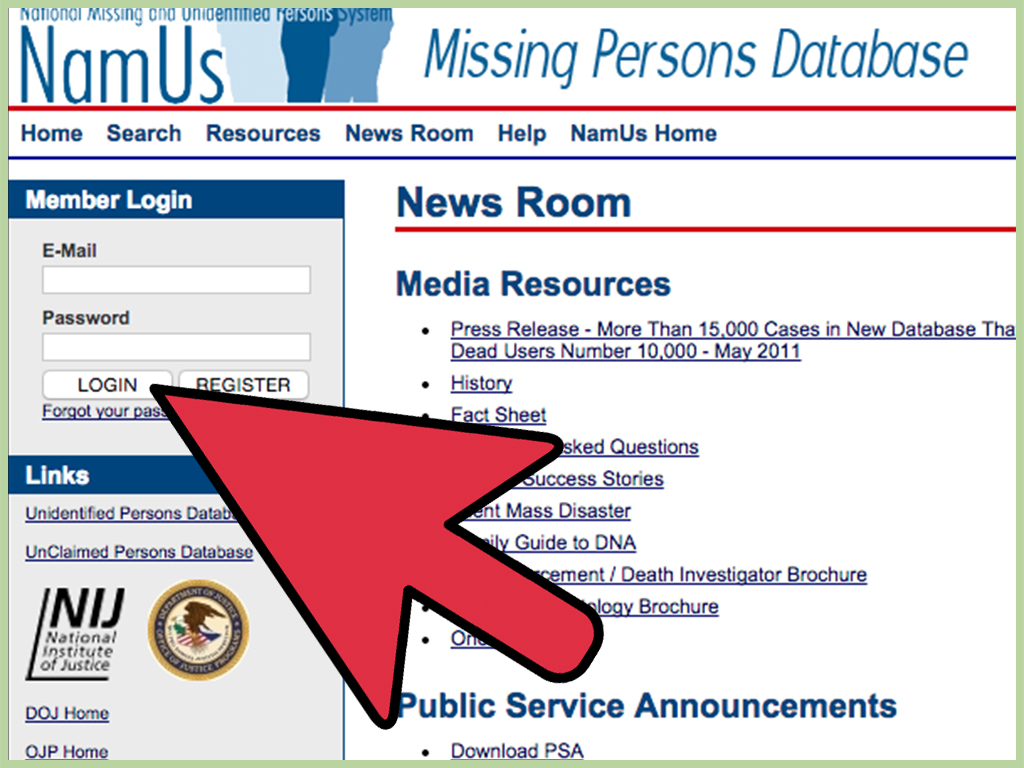
Report the disappearance to local law enforcement, especially when there are signs of danger, medical vulnerability, suspicious circumstances, or an unexplained break from normal communication. The National Missing and Unidentified Persons System, commonly known as NamUs, is a national resource for missing, unidentified, and unclaimed persons cases in the United States.
For international or parental-abduction concerns
Cases involving international travel, custody disputes, or suspected parental abduction require specialized legal and government assistance. Contact law enforcement and appropriate government agencies promptly. Do not try to arrange a private recovery or confrontation based on social media clues.
Organize Your Evidence Like a Researcher
Family searches become confusing fast. One old address leads to a former spouse, who leads to a cousin, who leads to a Facebook profile last updated during the ice bucket challenge. Organization keeps you from circling the same digital block forever.
Create a timeline with dates, locations, records, and possible connections. Label each item as confirmed, likely, unverified, or disproven. Save screenshots only when legally appropriate, record the date you found information, and note why you believe it relates to your relative.
For example:
- Confirmed: Elena Ruiz, born 1968 in El Paso, daughter of Manuel Ruiz and Rosa Garza.
- Likely: LinkedIn profile for Elena R. Hart in Denver lists an El Paso high school.
- Unverified: Facebook account shows mutual friends with a confirmed cousin.
- Disproven: Public record for Elena Ruiz in Miami has a different birth year and unrelated parents.
This method may sound formal, but it prevents the classic family-search mistake: becoming emotionally attached to the first person who seems close enough.
Prepare for Different Outcomes
Finding a relative online does not guarantee a reunion. Some people may be thrilled. Others may be cautious, confused, overwhelmed, or unwilling to reconnect. They may have complicated family histories, safety concerns, painful memories, or simply a different idea of what family means.
Give the person control over the pace of contact. Offer information, but do not demand it. Ask whether they would prefer email, phone, video chat, a letter, or no contact at all. A respectful approach protects both people from turning a hopeful search into a painful collision.
If the search involves adoption, estrangement, trauma, or unexpected DNA discoveries, professional support can be helpful. A counselor or support group can give you space to process before and after contact.
Common Mistakes to Avoid When Finding Lost Relatives Online
- Assuming the first matching name is the correct person.
- Posting private details publicly to pressure someone into responding.
- Sharing a person’s address, phone number, employer, or children’s information.
- Trusting one user-created family tree without checking records.
- Sending emotional, demanding, or accusatory first messages.
- Ignoring the possibility that a person may not want contact.
- Trying to handle an urgent missing-person case without law enforcement.
- Paying for expensive “locator” services before exhausting free and official resources.
Real-World Experiences: What People Learn While Searching for Lost or Missing Relatives Online
People who search for lost relatives online often begin with one small clue: a faded photograph, a middle name, an old birthday card, or a story told once at a family gathering and then never mentioned again. The search may start quietly, late at night, with a name typed into a search bar and a cup of coffee that has gone cold three paragraphs ago.
One common experience is discovering that family stories are both valuable and imperfect. A relative may remember that someone “moved to California,” but records show three different moves: first to Nevada, then Oregon, then California. Another person may remember a maiden name incorrectly, while a cousin’s obituary reveals the correct spelling. These moments can be frustrating, but they are normal. Family history is usually a patchwork quilt, not a clean spreadsheet.
Many searchers also learn the importance of slowing down. It is tempting to send a message immediately after finding a possible profile. But waiting long enough to verify the person’s identity can prevent embarrassment and protect everyone involved. A thoughtful message sent one week later is usually better than an emotional message sent 30 seconds after seeing a familiar face in a profile photo.
People looking for biological relatives often describe a mix of excitement and fear. DNA matches can provide answers that have been missing for decades, but those answers may raise new questions. Someone may discover a half-sibling, identify a birth parent, or learn that a long-held family belief was not accurate. The most successful reunions often begin with gentle communication, clear boundaries, and realistic expectations.
A common lesson is that a reunion does not have to happen all at once. Some relatives exchange emails for months before speaking by phone. Others begin by sharing family photos or medical history. A few may decide that limited contact feels best. These are all valid outcomes. Reconnection is not a competition, and there is no prize for reaching the emotional finish line fastest.
Families searching for someone who is truly missing often describe a different experience: urgency mixed with exhaustion. In these situations, organization becomes essential. Keeping a timeline, saving official case information, documenting communications, and working through law enforcement can help families maintain clarity during an emotionally overwhelming period. Support from trusted friends, advocates, and survivor communities can also make an enormous difference.
Another lesson is that online communities can be helpful but should be used carefully. A neighborhood group or local community page may help spread a verified missing-person alert, reconnect former classmates, or identify a shared family connection. But public groups can also attract speculation, misinformation, and people who treat a private crisis as entertainment. The safest approach is to share only approved, accurate information and avoid engaging with rumors.
People often find that the search changes them, even before it produces an answer. They become more interested in old family photos, immigration stories, military records, and the choices that shaped previous generations. A person who begins by looking for one lost cousin may eventually preserve family stories for younger relatives who never knew those stories existed.
Sometimes the most meaningful outcome is not a dramatic reunion. It may be confirming a name, locating a grave, understanding why a relative disappeared from family life, or learning that someone lived a full life in another place. Closure can look different from the movie version. It may arrive as a simple fact, a respectful boundary, or a long-awaited answer that helps you make peace with the unknown.
Finding lost or missing relatives online requires persistence, but it also requires humanity. Use the internet as a tool, not a battering ram. Verify facts, protect privacy, respect boundaries, and remember that every name in your search results belongs to a real person with their own story. The goal is not merely to find someone. It is to approach them in a way that leaves room for dignity, truth, and whatever kind of connection may be possible.
Conclusion
Learning how to find lost or missing relatives online is part research project, part family-history puzzle, and part lesson in patience. Start by gathering confirmed facts, search with name variations and location clues, use genealogy and public records carefully, and verify every major lead through more than one source. For biological family searches, DNA tools may help uncover connections, but they should be used with strong privacy settings and emotional preparation.
When a loved one may be missing or endangered, skip the amateur detective routine and contact law enforcement immediately. Official resources, missing-person databases, and support organizations are better equipped to coordinate a safe, accurate search. Whether your goal is a reunion, an answer, or peace of mind, a respectful and evidence-based approach gives you the best chance of finding the right path forward.