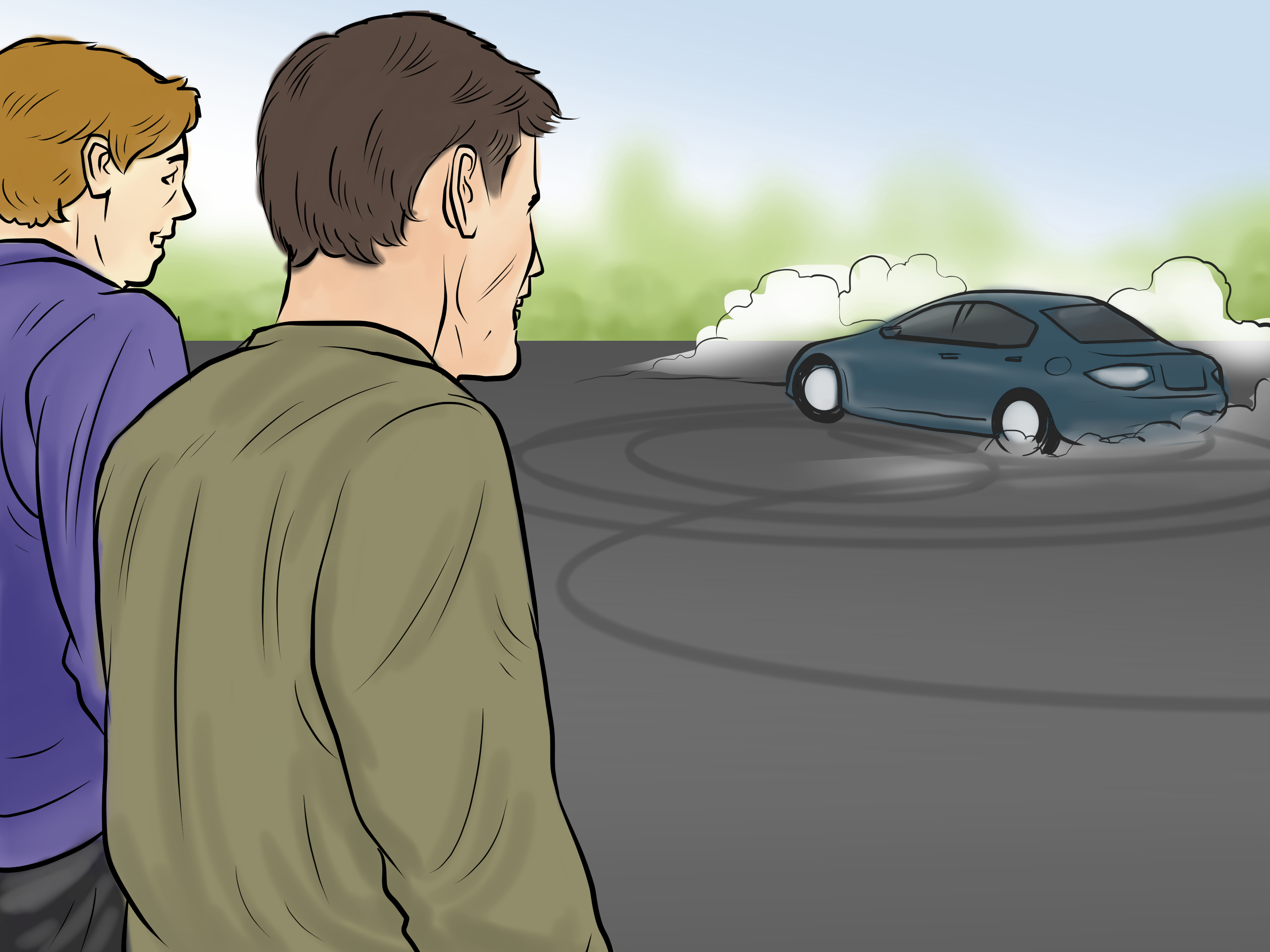
Spinning a car in a tight circle while the driven tires haze the pavement looks simple from the grandstands. From behind the wheel, however, a donut is a controlled loss-of-traction exercise involving steering, throttle balance, vehicle dynamics, and a surprising amount of restraint. The loud pedal may start the show, but smooth inputs keep it from becoming an expensive audition for a tow truck.
This guide explains how to do donuts in 15 structured steps, with one nonnegotiable condition: the maneuver belongs only on a sanctioned skidpad, drift school, or closed motorsports course under qualified supervision. Public roads, intersections, empty-looking parking lots, and informal car meets are not practice areas. They contain curbs, light poles, pedestrians, hidden debris, legal consequences, and cameras that seem to develop excellent night vision at precisely the wrong moment.
What Is a Car Donut?
A donut is a motorsports maneuver in which the vehicle rotates continuously around a relatively small center point. The front wheels guide the circle while the driven wheels spin faster than the car’s actual travel speed, reducing rear traction and creating oversteer. When the maneuver is balanced correctly, the car follows a controlled circular path instead of straightening, spinning unpredictably, or wandering across the practice area.
Donuts are commonly associated with rear-wheel-drive cars because their front tires can steer while the rear tires provide the wheelspin. Some all-wheel-drive vehicles can rotate under power, but their behavior varies significantly by drivetrain design, differential programming, torque distribution, and electronic controls. Front-wheel-drive cars do not perform the same conventional power donut, and improvised parking-brake techniques can damage components or produce abrupt, difficult-to-control rotation.
Before You Start: Understand the Costs and Risks
A donut converts fuel, tire tread, and mechanical sympathy into noise and smoke at an impressive rate. Aggressive wheelspin generates heat in the tires and places extra stress on the engine, transmission, clutch, differential, axles, wheel bearings, cooling system, and power-steering components. A car that feels perfectly healthy during ordinary commuting may reveal weak parts quickly when subjected to sustained high-load rotation.
Tire condition is especially important. Proper inflation, adequate tread, undamaged sidewalls, and secure wheel fasteners are basic requirements. Underinflation can increase heat buildup and make handling less predictable, while excessive pressure can reduce the contact patch. Always use the cold-tire pressure specified by the vehicle manufacturer unless the track operator or instructor gives a documented motorsports recommendation.
How to Do Donuts in 15 Steps
Step 1: Book a Sanctioned Skidpad or Drift School
Begin by locating a professional car-control school, drift clinic, autocross facility, or motorsports venue that explicitly permits skidpad exercises. A legitimate facility provides controlled access, runoff space, technical inspection, emergency procedures, trained staff, and clear operating rules.
Private ownership of a paved area does not automatically make it suitable. You still need the owner’s permission, appropriate insurance, adequate separation from people and property, and confirmation that local laws and noise rules allow the activity. A purpose-built venue removes much of that uncertainty.
Step 2: Learn With an Instructor
Professional coaching is the fastest and safest way to understand throttle oversteer. An instructor can evaluate your seating position, vision, hand placement, steering rate, and reactions before you attempt a complete rotation. More importantly, the instructor can stop the exercise when your confidence begins accelerating faster than your ability.
Many performance-driving schools teach skid recovery before deliberate sliding. That order makes sense: you should know how to end a slide before learning how to maintain one.
Step 3: Choose an Appropriate Vehicle
A mechanically sound rear-wheel-drive car with predictable power delivery is generally the clearest platform for learning conventional donuts. A limited-slip differential can make rear-wheel behavior more consistent, although vehicle setup should be discussed with the instructor rather than modified through guesswork.
Avoid tall SUVs, pickup trucks with a high center of gravity, vehicles with known mechanical problems, heavily modified cars that have not been professionally inspected, and anything the venue prohibits. Rollover risk and unpredictable weight transfer are not exciting learning features.
Step 4: Read the Owner’s Manual
Modern cars may use stability control, traction control, torque management, active differentials, and multiple driving modes. These systems behave differently among manufacturers. Do not assume that a button labeled “Sport,” “Track,” or “Off” does exactly what it did in somebody else’s video.
Follow the owner’s manual and the instructor’s directions. Electronic safety systems should never be disabled on public roads. At a sanctioned venue, the instructor may select a manufacturer-approved performance mode or use a school vehicle already configured for the exercise.
Step 5: Complete a Technical Inspection
Check tire pressure and tread, wheel fasteners, fluid levels, brake operation, steering response, throttle return, suspension condition, battery security, and visible leaks. Inspect the tires for cuts, bulges, exposed cords, embedded objects, and uneven wear. A tire near the end of its life should be replaced, not volunteered for one dramatic final performance.
Remove bottles, tools, floor clutter, phone mounts, and other loose objects from the cabin and trunk. During rotation, a harmless travel mug can become an enthusiastic projectile.
Step 6: Wear the Required Safety Gear
Use a helmet that meets the venue’s current standard, along with the installed seat belt or approved harness. Wear closed-toe shoes that allow precise pedal control. Many facilities also require long pants and may recommend natural-fiber clothing.
Adjust the seat so you can press the pedals fully without locking your knee. With your shoulders against the seatback, your wrists should comfortably reach the top of the steering wheel. Secure mirrors and verify that the doors are fully closed.
Step 7: Study the Practice Area
Walk the skidpad when permitted. Identify cones, pavement changes, drainage covers, painted lines, surface contamination, barriers, runoff areas, entry points, and the designated escape path. Confirm where instructors, marshals, and emergency equipment will be positioned.
The operating area must remain completely clear of spectators. Nobody should stand near the intended circle to record a dramatic close-up. Camera zoom exists for a reason.
Step 8: Warm the Car Normally
Bring the engine, transmission, and fluids toward normal operating temperature through gentle driving rather than stationary revving. Follow the instructor’s warm-up procedure and watch the gauges. Cold fluids and sudden high loads are unfriendly roommates.
Do not try to “warm” the tires with a burnout. A beginner needs predictable equipment, not overheated rubber and a cloud that hides the cones.
Step 9: Practice a Slow, Clean Circle
Before attempting wheelspin, drive a wide circle at low speed. Maintain a steady radius, use smooth steering, and look through the path rather than staring at the pavement directly ahead of the hood.
This exercise establishes the basic route and reveals how much steering input the circle requires. If you cannot follow the circle smoothly with full traction, adding wheelspin will not magically improve the geometry.
Step 10: Establish a Low-Speed Turning Path
Enter the marked exercise area in the gear and at the speed specified by the instructor. Begin turning gradually and allow the car’s weight to settle. Sudden steering creates abrupt weight transfer, which can produce a sharper reaction than expected.
Keep both hands positioned for controlled steering unless your instructor teaches a specific hand movement. Avoid crossing your arms into a knot that would challenge a professional magician.
Step 11: Apply Power Progressively
Once the vehicle is settled into the turn, increase the accelerator smoothly under the instructor’s direction. The objective is to reach the point where the rear tires begin to exceed available traction without shocking the drivetrain or launching the vehicle across the skidpad.
There is no universal throttle percentage, engine speed, or road speed. Surface grip, tire type, temperature, vehicle weight, gearing, differential design, and engine output all change the response. Exact inputs must be learned in person.
Step 12: Look Toward the Intended Circle
Vision directs control. Keep your eyes moving toward the open path you want the car to follow. Do not fixate on a cone, barrier, patch of smoke, or enthusiastic marshal. Drivers tend to steer toward whatever receives their full visual attention.
As the rear rotates outward, continue scanning around the circle. Looking farther ahead gives you more time to recognize whether the radius is tightening, widening, or becoming unstable.
Step 13: Balance Steering and Throttle
Once rotation begins, use measured steering corrections and small throttle changes to manage the circle. Too little power may allow the rear tires to regain grip and straighten the car. Too much may increase wheelspin, widen the path, overheat the tires, or turn the donut into an uncontrolled spin.
A stable donut is not maintained by holding every control rigidly. It requires continuous but subtle adjustments. Smoothness is the real party trick; smoke is merely the noisy supporting actor.
Step 14: Abort at the First Sign of Trouble
End the maneuver immediately if the car moves outside the marked zone, a warning light appears, steering response changes, fluid temperature rises, vibration develops, visibility becomes poor, or an instructor signals you to stop.
Use the recovery procedure taught for that vehicle. In general, avoid panic braking or snapping the steering wheel while the car is heavily rotated. Reduce power progressively, keep looking toward the safe exit path, allow the tires to regain traction, and straighten the car smoothly. The instructor’s vehicle-specific direction always takes priority.
Step 15: Cool Down and Inspect the Vehicle
After a short practice run, complete a gentle cooldown according to facility rules. Park in the designated area and inspect the tires, wheels, brakes, fluid levels, and surrounding pavement for evidence of a leak. Never touch tires, brakes, or drivetrain components immediately after use; they may be extremely hot.
Check for chunked tread, exposed cords, sidewall damage, loosened wheel hardware, unusual odors, fresh noises, or changes in clutch and transmission behavior. Do not continue because the remaining session time has already been paid for. Track fees are cheaper than engines.
Common Donut Mistakes to Avoid
Practicing on Public Roads or Parking Lots
An apparently empty lot can contain security staff, pedestrians, concrete stops, oil patches, storm drains, delivery vehicles, and property owners who did not purchase tickets to your performance. Street donuts may be treated as reckless driving, an exhibition of speed, or another serious traffic offense, depending on local law. A vehicle may also be cited, impounded, or damaged.
Using Excessive Speed
A donut does not require a high entry speed. Additional speed increases the size of the possible mistake and reduces the time available to correct it. Beginners should work at the lowest practical pace established by the instructor.
Holding Full Throttle
More throttle does not automatically produce more control. It produces more heat, tire wear, noise, and mechanical load. The goal is controlled rotation, not testing whether the rev limiter has a sense of humor.
Ignoring Temperature and Tire Condition
Repeated rotations can raise tire and fluid temperatures rapidly. Short attempts with inspection and cooldown periods are more sensible than one long run. Stop before the car feels different, not several laps afterward.
Copying an Online Clip Exactly
Videos rarely reveal tire pressure, differential setup, surface condition, electronic settings, previous practice, failed attempts, or the mechanic waiting outside the frame. Treat videos as entertainment, not as vehicle-specific operating manuals.
Can Every Car Do Donuts?
No. Power output is only one factor. Drivetrain layout, differential type, wheelbase, tire grip, steering geometry, weight distribution, electronic intervention, transmission behavior, and surface condition all matter.
Rear-wheel-drive vehicles are generally best suited to conventional power donuts. All-wheel-drive cars may require specialized instruction because their torque distribution can change during the maneuver. Front-wheel-drive vehicles cannot create the same sustained rear-power oversteer, and attempts to imitate it with abrupt parking-brake inputs can be especially hard on the car.
Electric vehicles introduce additional considerations, including immediate torque, substantial battery weight, sophisticated stability software, and manufacturer restrictions. Their quiet operation does not make the forces involved any smaller. Obtain approval from the venue and instruction from someone familiar with the specific model.
Experiences and Lessons From Learning Donuts on a Skidpad
Beginners commonly arrive at a skidpad expecting the hardest part to be producing wheelspin. Most discover that breaking traction is relatively easy in a suitable car. The challenge is managing what happens one second later. The first attempt often contains too much steering, too much throttle, or both. The car may spin farther than expected, straighten suddenly, or trace a shape resembling a potato rather than a donut.
One of the earliest lessons is that the driver’s eyes matter as much as the driver’s feet. New students frequently stare at the cone marking the center of the circle. The car then tightens toward that cone, and the student wonders why the cone appears to be approaching with hostile intent. Instructors repeatedly remind drivers to look around the circle and toward the open pavement. Once the eyes move ahead, steering corrections often become calmer almost immediately.
Another common experience is discovering how sensitive throttle control becomes after traction breaks. On the street, a small accelerator movement may produce only a modest change in speed. During a slide, that same movement can alter wheelspin and rotation noticeably. Students who treat the accelerator like an on-off switch usually alternate between bogging down and spinning too far. Those who make smaller adjustments begin to feel the car settle into a more consistent radius.
The steering wheel can also surprise first-time participants. A sliding car may naturally unwind some steering as the front wheels align with the direction of travel. Nervous drivers sometimes fight that movement, grip the wheel too tightly, or add several corrections in rapid succession. With coaching, they learn to guide the wheel rather than wrestle it. The experience becomes less like winning an argument and more like maintaining a conversation.
Mechanical awareness develops quickly because the car communicates through heat, smell, sound, and vibration. Hot tires have a distinctive odor. Brakes, clutches, and fluids may also warm faster than expected. A responsible session therefore includes short runs and frequent inspections. Many beginners are surprised by how much tread can disappear during repeated wheelspin. The tire bill has a remarkable ability to transform excitement into financial literacy.
Students also learn that a graceful exit is part of the maneuver. Releasing the accelerator abruptly or making a large steering correction can unsettle the vehicle as grip returns. A controlled finish requires patience: reduce power smoothly, watch the intended path, let the car recover, and straighten without drama. The best final rotation may look less spectacular, but it demonstrates far more skill.
Perhaps the most valuable experience is understanding why this maneuver belongs at a professional facility. A proper skidpad offers room to make beginner mistakes without involving traffic, curbs, parked cars, or bystanders. Instructors can identify poor habits early, and emergency support is available if a mechanical problem occurs. The environment turns an irresponsible street stunt into a structured lesson in traction, weight transfer, vision, and vehicle control.
After a well-managed training session, drivers often leave with greater respect for the limits of their cars. They recognize how quickly traction can disappear and how deliberate the recovery must be. That knowledge can improve everyday driving, particularly when responding to an unexpected skid in rain or other low-grip conditions. The smoke clears, the tires cool, and the most useful souvenir is not a dramatic video. It is a better understanding of what the vehicle is doing beneath you.
Conclusion
Learning how to do donuts is not about finding an empty patch of pavement and pressing the accelerator until physics files a complaint. It is a controlled motorsports exercise that requires a suitable venue, professional instruction, a properly inspected vehicle, safety equipment, smooth inputs, disciplined vision, and a reliable exit plan.
Start with low-speed circles, build your understanding gradually, and treat every unusual noise, warning light, temperature increase, or handling change as a reason to stop. A clean, brief, controlled rotation is more impressive than a long session that ends with damaged tires, an overheated car, or a conversation with law enforcement.