If your dashboard suddenly flashes Reduced Engine Power, your car is not being dramatic. It is going into self-protection mode. In plain English, the computer has decided something looks wrong enough that it would rather make the car slow and grumpy than let you keep driving at full power and risk bigger damage.
That means the honest answer to “how do you bypass reduced engine power?” is this: you really should not. A restart might make the warning disappear for a little while, but that is not a fix. It is more like hitting snooze on a smoke alarm. The smart move is to find the cause, repair it correctly, and get full performance back without gambling with your engine, transmission, or safety.
This guide walks through 11 parts and systems to check when your car drops into reduced power mode. Whether you drive a Chevy, GMC, Cadillac, Ford, Nissan, Toyota, or something else entirely, the logic is similar: the control module sees a bad signal, airflow problem, fuel issue, electrical fault, overheating condition, or emissions problem, then limits power to protect the vehicle.
What Reduced Engine Power Actually Means
Reduced engine power is often part of what drivers call fail-safe mode or limp mode. The car may limit throttle opening, cap RPM, dull acceleration, or hold transmission behavior in a conservative state. Sometimes you will also get a check engine light, traction or stability messages, or a code that points to the throttle actuator, pedal position sensor, airflow sensor, or a related circuit.
The reason this warning feels so annoying is because it usually shows up at the worst possible time: merging onto a highway, climbing a hill, or pulling away from a stoplight while your car suddenly moves like it just remembered leg day. Annoying, yes. Random, not always.
Before You Grab Tools, Do These Three Things
- Pull over safely if the car is struggling badly, overheating, or flashing the check engine light.
- Scan for trouble codes with an OBD-II scanner before replacing anything.
- Do not start replacing parts blindly. Reduced power problems love to fool people into buying the wrong component.
A code scan gives you a starting point. Even a basic scanner can tell you whether you are chasing a throttle problem, a pedal signal issue, a lean condition, a misfire, low fuel pressure, or an emissions-related fault. That matters, because reduced power is a symptom, not a single bad part.
The 11 Parts to Check
1. Throttle Body
The throttle body is the first thing many technicians inspect, and for good reason. A dirty or failing electronic throttle body can stick, move erratically, or report the wrong angle to the engine computer. Carbon buildup around the throttle plate is a repeat offender. When the plate cannot move smoothly, your vehicle may hesitate, idle strangely, or drop into reduced power mode.
What to look for: sticky throttle movement, heavy carbon around the bore, unstable idle, delayed response when pressing the gas, or trouble codes related to throttle actuator performance.
What to do: inspect and clean the throttle body if service information allows it. If the motor or internal sensor is failing, replacement is usually the real fix.
2. Accelerator Pedal Position Sensor
Your right foot makes a request. The accelerator pedal position sensor, often built into the pedal assembly, sends that request to the computer. If the signal is erratic or does not match what the computer expects, the car may limit power instead of guessing what you meant.
Classic clues include reduced power with poor throttle response, no real change when you press the pedal harder, or correlation codes involving the pedal sensors. Intermittent failures can be especially annoying because the car may behave perfectly until it suddenly does not.
3. Throttle Position Sensor
On many vehicles, the throttle body includes one or more throttle position sensors that tell the computer where the throttle plate actually is. If the commanded position and the reported position do not agree, reduced power mode can show up fast.
This is where many drivers meet code families like P2135 or related throttle correlation faults. Translation: the computer thinks the sensors are disagreeing, and that is enough to make it slam the door on full performance.
4. Mass Air Flow Sensor
The mass air flow sensor, or MAF, helps the engine calculate how much fuel to add based on incoming air. If it is dirty, contaminated, or electrically flaky, the engine may run rich, run lean, hesitate, stall, or feel weak. On some vehicles, a bad MAF does not just make the car run poorly. It can help trigger reduced power behavior.
What to watch for: rough idle, poor acceleration, black smoke, stalling, bad fuel economy, or codes pointing to airflow or mixture problems.
What to do: inspect the sensor, intake ducting, and air filter housing. Use the correct sensor cleaner if appropriate. Do not spray random garage chemistry experiments into it.
5. Air Filter and Intake Duct
Sometimes the villain is gloriously unglamorous. A badly clogged air filter, torn intake boot, loose duct clamp, or vacuum leak can throw off airflow calculations and create lean conditions, hesitation, and reduced power complaints.
If the intake hose between the air box and throttle body has a crack, the engine may ingest unmetered air. That means the computer is making decisions with bad math, and engines are not known for forgiving bad math.
Check for splits, collapsed ducting, disconnected hoses, and obvious vacuum leaks around the intake tract.
6. Wiring Harness, Connectors, and Grounds
This is the part people skip because it is less exciting than buying a shiny new sensor. It is also the part that can waste the most money if ignored. A loose connector, corroded terminal, rubbed-through wire, or weak ground can mimic a bad throttle body, bad pedal sensor, or bad control module.
Inspect the wiring going to the throttle body, pedal assembly, MAF sensor, and related grounds. Wiggle-test suspect harnesses with the engine idling if you know how to do so safely. Intermittent wiring faults often show up when the harness moves, heats up, or gets damp.
7. Battery and Charging System
Modern engines hate low voltage. A weak battery, poor battery cable connection, or undercharging alternator can create all kinds of nonsense, including throttle and sensor issues that seem unrelated at first. If the system voltage is unstable, computers and sensors may send noisy or incorrect signals.
Check battery terminals for corrosion, verify charging voltage, and do not assume “the car starts” means the electrical system is healthy. Reduced power can be the result of a voltage problem pretending to be a throttle problem.
8. Fuel Pump and Fuel Filter
If the engine is not getting enough fuel, it will feel lazy, stumble under load, and sometimes trigger protective strategies. A weak fuel pump, low fuel pressure, clogged filter, or restricted pickup can cause poor acceleration, stalling, misfires, and sluggish performance.
This issue often becomes more obvious under load. The car might idle fine in the driveway, then act miserable on hills or when accelerating onto the freeway. That pattern is a giant hint that fuel delivery deserves attention.
Verify fuel pressure against spec before accusing the pump. Guessing here gets expensive quickly.
9. Spark Plugs and Ignition Coils
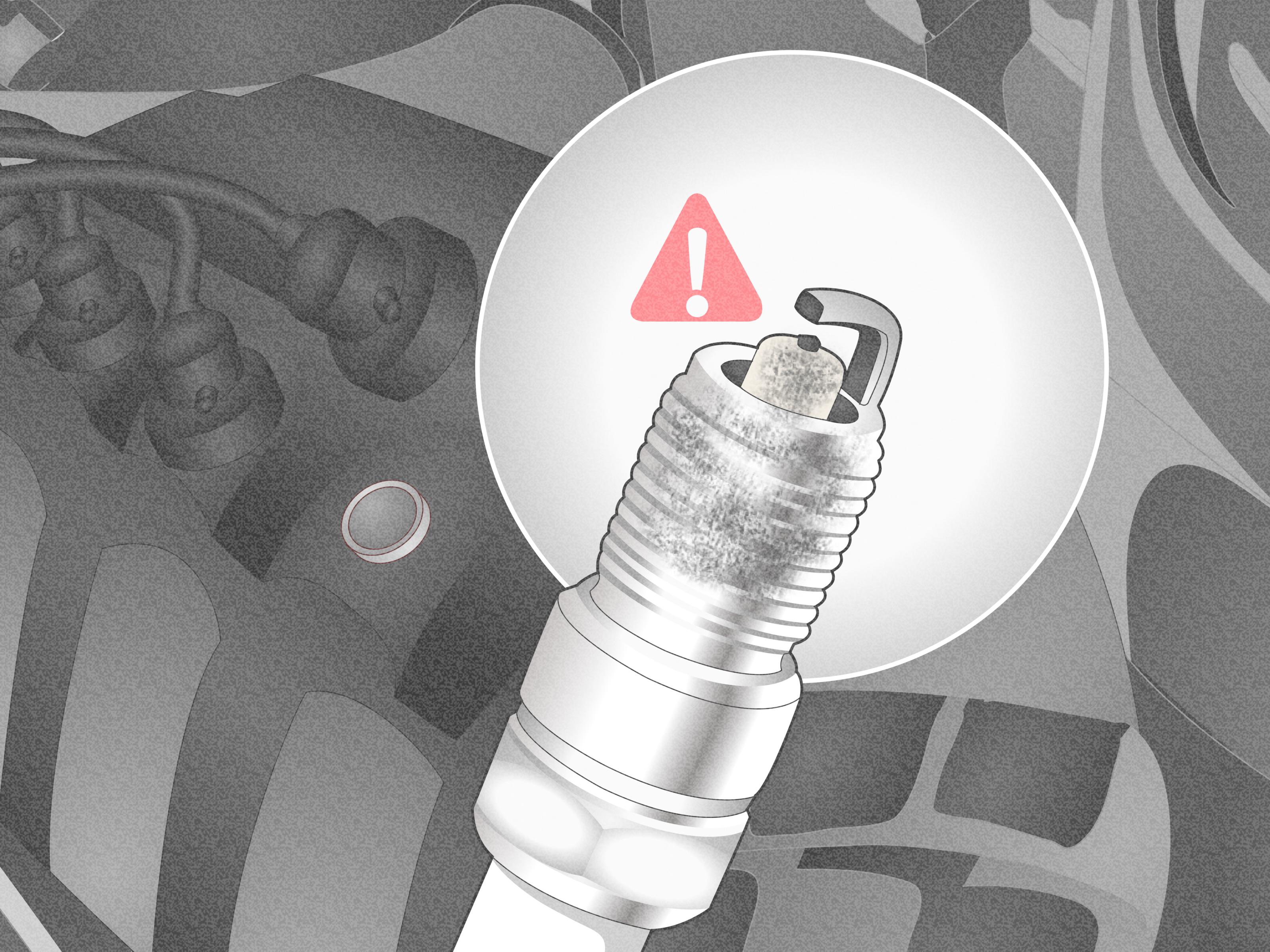
Worn spark plugs and weak ignition coils can create misfires, rough running, low power, and catalyst-damaging unburned fuel. Some cars will enter reduced power mode when misfires get severe enough. Others will simply run poorly until the computer decides enough is enough.
If your engine shakes, jerks, or flashes the check engine light under load, look hard at ignition components. Misfires are not just annoying. They can destroy the catalytic converter if you keep driving like nothing happened.
10. Oxygen Sensors and Catalytic Converter
A failing oxygen sensor can throw off fuel trim calculations, while a clogged catalytic converter can choke the engine and make it feel like it is trying to breathe through a coffee stirrer. Reduced acceleration, sulfur smell, excess heat, rattling, and poor top-end power all deserve attention here.
If power fades badly at higher RPM or under load, exhaust restriction should be on your list. Many drivers replace half the intake system before discovering the real issue is downstream.
11. Cooling System and Engine Temperature Inputs
An overheating engine may trigger reduced power mode on purpose. That is not your car being rude. That is your car trying not to cook itself. Low coolant, cooling fan problems, thermostat trouble, a failing water pump, or bad temperature data can all contribute.
If the temperature gauge is climbing, the coolant is low, or the warning appears after long idle time, towing, or hot-weather driving, check the cooling system before you chase smaller theories.
Do Not Forget the Computer Side of the Problem
Sometimes the hardware is fine, but the vehicle still needs an idle or throttle relearn after throttle body service. On certain applications, especially some throttle-by-wire setups, cleaning or replacing the throttle body without the correct relearn can create fresh driveability problems that look suspiciously like the old ones.
Software updates also matter. There are cases where manufacturers have issued bulletins or coverage extensions for reduced power complaints tied to throttle or pedal sensor correlation issues. So if your scan results point to known code patterns, it is worth checking service information for your exact year, make, model, and engine.
A Smarter Diagnosis Order
- Scan codes and note freeze-frame data.
- Check throttle body and intake tract.
- Inspect pedal and throttle sensor signals if you have live data access.
- Look at wiring, connectors, grounds, and battery voltage.
- Verify airflow, fuel pressure, ignition health, and exhaust restriction.
- Check cooling system status and whether a relearn or software update is needed.
That order prevents the classic DIY disaster: replacing the throttle body, then the pedal, then the MAF, then the battery, and finally discovering a rubbed-through wire near a bracket. Nothing says “I love automotive troubleshooting” like buying four parts to fix one broken inch of copper.
Can You Temporarily Clear Reduced Engine Power?
Sometimes, yes. Turning the engine off and restarting the car may temporarily restore normal performance. But that is not a bypass. It is a temporary reset. If the underlying fault is still there, the warning usually comes back, often with perfect comedic timing.
If reduced power appears once and never returns, you still should scan for stored codes. Intermittent problems love leaving breadcrumbs. If the warning returns regularly, stop treating it like a mood swing and start treating it like a diagnosis project.
When You Should Stop Driving
- Flashing check engine light
- Overheating or low coolant warning
- Severe shaking or misfire
- Very low acceleration in traffic
- Burning smell, sulfur smell, or obvious electrical odor
- Repeated stalling or no throttle response
If any of those are happening, do not keep “testing it” on public roads. That is how a repair bill becomes a tow bill, then a major repair bill, then a long conversation with your wallet.
Final Thoughts
The best way to “bypass” reduced engine power is not to bypass it at all. It is to find the real fault and fix it correctly. In most cases, the usual suspects are the throttle body, pedal sensor, throttle position sensor, MAF sensor, intake leaks, wiring faults, voltage problems, fuel delivery issues, ignition components, exhaust restriction, or overheating.
If you are lucky, the fix is a dirty throttle body, loose connector, or contaminated MAF sensor. If you are less lucky, it may involve fuel pressure testing, exhaust diagnosis, or a deeper electrical hunt. Either way, the car is giving you a warning for a reason. Listen to it. A reduced-power message is not an invitation to outsmart the system. It is a request to stop, diagnose, and repair before something more expensive joins the party.
Driver Experiences and Lessons From the Real World
One of the most common experiences with reduced engine power starts with confusion. A driver says the car was fine yesterday, then suddenly it would not accelerate onto the highway today. No dramatic noises, no puddle underneath, no smoke cloud worthy of a movie stunt. Just a warning on the dash and the feeling that the gas pedal had turned into a polite suggestion. In many of those cases, the actual problem turns out to be something in the throttle control chain, especially a dirty throttle body, a pedal sensor signal issue, or a wiring fault that only shows up when the engine moves under load.
Another common story goes like this: the owner replaces a part because “the internet said it was probably the throttle body,” and the problem either stays exactly the same or disappears for two days and comes back on Friday afternoon, because of course it does. That experience is a good reminder that reduced power problems are famous for part-swapping traps. A weak ground, damaged connector, or low-voltage condition can imitate a failed sensor so convincingly that even smart people end up buying the wrong part first.
Hot-weather failures are another pattern drivers describe all the time. The car behaves normally in the morning, then acts up in traffic or after a long uphill drive. That often pushes experienced techs to think about heat-sensitive components, fuel delivery issues, or cooling-system-related protection. When underhood temperatures climb, marginal electrical connections can get worse, weak fuel pumps can struggle more, and borderline sensors can start lying with extra confidence.
There is also the “it only happens when it rains” experience. Moisture can expose weak connectors, damaged harness insulation, or grounds that looked acceptable in dry weather but become troublemakers once humidity arrives. Drivers often report that the warning appears randomly after a storm, after a car wash, or during damp morning starts. Those cases can feel mysterious until someone inspects the connectors closely and finds corrosion, green crust, or a terminal that no longer grips properly.
Then there is the maintenance angle. Some drivers notice reduced power after ignoring tune-up items for too long. Worn plugs, a struggling coil, a dirty air filter, or a contaminated MAF may not cause immediate disaster, but together they can create enough poor performance and bad data to trigger a warning. The lesson here is not glamorous, but it is true: boring maintenance prevents interesting failures.
The biggest takeaway from real-world reduced power experiences is simple. The dash message is rarely the whole story. The real story lives in the codes, live data, wiring condition, fuel pressure, and basic inspection results. The drivers who solve it fastest are usually the ones who slow down, read the symptoms carefully, and diagnose in order instead of declaring war on the nearest sensor. That approach is less exciting than randomly replacing parts, but it works a whole lot better.