Air-drying clothes sounds wonderfully simple until your favorite button-down comes off the rack looking like it just survived a wrestling match with a fitted sheet. The good news is that wrinkle-free air-drying is absolutely possible. The even better news is that it does not require a laundry degree, a fancy drying room, or a spiritual relationship with an iron.
If you know how wrinkles form, choose the right drying setup, and hang each item with a little strategy, you can air-dry clothes that look fresh, smooth, and ready to wear. In many cases, you can also help garments last longer, reduce heat damage, and save energy. That is a pretty solid return for a task that mostly involves hanging damp fabric in the right way instead of tossing it into a machine and hoping for the best.
This guide breaks down exactly how to air-dry clothes without turning them into a crumpled art project. From shirts and dresses to jeans, sweaters, and sheets, here is how to keep wrinkles under control while still letting the air do the work.
Why Clothes Wrinkle When You Air-Dry
Wrinkles usually begin before the clothes ever reach the rack. Fabric gets twisted, compressed, and creased in the washer. If items sit in the drum too long, those folds deepen. Then, when clothes dry in a crumpled shape, the wrinkles set in place.
That is why the best wrinkle-free air-dry routine starts long before the “hang it up” stage. A shirt that comes out of the washer in a tangled ball is already plotting against your morning schedule. Your job is to interrupt the plot.
The biggest causes of wrinkles during air-drying
- Leaving wet laundry in the washer too long
- Using a spin speed that is too aggressive for wrinkle-prone fabrics
- Overloading the washer
- Hanging garments while they are bunched, folded, or twisted
- Not smoothing seams, collars, cuffs, hems, and plackets by hand
- Crowding the drying rack so air cannot circulate well
- Using the wrong drying method for the fabric, such as hanging sweaters that should be dried flat
Start in the Washer: The First Secret to Wrinkle-Free Air-Drying
If your goal is smooth clothes, the washer settings matter more than most people think. Wrinkle prevention starts with washing clothes gently enough that they do not come out looking pre-crushed.
1. Do not overload the washer
Stuffing the washer saves time only in the same way panic-texting saves romance. When clothes do not have room to move, they bunch up, rub hard against each other, and come out looking rumpled. Smaller loads are easier to wash, easier to shake out, and easier to hang neatly.
2. Use the right cycle for wrinkle-prone fabrics
Shirts, blouses, dresses, lightweight pants, and synthetic blends often do better on gentle or permanent-press settings. Those cycles usually use milder agitation and lower spin speeds, which can reduce deep creasing. Cotton tees and towels can handle more action, but office wear and soft woven fabrics tend to appreciate a calmer ride.
3. Remove clothes promptly
This is the golden rule. The second the wash cycle ends, your laundry becomes a timer-based game. Leave damp clothes sitting in a heap, and folds begin to set. Move them to the drying area right away, and you are already halfway to a smoother finish.
4. Give each item a good shake
Do not underestimate the mighty shake. A quick snap of a shirt or pair of pants helps release bunching, loosens folds, and starts straightening the fabric. It is the laundry equivalent of fluffing a pillow, except with fewer feathers and more dignity.
Choose the Best Air-Drying Setup
Your setup affects both drying speed and wrinkle control. The right environment helps fabric dry evenly instead of sagging, puddling, or stiffening in weird shapes.
Indoor drying
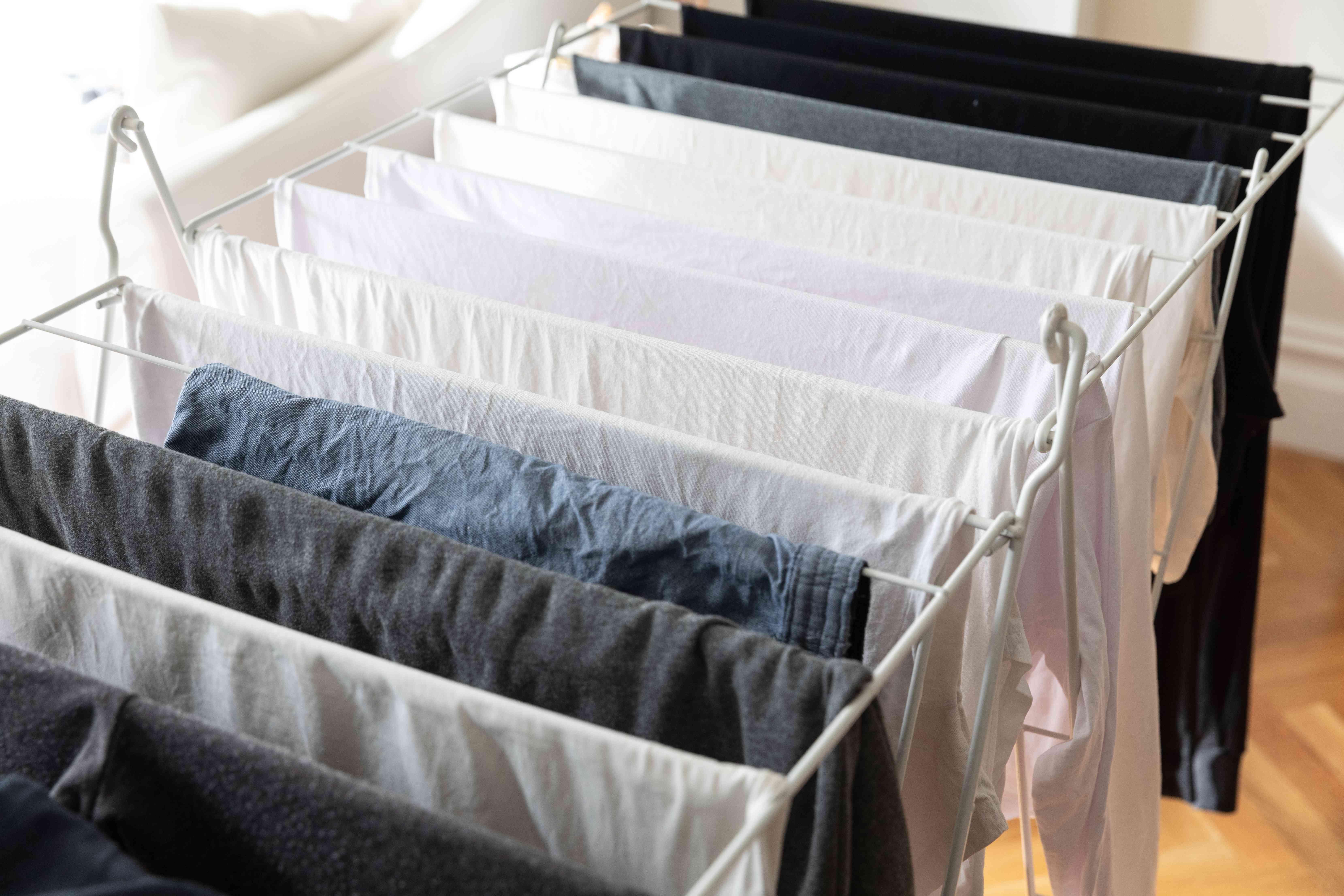
Indoor air-drying works best with a sturdy drying rack, hangers, or a tension line placed where air can move freely. A room with decent ventilation is ideal. If the space feels stuffy, drying takes longer, and fabric may stay damp long enough to encourage more creasing.
Place the rack near a fan, open window, or dehumidified area if possible. Do not cram pieces shoulder to shoulder. Your clothes are not boarding a budget airline. They need elbow room.
Outdoor drying
Outdoor line-drying can be wonderful for airflow, but it comes with trade-offs. Bright sun can help whites, but too much harsh sunlight may fade darker garments over time. Wind dries quickly, but it can also twist straps, bunch sleeves, and clip your patience in half if items are not secured well.
For wrinkle control, outdoor drying works best when garments are clipped in a way that supports their natural shape and keeps weight distributed evenly.
How to Hang Clothes So They Dry Smooth
This is where most of the anti-wrinkle magic happens. Different garments need different handling, and a “one method fits all” approach is how sweaters become neck-stretched and shirts become accordion art.
Shirts and blouses
Use hangers whenever possible. Button the top button or two, straighten the collar, smooth the placket, pull the sleeves gently into shape, and flatten the cuffs. This helps the shirt dry in the same silhouette you want to wear. If you drape a shirt over a rack bar, congratulations, you have created one giant horizontal crease.
Dresses
Hang dresses on shaped hangers and smooth the bodice, seams, and skirt while damp. If the dress is heavy, support it with sturdy hangers rather than clipping one side and hoping for the best. For strappy dresses, use hangers with hooks or loops so straps do not stretch.
Pants and jeans
For lightweight pants, hanging from the waistband works well. Smooth the front and back panels with your hands, align the side seams, and tug gently at the hems. Jeans can also be hung by the waistband, but if you want fewer clip marks, fold them neatly over a wide rack bar. Just smooth the knee area first so it does not dry with surprise geography.
T-shirts
T-shirts can go on hangers or across a rack. If you use a rack, lay them as flat and even as possible. If you use hangers, reshape the shoulders and body first so you do not end up with little “pointy mountain” hanger bumps.
Sweaters and knits
Dry these flat. Hanging wet sweaters can pull them out of shape because the water weight stretches the fibers. Lay them on a mesh drying surface or clean towel, shape the shoulders and sleeves, straighten the hem, and let them dry undisturbed. If you care about your sweaters, this is not negotiable.
Sheets and pillowcases
Shake sheets hard before hanging. Fold them evenly over a line or rack so the weight is balanced. Smooth corners and hems. Pillowcases benefit from a strong shake and a quick hand-smoothing before clipping. This takes all of 12 seconds and can save you a surprising amount of annoyance later.
The Hand-Smoothing Method That Makes a Big Difference
Want clothes to look better without ironing? Use your hands as a built-in steamer substitute while the fabric is still damp.
- Shake out the item right after washing.
- Lay or hang it in position.
- Run your palms firmly over the fabric.
- Straighten seams, hems, waistbands, collars, and cuffs.
- Reshape the garment so it dries in its intended form.
This works especially well on cotton shirts, workout tops, pajama pants, casual dresses, and many blended fabrics. Damp fibers are more cooperative than dry ones. Once they dry in the right shape, you have done most of the wrinkle-removal work without ever touching an iron.
How to Air-Dry Different Fabrics Without Wrinkles
Cotton
Cotton wrinkles easily, so remove it promptly, shake it well, and smooth it thoroughly before hanging. Hangers are often best for woven cotton shirts and dresses. Casual cotton tees can go on a rack or hanger.
Linen
Linen loves to wrinkle. That is part of its personality, and frankly, it is not apologizing. Still, you can reduce extreme creasing by hanging linen items immediately, shaping them carefully, and avoiding cramped drying conditions. Some relaxed texture is normal and even part of the charm.
Polyester and performance blends
These fabrics usually dry faster and resist wrinkles better than natural fibers. Hang them neatly, and they often come out ready to wear. This is one reason activewear can feel smug.
Wool
Lay wool flat and reshape it while damp. Never wring it aggressively. Press out extra water gently with a towel instead.
Delicates and elastics
Bras, lingerie, and stretchy garments are usually better off air-dried away from high heat. Lay them flat or hang them carefully in a way that supports their shape without distorting straps or bands.
Common Mistakes That Cause Wrinkles
- Skipping the shake: This is the easiest anti-wrinkle step and one of the most effective.
- Using tiny wire hangers for heavy garments: Weak hangers can create dents and pull fabric out of shape.
- Drying sweaters on hangers: That is how you end up with a sweater that now fits your floor lamp.
- Crowding the rack: Poor airflow means longer drying and more chances for fabric to dry in creases.
- Ignoring fabric type: Shirts, knits, denim, and delicates should not all be dried the same way.
- Waiting too long to put items away: Once dry, hang or fold promptly so they stay smooth.
How to Fix Wrinkles If They Still Show Up
Even with great technique, some garments may still need a little help. Fortunately, you have options that do not involve a dramatic ironing montage.
Use bathroom steam
Hang the garment in the bathroom while you take a hot shower. Light wrinkles often relax with the moisture in the air.
Try a garment steamer
A steamer is especially useful for blouses, dresses, and lightweight pants. It is gentler than ironing for many fabrics and fast enough that you may actually use it.
Use a quick dryer refresh
If the care label allows it, toss the wrinkled item in the dryer briefly with a damp cloth, then remove it right away and hang it up. This is helpful for items that air-dried almost perfectly but not quite.
Best Habits for Wrinkle-Free Air-Drying Every Time
- Sort wrinkle-prone items into smaller loads
- Use gentle or permanent-press cycles when appropriate
- Remove clothes from the washer immediately
- Shake each item before hanging
- Smooth fabric by hand while damp
- Use hangers for woven tops, dresses, and button-downs
- Dry sweaters and knits flat
- Leave space between garments for airflow
- Hang or fold clothes as soon as they are fully dry
Conclusion
Learning how to air-dry clothes and still keep them wrinkle-free is less about luck and more about sequence. Wash with care. Remove clothes promptly. Shake, smooth, shape, and hang each item the way its fabric wants to be treated. That is the formula.
Air-drying does not have to mean crunchy towels, rumpled collars, and emergency ironing sessions five minutes before leaving the house. With a better routine, you can get smoother results, protect delicate fabrics, and make your laundry system feel far more intentional. Your clothes dry. Your electric bill chills out. Your iron gets to enjoy a long, quiet retirement. Everybody wins.
Real-Life Experience: What Actually Helped Me Keep Air-Dried Clothes Smooth
When I first started air-drying more of my clothes, I assumed the process would be charming in a movie-montage kind of way. Sunlight through the window, neat little wooden clothespins, maybe a linen shirt swaying artistically while I sip coffee and make excellent life decisions. Reality was less elegant. My shirts dried with stubborn fold lines, my jeans took forever, and one unfortunate sweater came off the hanger looking like it had grown shoulder horns.
The biggest lesson I learned was that timing matters more than equipment. The loads that looked best were always the ones I dealt with immediately. If I let clothes sit in the washer while I answered emails, watched one video, then another video, then suddenly knew far too much about bread-making in Iceland, those clothes came out far more wrinkled. But when I pulled them out right away, gave each piece a strong shake, and hung them while they were still relaxed, the difference was obvious.
I also learned that hangers are not just for closets. They are one of the easiest ways to keep woven shirts, blouses, and dresses from drying with awkward creases. One week I hung my work shirts directly on hangers, buttoned the top button, smoothed the front placket, and tugged the cuffs straight. They dried looking surprisingly polished. The next week I draped similar shirts over a rack because I was in a hurry, and they dried with a lovely horizontal line right across the middle, as if the laundry itself wanted to make a point.
Sweaters taught me a different lesson: gravity is not always your friend. I used to hang everything because it felt organized, but knits do much better when laid flat and shaped by hand. Once I started drying sweaters on a towel or mesh rack, they kept their size better and looked less tired. That single change saved me from turning good knitwear into oddly stretched “around the house only” clothing.
Another thing that helped was giving clothes more breathing room. I used to crowd my rack because I wanted to finish one full load in a single shot. That made everything dry slowly and often unevenly. Now I space items apart, put a fan nearby if I am drying indoors, and accept that laundry, like people, behaves better when it is not packed too tightly.
Most of all, I stopped chasing perfection and started aiming for wearable smoothness. Linen will still look like linen. Casual cotton may still need a light steam now and then. But once I built a routine around prompt removal, shaking, smoothing, proper hanging, and fabric-specific drying, air-drying became far less frustrating. The clothes looked better, lasted longer, and required much less last-minute wrinkle triage. That is not glamorous, but it is extremely satisfying.