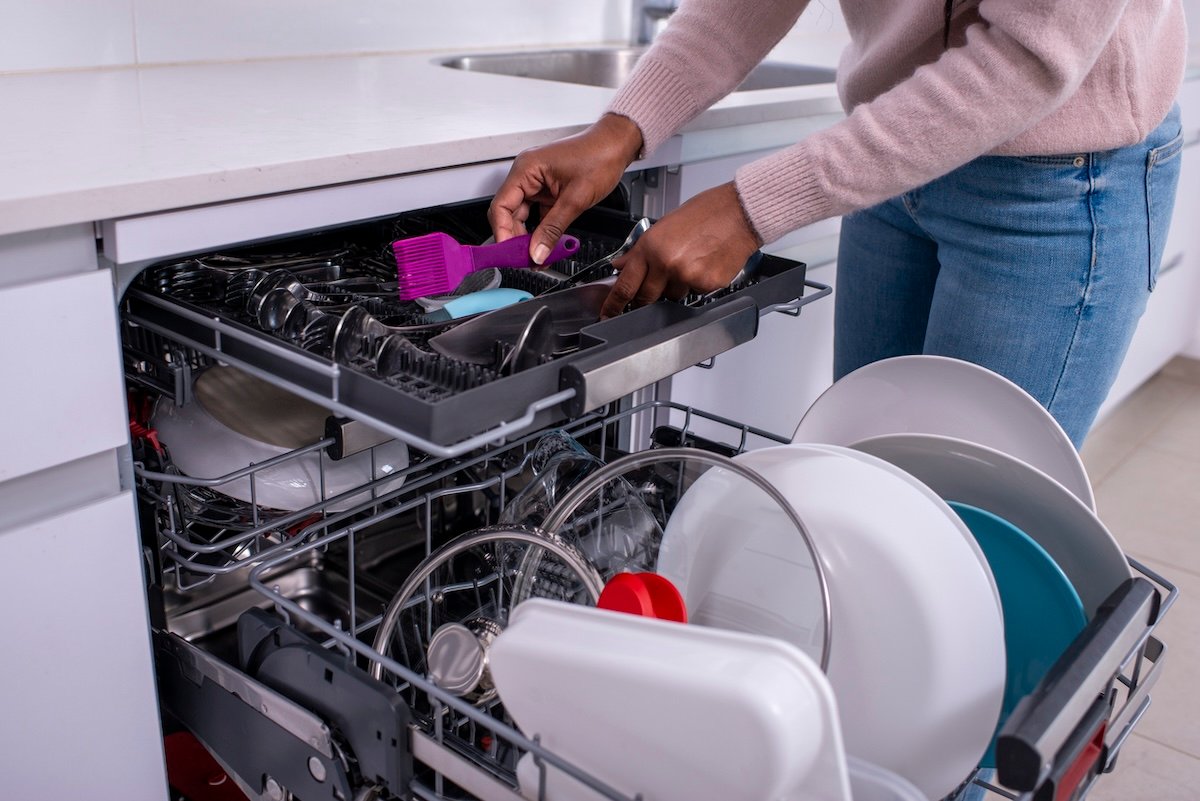
A dishwasher may sound like a tiny indoor car wash, but modern machines are surprisingly stingy with water. Instead of filling the entire tub, they repeatedly filter and recirculate a relatively small supply. That clever plumbing means a full dishwasher can use less water than washing the same dishes by handeven when your handwashing technique feels impressively economical.
So, how much water does a dishwasher use? Most modern full-size dishwashers consume approximately 3 to 5 gallons per cycle. Highly efficient ENERGY STAR-certified models use no more than 3.2 gallons per cycle, while some compact machines use around 2 gallons or less. Older appliances, heavy-duty cycles, and inefficient washing habits can push consumption considerably higher.
Here is how dishwasher water usage varies, what affects it, and how to keep your dishes clean without sending your utility meter into a dramatic monologue.
Average Dishwasher Water Use at a Glance
The amount of water a dishwasher uses depends on its age, size, design, selected cycle, and soil-sensing technology. The following ranges provide a practical comparison.
| Dishwasher type | Typical water use per cycle |
|---|---|
| ENERGY STAR standard-size dishwasher | 3.2 gallons or less |
| Modern standard dishwasher | About 3 to 5 gallons |
| Modern dishwasher on a heavy cycle | About 5 to 9 gallons, depending on model |
| ENERGY STAR compact dishwasher | 2 gallons or less |
| Small countertop dishwasher | Roughly 1.5 to 2 gallons |
| Portable dishwasher | About 3.5 to 4.5 gallons |
| Older dishwasher | Approximately 8 to 14 gallons |
| Handwashing with running water | Approximately 9 to 27 gallons |
These are general figures rather than universal guarantees. A particular normal cycle might use 3.2 gallons when dishes are lightly soiled but add one or more fills when sensors detect a miniature lasagna disaster.
How Much Water Does an ENERGY STAR Dishwasher Use?
Under current ENERGY STAR criteria, a standard-size residential dishwasher must use no more than 3.2 gallons of water per cycle. A qualifying compact model must use no more than 2 gallons per cycle.
For comparison, current EPA consumer guidance uses 5 gallons per cycle as the federal benchmark for a conventional standard-size machine. An ENERGY STAR model operating at the 3.2-gallon limit therefore uses 1.8 fewer gallons per loada reduction of about 36 percent.
What does that mean over a year?
Federal appliance testing calculations commonly assume 215 dishwasher cycles per year, or slightly more than four loads per week.
- A dishwasher using 3.2 gallons per cycle consumes about 688 gallons per year.
- A dishwasher using 4 gallons per cycle consumes about 860 gallons per year.
- A dishwasher using 5 gallons per cycle consumes about 1,075 gallons per year.
- An older machine using 10 gallons per cycle consumes about 2,150 gallons per year.
Replacing that 10-gallon veteran with a 3.2-gallon model could save roughly 1,462 gallons annually at the same usage frequency. The old machine may have survived three kitchen renovations and a questionable avocado-colored countertop, but loyalty has its limits.
Does a Dishwasher Use Less Water Than Handwashing?
In most real-world situations, a modern dishwasher uses less water than washing a comparable full load by hand. Handwashing estimates commonly range from 9 to 27 gallons, largely because kitchen faucets can deliver approximately 1.5 to 2 gallons every minute.
Leave a 2-gallon-per-minute faucet running for five minutes and 10 gallons disappear down the drain. A high-efficiency dishwasher can wash an entire load with less than one-third of that amount.
The advantage becomes smaller when someone hand-washes carefully using two partially filled basinsone for washing and one for rinsing. However, people rarely measure their water with laboratory precision while dealing with greasy skillets, slippery glasses, children asking for snacks, and a fork that appears determined to remain dirty.
The comparison must involve equal loads
A full dishwasher may hold eight to 16 place settings, depending on its size and rack design. Comparing that load with handwashing two coffee cups would be misleading. The fairest comparison is the amount of water needed to clean the same number of dishes to a similar standard.
Under those conditions, an efficiently loaded modern dishwasher usually wins.
Why Can a Three-Hour Dishwasher Cycle Use So Little Water?
Long cycle times make many owners suspicious. If a machine runs for three hours, surely it must be consuming enough water to refill Lake Michiganor at least a backyard pool.
Fortunately, cycle length and water consumption are not directly proportional. Modern machines use small amounts of water and circulate them repeatedly through spray arms. Filters remove food particles so the water can continue washing effectively before being drained and replaced during later stages.
Efficient cycles may run longer because they rely on extended soaking, carefully controlled temperatures, repeated circulation, and lower-powered spraying rather than constantly introducing fresh water. It is similar to slow cooking: more time does not automatically mean more ingredients.
What happens during a typical cycle?
- The dishwasher drains any residual water from the sump.
- A measured quantity of fresh water enters the machine.
- The water is heated, mixed with detergent, and pumped through the spray arms.
- The same water is filtered and recirculated several times.
- Dirty water drains away.
- One or more rinse stages use additional measured fills.
- The machine dries the dishes using heated drying, condensation drying, ventilation, or a combination of methods.
Because the tub does not fill like a bathtub, seeing only a shallow pool beneath the lower rack is completely normal.
What Determines How Much Water a Dishwasher Uses?
1. The selected wash cycle
Normal or eco cycles are generally designed to satisfy efficiency testing requirements. Heavy, pots-and-pans, sanitize, bottle-wash, and intensive cycles may use extra fills or rinses. Depending on the appliance, a heavy cycle can consume several gallons more than the normal setting.
Do not assume the shortest cycle uses the least water. Some quick cycles save time by using stronger spraying, additional water, higher temperatures, or fewer soaking periods. The cycle chart in the owner’s manual is more trustworthy than the name printed on the control panel.
2. Soil sensors
Many modern dishwashers measure the cloudiness of the wash water. When sensors detect relatively clean water, the machine may shorten part of the program or reduce the number of rinses. A heavily soiled load can trigger additional washing.
This is one reason excessive pre-rinsing can occasionally confuse the process. Scrape away bones, seeds, and large pieces, but allow the dishwasher and detergent to handle ordinary sauces and crumbs.
3. Dishwasher age
Dishwashers manufactured decades ago frequently used 10 gallons or more per normal load. Some early models approached 14 gallons. Improvements in spray-arm design, filtration, detergents, motors, sensors, and federal efficiency requirements have dramatically reduced that figure.
If an older machine still cleans well, replacement savings should be weighed against the cost and environmental impact of manufacturing a new appliance. However, water use becomes an important factor when the old unit needs an expensive repair or performs poorly enough to require repeated cycles.
4. Machine size and capacity
Compact and countertop dishwashers generally use fewer total gallons because they hold fewer items. That does not necessarily make them more efficient per plate. A small machine run twice may use more water than one full load in a standard-size model.
Choose capacity according to your household’s actual habits rather than automatically selecting the smallest appliance available.
5. Optional settings
Extra rinses, high-temperature washes, sanitizing options, and specialized spray zones can alter water or energy use. Heated drying typically affects electricity consumption more than water consumption, while rinse-only programs add water without completing a full wash.
How Much Water Does a Dishwasher Use Per Year?
Annual dishwasher water consumption depends on both efficiency and frequency. The simplest formula is:
Gallons per cycle × annual number of cycles = annual water use
| Loads per week | Annual cycles | Annual use at 3.2 gallons | Annual use at 5 gallons |
|---|---|---|---|
| 3 | 156 | 499 gallons | 780 gallons |
| 5 | 260 | 832 gallons | 1,300 gallons |
| 7 | 365 | 1,168 gallons | 1,825 gallons |
| 10 | 520 | 1,664 gallons | 2,600 gallons |
A family running a 3.2-gallon dishwasher daily uses about 1,168 gallons annually. A 10-gallon older machine used at the same frequency consumes 3,650 gallons. That is a difference of nearly 2,500 gallons each year.
How Much Does Dishwasher Water Cost?
Water and sewer rates vary widely across the United States, so there is no single national answer. Fortunately, calculating the approximate cost is easy:
Annual gallons ÷ 1,000 × local combined water and sewer rate
Suppose your combined rate is $15 per 1,000 gallons:
- 688 annual gallons would cost about $10.32.
- 1,168 annual gallons would cost about $17.52.
- 1,825 annual gallons would cost about $27.38.
- 3,650 annual gallons would cost about $54.75.
The direct water charge is often modest. However, dishwashers also use energy to heat water, operate pumps, and dry dishes. Water-efficient models can therefore reduce both water consumption and water-heating costs.
How to Reduce Dishwasher Water Use
Run full loads
A dishwasher typically uses nearly the same amount of water whether it contains six plates or a complete dinner-party aftermath. Waiting for a reasonably full load reduces the number of cycles you run. EPA estimates suggest that eliminating just one load per week can save an average family nearly 320 gallons annually.
Do not overload the racks
Full is efficient; packed like an airport suitcase is not. Overlapping plates, nested bowls, and blocked spray arms can leave food behind, forcing you to rerun the load. Leave enough space for water to reach every surface.
Scrape instead of pre-rinsing
Remove large food scraps, toothpicks, fruit pits, and bones. Do not stand at the sink polishing every plate before the machine sees it. Pre-rinsing under running water can waste more water than the dishwasher uses during the entire cycle.
Use the normal or eco cycle
For everyday loads, normal or eco is usually the most efficient choice. Reserve intensive settings for heavily burned or baked-on messes. Your cereal bowl does not require the culinary equivalent of a pressure washer.
Clean the filter
A clogged filter reduces circulation and allows debris to return to dishes. Inspect it regularly and clean it according to the manufacturer’s instructions. A clean filter improves washing performance without demanding extra water.
Check the spray arms
Make sure the arms rotate freely and their openings are not blocked by mineral deposits or food. Also confirm that tall utensils, cutting boards, and pan handles are not preventing rotation.
Use the correct detergent amount
Too little detergent may leave dishes dirty. Too much can create residue, especially in soft water. Follow the dishwasher and detergent instructions, adjusting for local water hardness when appropriate.
Repair leaks promptly
Inspect the supply line, door gasket, drain connection, and floor around the appliance. Even if a leak does not significantly change the measured water used by a cycle, it wastes water and can cause expensive cabinet or flooring damage.
How to Find the Exact Water Use of Your Dishwasher
General averages are useful, but the exact number depends on the model and cycle. Try these methods:
- Read the cycle guide. Many manuals list estimated gallons and cycle times for normal, heavy, quick, rinse, and sensor settings.
- Search the model number. The model label is usually located along the door edge, door frame, or tub opening.
- Use the ENERGY STAR Product Finder. Certified listings provide tested water consumption in gallons per cycle.
- Check manufacturer specifications. Product pages sometimes publish water-use figures directly.
- Review your utility data. A smart water meter may show the consumption change during a cycle, although other household water use must be paused for a useful comparison.
The yellow EnergyGuide label is excellent for comparing annual electricity consumption and estimated operating costs. It may not prominently display gallons per cycle, so the manual or ENERGY STAR product listing is usually better for exact water figures.
Practical Experiences and Lessons From Everyday Dishwasher Use
Published efficiency numbers are helpful, but household routines determine whether those savings survive contact with real life. Several practical patterns repeatedly appear when families compare dishwasher performance, water bills, and daily habits.
Experience 1: Pre-rinsing can erase the efficiency advantage
Consider a household with an efficient dishwasher using 3.2 gallons per cycle. Before loading it, someone rinses dishes under a 1.8-gallon-per-minute faucet for six minutes. That preliminary ritual uses almost 11 gallons before the dishwasher even starts.
The supposedly efficient load now requires more than 14 gallons. Simply scraping the plates could reduce total consumption by approximately 75 percent. The lesson is straightforward: buying an efficient appliance does little good when it is treated as the final stage of a full handwashing session.
Experience 2: A half-empty daily load can use more water than a full load every other day
Imagine two similar two-person households. The first runs a 4-gallon cycle every night, producing 28 gallons of weekly dishwasher use. The second loads carefully and runs four cycles per week, consuming 16 gallons.
Neither household has to tolerate a countertop mountain. Glasses and plates can be loaded immediately, and a full cycle can run when capacity is reached. The second routine saves about 624 gallons per year while requiring less detergent and less unloading.
Experience 3: The “quick” button is not always the efficient button
Many users select quick wash because shorter sounds cheaper. Depending on the model, however, the quick cycle may use more water or hotter washing to compensate for reduced soaking time. One machine might use 3.2 gallons on normal and nearly 6 gallons on quick wash.
Owners who consult the cycle chart sometimes discover that the slow, apparently lazy eco cycle is the frugal champion. It keeps circulating a small amount of water rather than solving everything with speed and force.
Experience 4: Better loading prevents repeat cycles
Efficiency disappears when dishes need a second wash. Common troublemakers include bowls nested together, plates facing away from the spray, utensils stacked like a bundle of firewood, and a large pan blocking detergent or water.
A household that reruns one failed 4-gallon load each week wastes 208 gallons annually. Leaving a little breathing room between items may look less efficient, but a correctly loaded rack that cleans everything once is better than an overstuffed rack washed twice.
Experience 5: Replacing an old dishwasher can create measurable savings
Suppose a family replaces a 12-gallon machine with a 3.2-gallon ENERGY STAR model and continues running five loads per week. The old appliance uses about 3,120 gallons annually. The new one uses about 832 gallons, saving approximately 2,288 gallons per year.
The family may also notice quieter operation, cleaner glasses, improved filtration, and fewer arguments about whether a dish is “technically clean.” Actual financial savings depend on local utility rates, hot-water costs, purchase price, and installation expenses, but the water reduction is substantial.
Experience 6: Maintenance matters more than owners expect
A dishwasher with a greasy filter or blocked spray arm may leave grit on glasses and dried food on plates. The first reaction is often to choose heavy wash, add an extra rinse, or run the entire load again.
Cleaning the filter and checking spray-arm movement can restore normal performance without increasing water use. This five-minute maintenance habit may save more water than obsessing over tiny differences between detergent brands.
The practical takeaway
The most water-efficient household is not necessarily the one with the most expensive dishwasher. It is the one that combines an efficient machine with sensible habits: scrape rather than rinse, load properly, run full loads, select the appropriate cycle, and maintain the filter.
Technology supplies the low gallons-per-cycle number. Daily behavior determines whether you actually receive it.
Frequently Asked Questions
Is it cheaper to use a dishwasher or wash dishes by hand?
A modern dishwasher is generally more water-efficient and often more energy-efficient when it is fully loaded and used without extensive pre-rinsing. Careful basin-style handwashing can be economical, but washing under a continuously running faucet usually consumes more water.
Does a dishwasher use the same amount of water when half full?
Usually, yes or nearly so. Soil sensors may make minor adjustments, but most machines do not reduce water use in direct proportion to the number of dishes. Running full loads is therefore more efficient.
Does the heavy cycle use more water?
It often does. Heavy cycles may add prewashes, rinses, higher temperatures, or longer circulation periods. Check the cycle guide because the difference varies by model.
Does a longer dishwasher cycle waste more water?
Not necessarily. Long eco cycles often conserve water by repeatedly circulating a small amount rather than introducing additional fresh fills.
Should dishes be rinsed before loading?
Remove large scraps, but ordinary plates usually do not need to be rinsed. Modern detergents, filters, spray systems, and soil sensors are designed to clean food residue.
How many gallons does a dishwasher use per minute?
Gallons per minute is not the most useful measurement because a dishwasher fills intermittently and recirculates water. Gallons per complete cycle provides a more accurate comparison.
Conclusion
Most modern dishwashers use approximately 3 to 5 gallons of water per load. Standard-size ENERGY STAR models use no more than 3.2 gallons per cycle, while qualifying compact models use 2 gallons or less. Older machines may consume 8 to 14 gallons, and handwashing under a running faucet can use far more.
For the greatest savings, run reasonably full loads, skip unnecessary pre-rinsing, use the normal or eco setting, load racks correctly, and keep the filter and spray arms clean. The dishwasher is already doing the hard work. There is no need to wash the dishes before asking it to wash the dishes.