If you’ve felt like home prices have been sprinting while your paycheck is politely power-walking, you’re not imagining it.
Over the past few years, U.S. home values climbed so fast they practically needed a hydration station and a finish-line photographer.
And even though some markets have cooled, “cool” in housing terms often means “still expensive, but now with slightly less yelling.”
This article breaks down what actually happened, why it happened, what the numbers say now, and what buyers and homeowners can do nextwithout
resorting to living in a converted garden shed (unless it’s a really nice shed with zoning approval).
The Dizzying Speed, in Real Numbers (Not Just Vibes)
Let’s start with the scoreboard. National home-price measures show a dramatic run-up after early 2020, with prices rising far faster than most
households could “save their way into” affordability.
National home prices: up big since 2020
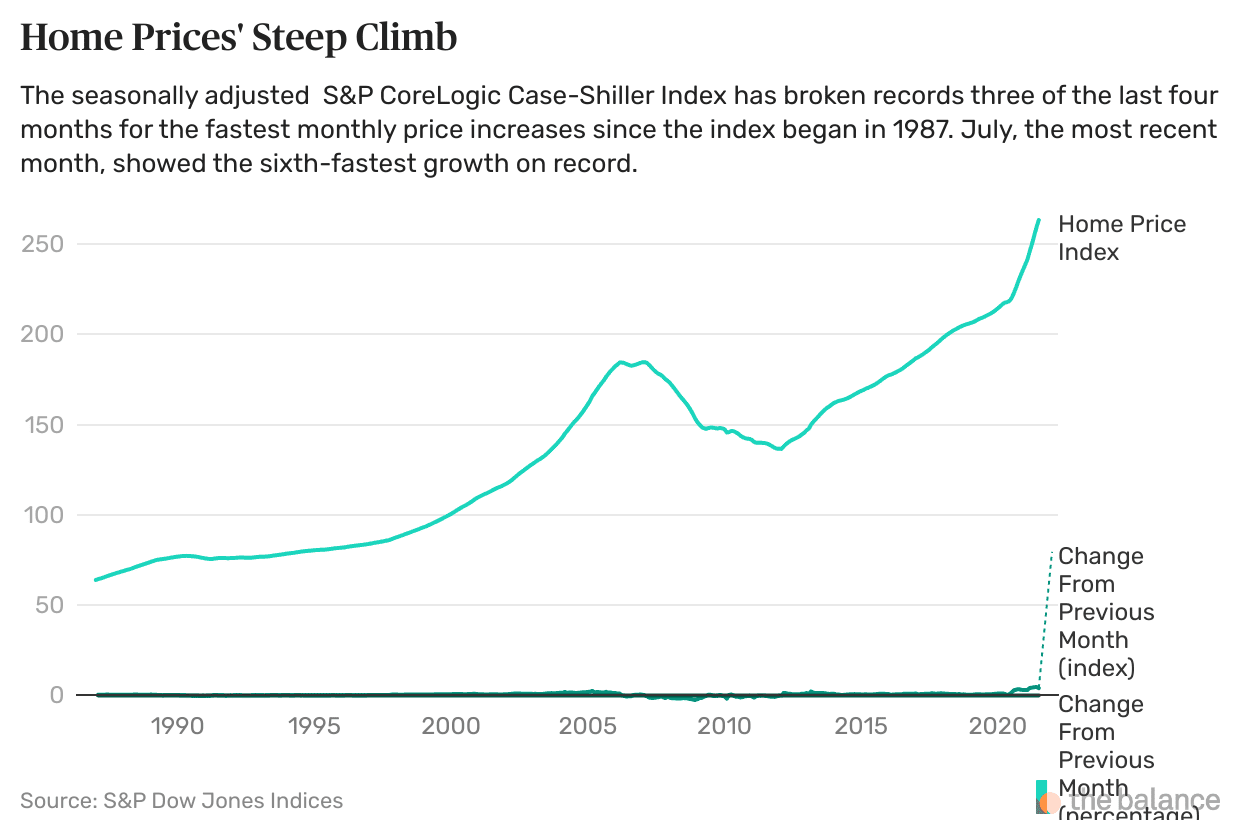
Using the widely watched Case-Shiller national home price index as a yardstick, U.S. home prices rose roughly 54% from
February 2020 to September 2025. That’s not a gentle inclineit’s a treadmill accidentally set to “mountain goat.”
The steepest stretch was the pandemic-era surge: from February 2020 to mid-2022, the same index climbed about 45%, before the
market began to cool and normalize into slower growth.
Prices are still higheven if growth has cooled
By late 2025, price growth had slowed in many national snapshots. For example, one major monthly industry summary pegged year-over-year gains
around the low single digits in fall 2025. Translation: the rocket boosters are off, but the spacecraft is still… in space.
Affordability is squeezed by both prices and rates
Housing affordability isn’t just about the sticker price. Mortgage rates matter because they determine the monthly paymentthe number that
actually moves into your budget and refuses to leave. In late 2025, the average 30-year fixed mortgage rate hovered a bit above 6%,
helping explain why buyers still feel pressure even when price growth is calmer.
Inventory is better in some places, but still tight overall
Housing supplyhow many homes are availablehas improved in some markets, yet it remains historically constrained in many others. With limited
inventory, even modest demand can keep prices elevated. When enough people are shopping and not enough homes are on the shelf, the shelf doesn’t
put anything on clearance.
Why Home Prices Took Off Like They Had Somewhere to Be
Home prices don’t rise at dizzying speed for just one reason. It’s more like a chaotic group project where everyone contributedand nobody
remembers signing up.
1) The demand shock: more buyers, new priorities
Starting in 2020, many households re-evaluated what they needed from a home: extra space for remote work, room for multi-generational living,
or just the ability to be indoors without feeling like a sardine with Wi-Fi.
Add historically low mortgage rates in the early pandemic years, and suddenly more people could qualify for (or justify) larger loans.
2) The supply problem: not enough homes, for a long time
The U.S. entered the 2020s with a housing shortage years in the making. New construction didn’t keep up with population growth and household
formation in many regions, while zoning limits, land costs, labor shortages, and materials inflation made building harder and pricier.
When demand surged, supply couldn’t respond quickly. Housing doesn’t scale like an app updateyou can’t just refresh the page and get
200,000 new homes delivered by Friday.
3) The “lock-in” effect: homeowners stayed put
Millions of homeowners refinanced or bought when rates were much lower than today’s. When mortgage rates rose, many owners hesitated to sell,
because moving would mean swapping a low rate for a higher onesometimes doubling the interest rate even if the new home price was similar.
That reduced the flow of existing homes coming to market. Fewer listings means fewer choices, and limited choices can keep prices firm even in a
slower economy.
4) Investors and second-home demand (market-dependent, but real)
In certain metros and vacation-heavy areas, investor demand and second-home buying amplified competition. This is highly localsome places saw
a big impact, others saw more of a ripple. Either way, when multiple buyer groups chase the same limited supply, bidding wars don’t need a
formal invitation.
Why It Still Feels Wild in 2025 (Even When Headlines Say “Cooling”)
“Cooling” doesn’t necessarily mean “cheap.” It often means the market moved from frantic to finicky.
That can look like fewer bidding wars, more negotiation, and price cuts in some areaswhile other regions remain stubbornly expensive.
Prices vary by region, and micro-markets can flip fast
In 2025, some parts of the country leaned toward buyer-friendly conditions, while others stayed tight.
Certain high-growth Sun Belt areas that surged earlier have seen softer pricing or more price reductions, while many Northeast and Midwest
pockets have stayed resilient due to limited supply and steady demand.
The key point: there isn’t one housing marketthere are thousands. National averages are helpful, but your zip code is the main character.
Insurance and HOA costs are becoming “hidden accelerators”
In some regions, especially where climate risks are rising, insurance premiums and HOA fees can meaningfully change affordability.
Even if a home’s price stops climbing, the all-in monthly cost can keep climbing. Buyers don’t purchase a price; they purchase a payment.
Wages grew, but not at the same speed as the 2020–2022 surge
Wage growth helped some households keep up, but the earlier leap in home prices created a gap that’s hard to close quickly.
Saving for a down payment is tough when the target keeps movinglike trying to hit a bullseye that’s attached to a Roomba.
What This Means If You’re Trying to Buy a Home Right Now
Buying in an expensive, high-rate environment can feel like shopping with two carts: one for your dreams and one for your spreadsheet.
Here are practical ways buyers are navigating today’s housing affordability challenge without setting their sanity on fire.
Get payment clarity first (then pick the prettiest kitchen)
Start with the monthly payment you can handlenot the purchase price you wish you could handle. Your budget should account for:
principal and interest, property taxes, homeowners insurance, HOA dues (if any), and maintenance.
If the payment works, the price is merely a number. If the payment doesn’t work, the price is a prank.
Consider rate strategiescarefully
Some buyers explore options like temporary buydowns, seller credits, or adjustable-rate mortgages.
These can help in certain situations, but they’re not magic spells. Understand how long savings last, what happens later, and whether your
income can handle future payment changes.
Expand your “must-have” list (without abandoning your soul)
If inventory is tight, flexibility matters. Common tradeoffs include:
- Choosing a smaller home with a smarter layout
- Widening the search radius (even 10–20 minutes can change the price landscape)
- Considering a home that needs cosmetic updatesnot structural surprises
- Exploring attached housing (townhomes/condos) where it fits your lifestyle
Don’t skip inspections to “win”
Competitive markets can tempt buyers into risky decisions. But waiving inspections can turn “dream home” into “surprise documentary series.”
If you’re competing, look for safer ways to strengthen an offer: faster closing, stronger earnest money (when reasonable), or clear financing.
What This Means If You Already Own a Home
For homeowners, rapid home price growth can be a mixed bag. Equity gains feel gooduntil you realize moving means buying into the same expensive
market you just “won.”
Equity is realuse it wisely
Rising values can increase home equity, which improves financial flexibility. But equity isn’t cash unless you sell or borrow against it.
Before tapping equity through a loan or line of credit, consider your long-term plans and whether the payment fits comfortably.
Property taxes may follow
In many jurisdictions, rising values can lead to higher property tax assessments over time (subject to local rules and caps).
If your monthly costs are creeping upward, it may not be your mortgageit may be the rest of the housing ecosystem.
Insurance costs can rise even if your home price doesn’t
Replacement costs, regional risks, and insurer behavior can affect premiums. Homeowners should review coverage annually and shop around when it
makes sense.
Will Prices Keep RisingOr Is the Frenzy Over?
Forecasting housing is humbling. The market is influenced by mortgage rates, job growth, construction levels, household formation, and local
policyand sometimes by the mysterious forces that cause everyone to suddenly want a third bathroom at the same time.
Slower growth doesn’t mean falling prices
Many reputable housing trackers show price growth slowing compared with the pandemic surge. But slower growth can still be positive growth,
especially when inventory remains limited.
Mortgage rates remain a huge lever
If rates fall meaningfully, more buyers can afford more houseoften increasing demand. At the same time, lower rates could unlock more sellers,
increasing supply. Which effect wins depends on how quickly each side responds.
More inventory is the most durable “cooling” factor
Over the long run, the clearest path to a healthier housing market is more supply: more homes built where people want to live, plus policies and
infrastructure that support that growth. When inventory rises, buyers have options, and options are the natural enemy of bidding wars.
Conclusion: The Market Isn’t “Normal”But It’s Not Stuck in 2021 Either
Home prices have risen at dizzying speed, especially from 2020 through mid-2022, leaving a lasting affordability challenge.
In 2025, the pace has slowed in many places, but the level of prices remains highand mortgage rates keep monthly payments heavy.
The takeaway is not “panic” or “give up.” It’s “get strategic.” Buyers can focus on payment-based budgeting, smart negotiation, and flexible
search criteria. Homeowners can treat equity as a tool, not a scoreboard, and plan around taxes and insurance costs. And everyone can remember:
housing is local, emotional, and financialsometimes all in the same afternoon.
Experiences From the Real World (Common Stories People Share in 2025)
The numbers explain what happened, but lived experience explains why it feels so intense. Here are real-world patterns people commonly describe
when dealing with the “dizzying speed” era of home pricestold in a way that may sound painfully familiar.
1) The first-time buyer who keeps getting “outbid by math”
A lot of first-time buyers say they didn’t lose houses to another couple with a golden retrieverthey lost to the monthly payment.
They’d find a home that seemed plausible, only to run the numbers and realize the payment turned their budget into a suspense novel.
Even when prices stabilized, higher rates made “affordable” feel like it moved to another planet.
Many describe a shift in strategy: less focus on “the perfect home,” more focus on “the sustainable payment.”
Instead of chasing the biggest square footage, they look for layouts that use space better, neighborhoods with stable taxes, and homes that don’t
need immediate major repairs. The goal becomes: buy something that doesn’t make you house-poor, and then improve it slowly.
2) The homeowner who wants to movebut feels trapped by their own good deal
Plenty of homeowners who bought or refinanced at very low rates say they feel “locked in.”
They may want a bigger house, a different school district, or a shorter commute, but the math punishes the move.
Even if they can sell at a higher price than they paid, buying again at today’s rates can mean a much larger monthly cost.
This creates a strange emotional loop: gratitude for having a low-rate mortgage, mixed with frustration that the same market conditions that
boosted their equity also made upgrading harder. Many decide to renovate instead of movefinishing a basement, converting a dining room into an
office, or building a backyard shed that becomes the unofficial headquarters of “Do Not Disturb” meetings.
3) The buyer who discovers the hidden price tag: insurance, HOA, and upkeep
Another common experience: buyers finally accept a higher purchase price, then get surprised by the ongoing costs.
In some areas, homeowners insurance quotes are higher than expected. In others, condo fees or HOA dues are substantial, and rising.
Add maintenance and utilities, and the “affordable” home starts to feel like it has a subscription plan.
People often say they wish they had compared “all-in monthly costs” more aggressively across neighborhoods.
Two homes with similar prices can have very different true monthly burdens once taxes, insurance, and HOA dues enter the chat like uninvited
relatives who also brought spreadsheets.
4) The seller who expects 2021and gets 2025 instead
Some sellers list with 2021 expectations: instant offers, waived contingencies, and a bidding war soundtrack.
Then reality shows up with 2025 behavior: buyers negotiate, days-on-market matter again, and price reductions happen.
The home may still sell at a strong price compared to pre-2020 levels, but the process can feel slower and more “normal.”
Sellers who adapt tend to do better: sharp pricing, clean presentation, and repairs that reduce buyer anxiety.
In a market where payments are high, buyers are extra sensitive to anything that looks like future expense.
5) The “we’ll wait one more year” crowdon repeat
One of the most common emotional experiences is the loop of waiting: “We’ll wait for rates to fall.” “We’ll wait for prices to drop.”
“We’ll wait for more inventory.” Sometimes that works out; sometimes it turns into a multi-year cycle where life events (jobs, kids, caregiving)
force a decision anyway.
Many people eventually reframe the question from “Is this the perfect market?” to “Is this the right move for our life?”
If you’re buying a primary residence and plan to stay for years, timing mattersbut it’s not the only thing that matters.
The best decision is often the one that fits your budget, your stability, and your future plans, rather than the one that wins the housing
market prediction contest.
The big theme across these experiences is that the dizzying price run-up changed expectations. Buyers became more payment-focused, homeowners
became more cautious about moving, and local costs like insurance and HOA dues became more important than ever.
The market may be calmer than the peak frenzy, but the aftereffects are still shaping real livesone mortgage calculator refresh at a time.