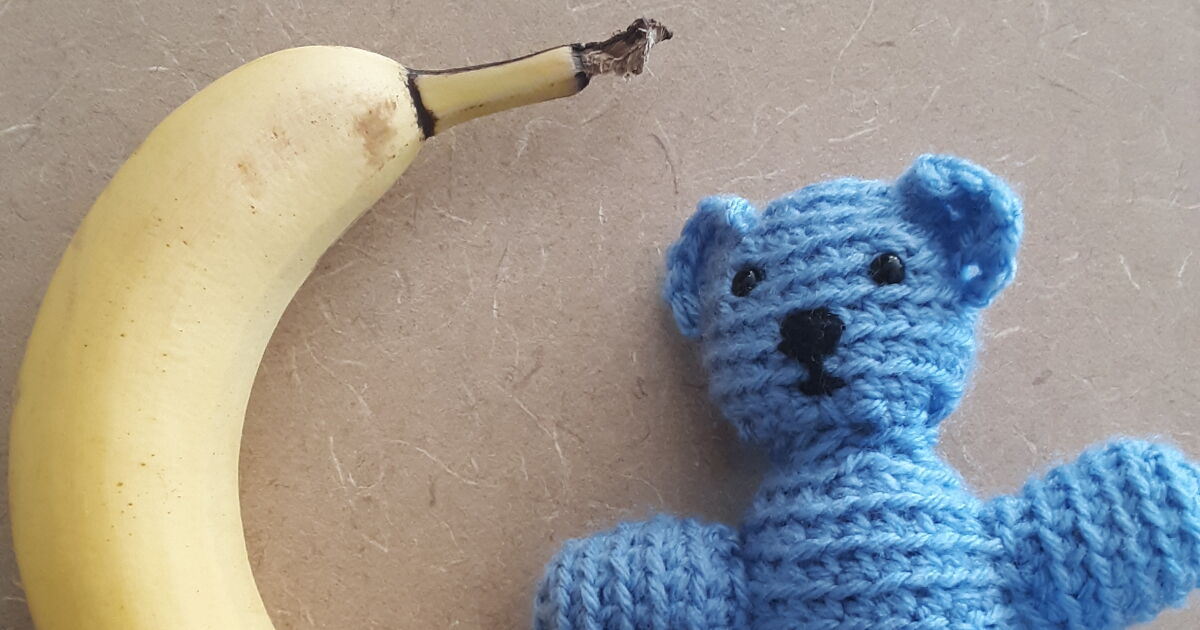
There are two kinds of people on the internet: people who see a gigantic onion and keep scrolling, and people who immediately demand a banana for scale. The second group is correct. Without a familiar object nearby, a photo of something strangely huge, mysteriously tiny, or aggressively out of proportion can feel like a visual prank. Is that carrot the size of a baseball bat, or is the camera just feeling dramatic? Is that dog actually a sofa with ears, or are we being fooled by perspective? Only one hero can restore order: the humble banana.
The phrase “banana for scale” has become one of the internet’s funniest unofficial measurement systems. It is not a scientific unit, no matter how strongly some comment sections may argue otherwise. Yet it works because it combines three things humans love: curiosity, comedy, and the deep need to know exactly how enormous that mushroom really is. A banana is familiar, portable, bright, and silly enough to make almost any photo better. Put it beside a massive zucchini, a tiny chair, a giant shoe, or a suspiciously large housecat, and suddenly the picture tells a story.
This article explores why weird proportions fascinate us, why bananas became the internet’s favorite scale marker, and how odd-size objects turn ordinary photos into tiny viral events. Fellow pandas, grab your fruit ruler. Things are about to get delightfully disproportionate.
Why Weird Proportions Make Our Brains Slam The Brakes
Humans are constantly estimating size. We do it while parking a car, choosing a box, judging whether leftovers will fit in the fridge, or deciding whether a couch can survive a narrow hallway. Our brains use context clues: familiar objects, distance, shadows, body parts, furniture, and background details. Most of the time, this system works beautifully. Then someone posts a picture of a cucumber that looks like it could challenge a pool noodle to a duel, and the brain says, “Excuse me, I need a second.”
Weird proportions surprise us because they violate expectation. A strawberry should not look like a tomato. A tiny frog should not sit on a fingertip like a green punctuation mark. A pumpkin should not require a forklift and emotional support. When familiar categories behave unfamiliar ways, we pause. That pause is internet gold.
The Joy Of “Wait, How Big Is That?”
Part of the fun comes from uncertainty. A photo without scale can be wonderfully confusing. A close-up of a seashell might look like a mountain range. A toy chair might look like designer furniture until a finger enters the frame. A mushroom growing in the yard might be dinner-sized, umbrella-sized, or “call the local wizard” sized. The viewer has to solve a visual puzzle.
That puzzle becomes even better when a banana enters the scene. Suddenly, the image changes from “interesting object” to “comedy documentary.” The banana does not merely measure; it performs. It says, “I am here to help, but I am also making this ridiculous.”
Why A Banana Became The Internet’s Funniest Measuring Tool
Bananas are not perfectly uniform, which is exactly why the joke works. A medium banana may fall within a general size range, but nature does not run a precision factory. Bananas curve, taper, bend, bruise, and occasionally look like they are plotting something. As a serious ruler, the banana is questionable. As a cultural reference point, it is magnificent.
The banana has several advantages. It is common in many households, instantly recognizable, easy to place beside objects, and bright enough to stand out in a photo. It is also inherently funny. A ruler looks official. A coin looks practical. A banana looks like someone tried to solve a measurement problem during lunch.
From Meme To Visual Language
“Banana for scale” grew popular online because it turned size comparison into a shared joke. Instead of saying, “This object is approximately 14 inches long,” users could say, “Here it is next to a banana,” and everyone understood the assignment. The banana became a casual visual language: not exact, but understandable; not scientific, but satisfying.
Even when people use bananas badly, the meme improves. A banana beside another banana? Funny. A tiny banana used to measure a huge banana? Better. A banana placed nowhere near the object it is supposed to measure? Chaotic, but still somehow accepted by the internet court.
What Counts As “Weird Proportion”?
Weird proportion does not simply mean “big.” It means the object looks dramatically different from what we expect. Sometimes the subject is enormous. Sometimes it is unbelievably small. Sometimes the proportions are lopsided, stretched, squashed, or visually confusing. The best examples make viewers ask three questions in rapid order: “What am I looking at?” “How did it get like that?” and “Where is the banana?”
1. Giant Versions Of Everyday Things
Oversized everyday objects are classic weird-proportion material. A spoon the length of a forearm, a cabbage like a bowling ball, a shoe big enough to house a mouse family, or a dog bone that looks like it belongs to a dinosaur all deliver immediate visual impact. These photos work because the object is familiar. We know what a spoon should look like. When it appears large enough to stir a bathtub, comedy arrives naturally.
2. Tiny Things That Look Like Miniature Props
Small objects can be just as surprising. A miniature banana next to a normal banana creates instant nonsense. A tiny egg, a tiny chair, a tiny book, or a tiny door in an old building invites viewers to imagine a secret society of very organized mice. The humor comes from scale mismatch. The object is recognizable, but its size belongs to another universe.
3. Animals With Unexpected Dimensions
Animals are internet royalty, and weird proportions only increase their power. Think of a cat with enormous paws, a rabbit stretched like a loaf of bread, a long dog that seems assembled from spare parts, or a tiny kitten placed beside a banana and revealed to be approximately one fruit long. These photos are charming because animals already have personality. Add strange scale, and they become legends.
4. Nature Being Extra
Nature loves drama. Giant pumpkins, oversized leaves, massive mushrooms, unusually long carrots, enormous sunflowers, and hailstones that look like frozen golf balls all make excellent banana-for-scale candidates. The banana gives viewers a quick way to understand the size, while also adding a cheerful note of absurdity. It is hard to fear a giant vegetable when it is posing beside a snack.
The Science Behind Scale: Why Reference Objects Matter
Although the banana is funny, the idea behind it is genuinely useful. Photos flatten the world. They remove depth, distort perspective, and make size difficult to judge. Without reference points, viewers may misread an object’s dimensions. A close-up can make a small object look huge, while a distant shot can make something massive feel ordinary.
Professionals who need accurate visual documentation often use proper scale markers, rulers, grids, or reference cards. These tools help establish measurement, position, and proportion. The banana is not a forensic instrument, and nobody should bring one to a laboratory expecting applause. But it follows the same basic principle: a known object in the frame helps the viewer understand the unknown object.
Familiar Size Is Powerful
Our brains are especially good at using familiar objects as shortcuts. A hand, coin, soda can, car, doorway, or banana gives us a mental baseline. We know roughly how big these things are, so we use them to estimate what is nearby. That is why “human for scale” photos work so well with giant trees, massive statues, and huge machinery. The person becomes a living ruler. The banana is simply the comedy version.
How To Take A Great “Banana For Scale” Photo
Taking a funny scale photo is easy. Taking a great one requires a tiny bit of thought, plus one banana that is willing to work for exposure.
Place The Banana On The Same Plane
If the banana is closer to the camera than the object, it may look bigger than it should. If it is far behind the object, it may look tiny. For the clearest comparison, place the banana right beside the subject on the same surface. If you are measuring a giant leaf, put the banana on the leaf or directly next to it. If you are showing a huge shoe, place the banana at the sole, not three feet in front of the lens like a yellow trickster.
Avoid Extreme Angles
Dramatic camera angles can be fun, but they can also confuse the scale. Shooting straight down or straight across usually gives the viewer a better sense of size. Unless the goal is pure chaos, avoid the “my banana is in the foreground and now it looks like a canoe” technique.
Use Good Lighting
Bad lighting can hide edges, blur details, and make the photo harder to read. Natural light is usually best. A bright banana beside a shadowy object is still funny, but a clear photo lets the weird proportion shine.
Let The Object Be The Star
The banana is a supporting actor. It should not steal the entire scene unless the joke is specifically about the banana. The best images let the viewer notice the strange object first, then discover the banana and realize the size difference. That tiny delay makes the humor land harder.
Why These Posts Work So Well Online
Weird-proportion posts are highly shareable because they are easy to understand instantly. A person does not need background knowledge, a long explanation, or a complicated setup. The image says everything: here is something unusually sized, and here is a banana to prove it.
They also invite participation. People love adding comments such as “Need another banana for scale,” “That banana looks suspiciously small,” or “Please measure the banana with a second banana.” The joke becomes communal. Everyone understands the format, so everyone can play.
The Perfect Mix Of Curiosity And Low-Stakes Absurdity
The internet can be loud, serious, and exhausting. A photo of a giant radish beside a banana offers something refreshingly harmless. It asks nothing from the viewer except a laugh and perhaps mild concern for the radish. Weird-proportion content is curiosity without homework. It is visual trivia with a fruit punchline.
Examples Of Weird Proportion That Deserve A Banana
Imagine opening your garden and finding a zucchini the size of a toddler’s baseball bat. Banana for scale. Imagine adopting a puppy whose paws suggest it may grow into a small horse. Banana for scale. Imagine buying a “personal-sized” cookie that appears to have been baked for a personal giant. Banana for scale.
Other excellent candidates include oversized furniture, tiny hotel toiletries, unusually large fruit, massive books, extremely long cables, jumbo remote controls, tiny frogs, huge leaves, miniature tools, enormous pine cones, and any cat that appears to be violating the laws of normal cat density. If the object makes people squint, laugh, or accuse the camera of lying, it deserves a banana.
What The Banana Teaches Us About Seeing
Behind the joke is a simple truth: scale changes everything. A rock becomes impressive when you realize it is taller than a person. A sculpture becomes more delicate when you see it fits inside a palm. A vegetable becomes newsworthy when it appears capable of blocking a driveway. Size shapes meaning.
The banana reminds us that photos are not neutral. They need context. They need comparison. They need a little yellow honesty. By adding a common object, we make an image easier to understand and more fun to share. That is why the meme has survived. It is useful enough to be practical and silly enough to stay entertaining.
Personal Experiences: The Day Everything Needed A Banana For Scale
Once you start thinking in banana scale, ordinary life becomes a scavenger hunt for visual weirdness. The first time I truly understood this was at a farmers market, where a vendor had arranged vegetables in neat baskets like a peaceful produce choir. Then I saw it: a sweet potato so large it looked less like food and more like something a cartoon caveman would use as a pillow. Everyone near the table paused. Nobody said anything at first. We all simply stared at the root vegetable as if waiting for it to introduce itself.
The vendor noticed our confusion and placed a banana beside it. The crowd immediately relaxed. The mystery had been solved. The sweet potato was not “large” in an abstract way; it was nearly three bananas of earthy ambition. People laughed, took photos, and suddenly the vegetable had a personality. It became the main character of the market. That is the magic of scale: it transforms size into a story.
Another memorable moment happened during a move, which is when every object in a home reveals its true personality. A small lamp that looked polite on a bedside table became strangely enormous once placed in a cardboard box. A rolled rug looked like a medieval battering ram. A mixing bowl appeared large enough to bathe a raccoon. At some point, someone placed a banana next to a stack of books that had become dangerously tower-like. The photo made the pile look both impressive and guilty, as if literature itself had been caught overachieving.
Pets may be the best subjects of all. A friend once sent a photo of a kitten sleeping next to a banana. The kitten was smaller than the banana, which immediately made it seem illegal in several emotional jurisdictions. A few months later, the same cat was photographed beside another banana and had grown into a long, luxurious creature with the confidence of a tiny landlord. The two images together told a better growth story than any chart could. No spreadsheet can compete with “formerly one banana, now three bananas and attitude.”
The funniest thing about banana scale is how quickly it spreads through a group. One person uses it as a joke, and soon everyone is measuring everything. A giant mug? Banana. A suspiciously small hotel towel? Banana. A backyard mushroom? Banana. A loaf of bread that looks like it was baked during a thunderstorm? Absolutely banana. It turns measurement into play, and play makes people pay attention.
That may be why the phrase still works so well. It is not only about size. It is about shared curiosity. It gives people permission to notice odd details in daily life and present them with a wink. Weird proportions are everywhere once you look closely: in grocery aisles, garages, gardens, antique shops, pet beds, kitchens, and moving boxes. The banana simply gives us a way to say, “Look at this strange thing with me.” And honestly, that is one of the nicest things the internet can do.
Conclusion
“Hey Pandas, Show Me Anything Of Weird Proportion And Add A Banana For Scale” is more than a funny prompt. It is a celebration of visual surprise, everyday absurdity, and the human desire to understand size through comparison. A banana may not be a laboratory-grade measuring tool, but it is one of the internet’s most charming reference objects. It helps us see giant vegetables, tiny animals, oversized household items, and strange discoveries with clearer eyes and a bigger smile.
In a world full of complicated measurements, the banana keeps things simple. Is the object weirdly huge? Add a banana. Is it unbelievably tiny? Add a banana. Is the banana itself weirdly proportioned? Congratulations, you have reached advanced internet measurement. Please proceed carefully and bring a second banana.