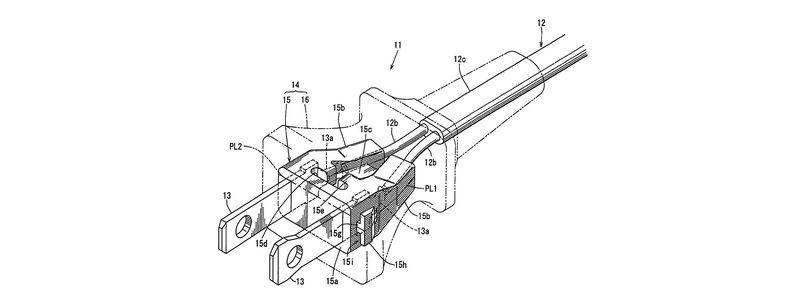
International mains plugs and sockets are the tiny plastic diplomats of the electrical world. They sit quietly on walls, under desks, behind hotel beds, and in airport lounges, pretending to be boring. Then you travel overseas, pull out a laptop charger, and discover that your plug looks like it arrived at the wrong costume party. Two flat blades? Three square pins? Round pins? Side earth clips? A plug shaped like it was designed by a very serious committee after six cups of coffee?
That is exactly why the topic has always been perfect for Hackaday-style curiosity. Mains connectors are everyday objects, but inside their shapes, shutters, fuses, grounds, and voltages is a surprisingly rich history of engineering choices. Some are elegant. Some are wonderfully overbuilt. Some are legacy compromises wearing a plastic smile. And all of them remind us that “standard” is one of the funniest words in technology.
Why International Plugs Are So Delightfully Complicated
The world did not sit down one afternoon and agree on a universal outlet. Early domestic electricity grew country by country, utility by utility, and appliance by appliance. Lighting came first, so some of the earliest portable devices drew power from lamp sockets. As homes gained radios, irons, vacuum cleaners, heaters, and kitchen appliances, each region developed its own idea of what a safe and practical connector should look like.
By the time international travel and global electronics became normal, the plug zoo was already open for business. Today, the familiar plug types include Type A and Type B in North America and Japan, Type C Europlugs across much of Europe, Type E and Type F systems in parts of continental Europe, Type G in the United Kingdom and several former British-influenced regions, Type I in Australia, New Zealand, China, and Argentina, plus other designs such as Type D, M, J, K, L, and N. A travel adapter can begin to look less like an accessory and more like a mechanical hedgehog.
Voltage and Frequency: The Shape Is Only Half the Story
The first rookie mistake is assuming that if a plug fits, the device is safe to use. Plug shape is only the physical handshake. The electrical conversation also depends on voltage and frequency. In the United States and Canada, ordinary household outlets are commonly around 120 volts at 60 hertz. In much of Europe and many other regions, household supply is commonly around 220 to 240 volts at 50 hertz.
That difference matters. A modern laptop charger labeled “Input: 100-240V, 50/60Hz” is usually happy almost anywhere with the right adapter. A single-voltage hair dryer, heating pad, old clock motor, turntable, or transformer-based gadget may not be so cheerful. Plug a 120-volt appliance into a 230-volt supply without a proper converter, and you may get smoke, sparks, or a brief but memorable lesson in humility.
Frequency can matter too. Many switch-mode power supplies do not care much whether the grid is 50 or 60 hertz, but motors, clocks, some pumps, and older equipment may run hot, slow, fast, or not at all. That is why the best travel advice is still delightfully analog: read the label on the device before plugging it in.
The North American NEMA World: Simple, Cheap, and Everywhere
In the United States, the most recognizable household connectors are NEMA Type A and Type B. Type A has two flat parallel blades. Type B adds the round grounding pin below them. The common grounded residential receptacle is often associated with 15-amp, 125-volt service, though the broader NEMA family includes many configurations for different voltages, currents, and special uses.
The North American plug system has a few big advantages. It is compact, inexpensive to manufacture, and supported by an enormous installed base. That last point matters more than people think. Once millions of buildings contain a particular receptacle pattern, changing the national plug standard becomes a heroic logistical project, somewhere between “replace every road sign” and “teach cats to file taxes.”
Still, the classic two-blade plug has drawbacks. Older unpolarized plugs can be inserted either way. Partially inserted flat-blade plugs may expose metal that is close enough for an unlucky finger or piece of metal to touch. Modern polarized plugs, grounded plugs, tamper-resistant receptacles, GFCI protection, AFCI protection, and better product standards have improved safety, but the legacy shape remains a frequent subject of friendly international teasing.
Type G: The British Plug That Looks Like It Means Business
The British Type G plug, formally associated with BS 1363, may be the most debated household plug on Earth. It has three rectangular pins, a robust body, a longer earth pin, insulated live and neutral pin sleeves, and a replaceable fuse inside the plug. It is also famous for causing emotional damage when stepped on barefoot. If Lego bricks are the infantry of domestic foot pain, the British plug is the armored division.
From an engineering standpoint, though, Type G is fascinating. The longer earth pin connects first and disconnects last, helping ensure that grounded appliances have protective earth before the live and neutral conductors engage. The earth pin also opens shutters inside the socket, which block access to live and neutral contacts when no plug is inserted. The insulated sleeves reduce the chance of touching a live pin while a plug is partly withdrawn.
The built-in fuse is the feature that really sets Type G apart. In many countries, branch-circuit protection is expected to protect wiring behind the wall. In the British system, the plug fuse helps protect the flexible cord connected to the appliance. A thin appliance lead does not need to rely only on a much larger circuit breaker. That is clever, practical, and very British: put a safety device in the plug, then make the plug sturdy enough to survive being used as a doorstop.
Schuko, Europlug, and the Continental Approach
Across much of continental Europe, Type C Europlugs and Type E or F grounded systems are common. The Europlug is slim and convenient for low-power Class II devices that do not require protective earth. Type F, often called Schuko from the German term for protective contact, uses side grounding clips. Type E uses a socket earth pin. Many modern European plugs are designed to work with both Type E and Type F sockets, which is a clever compromise in a continent where the phrase “almost compatible” does a lot of heavy lifting.
Recessed sockets are one of the strongest safety features in many European systems. Because the live pins are surrounded by the socket recess before they make contact, it can be harder to touch energized metal during insertion or removal. Compared with exposed flat blades, that is a very nice mechanical guardrail. However, Europe is not a single plug standard paradise. There are still national variants, older installations, and special cases that keep adapter manufacturers gainfully employed.
Australia, China, and the Slanted-Pin Family
Type I plugs, used in Australia, New Zealand, China, Argentina, and some Pacific regions, are easy to recognize thanks to their angled flat pins. Grounded versions include a vertical or angled earth pin depending on the configuration. The angled design has a crisp mechanical identity: it is visually distinct, generally secure, and less likely to be confused with the North American flat-blade family.
However, even similar-looking Type I systems may differ in details, approvals, polarity expectations, and regional rules. That is another recurring theme in international mains power: physical similarity does not automatically mean full regulatory or electrical equivalence. The plug may look like a cousin, but the standards paperwork may say, “We have never met this person.”
Why Grounding Is Not Optional Decoration
Grounding pins are not there to make plugs harder to pack in a suitcase. They are a safety path. In appliances with metal cases or exposed conductive parts, protective earth gives fault current a low-resistance route that helps trip a breaker, blow a fuse, or activate protective equipment. Without that path, a fault can turn a metal appliance body into an unpleasant surprise.
This is why defeating a ground pin, filing a polarized blade, forcing a plug into a socket where it does not belong, or using suspicious “universal” adapters with loose contacts is a bad idea. It may work once. It may work many times. The problem is that electrical safety is not about the times nothing happens; it is about the one fault condition that arrives wearing tap shoes.
Shutters, GFCIs, AFCIs, and Other Quiet Heroes
Modern receptacle safety is not only about plug geometry. Tamper-resistant shutters help prevent children from inserting foreign objects into energized slots. Ground-fault circuit interrupters, commonly called GFCIs, monitor current imbalance and can shut off power quickly when a ground fault is detected. They are especially important in wet or damp areas such as bathrooms, kitchens, garages, laundry rooms, outdoor receptacles, and similar locations.
Arc-fault circuit interrupters, or AFCIs, are designed to reduce fire risk from dangerous arcing faults. These protections are not glamorous. Nobody takes vacation photos of a GFCI outlet unless they are an electrician or a deeply committed nerd. But they represent decades of learning from accidents, fires, product failures, and bad human decisions involving forks, extension cords, overloaded outlets, and “temporary” fixes that somehow become permanent fixtures.
Adapters vs. Converters: Please Do Not Confuse Them
A plug adapter changes shape. A voltage converter changes voltage. That distinction should be printed on every suitcase, every airport kiosk, and possibly every forehead at the departure gate.
If your phone charger, laptop power brick, camera charger, or USB-C power supply accepts 100-240 volts and 50/60 hertz, you usually need only a plug adapter. If your device accepts only 120 volts and your destination supplies 230 volts, you need a proper voltage converter rated for the appliance’s power draw, or you need to leave that appliance at home and enjoy local alternatives. This is especially important for heat-producing devices such as hair dryers, curling irons, kettles, and travel irons, which draw much more power than phone chargers.
Cheap adapters are also worth treating with suspicion. A good travel adapter should fit firmly, carry appropriate ratings, avoid exposed live parts, and not pretend to be a universal solution for every appliance on Earth. “Universal” is a marketing word. Electricity prefers math.
The Hackaday Lesson: Design Is a Negotiation With History
The fun of discussing international mains plugs is that every design tells a story. The North American system reflects simplicity, cost, and backward compatibility. The British system reflects fused plugs, shuttered sockets, and a strong appetite for belt-and-suspenders safety. Continental European systems often emphasize recessed sockets and robust earth arrangements. Other national systems reveal local regulations, colonial history, appliance markets, and the practical reality that replacing infrastructure is expensive.
Hackaday readers tend to appreciate the object behind the object. A plug is not just a plug. It is a mechanical interface, an electrical safety device, a manufacturing compromise, a legal artifact, and sometimes a cultural argument in plastic form. It is also a reminder that standards do not emerge from pure logic. They emerge from committees, accidents, patents, installed bases, utilities, wars, trade, builders, appliance makers, and consumers who just want the toaster to work.
Practical Safety Tips for Travelers and Tinkerers
Read the Input Label
Before connecting any device overseas, check the voltage and frequency label. Look for a range such as 100-240V and 50/60Hz. If the label lists only one voltage, do not assume a plug adapter is enough.
Respect Current Ratings
Adapters, cords, power strips, and outlets all have current limits. A tiny travel adapter may handle chargers but not a space heater, kettle, or hair dryer. High-wattage appliances should be connected only through equipment rated for the load and appropriate for the local supply.
Avoid Daisy-Chaining
Plugging adapters into power strips into extension cords into more adapters is how a charging station turns into a small electrical escape room. Keep connections simple, visible, and properly rated.
Do Not Modify Plugs Casually
Cutting off pins, bypassing grounds, opening shutters with tools, or jamming mismatched plugs into sockets may feel like clever field engineering. It is usually just a bad idea wearing a tiny hard hat.
Use Certified Gear
Choose adapters, cords, and power strips from reputable manufacturers with recognized safety certifications. If the plastic feels flimsy, the plug wiggles, the contacts spark, or the listing looks suspicious, trust your instincts and do not use it.
Extra Experience: What International Plugs Teach You the Hard Way
The first real lesson of international mains plugs usually happens in a hotel room at 11:47 p.m. You have a phone at 6 percent, a laptop at 3 percent, and exactly one adapter that does not fit the socket next to the bed. At that moment, world electrical standardization becomes more emotionally important than world peace.
Anyone who travels with electronics quickly develops rituals. You learn to pack one high-quality universal adapter, one compact USB-C charger with multiple ports, and one short extension cord or power strip only if it is properly rated for the destination voltage. You learn that hotel desks often have the worst outlet placement known to architecture. You learn that the outlet behind the mini-fridge is technically available if you are willing to crawl on the floor and negotiate with dust bunnies.
You also learn that not all adapters are equal. Some fit snugly and inspire confidence. Others sag out of the wall like a tired robot. A loose adapter is more than annoying; poor contact can create heat, arcing, and unreliable power. The best adapters feel boring, and in electrical safety, boring is beautiful.
Workshop experience teaches another lesson: mains connectors deserve respect even when the project is low power. Many modern gadgets run internally on 5, 12, or 24 volts, but their power supplies still connect to the wall. That wall connection is where safety margins matter. Strain relief, insulation, fusing, grounding, enclosure design, creepage distance, clearance distance, and proper cable selection are not optional decorations. They are the difference between a finished project and a cautionary forum thread.
One of the most useful habits is building a small “power passport” kit. Include adapters for common regions, a USB-C charger rated for global input, a simple outlet tester for domestic work where appropriate, spare IEC leads for equipment with detachable cords, and labels on power supplies that are not universal input. If you maintain equipment for labs, events, or maker spaces, color-coded cords and clearly marked voltage ratings can prevent a surprising amount of chaos.
The most humbling experience is discovering that the plug shape is often the least interesting part. The real story is compatibility. Does the device accept the local voltage? Is the plug grounded correctly? Is the adapter rated for the load? Is the outlet controlled by a wall switch? Is the hotel key-card slot cutting power when you leave? Is the “universal” socket in the airport lounge so worn that your charger slowly slides out while you watch it with deep personal disappointment?
International plugs also teach patience with standards. It is easy to declare one design “best,” but every system carries trade-offs. The British plug is safe and robust, but bulky. The North American plug is compact and cheap, but older versions are less protective. Schuko-style connectors feel secure and substantial, but European compatibility can be messier than it looks. Type I is neat and distinctive, but regional differences still matter. There is no perfect plug, only a long conversation between physics, economics, regulation, and human behavior.
So the next time you plug in a charger abroad, pause for a second before blaming the wall. That socket is a little fossil of electrical history. It tells you how a country wired its homes, protected its people, negotiated appliance markets, and made peace with legacy infrastructure. Then go ahead and charge your phone. Just read the label first.
Conclusion
International mains plugs and sockets are more than travel inconveniences. They are compact lessons in safety engineering, historical momentum, and regional problem-solving. From North American NEMA connectors to British fused Type G plugs, from recessed European sockets to slanted Type I systems, every design reflects a different balance of cost, protection, compatibility, and tradition.
The Hackaday spirit makes this topic especially enjoyable because it invites us to look closely at objects we normally ignore. A wall outlet is not just a hole that makes electricity happen. It is a carefully negotiated interface between dangerous energy and everyday life. Treat it with curiosity, respect, and the correct adapter, and it will usually behave itself. Treat it like a puzzle to be defeated with a screwdriver, and it may file a complaint directly through your nervous system.