There are discoveries that ruin an afternoon, and then there are discoveries that make you reconsider an entire wedding. Finding out your fiancé has been privately discussing how to make you look more attractive in your wedding photos definitely belongs in category two.
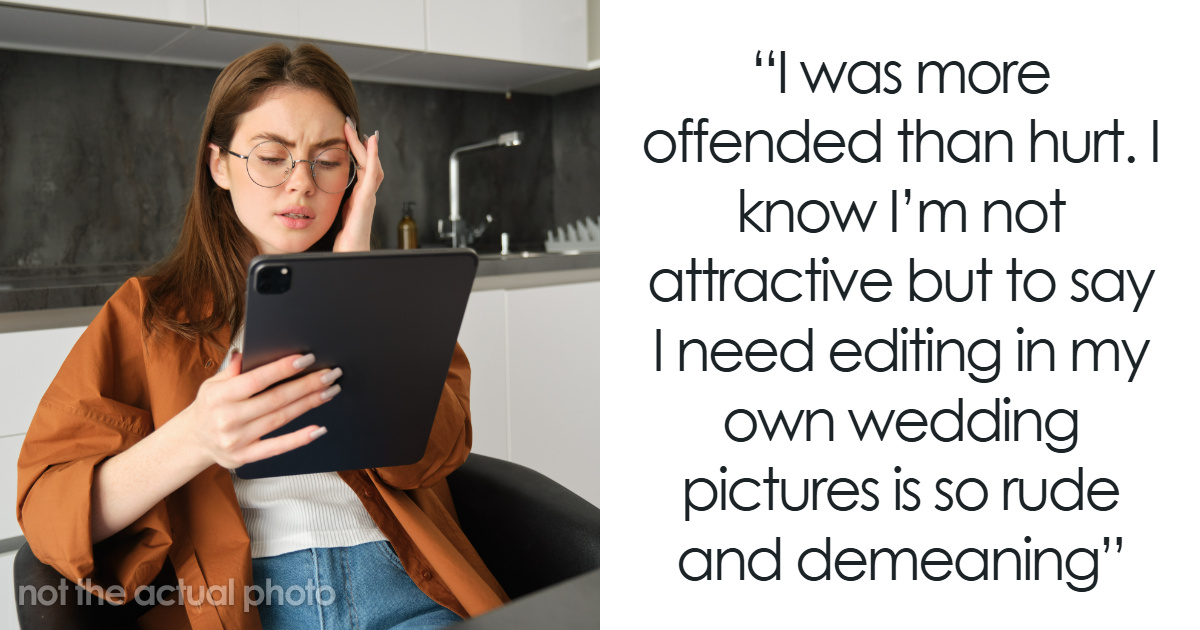
That was the uncomfortable situation one woman described after accidentally opening a message thread on her fiancé’s iPad. She wasn’t snooping through folders with a detective hat and a corkboard full of red string. Messages kept arriving while she was using the device, and one accidental tap exposed a conversation between her fiancé and his friend about her appearance. Specifically, they were discussing which angles supposedly suited her best and whether a wedding photographer could edit her appearance afterward.
Story basis:
The story quickly became bigger than photography. It raised questions about attraction, respect, private conversations between friends, digital privacy, body image, and one particularly important premarital issue: should you marry someone who appears embarrassed by how you look?
The Secret Chats Were About Much More Than Wedding Photos
The couple had reportedly been dating for about two years and were living together when the woman stumbled across the conversation. She already knew she did not fit conventional beauty standards, but she described herself as generally comfortable with her appearance. Her history, however, included hurtful experiences with people making assumptions about why men would date her.
Then she saw her fiancé exchanging photographs of her with his friend as they analyzed which side of her face looked better.
The friend apparently suggested concentrating on certain angles, while the fiancé entertained the idea that their photographer could make adjustments during editing. Wedding photography suddenly sounded less like capturing a happy day and more like launching Photoshop’s emergency response team.
What made the conversation especially painful wasn’t simply, “Which angle photographs well?” Plenty of people have preferred angles. Entire generations have mastered the subtle chin-forward maneuver after seeing themselves tagged in an unfortunate Facebook photo.
The difference was respect.
Instead of discussing photography with his future wife, the fiancé was privately examining her appearance with another person. Worse, his friend was making dismissive comments, and rather than shutting those comments down, the fiancé participated.
Original account and later coverage:
Why Appearance Criticism From a Partner Can Hurt So Much
A random stranger thinking your nose is too large is annoying. Your future spouse quietly agreeing with that stranger is something entirely different.
Research on appearance-related comments suggests that romantic partners can have substantial influence over body image because their opinions carry emotional significance. Studies have associated negative appearance commentary from partners with body dissatisfaction, insecurity, self-consciousness, shame, and doubts about acceptance within the relationship.
Research on partner appearance comments and body image:
That’s partly why the woman’s reaction made sense even though she initially described herself as more offended than devastated. Confidence isn’t a force field. A person can genuinely like themselves while still feeling wounded when someone they trust treats their appearance as a defect requiring management.
Your Partner’s Opinion Occupies Premium Mental Real Estate
Romantic relationships create vulnerability. Ideally, partners become people around whom we can relax rather than audition.
You want to be able to wake up with your hair performing experimental architecture and assume your partner isn’t secretly organizing a committee meeting about it.
When criticism comes from the person expected to provide emotional safety, however, it can become disproportionately influential. Even someone who previously felt confident may begin mentally replaying remarks, inspecting photographs differently, or comparing themselves with other people.
Cleveland Clinic guidance on body image similarly notes that comparison can intensify insecurity, while Mayo Clinic emphasizes that self-esteem can affect relationships and broader well-being.
Body image and self-esteem guidance:
Physical Attraction Matters, but It Isn’t the Whole Relationship
It would be unrealistic to pretend appearance never matters in romantic relationships. Physical attraction can play an important role in creating and maintaining romantic connection.
But attraction is much more complicated than ranking someone’s cheekbones on an imaginary Olympic scoreboard.
WebMD describes multiple forms of attraction, including physical, emotional, romantic, intellectual, social, and sexual attraction. Attraction can also change over time. Someone might initially notice a person’s appearance and later become intensely attracted to their humor, intelligence, kindness, voice, confidence, or the fact that they somehow remember where the spare batteries live.
Attraction research:
Long-term relationships therefore cannot be reduced to whether someone photographs like a magazine model. Shared values, admiration, emotional intimacy, reliability, affection, trust, and compatible goals all contribute to romantic attachment.
The real problem in this story wasn’t that one partner recognized that the other wasn’t conventionally beautiful. Mature adults understand that humans look like humans. The problem was the combination of embarrassment, private criticism, social comparison, and uncertainty about marriage.
There Is a Major Difference Between Criticism and Contempt
Healthy couples criticize things occasionally. Someone leaves dishes beside the dishwasher instead of inside it, and suddenly civilization itself feels negotiable.
But relationship researchers distinguish complaints about behavior from attacks that communicate disrespect or superiority.
The Gottman Institute identifies criticism and contempt among destructive communication patterns in relationships. Contempt can appear through mockery, sarcasm, ridicule, sneering, or communication that essentially says, “I am above you.”
Relationship criticism and contempt:
That distinction matters here. Discussing wedding photography preferences is ordinary. Treating a future spouse’s face as an embarrassing technical problem is not.
Even if the fiancé never intended his comments to be discovered, intention doesn’t erase meaning. Private conversations often reveal attitudes people carefully soften in public.
Was Reading the Chat an Invasion of Privacy?
This is where internet debates tend to split into two camps approximately eight seconds after someone mentions a phone.
One camp says partners deserve privacy. The other says committed couples should have nothing to hide. Reality is less dramatic.
Pew Research Center found that password sharing is common among American couples. In its research, 75% of partnered Americans said they had given their partner their phone password. At the same time, 70% said secretly looking through a partner’s phone was rarely or never acceptable.
Digital relationship privacy data:
In this case, though, the woman described accidentally opening the conversation while messages repeatedly appeared on an iPad she had permission to use. That’s different from waiting until someone falls asleep, obtaining their thumbprint like a low-budget spy movie, and conducting a midnight forensic audit.
Privacy and Secrecy Aren’t Identical
People in relationships are still allowed private conversations. Friends need space to talk. Individuals need autonomy. Partners don’t automatically receive diplomatic clearance to every message ever written.
But privacy becomes a different issue when private communication involves disrespecting the relationship itself.
A healthy boundary might be, “My conversations with friends are private.” A relationship problem might be, “My friends and I regularly insult my partner behind their back while I encourage it.”
Healthy relationships generally require some balance between autonomy, honesty, trust, and mutually understood boundaries rather than permanent digital surveillance.
Healthy relationship and boundary guidance:
The Friend’s Role Made the Situation Worse
Friends naturally become sounding boards for relationship problems. Sometimes you need somebody outside the relationship to say, “Yes, that argument was ridiculous,” or, “No, buying a third espresso machine is not a shared financial priority.”
But there’s a difference between seeking perspective and creating an echo chamber.
A good friend can question your thinking. A destructive dynamic develops when friends continually validate resentment, mock a partner, or encourage someone to view their relationship through contempt.
In the messages described by the woman, the friend wasn’t simply listening to concerns about attraction. He was actively evaluating her appearance and recommending ways to disguise perceived flaws.
The fiancé’s responsibility, however, remained his own. Friends can influence conversations, but adults are still responsible for the attitudes they entertain and the boundaries they establish.
The Later Conversation Revealed the Bigger Problem
After confronting the situation, the couple eventually had a direct conversation. According to the later update, the fiancé admitted he had already been considering ending the relationship and wasn’t sure how to deal with criticism from other people about them.
The woman moved out.
Breakup update:
That revelation reframed the entire photography conversation.
The wedding pictures weren’t really the core issue. They were evidence of a relationship continuing after one partner had developed serious doubts but had not communicated them honestly.
That is one reason avoiding difficult conversations rarely saves anyone pain. It usually puts the pain on a payment plan with extremely unfriendly interest rates.
What He Could Have Done Instead
Suppose attraction genuinely had become a concern. What should someone do?
1. Figure Out What the Concern Actually Is
Attraction can change because of emotional distance, unresolved resentment, stress, routine, health changes, personal insecurity, or shifting relationship dynamics. Immediately concluding “my partner isn’t attractive enough” can oversimplify the problem.
2. Don’t Turn Friends Into a Partner-Roasting Committee
Talking to trusted friends is normal. Sharing private frustrations in ways that humiliate your partner is different. Before sending a message, imagine your partner reading it tomorrow. If that thought causes your soul to temporarily leave your body, reconsider the message.
3. Talk About the Relationship, Not Someone’s Facial Geometry
If the real problem is fading intimacy or uncertainty about marriage, discuss that. “I’ve been feeling disconnected” can start a meaningful conversation. “Mike and I ranked your angles and selected the left side” generally does not.
4. Delay the Wedding if Necessary
Breaking an engagement is painful. Marrying someone you already don’t want to marry is usually much worse.
Premarital uncertainty deserves attention before deposits, seating charts, and monogrammed napkins transform emotional avoidance into an expensive group project.
Couples counseling can provide structured space for difficult conversations involving commitment, intimacy, conflict, and communication, particularly when both partners genuinely want to understand whether the relationship should continue.
Communication and couples counseling guidance:
What This Experience Can Teach Anyone in a Serious Relationship
Stories like this attract attention because the details are dramatic, but the underlying lessons are remarkably ordinary. Plenty of relationships don’t implode because of an iPad notification. They weaken slowly through conversations that never happen.
Private Respect Still Counts
One of the most revealing tests of a relationship is how someone talks about their partner when that partner isn’t present.
You don’t need to pretend your partner is perfect. Healthy people complain occasionally. They ask friends for advice. They may even say, “I am furious with him right now.”
But there is a difference between discussing a problem and reducing someone you supposedly love to a punchline.
If your partner’s appearance, intelligence, job, family, hobbies, or personality constantly becomes entertainment for your friends, resentment has probably moved beyond ordinary venting.
Accidental Discoveries Can Change How the Past Looks
People who discover painful messages often replay previous moments afterward.
A compliment that once felt genuine may suddenly seem suspicious. An awkward pause during a photograph becomes meaningful. A friend’s strange joke gets reconsidered. The brain starts reopening old files like an intern who has consumed four energy drinks.
That doesn’t mean every memory was fake. It means betrayal or humiliation can alter interpretation. Giving yourself time before making sweeping conclusions about your entire history can be helpful.
Wedding Pressure Can Encourage Bad Decisions
Once a wedding is scheduled, canceling it can feel impossible. Families know. Invitations may be prepared. Deposits have been paid. Grandma has already purchased something aggressively floral.
But money already spent cannot turn an unhealthy marriage into a healthy one.
If someone discovers a serious problem before getting married, postponing or canceling the ceremony may be emotionally difficult, but continuing solely because plans exist is not a solution.
Breaking Up Does Not Instantly Restore Confidence
The woman’s update also offered an important detail that tidy internet morality tales sometimes ignore: leaving did not immediately make her feel wonderful.
She described living independently as peaceful in some ways but also struggling emotionally and becoming more focused on her appearance afterward.
That is believable. Making the right decision can still hurt.
Someone can leave a relationship because they recognize disrespect while simultaneously mourning the future they expected to have. They can know intellectually that another person’s judgment doesn’t define their worth and still hear that judgment echoing for a while.
Self-esteem and post-breakup context:
Comparison Is Particularly Dangerous After Rejection
After a breakup involving appearance, social comparison can become almost irresistible.
You notice attractive friends receiving attention. You notice couples on the street. You notice Instagram couples who apparently spend every Tuesday drinking champagne on a yacht despite having no visible employment.
The temptation is to transform all of that into evidence: “See? I wasn’t attractive enough.”
But relationships aren’t beauty contests with mathematically distributed prizes. Attraction varies dramatically between individuals, and successful relationships depend on far more than conventional attractiveness.
Someone choosing not to continue a relationship is information about that relationship. It is not an internationally certified measurement of another person’s desirability.
Hard Conversations Are Usually Kinder Than Comfortable Lies
Perhaps the biggest lesson concerns avoidance.
The fiancé apparently wanted to leave before the wedding but continued toward marriage. He may have believed delaying the conversation was kinder. In practice, avoidance allowed his doubts to leak elsewhere, including conversations with his friend.
People sometimes stay because they fear hurting someone, fear loneliness, feel guilty, have intertwined finances, or simply dread being the person who ends things.
Yet continuing a commitment you no longer want can create exactly the harm you were trying to avoid.
An uncomfortable sentence today can prevent years of resentment tomorrow.
Conclusion: Wedding Photos Should Capture Love, Not Conceal Embarrassment
The most troubling part of this story wasn’t a man’s awareness that his fiancée didn’t meet every conventional beauty standard. Very few humans do. It wasn’t even that he talked to a friend about relationship doubts; trusted friendships can be valuable places to process difficult emotions.
The problem was how he handled those doubts.
Instead of having an honest conversation with the woman he planned to marry, he participated in a private discussion analyzing how her appearance might be corrected for wedding photographs. His friend treated her looks dismissively, and he failed to protect the basic respect his relationship deserved.
The eventual breakup may have been painful, but the discovery exposed something more important than an unflattering photograph ever could: the relationship was already missing the honesty and admiration needed for marriage.
A good wedding photographer can fix lighting, remove a stray hair, straighten a horizon, and probably make Uncle Gary look slightly less enthusiastic about the open bar. What photography cannot fix is contempt, hidden resentment, or a fiancé who doesn’t actually want to be there.
Those problems require conversationand sometimes the courage to walk away before saying “I do.”