French-inspired fashion from Freedom, Maine sounds like a phrase someone invented after drinking excellent coffee in a linen dress beside a weathered barn. Yet it points to something surprisingly real: a quiet, handmade approach to clothing that blends rural New England practicality with the unfussy elegance often associated with French style. Think linen that looks better rumpled, silhouettes that do not shout for attention, colors borrowed from stone walls and late-summer fields, and garments designed for real life rather than a dramatic runway sprint.
At the center of this story is Le Bouton, the clothing line associated with designer Lisa Dorr, who lived and worked in Freedom, Maine. Her designs became known for fine fabrics, simple shapes, and a sense of honest beauty. That phrase matters. In an era when fashion can feel like a conveyor belt of micro-trends, “honest beauty” is refreshingly human. It suggests clothes that do not need sequins, slogans, or a small loan to make sense. They simply need good fabric, thoughtful cutting, and enough room for a person to move, breathe, garden, cook, chase a child, or sit on a porch pretending not to check email.
What Makes Freedom, Maine a Fashion Story?
Freedom is a small town in Waldo County, Maine, with a history rooted in settlement, mills, farming, and preservation. It was incorporated in 1813, and its past includes sawmills, gristmills, and old buildings that still help shape the town’s character. This matters because the best small-batch fashion often grows from a place, not a spreadsheet. Freedom is not trying to be Paris. That is exactly why its French-inspired fashion feels interesting.
French style is often described as effortless, but the word can be misleading. Effortless does not mean careless. It means edited. A great French-inspired wardrobe usually depends on a few repeatable ideas: natural fabrics, neutral colors, wearable proportions, quality basics, and one or two details that make the outfit feel personal. In Freedom, those ideas meet Maine’s practical rhythm. Clothes have to work on a chilly morning, a warm afternoon, and a windy evening when the weather changes its mind faster than a toddler choosing socks.
The Le Bouton Approach: Simple, Artistic, and Wearable
Le Bouton’s appeal comes from restraint. Lisa Dorr’s work has been described through fine fabrics and simple silhouettes, and her own comments about the line emphasize art, nature, cinema, history, designers, and beloved textiles as sources of inspiration. That mix explains why the clothing feels French-inspired without becoming costume-like. It does not scream “Parisian café.” It whispers “beautifully made dress, probably near a window, possibly with good bread nearby.”
Linen as the Star Fabric
Linen is central to this aesthetic. In Dorr’s own discussion of her work, she praised linen for children because it looks best rumpled and improves with wear. That philosophy could be printed on a slow-fashion flag. Linen is not a fabric for people who panic at the sight of a wrinkle. It is a fabric for people who understand that life has texture. A linen dress that creases through the day is not failing; it is keeping a diary.
From a style perspective, linen is also perfectly suited to French-inspired dressing. It has body without stiffness, softness without clinginess, and a natural irregularity that makes even a plain garment feel alive. In a Maine context, linen also bridges beauty and utility. It can be worn with sandals in summer, layered over a turtleneck in fall, or paired with wool socks and boots when the day begins with optimism and ends with wind.
Simple Silhouettes That Let the Wearer Exist
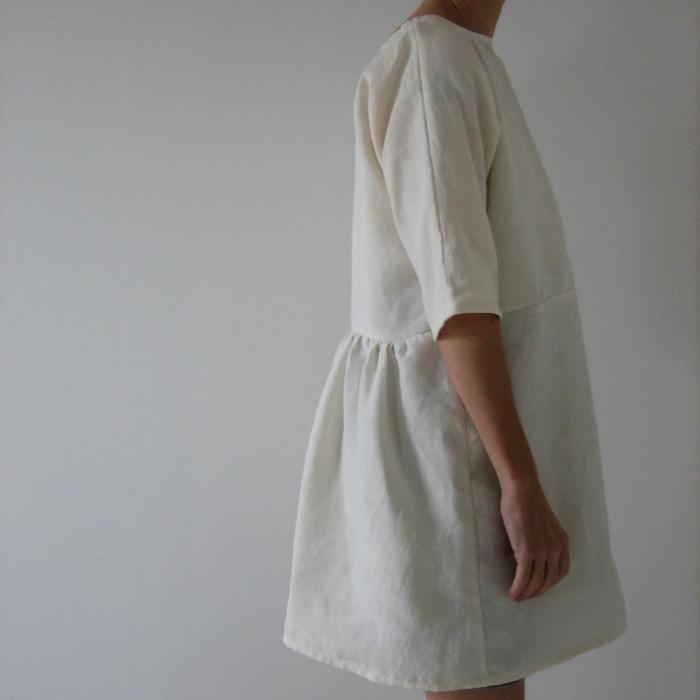
The French-inspired look from Freedom is not about tight tailoring or overly polished glamour. It is closer to a studio smock, a gathered linen dress, a boat-neck top, an easy apron shape, or a child’s garment built for movement. These pieces do not fight the body. They frame it gently. The result is clothing that looks intelligent without being severe and charming without being sugary.
This is especially important in children’s fashion. Many kids’ clothes are either miniature adult outfits or cartoon explosions. Le Bouton’s children’s pieces were described as basic forms built around shape, volume, color, and texture. That design language respects children as active people. They climb, spill, nap, and invent mysterious outdoor soups out of mud and leaves. Clothes should survive the adventure and look better for it.
French Style, Maine Soul
French-inspired fashion often includes familiar wardrobe staples: Breton stripes, ballet flats, basket bags, trench coats, tailored trousers, cardigans, and crisp shirts. But the Freedom, Maine version feels earthier. It trades city polish for rural poetry. Instead of a trench coat on a Paris boulevard, imagine a washed linen coat over a dress at a farmstand. Instead of a tiny structured handbag, picture a market basket carrying apples, flowers, and one impulsive pastry. The ingredients are French; the seasoning is Maine.
The Color Palette: Soft, Natural, and Useful
A Freedom-meets-France wardrobe works best in colors that can live together peacefully: ivory, oatmeal, slate, faded blue, charcoal, mustard, clay, olive, and soft black. These shades are not boring. They are cooperative. A grey linen dress, a navy cardigan, and a pair of brown leather sandals can create more outfits than a closet full of trend pieces arguing with one another.
One reason French-inspired fashion remains popular is that it makes dressing easier. A neutral base allows texture to do the talking. Linen, cotton, wool, canvas, leather, and straw all bring their own personality. When the colors are calm, the fabric becomes the feature. That is why a simple off-white linen dress can feel more luxurious than something covered in decorative drama. The dress knows who it is. Confidence looks good in every size.
The Beauty of “Buy Less, Wear More”
Slow fashion is not just an aesthetic choice; it is a practical response to waste. The U.S. Environmental Protection Agency has estimated that millions of tons of textiles enter municipal solid waste streams, and the Government Accountability Office has highlighted how fast fashion contributes to landfill problems. Against that backdrop, small-batch clothing made with durable fabrics feels less like nostalgia and more like common sense.
Le Bouton’s made-to-order and handmade spirit fits naturally into this conversation. A garment made with intention invites a different relationship. You are less likely to treat it as disposable. You notice the seam, the weight, the drape, the way it changes after washing. You may even repair it. Imagine that: a button falls off and the world does not end. Somewhere, a fast-fashion algorithm faints dramatically.
How to Wear French-Inspired Fashion from Freedom, Maine
The best way to wear this style is to avoid trying too hard. That does not mean rolling out of bed and hoping for the best, although linen will forgive you if you do. It means choosing pieces that look intentional together without feeling overly matched.
1. Start with a Linen Dress
A linen dress is the foundation. Choose a relaxed silhouette with a slight boat neck, gathered skirt, apron-inspired shape, or easy shift cut. The goal is movement. Wear it with flat sandals, clogs, or ballet flats in warm weather. Add a cardigan or chore jacket when the temperature dips. The dress should be simple enough for daily wear but beautiful enough that people ask where you found it.
2. Add a Breton Stripe or Plain Cotton Top
The Breton stripe is a classic French reference, but in this wardrobe it should feel casual rather than theatrical. Pair a striped top with wide-leg linen trousers, faded denim, or a cotton skirt. If stripes are not your thing, a plain white or navy cotton top works just as well. The magic is in proportion: slightly boxy, breathable, and not too precious.
3. Choose Practical Shoes
French-inspired does not require suffering in shoes that look elegant only while standing completely still. Ballet flats, leather sandals, clogs, loafers, and low boots all fit the Freedom, Maine mood. The shoes should handle a gravel path, a farmers market, or a long afternoon of wandering. Style should not collapse at the first sight of a puddle.
4. Carry a Basket or Canvas Tote
A basket bag gives the outfit an instant French countryside feeling, but a canvas tote may be more Maine. Either works. The key is usefulness. The bag should carry a book, a scarf, sunglasses, and maybe blueberries if the day goes well. In this aesthetic, accessories are not decorations added at the last second; they are objects that participate in daily life.
5. Let Texture Replace Logos
Logo-heavy dressing has its place, but this look is strongest when branding steps aside. Let washed linen, nubby cotton, hand-stitching, patchwork, and softened leather create interest. A small imperfection can be more stylish than a perfect surface. It says the garment belongs to the world, not just a hanger.
Why This Aesthetic Feels So Current
Fashion is moving through a complicated moment. Industry reports point to cautious consumers, economic pressure, technology shifts, and a growing interest in value. At the same time, resale and secondhand fashion continue to expand, especially among younger shoppers. All of this supports a broader change: people want clothes that last longer, work harder, and feel more personal.
French-inspired fashion from Freedom, Maine fits that shift beautifully. It is not loud luxury. It is not disposable trend-chasing. It is a wardrobe philosophy built around fewer, better things. In SEO language, the related keywords might be “slow fashion,” “linen clothing,” “French capsule wardrobe,” and “Maine-made style.” In human language, it is simply this: clothes you can live in without feeling underdressed for your own life.
Specific Outfit Examples
The Porch Morning Look
Wear an oatmeal linen dress with a navy cardigan, brown leather sandals, and a canvas tote. Add a loose braid or a low bun if you want to look like you accidentally became the main character in a tasteful independent film. This outfit works for coffee, errands, gardening, or writing three sentences in a notebook and calling it a creative breakthrough.
The Farmers Market Look
Pair a striped cotton top with wide-leg linen trousers, clogs, and a basket bag. Roll the sleeves. Skip heavy jewelry. Let the outfit feel useful and relaxed. Bonus points if the basket contains flowers, bread, or vegetables you fully intend to cook before remembering takeout exists.
The Studio Afternoon Look
Choose a smock-style tunic over straight jeans with low boots. Add a scarf in faded red, indigo, or cream. This outfit feels creative without looking like you are auditioning to become an art teacher in a romantic comedy. It is practical, layered, and full of quiet charm.
The Dinner in a Mill Look
For a special evening, wear a black or charcoal linen dress with simple flats, a cropped jacket, and one beautiful accessory: a silver cuff, a silk scarf, or small pearl earrings. The look is elegant but not stiff. It suits a candlelit dinner, especially in a restored building with old beams, good food, and the kind of atmosphere that makes everyone lower their voice for no clear reason.
The Handmade Connection: Clothing as Local Culture
Freedom, Maine has become widely associated with craft, food, rural beauty, and preservation, partly because of places like The Lost Kitchen and the renovated mill at Freedom Falls. That cultural setting matters. A town known for handmade tables, seasonal food, old buildings, and carefully chosen objects naturally makes room for fashion that values the same things.
Le Bouton’s work also extended beyond clothing into textile objects, including collaborations that used fabric remnants in handmade throws. That kind of project speaks to a larger design ethic: waste less, notice materials, and make something with care. It is a very French idea and a very Maine idea at the same time. The French part says, “Edit beautifully.” The Maine part says, “Use what you have, and make it sturdy.” Together, they produce something quietly wonderful.
Experience Notes: Living with French-Inspired Fashion from Freedom, Maine
To understand this style, imagine packing for a long weekend in inland Maine with only a small bag. You bring one linen dress, one striped shirt, one pair of relaxed trousers, a cardigan, sandals, low boots, a scarf, and a tote. At first, it may feel too simple. Then the outfits begin to multiply. The dress works alone in the afternoon sun. The cardigan makes it dinner-ready. The striped shirt goes with the trousers for a market run. The scarf becomes warmth, color, and emergency hair management. Suddenly, the limited wardrobe feels less like restriction and more like relief.
That is the real experience of French-inspired Freedom style: it lowers the volume. You stop asking, “Is this trendy enough?” and start asking, “Can I live well in this?” A good linen dress does not demand a perfect day. It handles wrinkles, movement, weather, and a little chaos. A smock top does not care whether you are painting, cooking, working from home, or carrying firewood with more ambition than technique. These garments are not fragile little museum pieces. They are companions.
There is also an emotional quality to wearing natural fabrics in a rural setting. Linen catches light differently than synthetic fabric. Cotton softens after washing. Wool holds warmth in a way that feels almost loyal. When you wear these materials in a place like Freedom, with its fields, old mills, and quiet roads, the clothing seems to belong to the landscape. You do not feel dressed up as someone else. You feel more like yourself, but edited.
Another pleasure is how forgiving this style can be. French-inspired fashion is often misunderstood as exclusive or intimidating, but the Freedom version is approachable. You do not need a Paris address or a dramatic red lip. You need a few well-chosen pieces, a willingness to repeat outfits, and the courage to let fabric wrinkle. The look improves when it is worn. That alone makes it feel more humane than fashion that punishes sitting down.
For anyone building this wardrobe, the best experience begins slowly. Buy one excellent linen piece instead of five mediocre substitutes. Choose colors that work with what you already own. Look for secondhand cotton shirts, vintage scarves, handmade bags, and shoes that can survive real walking. Repair what you love. Wash gently. Air dry when possible. Let garments develop personality. Over time, your closet becomes less crowded and more useful.
The final reward is confidence. Not the loud kind that arrives with a spotlight and a soundtrack, but the quiet kind that comes from knowing your clothes make sense. French-inspired fashion from Freedom, Maine is beautiful because it does not chase attention. It invites attention slowly, through fabric, proportion, and purpose. It is style with fresh air in it.
Conclusion
French-inspired fashion from Freedom, Maine is more than a charming headline. It is a complete wardrobe philosophy: simple silhouettes, natural fabrics, useful beauty, and a deep respect for craft. Through the story of Le Bouton and Lisa Dorr’s linen-rich design language, we see how rural Maine and French style can meet in a way that feels timeless rather than trendy. The result is clothing that looks elegant, moves easily, and grows better with wear.
This style is for people who want fewer clothes with more meaning. It favors linen dresses over disposable hauls, baskets over flashy bags, and texture over logos. It is practical without being plain, romantic without being fussy, and chic without needing to announce itself. In other words, it is fashion with a good backbone and a soft sleeve.
Note: This article was created from public-source research and written as original, web-ready editorial content. Source links are intentionally not inserted in the article body, as requested.