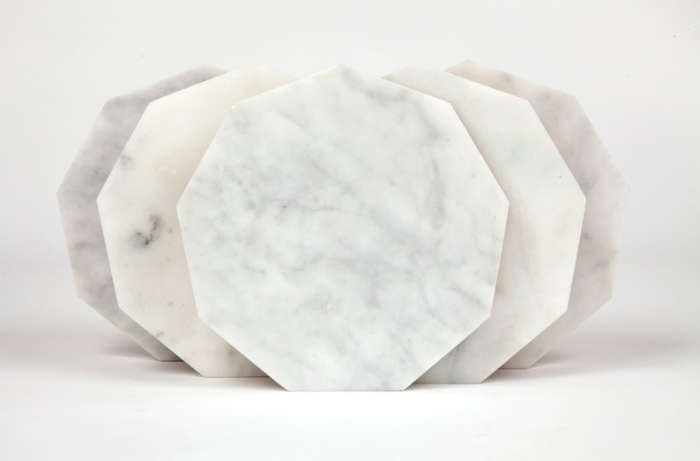
Some kitchen objects spend their lives apologizing for being practical. They get shoved into drawers, hidden behind cutting boards, or brought out only when a dangerously hot Dutch oven threatens the dining table. Fort Standard Geometric Trivets take a different approach. They do the useful job of protecting a surface, but they also behave like small pieces of sculpture that happen to be ready when dinner arrives.
Designed by New York-based studio Fort Standard, these geometric stone trivets capture a larger idea that runs through the company’s work: ordinary objects become more interesting when material, form, and function are treated as equal partners. The concept is remarkably simplecut natural stone into crisp geometric shapes and add a protective leather undersidebut that simplicity is precisely where the design gets its strength.
There are no decorative swirls, novelty slogans, or silicone flowers pretending to be daisies. Instead, there is stone, geometry, texture, and enough visual confidence to sit on a table even when no hot pan is anywhere in sight.
Research basis:
What Are Fort Standard Geometric Trivets?
Fort Standard Geometric Trivets are tabletop accessories made from natural stone and shaped into clean geometric forms. Product listings and design publications have described versions in marble and other stones, typically finished with a leather bottom intended to help protect tables from scratches.
Historical listings place the approximate dimensions around seven inches across, with some versions measuring between seven and eight inches in diameter or width depending on the shape. A white Carrara marble triangle version has also been described as measuring about 7 by 7 inches, with natural variation in color and veining.
That last detail matters. Marble is not a sheet of plastic wearing a marble-print costume. Every piece of natural stone has its own veins, clouds, tonal shifts, and tiny irregularities. Two trivets from the same design may therefore look like siblings rather than identical twins.
A Small Object With Architectural Presence
The appeal begins with scale. A geometric trivet is small enough to live on a kitchen counter without taking over the room, yet substantial enough to have visual weight. The crisp outline gives it an almost architectural character, while the natural stone keeps it from feeling cold or overly mathematical.
Put another way, this is geometry with a pulse.
A triangle, polygon, or other reduced shape could feel severe if made from anonymous industrial material. In marble, however, the veins interrupt perfection. Nature scribbles across the geometry. The designer establishes the outline; the stone supplies the improvisation.
Research basis:
The Fort Standard Design Philosophy Behind the Trivets
Fort Standard emerged from the New York design world with a reputation for combining contemporary forms with traditional materials and craft-conscious production. The studio was founded by industrial designers Gregory Buntain and Ian Collings, who studied at Pratt Institute and developed work spanning furniture, lighting, tabletop objects, and smaller home accessories.
Across coverage of the studio, several themes appear repeatedly: respect for materials, attention to useful details, simple forms, and an interest in making everyday objects worthy of being seen rather than hidden.
The geometric trivets are almost a pocket-sized summary of those ideas.
Material Comes First
Fort Standard’s work has frequently explored wood, metal, leather, and stone. The studio’s current philosophy also emphasizes the character and natural variation of high-quality materials and the way well-made objects can develop through use and age.
With the geometric trivets, stone is not merely a convenient heat barrier. It is the visual event. The veining, mineral pattern, thickness, edge, and weight all contribute to the experience.
This explains why the object does not need excessive ornament. Adding a decorative pattern to expressive marble can be like putting a sticker on a sunset. Technically possible, perhaps. Necessary? Not especially.
Function Is Quietly Built In
Good minimalist design sometimes gets accused of looking wonderful while being about as practical as a white sofa in a house with three toddlers and a Labrador. The Fort Standard trivet avoids that trap by addressing a basic tabletop problem directly.
A hot serving vessel needs separation from a vulnerable surface. The stone provides a substantial platform, while the leather underside adds a softer point of contact with the table. That backing is a particularly thoughtful detail because stone itself can be hard on delicate surfaces if dragged or dropped carelessly.
The result is a layered material solution: a durable upper surface, a softer lower surface, and a geometric form that ties everything together visually.
Research basis:
Why the Geometry Works So Well
Geometric home accessories are hardly new, but Fort Standard’s approach demonstrates why basic shapes remain so useful in interior design. A simple geometric object can adapt to different environments without disappearing completely.
In a minimalist kitchen, a marble trivet reinforces the clean lines already present. On a rustic wood table, the stone introduces contrast. In an eclectic dining room, it becomes a visual pause between more expressive objects.
Geometry Creates Order
Circles, triangles, squares, and polygons are easy for the eye to understand. Their boundaries are clear. That clarity can make a tabletop arrangement feel intentional even when the rest of dinner is operating under what might politely be called “creative conditions.”
A geometric trivet can visually anchor a serving bowl, tea kettle, casserole, or Dutch oven. The vessel sits within a recognizable shape instead of appearing to float randomly on the table.
Natural Stone Prevents the Design From Feeling Sterile
Pure geometry can become clinical, but natural stone introduces irregularity. A marble vein may cut diagonally through a carefully controlled shape. Color may shift from bright white to gray or creamy beige. Small mineral details make the object feel individual.
This balance between controlled form and uncontrolled material is one of the most compelling qualities of the Fort Standard marble trivet. The design is disciplined, but the material refuses to become completely predictable.
Materials and Construction
Available descriptions of Fort Standard’s stone trivets emphasize natural stone construction and a leather backing. One triangle version has been identified specifically as white Carrara marble and described as being water-jet cut, with production details including stone cutting in New Jersey and leather tanned in Brooklyn.
Those details fit the broader Fort Standard interest in combining modern fabrication methods with tactile, long-established materials.
Natural Marble
Marble brings several qualities to a tabletop accessory. It feels substantial, appears luxurious without requiring ornamental decoration, and offers a naturally varied surface. In white Carrara marble, gray veining creates enough movement to make each piece visually distinct.
Stone also gives the trivet permanence. A lightweight pad may be easy to toss into a drawer; a marble trivet tends to claim a place on the counter. That sounds like a small behavioral difference, but it changes how the object participates in a room.
The Leather Underside
The leather base may be the less photographed side, but it is an important part of the design. Historical product descriptions specifically highlight a hand-stamped leather bottom intended to protect table surfaces from scratching.
It also creates an attractive material contrast. The cool hardness of stone meets the warmer, softer character of leather. Even when the backing is mostly hidden during use, knowing it is there makes the object feel more finished.
This is a good example of design attention being spent where it matters rather than where it photographs most dramatically.
Research basis:
More Than a Hot-Pan Holder
The obvious purpose of a trivet is to sit beneath hot cookware or serving dishes, but a well-designed stone version can take on several supporting roles around the home.
A Permanent Countertop Object
Because the Fort Standard Geometric Trivets are visually restrained, they can remain on display between meals. A marble trivet can act as a base for a kettle, coffee press, ceramic pitcher, or frequently used container.
It creates a defined zone without adding another bulky organizer. In a kitchen where every surface is fighting for survival, that is no small achievement.
A Base for Decorative Objects
The same geometric form can visually frame a vase, candle, or small arrangement. This does not mean the trivet suddenly needs to resign from kitchen duty and begin introducing itself as a sculpture pedestal. It simply means a thoughtfully designed object can be useful in more than one context.
A Design-Oriented Gift
Architect Magazine once included the geometric trivets in a design-focused gift guide, which makes sense. They occupy a useful middle ground between household necessity and collectible design object.
A trivet is practical enough that the recipient does not need an empty gallery wall or a degree in design theory to use it. Yet a natural-stone version with a considered form feels more memorable than another generic kitchen gadget destined for the mysterious drawer where avocado slicers go to retire.
How Fort Standard Geometric Trivets Fit Different Interior Styles
Modern and Minimalist Kitchens
In a kitchen with flat-panel cabinets, simple hardware, and restrained colors, a geometric marble trivet feels completely at home. The strong shape echoes architectural lines, while the stone adds texture to prevent the space from becoming visually flat.
Warm Contemporary Interiors
Fort Standard has often been associated with a warm contemporary approachmodern forms softened by tactile materials. A stone-and-leather trivet naturally works in rooms that combine walnut, oak, linen, ceramics, brass, and other materials with visible texture.
Traditional Dining Rooms
Marble also has enough historical familiarity to work with more traditional furniture. On a dark wood dining table, a white stone trivet creates contrast without looking aggressively futuristic.
Eclectic Spaces
In a room filled with collected ceramics, vintage objects, books, artwork, and mismatched chairs, a geometric trivet can provide a moment of visual discipline. It does not compete for attention; it organizes attention.
What Makes the Design Feel Timeless?
Trends tend to announce themselves loudly. Timeless objects usually speak at indoor voice level.
The Fort Standard trivet avoids several features that quickly date household products. There is no trendy printed graphic, no unnecessary electronic component, and no complicated mechanism waiting to become obsolete. The core ingredients are stone, leather, and geometry.
Those materials and forms have existed for centuries, but the combination feels distinctly contemporary because of the precision and reduction involved.
That is one reason small design objects can remain compelling long after their original retail moment. A useful object based on honest materials does not require the surrounding trend cycle to explain why it exists.
Research basis:
Care and Everyday Use
Natural stone deserves sensible treatment. Marble can develop marks, stains, or surface changes if exposed to aggressive chemicals or left in contact with staining substances. For routine care, a gentle approach is the safest philosophy: wipe spills promptly, avoid harsh abrasive cleaning methods, and treat the trivet as natural stone rather than indestructible laboratory equipment.
The leather underside should also be kept reasonably dry. Because natural leather can change with age and use, minor patina should not automatically be viewed as damage. In many well-made objects, those changes become part of the material character.
It is also wise to lift a heavy stone trivet rather than slide it repeatedly across delicate furniture. The backing is designed to protect surfaces, but good table manners still apply to the table accessory itself.
The Broader Appeal of Fort Standard’s Everyday Objects
The geometric trivets make more sense when viewed within Fort Standard’s larger body of work. The studio has designed furniture, cutting boards, bowls, bottle openers, lighting, and other objects while repeatedly exploring how material and process can create interest without unnecessary decoration.
That approach has been recognized across American design publications and institutions, from coverage of the founders’ Pratt Institute background to features on the studio’s furniture collections and material experiments.
The trivet may be smaller than a credenza or dining table, but the design question is essentially the same: How much can be achieved with a clear function, a strong material choice, and a form stripped of everything it does not need?
Apparently, quite a lot.
Experiencing Fort Standard Geometric Trivets in Everyday Life
The most interesting thing about living with a well-designed trivet is how quickly it stops behaving like an accessory you remember only when something is hot. A substantial geometric stone trivet tends to remain visible, and that visibility changes the daily experience of the kitchen or dining room.
Imagine the morning routine. The trivet is sitting on the counter beneath a coffee press or ceramic pot. In early light, the marble veining becomes more noticeable than it was under bright evening fixtures. The geometry feels precise from across the room, but up close the stone is irregular and individual. Before breakfast has accomplished anything impressive, the counter already looks slightly more considered.
Later, the same object moves to the table beneath a serving dish. This is where its weight becomes part of the experience. A substantial stone trivet does not flutter, fold, bunch up, or attempt an escape when a pan is lowered onto it. It feels planted.
That physical stability can make serving food feel more deliberate. There is a clear destination for the hot dish. The geometric outline creates a small visual stage, while the leather underside helps separate the hard stone from the furniture below.
The Pleasure of Leaving It Out
Many kitchen tools create visual clutter when left on display. A potato peeler on the dining table rarely inspires anyone to whisper, “What a beautiful composition.” A geometric marble trivet is different because its resting state is still visually complete.
Between meals, it may sit alone. That is enough.
It may hold a vase one week and return to casserole duty the next. It may become the unofficial location for a teapot, a candle, or a bowl of lemons. The design does not dictate one permanent use, which makes it easier to integrate into changing routines.
The Experience of Natural Variation
Owning a natural-stone object also involves accepting variation. The piece seen in a photograph may have dramatic gray veins, while another is quieter and more cloudlike. This unpredictability is part of the appeal.
Mass production has trained consumers to expect absolute sameness, but natural materials offer a different experience. You are not simply buying a shape; you are getting one particular section of stone. The geometry can be repeated. The mineral pattern cannot.
Over time, that uniqueness becomes more familiar. You begin recognizing a specific vein or tonal shift the way you recognize the grain in a favorite wooden table.
Using It During Real, Slightly Chaotic Meals
Design photography usually presents tabletop objects in a state of supernatural calm. Real meals are less cooperative. Someone needs another fork. The vegetables are getting cold. A sauce has appeared where no sauce was invited.
In that setting, the value of a good trivet becomes refreshingly basic: it is there, it is sturdy, and it does its job without demanding attention.
That may be the best test of functional design. The object can be appreciated when the room is quiet, but it remains useful when nobody has time to appreciate anything.
A Small Luxury Rather Than a Disposable Gadget
The Fort Standard Geometric Trivets also represent a different way of thinking about small household purchases. Instead of buying a purely temporary solution, the idea is to choose an object that earns its place through both performance and appearance.
That does not mean every kitchen tool needs to be a collectible design piece. Nobody needs an artisanal, gallery-certified onion bag. But objects used repeatedly can benefit from better materials and more thoughtful construction.
A trivet is touched, moved, seen, stored, and used around food and furniture. Improving that humble interaction can make everyday life marginally more pleasant. Design often works exactly at that scalenot by transforming existence in a cinematic montage, but by removing small annoyances and adding small moments of satisfaction.
How the Design Changes With the Room
Another part of the experience is seeing the trivet behave differently in different surroundings. Against white quartz, pale marble may appear subtle and almost monochromatic. Against walnut, it becomes graphic. Beside handmade ceramics, it emphasizes texture. Near polished metal, it feels softer and more geological.
This adaptability is one reason the design remains interesting. The trivet has a strong identity, but it does not require an entire room to dress around it.
Final Thoughts
Fort Standard Geometric Trivets demonstrate how much design can be packed into an object with an extremely straightforward job. Natural stone gives the pieces weight and individual character. Geometric forms provide visual clarity. A leather underside adds a practical layer of protection and a satisfying material contrast.
The result is not revolutionary in the loud, gadget-launch sense of the word. It does not connect to Wi-Fi. It will not send your phone a notification announcing that the casserole is still hot. Thankfully.
Instead, it represents a quieter and arguably more durable idea: everyday objects deserve thoughtful materials, useful details, and forms that remain enjoyable after trends have moved on.
For admirers of contemporary American design, marble kitchen accessories, minimalist tableware, and functional home objects, the Fort Standard trivet remains a compelling example of how good design can elevate something as ordinary as protecting a table from dinner.
Note: Fort Standard trivet versions, dimensions, materials, retail pricing, and availability have varied across historical and retailer listings. Buyers seeking a specific edition should confirm current product details with the seller before purchasing.