Some chips sit on a circuit board and quietly do their jobs. Others look at a drone, a camera, a radar stream, and a pile of real-time math and say, “Sure, I’ll handle that before lunch.” AMD Zynq belongs in the second group. It combines an Arm-based processing system with FPGA programmable logic, creating a device that can run software like a normal embedded processor while also behaving like custom hardware when speed, timing, and parallelism matter.
That is why the phrase Flying High With Zynq works so well. Zynq is not only about aviation, but flight is one of the easiest places to understand its value. A flying machine has no patience for lazy electronics. Sensors are constantly chattering, motors need precise control, cameras produce oceans of pixels, and navigation software must make decisions before the ground gets too friendly. In that world, milliseconds matter, power matters, and reliability matters even more.
Zynq’s big trick is giving engineers two brains in one package: a processor for flexible decision-making and programmable logic for deterministic acceleration. Think of the processor as the pilot with the checklist and the FPGA fabric as the pit crew that changes all four tires before the pilot finishes saying “latency.” Together, they make a strong platform for drones, robotics, industrial vision, aerospace prototyping, software-defined radio, and edge AI systems.
What Is Zynq, Really?
At its core, Zynq is a system-on-chip that blends software programmability and hardware programmability. The Zynq-7000 family uses Arm Cortex-A9 processing cores alongside FPGA fabric. The newer Zynq UltraScale+ MPSoC family expands the idea with 64-bit processing options, real-time control capabilities, graphics and video support, and stronger acceleration resources. In plain English, it lets one chip behave like a small computer and a custom circuit factory at the same time.
This matters because traditional embedded designs often force a trade-off. A microcontroller is easy to program but may struggle with heavy parallel workloads. A pure FPGA is fast and deterministic but can be intimidating for teams that live in C, C++, Python, Linux, or robotics middleware. Zynq stands in the middle and says, “Why not both?”
Why Zynq Makes Sense for Flight and Robotics
Flight control is a beautiful nightmare. A drone or unmanned aerial vehicle must read inertial sensors, estimate attitude, control motors, manage communications, watch battery levels, process location data, and sometimes interpret camera feeds. If one part of the system is late, noisy, or confused, the aircraft may start flying like a shopping cart with propellers.
This is where Zynq shines. The Arm processor can run an operating system, autopilot logic, mission planning software, network communication, and user interfaces. Meanwhile, the programmable logic can handle repetitive, time-critical, or high-throughput tasks such as pulse generation, sensor timing, motor-control interfaces, image preprocessing, video pipelines, or custom data buses.
Open-source autopilot ecosystems such as ArduPilot and PX4 show why flexible computing platforms matter. These projects support many vehicle types and research workflows, from multicopters to fixed-wing aircraft and ground vehicles. Zynq adds another layer: developers can keep familiar software stacks while moving performance-sensitive work into hardware.
The Historic “Flying High” Moment
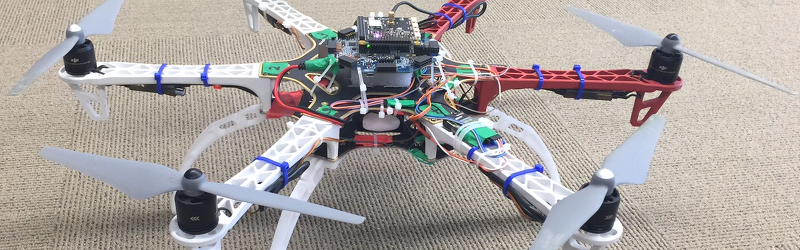
The title also nods to a memorable milestone in the maker and embedded-systems world: a Zynq-powered unmanned aircraft running ArduPilot. The project helped demonstrate that an FPGA-plus-processor SoC could be more than a lab curiosity. It could fly. That may sound simple until you remember that flight is the electronics equivalent of doing ballet while being chased by physics.
The Aerotenna OcPoC project, short for Octagonal Pilot on Chip, became a notable example of this direction. It aimed to pair open-source autopilot software with a Zynq-based architecture. The idea was exciting because it suggested a future where flight controllers could be more adaptable, more integrated, and better prepared for sensor-heavy autonomous systems.
Processor vs. Programmable Logic: Who Does What?
A successful Zynq design begins with smart partitioning. Not everything belongs in the FPGA fabric. In fact, throwing every task into programmable logic is a great way to create a very expensive headache with blinking LEDs.
Good Jobs for the Arm Processor
The processor is ideal for high-level logic: flight modes, mission planning, telemetry, configuration, logging, user commands, networking, and general decision-making. It is also where Linux, real-time operating systems, robotics frameworks, and development tools feel most at home.
Good Jobs for the FPGA Fabric
The programmable logic is best for tasks that need speed, parallelism, repeatability, or exact timing. Examples include sensor fusion helpers, camera-frame preprocessing, motor signal generation, custom communication protocols, signal filtering, encryption acceleration, and low-latency control loops. When data arrives fast and in predictable patterns, the FPGA fabric can chew through it like a caffeinated calculator.
Real-Time Image Processing: The Sky Has Eyes
Modern drones and aerospace systems increasingly rely on cameras, depth sensors, radar, LiDAR, and other data-hungry instruments. A processor can analyze images, but high-resolution video streams can quickly overwhelm a small embedded CPU. Zynq gives engineers a way to process pixels before the software layer ever sees them.
For example, the FPGA fabric can perform grayscale conversion, edge detection, filtering, object preselection, frame synchronization, or data compression. The processor can then focus on interpretation: Is that a landing marker? Is the object moving? Is the aircraft drifting? Is the camera seeing a bird, a branch, or the world’s most suspicious plastic bag?
This split is especially useful in edge AI. A drone cannot always stream raw video to the cloud. Connectivity may be weak, latency may be unacceptable, and power budgets are always watching from the corner like a strict accountant. Processing more data onboard can make autonomous systems faster and more independent.
Hardware-Software Co-Design: The Secret Sauce
Zynq rewards teams that think in systems, not silos. Hardware-software co-design means deciding which parts of an application belong in software and which parts deserve hardware acceleration. Tools such as AMD Vivado and Vitis support this workflow by helping engineers create programmable logic designs, build embedded applications, debug systems, and deploy complete designs to Zynq platforms.
The best co-design process usually starts with profiling. First, build the software version. Then measure what is too slow, too power-hungry, or too unpredictable. Only then should the team move selected functions into programmable logic. This keeps the project grounded in reality rather than vibes, coffee, and heroic assumptions.
Development Boards That Lower the Runway
One reason Zynq became popular with students, researchers, and prototyping teams is the availability of development boards. Boards such as the ZedBoard and PYNQ-Z1 helped make Zynq approachable. They provide memory, I/O, expansion connectors, and enough documentation to let developers build real projects without designing a full custom board on day one.
PYNQ is especially interesting because it brings Python and Jupyter-style workflows into the adaptive-computing world. That does not magically eliminate the need to understand hardware, but it does make experimentation friendlier. For teams exploring computer vision, robotics, control systems, or teaching labs, that friendliness matters.
Zynq in Aerospace Thinking
Aerospace electronics are not just “electronics, but higher.” They must survive tough constraints: vibration, thermal variation, power limits, communication delays, software assurance requirements, and sometimes radiation concerns. NASA’s small-spacecraft avionics guidance describes avionics as the electronic subsystems and software that allow a spacecraft to operate and complete its mission. Zynq-style devices fit naturally into this conversation because they combine control, data handling, and acceleration in a compact architecture.
That does not mean every Zynq board belongs on a spacecraft or certified aircraft. Aerospace qualification is a serious process involving parts selection, redundancy, testing, documentation, and risk management. But as a prototyping and research platform, Zynq gives engineers a powerful way to explore architectures before committing to final flight hardware.
Where Zynq Beats a Plain Microcontroller
A plain microcontroller is often perfect for simple drones, sensors, and control tasks. It is cheap, efficient, and easy to understand. Zynq becomes more attractive when the system needs multiple demanding workloads at once.
Consider a drone that must stabilize itself, track objects with a camera, communicate with a ground station, log data, avoid obstacles, and support future sensor upgrades. A microcontroller may still handle the basic flight loop, but advanced perception and custom I/O can become painful. Zynq gives the design more headroom without forcing everything onto a large power-hungry computer.
Where Zynq Can Be Overkill
Now for the honest part: Zynq is not magic dust. If your project only needs to blink LEDs, read a temperature sensor, or fly a basic hobby quadcopter, Zynq may be like hiring a symphony orchestra to play a doorbell. It will work, but your budget may start sweating.
The learning curve is also real. Developers must understand embedded Linux or bare-metal programming, FPGA design concepts, timing closure, memory mapping, AXI interfaces, boot flows, and debugging across hardware and software boundaries. Zynq is powerful because it gives you many levers. It is challenging because some of those levers are attached to trapdoors.
Best Practices for Flying High With Zynq
Start With a Clear Mission
Before choosing a Zynq device, define the workload. Are you accelerating vision? Managing many sensors? Building a custom flight controller? Running AI at the edge? The clearer the mission, the easier it is to choose the right device, board, memory, I/O, and software stack.
Prototype Before You Customize
Use a development board first. Validate the algorithm, test the software, and measure latency. Custom hardware should come after the architecture proves itself, not before. Otherwise, you may create a beautiful printed circuit board that teaches expensive lessons.
Keep the Processor and FPGA Talking Cleanly
The interface between the processing system and programmable logic is critical. Poor data movement can ruin an otherwise clever accelerator. Plan memory buffers, DMA transfers, interrupts, and control registers carefully.
Respect Power and Heat
Flying systems are weight-sensitive and power-sensitive. Every watt becomes heat, and every gram asks the battery for rent. Zynq can be efficient, but only if the design is thoughtful.
Experience Notes: What Flying High With Zynq Feels Like
Working with Zynq feels a little like learning to fly an aircraft with two cockpits. In one cockpit, everything looks familiar: C code, Linux prompts, Python notebooks, device trees, serial consoles, and logs scrolling by like tiny digital rain. In the other cockpit, you are dealing with clocks, timing constraints, HDL, block designs, AXI buses, and signals that do not care about your feelings. The first time both sides cooperate, it feels fantastic. The first time they do not, you may briefly consider opening a bakery.
A typical Zynq experience starts with optimism. You boot a development board, run a demo, blink an LED, maybe stream some data, and think, “This is easy.” Then you try to add a custom hardware block. Suddenly, you are learning about bitstreams, hardware handoff files, address maps, interrupts, cache coherency, and why one missing clock connection can turn a confident engineer into a detective with a multimeter.
But that learning curve has a reward. Once you understand the workflow, Zynq becomes addictive. You begin to see systems differently. A camera feed is no longer just a video stream; it is a pipeline. A motor signal is no longer just an output; it is a timing problem. A sensor array is no longer a pile of peripherals; it is a dataflow puzzle. Zynq encourages you to ask, “What should software decide, and what should hardware guarantee?” That question is at the heart of good embedded design.
In a flight-related project, the experience becomes even more vivid. Imagine logging inertial data while the aircraft vibrates, watching telemetry update in real time, and tuning a control loop that must remain stable under changing conditions. The processor handles the readable, flexible world of configuration and state. The FPGA fabric handles the disciplined world of repeatable timing. When the aircraft responds smoothly, it feels like the electronics have disappeared and the design is simply doing what it was meant to do.
The best practical lesson is to stay humble. Zynq projects reward incremental progress. Bring up one sensor. Verify one interface. Accelerate one function. Measure before and after. Keep notes. Version-control everything. Celebrate small wins, because in hardware-software co-design, a small win is often a big win wearing a modest hat.
The second lesson is to avoid using the FPGA fabric just because it is there. Programmable logic is precious. Spend it where it buys something real: lower latency, better determinism, reduced CPU load, higher throughput, or cleaner integration. When used thoughtfully, Zynq can make a compact system feel surprisingly capable. When used randomly, it becomes a complicated way to generate confusion at high speed.
Ultimately, flying high with Zynq is not about replacing every processor or reinventing every flight controller. It is about building systems that can sense, decide, and act with confidence. It is about giving embedded machines enough real-time muscle to handle modern workloads without dragging a desktop computer into the sky. And yes, it is also about the quiet joy of watching a design work after hours of debugging, when the board boots, the sensors respond, the logic runs, and the whole thing finally feels airborne.
Conclusion
Zynq stands out because it solves a modern embedded problem: software alone is flexible but not always fast enough, while hardware alone is fast but not always friendly. By combining Arm processors with FPGA programmable logic, Zynq gives engineers a practical bridge between both worlds.
For drones, robotics, aerospace prototypes, smart cameras, industrial systems, and edge AI devices, that bridge can be powerful. It allows real-time control, high-speed sensing, image processing, custom interfaces, and software-driven intelligence to live together on one adaptable platform. Zynq is not the right answer for every project, but when the mission calls for low latency, parallel processing, and serious flexibility, it deserves a place on the shortlist.
Flying high with Zynq means thinking like a systems engineer: let software handle strategy, let hardware handle speed, and let the design earn its wings one verified signal at a time.