Editorial note: This article is for general wellness education and is based on current guidance from reputable U.S. health and fitness sources, including the CDC, NIH/NIDDK, MedlinePlus, Johns Hopkins Medicine, Harvard Health, Cleveland Clinic, Mayo Clinic, the American Heart Association, ACSM, ACE Fitness, and peer-reviewed exercise research. Belly fat loss should be approached through safe, sustainable habits rather than extreme dieting, punishment workouts, or “miracle” routines.
Introduction: The Truth About Belly Fat and Exercise
Search for “exercises to lose belly fat,” and the internet will throw enough crunches at you to make your abs file a complaint. The promise is usually simple: do one magical move, burn belly fat, become a walking fitness commercial. Unfortunately, the body is not a microwave, and belly fat does not come with a “30-second express melt” button.
The good news? Exercise absolutely helps reduce belly fat, especially when it is consistent, progressive, and paired with smart daily habits. The not-so-glamorous truth is that you cannot choose exactly where your body loses fat first. Sit-ups can strengthen your core, but they do not directly vacuum fat from your waistline. Fat loss happens across the body, while your genetics, hormones, sleep, age, stress, and nutrition influence where changes show up first.
That does not mean ab exercises are useless. Far from it. A stronger core supports better posture, safer lifting, improved balance, and more confident movement. But the best belly fat workout plan combines three major ingredients: aerobic exercise to burn energy and improve heart health, strength training to build calorie-hungry muscle, and core training to strengthen the muscles underneath. Think of it as a three-part band. Cardio plays drums, strength training plays guitar, and core work keeps everyone from falling off the stage.
Can You Target Belly Fat With Specific Exercises?
The short answer: not exactly. The longer answer: you can target your abdominal muscles, but you cannot force your body to remove fat only from your belly. This idea is called spot reduction, and it has been one of the most persistent fitness myths since someone first sold a vibrating belt and called it science.
When you exercise, your body uses stored energy from different places. It does not simply pull fat from the muscle area being worked. That is why doing 200 crunches may make your abs sore, but it will not automatically shrink your waist. However, exercises that burn calories, improve insulin sensitivity, build muscle, and increase overall activity can reduce total body fat, including abdominal and visceral fat over time.
Visceral fat is the deeper abdominal fat stored around internal organs. Unlike the softer fat just under the skin, visceral fat is more strongly linked with health risks such as heart disease, type 2 diabetes, and metabolic problems. This is why losing excess belly fat is not only about how jeans fit after laundry day. It is also about long-term health.
The Best Exercises to Lose Belly Fat
The most effective belly fat exercise routine is not one workout. It is a balanced weekly plan. Below are the exercise types that matter most, with practical examples you can actually do without needing a celebrity trainer, a fog machine, or a refrigerator full of pre-cut celery.
1. Brisk Walking
Brisk walking is underrated because it looks too simple to be powerful. But simple is exactly why it works. Walking is accessible, joint-friendly, and easy to repeat. A brisk walk raises your heart rate, burns calories, improves cardiovascular fitness, and helps reduce sedentary time.
For belly fat loss, aim for 30 minutes of brisk walking most days of the week. If 30 minutes feels too much at first, start with 10 minutes after meals. A post-meal walk can also help with blood sugar control. Over time, increase your pace until you can talk in short sentences but not sing your favorite song without sounding like a tired karaoke machine.
2. Jogging or Running
Jogging and running are vigorous aerobic exercises that burn more energy per minute than casual walking. They can be effective for reducing overall body fat when done consistently. Beginners should not sprint into running like they are being chased by a tax bill. Start with intervals: walk for two minutes, jog for one minute, and repeat for 20 to 30 minutes.
As fitness improves, increase the jogging time and reduce the walking time. Good shoes, gradual progression, and rest days are important. If running bothers your knees, hips, or lower back, choose cycling, swimming, rowing, or elliptical training instead. The best exercise is the one your body can recover from and your schedule will actually allow.
3. Cycling
Cycling, whether outdoors or on a stationary bike, is excellent for building endurance and burning calories with lower impact on the joints. It is especially useful for people who want cardio without the pounding of running.
Try a steady 30- to 45-minute ride at moderate intensity. For variety, add short bursts: pedal harder for 30 seconds, then return to an easier pace for 90 seconds. Repeat this pattern 6 to 10 times. Your legs may question your life choices, but your cardiovascular system will appreciate the memo.
4. Swimming
Swimming trains the whole body while being gentle on the joints. It works the arms, legs, back, shoulders, and core while improving aerobic fitness. Because water supports body weight, swimming is a smart option for people who feel uncomfortable with high-impact workouts.
Begin with 15 to 20 minutes of easy laps or water walking. Gradually work up to 30 minutes. Different strokes challenge the body in different ways, and even simple pool intervals can help build endurance.
5. High-Intensity Interval Training
High-intensity interval training, better known as HIIT, alternates short bursts of hard effort with easier recovery periods. Research suggests HIIT can help reduce total, abdominal, and visceral fat when programmed appropriately. The key phrase is “appropriately.” HIIT should feel challenging, not like a dramatic farewell letter to your lungs.
A beginner-friendly HIIT session might look like this:
- Warm up for 5 minutes with easy walking or cycling.
- Work hard for 20 seconds.
- Recover slowly for 100 seconds.
- Repeat 6 to 8 rounds.
- Cool down for 5 minutes.
Good HIIT exercises include fast cycling, uphill walking, bodyweight squats, step-ups, modified jumping jacks, or rowing. Do HIIT only 1 to 3 times per week, depending on fitness level. More is not always better. Sometimes more is just soreness wearing a fake mustache.
6. Strength Training
Strength training is essential for losing belly fat because muscle helps support a healthier metabolism. The goal is not to become a professional bodybuilder. The goal is to maintain and build lean muscle so your body becomes stronger, more capable, and better at using energy.
Train major muscle groups at least two days per week. Include movements such as squats, lunges, push-ups, rows, deadlifts, overhead presses, and glute bridges. Bodyweight exercises are fine for beginners. Dumbbells, resistance bands, kettlebells, and machines can all work too.
A simple full-body strength workout might include:
- Squats: 2 to 3 sets of 8 to 12 reps
- Push-ups or incline push-ups: 2 to 3 sets of 6 to 12 reps
- Dumbbell rows or band rows: 2 to 3 sets of 8 to 12 reps
- Glute bridges: 2 to 3 sets of 10 to 15 reps
- Plank: 2 to 3 rounds of 20 to 45 seconds
Use a weight or variation that feels challenging by the last few reps while still allowing good form. If your form collapses, the weight is too heavy or your body is asking for a timeout.
7. Circuit Training
Circuit training combines strength and cardio by moving from one exercise to the next with short rest periods. This keeps the heart rate elevated while training multiple muscle groups. It is efficient, flexible, and ideal for people who want a full workout without spending half the evening negotiating with gym machines.
Try this beginner circuit:
- Bodyweight squats: 12 reps
- Incline push-ups: 10 reps
- Step-ups: 10 reps per leg
- Band rows: 12 reps
- Mountain climbers: 20 seconds
- Rest: 60 to 90 seconds
Repeat the circuit 2 to 4 times. Keep movements controlled. A circuit should raise your heart rate, not turn your living room into a low-budget disaster movie.
The Best Core Exercises for a Stronger Midsection
Core exercises do not directly burn belly fat, but they are still important. A strong core supports the spine, improves posture, helps with balance, and makes many other exercises safer and more effective. The goal is not endless crunches. The goal is stability, control, and strength.
Plank
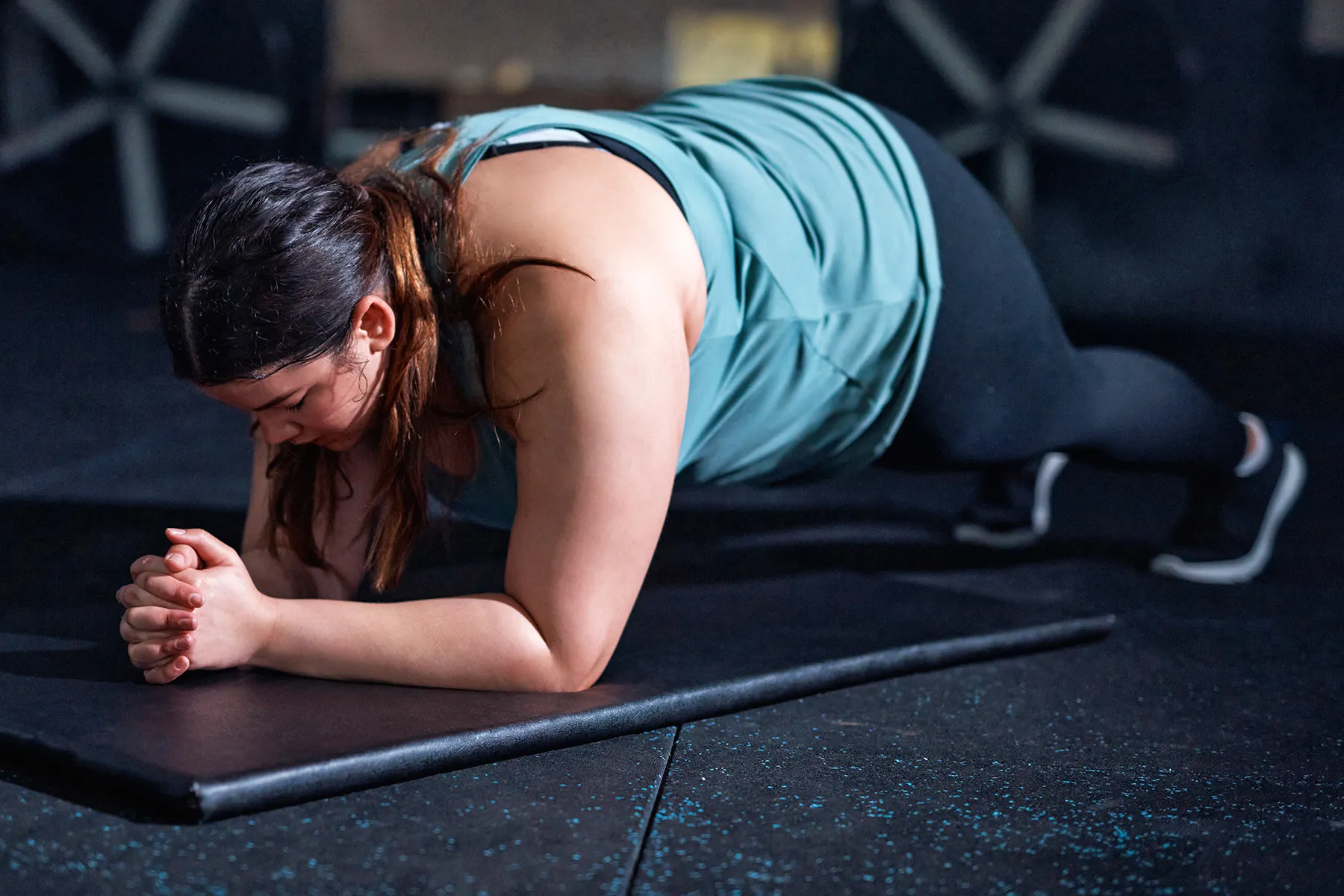
The plank trains the deep core muscles, shoulders, glutes, and back. Start on your forearms and toes, or modify by placing your knees on the floor. Keep your body in a straight line and avoid letting your hips sag. Hold for 15 to 30 seconds, rest, and repeat.
Dead Bug
The dead bug is gentle but effective. Lie on your back with arms up and knees bent at 90 degrees. Slowly lower one arm and the opposite leg, then return to start. Keep your lower back close to the floor. This exercise teaches core control without yanking on your neck.
Bird Dog
Start on hands and knees. Extend one arm and the opposite leg, pause, and return. Alternate sides. Bird dogs strengthen the core, glutes, and back while improving balance. They also have the funniest name in the gym, which should count as a bonus.
Side Plank
The side plank targets the obliques and helps build lateral stability. Start with knees bent if needed. Keep the shoulder stacked over the elbow and lift the hips. Hold for 10 to 30 seconds per side.
Pallof Press
Using a resistance band, stand sideways to the anchor point and press the band straight out from your chest. Resist rotation. This anti-rotation exercise trains the core to stabilize the body, which is useful for sports, lifting, and daily movement.
A Weekly Workout Plan to Lose Belly Fat
The best plan is realistic. If a workout schedule requires two hours a day, six supplements, and the emotional discipline of a monk, it will probably collapse by Thursday. Here is a balanced weekly plan for adults who want sustainable fat loss and better fitness.
Beginner Weekly Plan
- Monday: 30-minute brisk walk plus 10 minutes of core exercises.
- Tuesday: Full-body strength training for 30 minutes.
- Wednesday: 30-minute cycling, swimming, or walking.
- Thursday: Rest day or gentle stretching.
- Friday: Full-body strength training for 30 minutes.
- Saturday: 20-minute beginner HIIT or hill walking session.
- Sunday: Easy walk, mobility work, or active recovery.
Intermediate Weekly Plan
- Monday: Strength training plus core work.
- Tuesday: Moderate cardio for 40 minutes.
- Wednesday: HIIT for 20 to 25 minutes including warm-up and cool-down.
- Thursday: Strength training.
- Friday: Brisk walking or cycling for 30 to 45 minutes.
- Saturday: Circuit training.
- Sunday: Rest or gentle movement.
Progress gradually. Add time, resistance, or intensity slowly. The body responds well to consistency, but it gets cranky when you suddenly go from couch mode to superhero training montage.
How Hard Should You Exercise?
Intensity matters, but harder is not always smarter. Moderate-intensity exercise means your breathing speeds up, but you can still speak in short sentences. Vigorous exercise means you can only say a few words at a time. This “talk test” is a simple way to monitor effort without needing fancy equipment.
Most adults should aim for at least 150 minutes of moderate-intensity aerobic activity per week, or 75 minutes of vigorous activity, plus strength training at least two days per week. More movement may be useful for weight management, but beginners should build gradually. Recovery is part of the plan, not a sign of laziness.
If you have a medical condition, chest pain, dizziness, joint pain, are pregnant, or have been inactive for a long time, talk with a healthcare professional before starting a new routine. If you are a teen, focus on strength, health, sports performance, energy, and confidence rather than aggressive fat-loss goals, and involve a trusted adult or health professional when making major fitness changes.
Common Mistakes That Slow Belly Fat Loss
Doing Only Ab Exercises
Crunches, planks, and leg raises are useful, but they are not enough by themselves. A better plan combines cardio, strength training, and core work.
Going Too Hard Too Soon
Extreme soreness is not a badge of honor. It is often a sign that your plan is too aggressive. Start where you are, then build.
Ignoring Sleep
Poor sleep can increase hunger, reduce motivation, and make workouts feel harder. Most adults do best with consistent, sufficient sleep.
Sitting All Day Except for One Workout
A 45-minute workout is great, but daily movement also matters. Take short walks, stand up regularly, use stairs when possible, and treat movement like a lifestyle rather than a single appointment.
Expecting Instant Results
Visible changes take time. Waist size, energy, strength, endurance, mood, and how clothes fit can all be useful progress markers. The scale is only one data point, and sometimes it is a dramatic little rectangle with trust issues.
Nutrition Still Matters, Even in an Exercise Article
This article is about exercises to lose belly fat, but exercise and nutrition are teammates. You do not need a miserable diet or a list of forbidden foods carved into stone. Instead, focus on sustainable basics: more fiber-rich foods, enough protein, plenty of fruits and vegetables, whole grains, water, and reasonable portions of calorie-dense foods.
Protein supports muscle repair after workouts. Fiber helps meals feel satisfying. Minimally processed foods usually make it easier to manage appetite. Alcohol, sugary drinks, and highly processed snacks can add calories quickly, so reducing them may help. The goal is not perfection. The goal is a pattern you can repeat without feeling like your life has become one long salad commercial.
Experience-Based Tips: What Actually Helps People Stick With Belly Fat Exercises
After looking at what works in real life, one pattern becomes obvious: the best belly fat exercise plan is rarely the most exciting one on day one. It is the plan that survives normal life. People often start with big motivation, buy new shoes, create a heroic playlist, and announce that everything changes Monday. Then Monday arrives with emails, errands, school pickups, deadlines, rain, hunger, and one mysterious knee click. The routine that lasts is the one that bends without breaking.
A helpful experience is to begin with a “minimum workout.” This is the smallest version of your plan that still counts. For example, if the goal is a 40-minute walk, the minimum workout might be 10 minutes. If the goal is strength training, the minimum might be one round of squats, push-ups, rows, and planks. This removes the all-or-nothing trap. Many people discover that once they start, they often do more. And on busy days, the minimum keeps the habit alive.
Another practical lesson is to stop treating cardio and strength training like enemies. Some people walk every day but avoid weights because they think strength training is only for athletes. Others lift weights but skip cardio because they find it boring. Belly fat responds best to a complete approach. Walking improves endurance and burns calories. Strength training builds muscle and protects metabolism. Core exercises improve posture and stability. Together, they make the body more capable.
Tracking also helps, but not in an obsessive way. A simple calendar checkmark can be enough. Write down the workout, how long it took, and how it felt. Over several weeks, patterns appear. Maybe morning walks are easier than evening workouts. Maybe HIIT on Monday ruins Tuesday’s strength session. Maybe sleep has a bigger effect than expected. This kind of feedback makes the plan smarter.
Many people also find that environment beats willpower. Put walking shoes near the door. Keep resistance bands visible. Prepare workout clothes the night before. Choose a gym close to home or create a small workout corner. If starting the workout requires searching for socks, moving furniture, charging headphones, and negotiating with a laundry basket, the workout may lose before it begins.
Finally, the most underrated experience is learning to enjoy the feeling of being consistent. Not every workout needs to be thrilling. Some sessions are ordinary. Some are awkward. Some feel like your body downloaded an update overnight and forgot how lunges work. That is normal. Progress comes from returning to the routine repeatedly, not from having perfect motivation. Belly fat loss is not a seven-day trick. It is the side effect of building a body that moves often, lifts regularly, recovers well, and gets treated with patience.
Conclusion: The Smart Way to Exercise for Belly Fat Loss
The best exercises to lose belly fat are not secret. They are the proven basics: brisk walking, running, cycling, swimming, HIIT, strength training, circuit workouts, and core exercises. The magic is not in one move. It is in combining these tools consistently and safely.
If you want a stronger, healthier midsection, train the whole body. Move most days. Lift at least twice a week. Add core exercises for strength and posture. Sleep enough. Eat in a way that supports your goals without turning meals into a math exam. Be patient with your body, and remember that health is not built by punishing yourself. It is built by showing up, adjusting when needed, and letting small wins stack up until they become visible results.
Belly fat may be stubborn, but it is not unbeatable. With the right exercise plan and steady habits, your waistline, energy, strength, and confidence can all move in the right directionno magical crunch machine required.