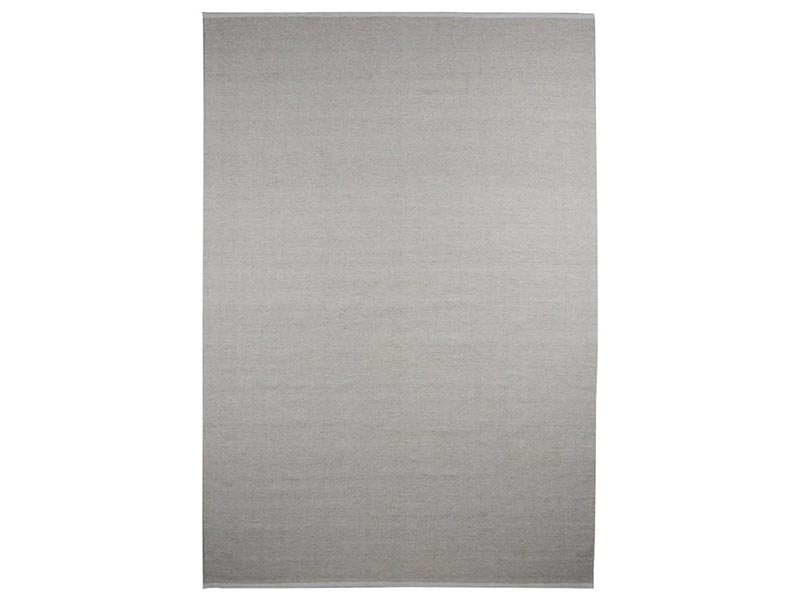
The Escape Kelim Rug is what happens when traditional weaving meets Scandinavian restraint and agrees not to argue about throw-pillow colors. Designed by Space Copenhagen for Massimo Copenhagen, this handwoven wool rug favors natural texture, quiet tones, and subtle craftsmanship over loud patterns. It does not demand attention from across the room. Instead, it gradually makes everything around it look more intentional.
Made from undyed New Zealand wool and woven in India using traditional kilim techniques, the Escape collection offers a modern interpretation of the flatwoven rug. Its understated palette works with minimalist interiors, but it is not limited to pale wood, white walls, and one extremely photogenic ceramic vase. It can also calm colorful rooms, soften industrial spaces, and add warmth to homes filled with contemporary furniture.
What Is the Escape Kelim Rug?
The Escape Kelim Rug is a collection of handcrafted, flatwoven rugs created by Danish design studio Space Copenhagen for Massimo Copenhagen. Space Copenhagen was established in 2005 by Signe Bindslev Henriksen and Peter Bundgaard Rützou. The studio describes its multidisciplinary approach as “Poetic Modernism,” a fitting phrase for a rug that feels contemporary without looking cold or overly calculated.
Rather than covering the surface with ornamental motifs, Escape relies on natural wool color, woven texture, visible craftsmanship, and restrained finishing details. Depending on the selected version, the rug may have clean edges, decorative stitching, or fringed ends. Retail configurations commonly include Chalk, Light Beige, Stone, and Muscat, although available combinations can differ by size and seller.
A Modern Take on Kilim Weaving
Kilims are traditionally produced with a tapestry-style flatweaving technique rather than a raised, knotted pile. Museums classify kilim textiles as flat-woven or tapestry-woven objects, and historical examples have served as floor coverings, wall hangings, furniture coverings, storage pieces, and portable textiles. The technique generally creates a lighter, thinner surface than a thick pile rug.
The Escape Kelim Rug borrows that structural tradition while removing the dense geometric ornament normally associated with antique kilims. The result is a floor covering that feels architectural and calm. You see the weave, the slight tonal shifts, and the evidence of human hands, but you are not handed twelve competing diamonds and a border that wants its own zip code.
Materials, Construction, and Technical Details
Undyed New Zealand Wool
The rug is made from 100% undyed New Zealand wool. According to the manufacturer, the fibers are used without bleach or added dyes, allowing the natural color of the wool to define the finished surface. This is why shades such as Chalk, Stone, and Muscat feel nuanced rather than perfectly uniform.
Undyed does not mean visually flat. Natural fibers can contain small tonal variations, and handweaving can make those differences more noticeable. In mass-produced flooring, variation is often treated as a defect. Here, it is part of the design language. The surface looks relaxed and organic instead of digitally color-matched within an inch of its life.
Handwoven Production
Escape rugs are handwoven in India. Because the process involves natural yarn and manual construction, the manufacturer allows for size variation of approximately plus or minus three percent. Buyers should therefore think of the listed dimensions as careful targets rather than laser-cut guarantees.
The rug weighs approximately 2.5 kilograms per square meter and has no conventional pile height. Its relatively low profile can be useful beneath dining chairs, near doors, in hallways, and in rooms where a thick rug might interfere with furniture movement. An underlay is listed as included with the rug, although customers should confirm the exact package contents and installation recommendations with their chosen retailer.
Certification and Product Safety
Massimo Copenhagen lists the Escape Kelim Rug as certified under OEKO-TEX Standard 100. This certification indicates that a textile has been tested against requirements concerning potentially harmful substances. Certification does not make a rug stain-proof, indestructible, or capable of doing the vacuuming itself, but it does provide useful third-party information about textile testing.
Available Escape Kelim Rug Sizes
Commonly listed dimensions include:
- Approximately 2 feet 11 inches by 8 feet 2 inches
- Approximately 5 feet 7 inches by 7 feet 10 inches
- Approximately 6 feet 7 inches by 9 feet 10 inches
- Approximately 8 feet 2 inches by 11 feet 6 inches
- Approximately 9 feet 10 inches by 13 feet 1 inch
The narrow version functions as a runner, while the larger sizes suit living rooms, bedrooms, dining rooms, hotel-style sitting areas, and open-plan interiors. Not every color or edge treatment is produced in every dimension, so it is wise to choose the size first and then examine the available finishes. Otherwise, you may become emotionally attached to a fringed Muscat version that does not exist in the dimensions your sofa demands.
Why the Escape Kelim Rug Works in Modern Interiors
It Adds Texture Without Adding Visual Noise
Minimal rooms can become sterile when every surface is smooth. A handwoven wool rug introduces irregularity, softness, and shadow without requiring a bold pattern. Escape works especially well with plaster walls, natural stone, oak, walnut, linen, leather, brushed metal, and sculptural furniture.
Its neutrality also makes it useful in more expressive homes. A quiet flatweave can support striped upholstery, colorful art, dark cabinetry, patterned bedding, or vintage furniture without starting a decorative wrestling match. Design publications frequently recommend neutral or solid rugs as flexible foundations because they allow surrounding colors and shapes to evolve.
It Helps Define a Room
A properly sized rug visually gathers furniture into a single composition. In an open floor plan, it can separate a seating area from a dining zone without adding walls. In a small room, a generous rug may make the space feel more unified, while an undersized rug can leave furniture looking stranded around a tiny fabric island.
Interior design guidance generally recommends placing at least the front legs of primary living-room seating on the rug. Larger rooms can accommodate all furniture legs on the textile, provided an even border of flooring remains visible.
How to Style an Escape Kelim Rug by Room
Living Room
In a living room, select a size that reaches beneath the front legs of the sofa and chairs. The rug should relate to the full seating arrangement, not merely the coffee table. A Stone or Muscat rug can ground cream upholstery and pale floors, while Chalk or Light Beige can brighten walnut furniture, charcoal seating, or darker architectural finishes.
Add cushions or throws with visible texture rather than trying to match the rug exactly. Bouclé, linen, felted wool, and washed cotton complement the handmade surface. A little tonal difference prevents the room from resembling a beige paint-swatch convention.
Dining Room
A flatweave is practical beneath dining furniture because chairs can move more easily than they would on a deep pile. The rug should extend far enough beyond the table for chair legs to remain on it when diners pull their seats back. Design guides commonly recommend roughly 24 to 36 inches of extra rug around the table, depending on chair depth and room size.
However, pale undyed wool requires realistic expectations. A household involving young children, enthusiastic red-wine pouring, or tomato sauce with excellent aim may find a dining-room placement demanding. Beauty is important, but so is knowing your household’s relationship with marinara.
Bedroom
Position a larger Escape rug beneath the lower portion of the bed so that it extends beyond both sides and the foot. This creates a soft landing in the morning and visually anchors the bed. In a compact room, a runner beside the bed can provide the same tactile benefit without covering most of the floor.
Hallway or Entry
The runner format suits long corridors and narrow entryways. Its low profile gives it a streamlined appearance, but an underlay is important for stability. Make sure nearby doors can clear the rug and any fringe. A beautiful runner that traps the front door every morning will eventually become less “poetic modernism” and more “daily obstacle course.”
Layered Interiors
Escape can also serve as a quiet base beneath a smaller vintage or patterned rug. The flat construction avoids excessive bulk, while the neutral wool creates a visual frame for the upper layer. When layering, leave enough of the base visible for the arrangement to look deliberate rather than like one rug is attempting to escape from under another.
Choosing the Right Color
Chalk
Chalk is the lightest and airiest option. It works well in interiors with dark wood, black accents, concrete, or colorful furniture. It can make a room feel more open, but it will also reveal tracked-in dirt sooner than a deeper shade.
Light Beige
Light Beige is a flexible choice for warm modern interiors. It pairs naturally with oak, tan leather, linen upholstery, terracotta, muted green, and soft gray.
Stone
Stone introduces a cooler, more grounded neutral. It can connect gray flooring with warmer furniture and is particularly effective in contemporary rooms that combine steel, glass, stone, and wood.
Muscat
Muscat is generally the deepest and earthiest option. It adds weight to pale rooms and can hide everyday visual wear more gracefully than the lightest colors. It is a strong choice for rustic-modern, Japandi, industrial, and dark-toned interiors.
Because the wool is undyed, photographs may not capture every undertone accurately. Requesting a sample is sensible when possible, particularly if the rug must coordinate with expensive upholstery, custom cabinetry, or flooring that changes dramatically under different lighting.
How to Care for an Escape Kelim Rug
Vacuum Gently
The manufacturer recommends vacuuming without a brush, especially while the rug is new and releasing loose fibers. Use plain suction and move carefully across the weave. Do not run a rotating brush over fringed edges or decorative stitching.
Initial shedding is normal for many new wool rugs. Frequent gentle vacuuming during the early period can remove loose fiber without aggressively disturbing the construction.
Rotate the Rug
Turn the rug approximately twice per year to distribute traffic, sunlight exposure, and furniture pressure more evenly. Felt protectors beneath heavy furniture legs can reduce concentrated wear. Rotating is not glamorous, but neither is discovering that one side of the rug has aged like fine wine while the other has aged like an office chair mat.
Respond to Spills Quickly
Blot liquid with a clean, absorbent white cloth rather than rubbing it deeper into the wool. Lift dry solids carefully before vacuuming. General carpet-care organizations advise prompt treatment because delayed action increases the chance that a spill will become a lasting stain. However, the Escape manufacturer specifically recommends professional cleaning and warns against chemical cleaning, so avoid experimenting with bleach, strong detergents, generic spot removers, or viral cleaning mixtures.
Limit Strong Sunlight
Prolonged exposure to intense sunlight may gradually affect the rug’s appearance. Window treatments, periodic rotation, and thoughtful placement can help reduce uneven fading. Manufacturer instructions should always take priority over broad online rug-cleaning advice.
Advantages and Practical Considerations
Advantages
- Handwoven construction with visible artisanal character
- Natural, undyed New Zealand wool
- Low-profile flatweave suitable for modern furniture
- Subtle colors that adapt to changing décor
- Multiple sizes, including a hallway runner
- Optional fringed and stitched variations
- Included underlay on listed configurations
- OEKO-TEX Standard 100 certification
Considerations Before Buying
- Handmade dimensions may vary slightly
- New wool can shed loose fibers
- Light colors reveal dirt and spills more readily
- Professional cleaning is recommended
- Some versions are made to order or nonreturnable
- Color and texture may look different under home lighting
- Fringe requires more careful vacuuming and placement
The Escape Kelim Rug is best viewed as a long-term design object rather than a temporary decorating accessory. It costs more than many machine-made rugs, and its care requirements are more deliberate. The tradeoff is a natural material, handmade construction, versatile coloring, and a design unlikely to look embarrassingly dated when the next social-media décor trend discovers neon checkerboards.
The Experience of Living With an Escape Kelim Rug
The first noticeable part of the Escape Kelim experience is not a dramatic pattern or an unusually plush surface. It is the way the room changes around it. Once unrolled and positioned correctly, the rug begins connecting separate objects: the sofa relates to the lounge chair, the coffee table stops floating visually, and the wood or stone floor becomes a border rather than an empty gap.
Because the rug is handwoven, the surface may not resemble a perfectly uniform sheet produced by a machine. Slight tonal movement, tiny irregularities, and small dimensional differences contribute to its character. Buyers expecting absolute symmetry may need time to adjust. Buyers who enjoy handmade ceramics, natural wood grain, linen wrinkles, and other evidence of material honesty will probably understand the appeal immediately.
During the first few weeks, loose wool fibers may appear on the surface or collect nearby. This can initially look alarming, especially after paying designer-rug prices. Gentle vacuuming without a rotating brush usually makes the adjustment period more manageable. The experience becomes less about protecting a precious object and more about establishing a sensible maintenance routine.
Underfoot, a kelim-style flatweave feels different from a thick tufted rug. It is firm, stable, and textile-like rather than cushiony. The included underlay adds security and some support, but the overall sensation remains tailored and low profile. This makes the rug pleasant in rooms where furniture needs to sit evenly or chairs need to slide, though shoppers seeking a deep, cloudlike surface should choose another construction.
Daylight reveals one of the rug’s best qualities. Undyed wool can look warmer in morning sun, more neutral during midday, and slightly deeper under evening lamps. A Stone rug may appear gray in one setting and softly brown in another. Muscat may read earthy and muted rather than simply dark. This responsiveness gives the rug depth, but it also explains why samples and careful measurements are valuable.
Furniture placement has a major effect on satisfaction. When the rug is too small, the refined design can look timid and disconnected. When the correct size extends beneath the seating group, the same rug makes the room feel finished. Spending extra time with painter’s tape before ordering is considerably cheaper than discovering that the sofa, chairs, and rug refuse to participate in the same conversation.
Daily life also clarifies whether the selected color suits the household. Chalk can be beautiful in a low-traffic bedroom or formal sitting area, but it asks owners to notice shoes, pets, and drinks. Stone and Muscat are more forgiving visually. No shade is immune to spills, and undyed wool should not be treated like machine-washable performance fabric.
Over time, rotating the rug and protecting it from relentless direct sunlight become simple seasonal habits. The surface may relax further into the room, and minor signs of use can make the textile feel less like a showroom piece and more like part of the home. That gradual integration is arguably the rug’s strongest experience: it does not create an instant decorative stunt. It creates a quieter, more coherent atmosphere that remains useful even as furniture, artwork, and wall colors change.
For the right owner, the Escape Kelim Rug feels luxurious without behaving like a trophy. It is practical enough for regular use, refined enough for carefully designed interiors, and neutral enough to survive several rounds of redecorating. Its charm comes from restraint, natural variation, and craftsmanshipnot from shouting, sparkling, or spelling “HOME” in giant letters across the floor.
Conclusion
The Escape Kelim Rug combines traditional flatweaving with a distinctly modern Scandinavian sensibility. Its handwoven construction, undyed New Zealand wool, muted colors, and subtle finishing details make it particularly effective in interiors that value material quality over decoration for decoration’s sake.
Choose a generous size, consider how the natural color will react to your lighting, and follow the manufacturer’s care instructions carefully. When properly placed, the rug can define a room, soften hard architecture, and provide a flexible foundation for furniture and art. It is not the lowest-maintenance option available, but for buyers seeking a calm, tactile, and enduring wool rug, Escape offers considerably more personality than its quiet appearance first suggests.