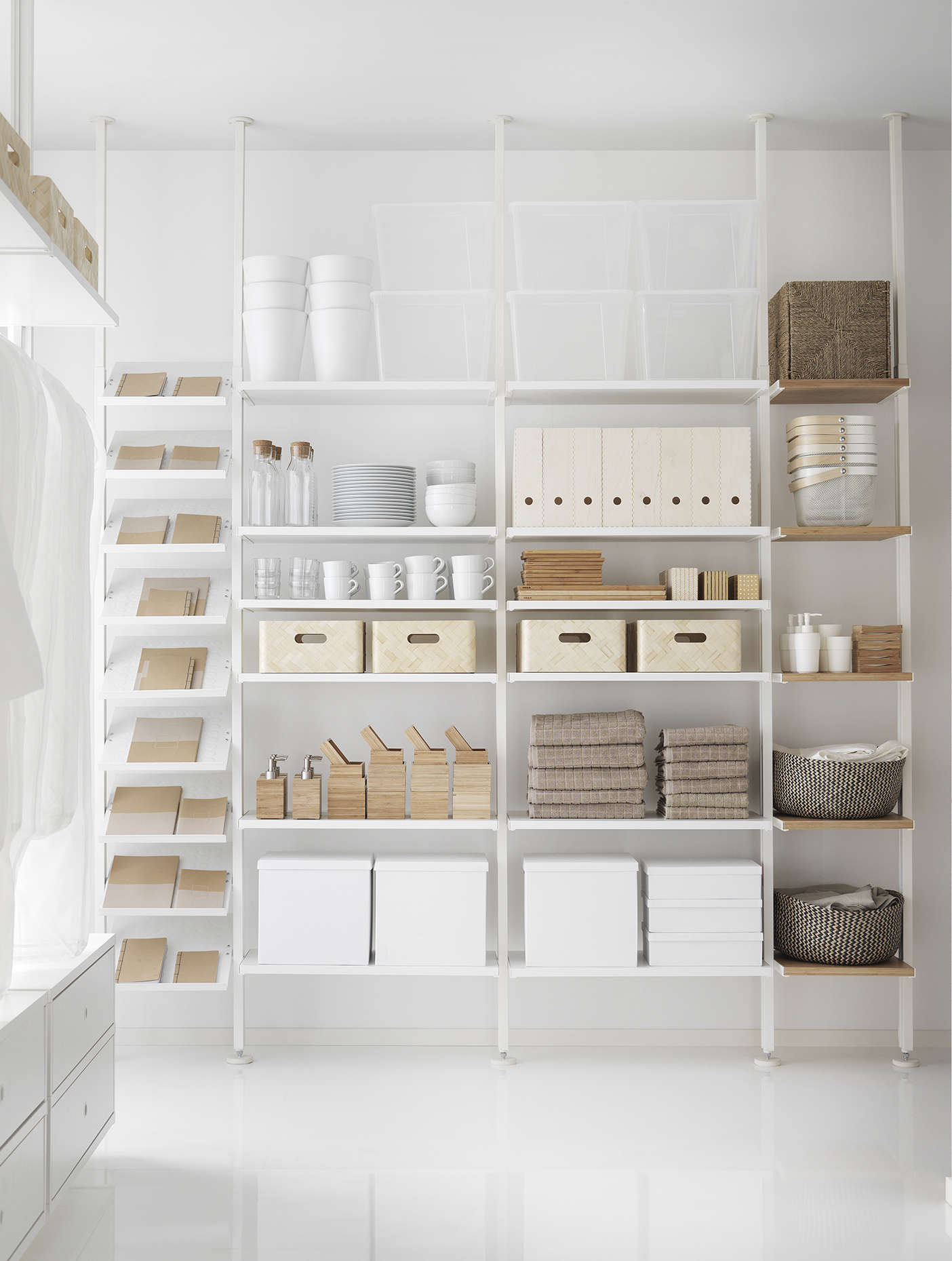
An Elvarli shelf unit is one of those rare home-storage solutions that can make a cramped closet, unfinished laundry room, awkward bedroom nook, or open-plan apartment feel like it finally received a thoughtful memo. Instead of committing to a bulky wardrobe or a permanent built-in, the IKEA ELVARLI system uses adjustable shelves, rails, drawers, and vertical supports to create a storage setup that can evolve with your home.
That flexibility is the real appeal. You might begin with a simple open shelf unit for folded sweaters and sneakers. Later, you can add hanging rails for jackets, drawers for smaller items, bamboo shelves for warmth, or shoe shelves for the footwear collection that has somehow become its own small country. ELVARLI works especially well for people who want storage that feels lighter and more open than a traditional cabinet.
Still, an ELVARLI shelf unit is not magic furniture dust. It needs careful measuring, thoughtful planning, and proper installation. When done well, it can look customized and expensive. When done poorly, it can resemble a very organized science experiment. This guide explains how to choose, plan, style, install, and live with an ELVARLI shelf unit in a way that makes daily life easier instead of merely giving your clutter a taller address.
What Is an Elvarli Shelf Unit?
ELVARLI is IKEA’s modular open-storage system. It can function as a closet organizer, freestanding wardrobe, display shelf, room divider, laundry-room organizer, entryway storage wall, or hybrid of several of those uses. The system is built around vertical supports, then customized with shelves, hanging rails, drawers, shoe shelves, and other accessories.
The most important thing to understand is that “Elvarli shelf unit” can describe several different setups. Some configurations use wall-anchored side units. Others use floor-to-ceiling posts. The shelves then connect to those vertical supports, allowing you to create a layout based on your available width, depth, and height.
For example, a narrow setup may be designed for folded clothes, handbags, and shoes. A wider configuration can combine shelves, hanging rails, drawers, and baskets to create a full open wardrobe. In a studio apartment, the same system can help separate a sleeping area from a living zone without blocking natural light or making the room feel boxed in.
Individual ELVARLI shelves are available in different widths and depths. One current U.S. shelf option measures approximately 31 1/2 inches wide by 20 1/8 inches deep, and IKEA notes that shelves are designed to work with ELVARLI side units and posts. Post-based setups require the correct brackets for each shelf component.
Why an Elvarli Shelf Unit Works So Well
It Uses Vertical Space Instead of Letting It Collect Dust
Most closets waste a surprising amount of vertical space. There may be one rod, one sad top shelf, and several feet of empty air above the clothes. An ELVARLI shelf unit gives that unused height a job. You can place frequently used items at eye level, reserve upper shelves for seasonal storage, and keep heavier items closer to the floor.
This is especially helpful in apartments, small bedrooms, and homes with limited built-in storage. Rather than buying several separate furniture pieces, you can build upward. The result is a cleaner floor plan and fewer random storage bins pretending they are decorative side tables.
It Can Be Reconfigured as Your Needs Change
A traditional closet system is often designed for one version of your life. ELVARLI is more forgiving. A single person may need extra hanging space for work clothes. A family may need baskets and shelves for children’s clothes. A hobbyist may need room for camera equipment, craft supplies, or neatly folded fabric.
Because the system is modular, you can adjust shelf placement and add compatible components over time. That makes it useful for renters, frequent movers, first-time homeowners, and anyone who has learned the hard way that a “permanent” storage solution can feel outdated after one enthusiastic shopping phase.
Open Storage Makes Everyday Items Easier to Find
Open shelving encourages visibility. You can see folded jeans, shoes, bags, towels, and baskets at a glance. That can make getting dressed faster and reduce the classic morning mystery of wondering where your favorite sweater disappeared. Spoiler: it was probably under a chair.
However, visibility works only when the system is organized intentionally. Open shelves do not hide clutter; they put it on a small stage with excellent lighting. Use baskets, matching hangers, shelf dividers, and consistent folding methods to keep the system looking calm rather than chaotic.
Planning an Elvarli Shelf Unit Before You Buy
Measure the Space Carefully
Before choosing an ELVARLI configuration, measure the width, depth, and ceiling height of the area. Measure more than once. Walls are not always perfectly straight, floors can slope, and old homes occasionally behave like they were designed by a mischievous architect with a ruler allergy.
Take note of baseboards, light switches, outlets, doors, windows, HVAC vents, trim, and ceiling fixtures. If you plan to use an ELVARLI shelf unit inside a closet, measure the interior depth with the door closed. A storage system that looks perfect in a product photo is less charming when it prevents the closet door from shutting.
Decide What You Actually Need to Store
Do not start with the shelf unit. Start with your belongings. Sort items into broad categories: hanging clothes, folded clothes, shoes, bags, accessories, linens, cleaning supplies, office materials, or hobby gear. Then estimate how much space each category needs.
A good rule is to design around your real habits, not your fantasy habits. If you fold sweaters, plan enough shelves for sweaters. If you leave bags on the floor, create a designated bag shelf or basket. If you own twenty pairs of sneakers, do not pretend three shoe shelves will somehow inspire minimalism overnight.
Professional organization advice consistently recommends storing frequently used items where they are easiest to reach, while seasonal or occasional items belong higher up or farther back. This approach reduces daily friction and keeps the most useful parts of the storage system from becoming crowded.
Choose Between Side Units and Posts
ELVARLI generally offers two structural approaches: wall-anchored side units or ceiling-anchored posts. Side units work well against a wall, while post-based systems can be useful when creating open storage or a room divider.
This choice matters because the installation requirements are different. IKEA states that side-unit combinations need to be attached to the wall, while post-based combinations require ceiling attachment. Do not choose based only on appearance. Choose based on the structure of your room, the type of wall or ceiling you have, and whether you can safely install the hardware.
How to Create a Functional Elvarli Shelf Layout
Use the “Everyday Zone” in the Middle
The middle area of the shelf unit should hold the items you reach for most often. In a bedroom closet, that might include daily shirts, jeans, favorite shoes, handbags, and work clothes. In a laundry room, it may include detergent, towels, baskets, and cleaning products.
Keep this section simple. Use open shelves for visible categories and reserve drawers or baskets for smaller items that tend to wander off, such as socks, chargers, belts, scarves, or mysterious single gloves that may never find their soul mates.
Use the Lower Zone for Heavy or Bulky Items
Lower shelves are best for shoes, storage bins, stacked towels, heavier bags, and bulkier household items. Keeping weight low improves stability and makes the system easier to use. It also prevents you from lifting a heavy box from above shoulder height, which is an activity nobody has ever described as “relaxing.”
If children use the unit, place child-friendly clothing, books, or toys on lower shelves. Avoid putting tempting climbing targets or heavy objects high up. The U.S. Consumer Product Safety Commission recommends anchoring furniture with drawers, doors, or shelves to the wall to reduce tip-over risks, especially in homes with children.
Reserve Upper Shelves for Seasonal Storage
Upper shelves are ideal for off-season clothes, spare bedding, travel bags, holiday decorations, or items you need occasionally but not every morning. Use labeled bins or baskets so you do not have to pull down every container just to locate one winter scarf.
Clear labels are a small detail with an enormous payoff. Labels help household members know where items belong, reduce clutter creep, and make it easier to maintain the system after the initial organization burst fades.
Best Rooms for an Elvarli Shelf Unit
Bedroom Closet
ELVARLI is most commonly used as an open wardrobe or closet organizer. A balanced bedroom setup may include a hanging rail for dresses and shirts, several shelves for folded clothes, drawers for undergarments, and shoe storage near the bottom.
For a polished look, use matching hangers, keep folded stacks relatively low, and choose a consistent color palette for baskets. You do not need every item to match perfectly, but visual repetition helps open storage feel calmer.
Studio Apartment Room Divider
A post-based ELVARLI shelf unit can help define zones in a studio apartment without creating a dark, heavy wall. Use the lower shelves for baskets or closed storage, then keep upper shelves more open with books, plants, or decorative objects. This creates separation while allowing light to travel through the room.
Design publications have highlighted ELVARLI as a useful open-storage and room-divider solution because it can help divide a living area without fully closing off the space.
Laundry Room or Utility Area
An ELVARLI shelf unit can make a laundry room feel more efficient. Use shelves for folded towels, detergent bins, cleaning tools, and extra linens. Add baskets for unmatched socks, dryer sheets, and the assortment of items found in pockets that somehow includes receipts, rocks, and at least one tiny dinosaur.
Open shelving works particularly well in utility spaces because it keeps supplies visible. The key is containment: use bins for small products, reserve a shelf for backstock, and avoid leaving every bottle, brush, and random cleaning gadget exposed.
Entryway or Mudroom
In an entryway, ELVARLI can handle shoes, bags, umbrellas, hats, seasonal accessories, and storage baskets. Give each household member a defined shelf or bin. This turns the system into a practical drop zone rather than a decorative monument to abandoned backpacks.
Style Tips for an Elvarli Shelf Unit
The ELVARLI system has a simple, airy appearance that works with modern, Scandinavian, minimalist, industrial, and casual contemporary interiors. White components create a clean look, while bamboo shelves can soften the metal framework and add warmth.
To make the shelf unit look intentional, use three visual rules:
- Repeat materials, such as matching baskets, hangers, or storage boxes.
- Leave some open space instead of filling every shelf edge to edge.
- Mix practical storage with a few decorative pieces, such as plants, framed art, books, or sculptural objects.
Open shelving looks best when it is not overstuffed. A helpful guideline is to leave some breathing room around objects. Shelves packed to the edges are harder to clean, harder to use, and visually louder than a group chat at midnight.
Organization experts often recommend combining open storage for useful or attractive items with closed storage for clutter-prone categories. Baskets, drawers, and lidded containers are especially useful for accessories, paperwork, toiletries, cables, and other practical items that do not need to be on display.
Installation and Safety Tips
Proper installation is the most important part of owning an ELVARLI shelf unit. Read the current assembly instructions for your specific configuration before starting. The hardware and attachment method depend on whether you are using wall-mounted side units or floor-to-ceiling posts.
Use the correct fasteners for your wall or ceiling material. Drywall, wood studs, concrete, plaster, metal framing, and other materials require different hardware. If you are uncertain about the structure behind a wall or ceiling, ask a qualified installer or contractor before drilling.
Leveling matters, too. A shelf unit can look almost level and still cause baskets to slide, drawers to misbehave, or your carefully arranged books to slowly march toward one side. Use a level, check each support point, and retighten components according to the assembly instructions.
Do not overload shelves. Distribute weight evenly, avoid stacking dense objects in one corner, and place heavier belongings lower down whenever possible. IKEA notes that ELVARLI shelves have different maximum loads depending on their dimensions, so check the current product listing and installation instructions for the exact shelf you choose.
Cleaning and Maintaining an Elvarli Shelf Unit
Maintenance is pleasantly uncomplicated. Wipe shelves and supports with a damp cloth and mild cleaner, then dry them with a clean cloth. Avoid harsh abrasives that could damage painted surfaces or shelf finishes.
Every few months, reassess the layout. Remove items you no longer use, donate clothing that no longer fits your life, and move seasonal categories as needed. A modular storage system works best when you allow it to remain modular. There is no award for keeping the same shelf arrangement for ten years while quietly resenting it.
Real-World Experiences With an Elvarli Shelf Unit
Living with an ELVARLI shelf unit is often less about the furniture itself and more about the habits it encourages. The first experience many people notice is visibility. When folded clothes, shoes, bags, and storage bins are out in the open, it becomes easier to see what is actually owned. That can be refreshing, mildly alarming, or both. A closet that once seemed “too small” may turn out to contain six scarves, four nearly identical black sweaters, and enough tote bags to open a small farmers market.
In a bedroom, the system can make getting dressed faster because the most-used clothes are visible and easy to reach. Hanging shirts on one side, folded jeans on another, and shoes on lower shelves creates a natural daily flow. Instead of opening drawers, moving boxes, and searching under a bed, the essentials are already organized in one place. The trick is setting up the layout around routines. Work clothes should be near the middle. Exercise gear may deserve a basket near the bottom. Formalwear and off-season items can move upward.
People also tend to appreciate ELVARLI when moving into homes with awkward storage. A bedroom without a closet can become more functional with an open wardrobe setup. A deep closet with one old rod can be transformed into a combination of hanging space, shelves, and drawers. A laundry room can gain a place for towels, supplies, baskets, and spare bedding without needing expensive custom cabinetry.
Another common experience is that the system rewards neatness but does not force it. That is both a strength and a warning. A closed wardrobe can hide messy stacks and mismatched bins. ELVARLI cannot. If you place random piles on every shelf, the unit will faithfully display them like an art exhibit titled “I Will Deal With This Later.” The best results come from using baskets for loose items, creating broad categories, and allowing some empty space on shelves.
For small apartments, the room-divider use can feel particularly satisfying. A vertical shelf arrangement can create separation between a bed and a living area without sacrificing light or making the room feel smaller. The system can hold books, plants, storage baskets, and a few decorative objects while still allowing the apartment to feel open. It works best when the shelf styling is balanced on both sides, especially if the unit is visible from more than one room zone.
Renters often like the flexibility of a modular setup, but they should pay close attention to installation requirements before buying. Ceiling-mounted or wall-mounted components may require landlord approval, appropriate anchors, and repair work when moving out. Planning ahead matters. Measure ceiling height, identify wall materials, and confirm that the configuration you want is suitable for the space before investing in several components.
Another practical lesson is to avoid buying accessories before understanding the core layout. It is tempting to add every drawer, basket, shelf, rail, and organizer at once. A better approach is to start with the essential structure, live with it for a few weeks, and notice what is missing. Maybe you need more shoe storage. Maybe you need fewer shelves and more hanging space. Maybe you discover that the real problem was not storage at all; it was keeping clothes you no longer wear.
In the long run, the best ELVARLI shelf unit setups are not necessarily the ones with the most parts. They are the ones that make everyday routines simpler. You should be able to find what you need, put it back without effort, and change the arrangement when your life changes. That is what makes the system useful: it adapts without demanding that your entire home become a showroom.
Final Thoughts
An ELVARLI shelf unit is a smart choice for anyone who wants flexible, open, and customizable storage. It can serve as a closet system, shelving wall, room divider, laundry organizer, or entryway station. The key is thoughtful planning: measure carefully, choose the right support type, install it securely, distribute weight sensibly, and organize around your actual daily habits.
When styled with baskets, matching hangers, labeled bins, and a little breathing room, ELVARLI can look polished while still doing the unglamorous work of holding your life together. And honestly, any storage system that helps you find your favorite shirt before coffee deserves a little respect.
Note: ELVARLI components, dimensions, finishes, pricing, stock availability, and installation requirements may vary by location and over time. Confirm the current product listing and assembly instructions before purchasing or installing.