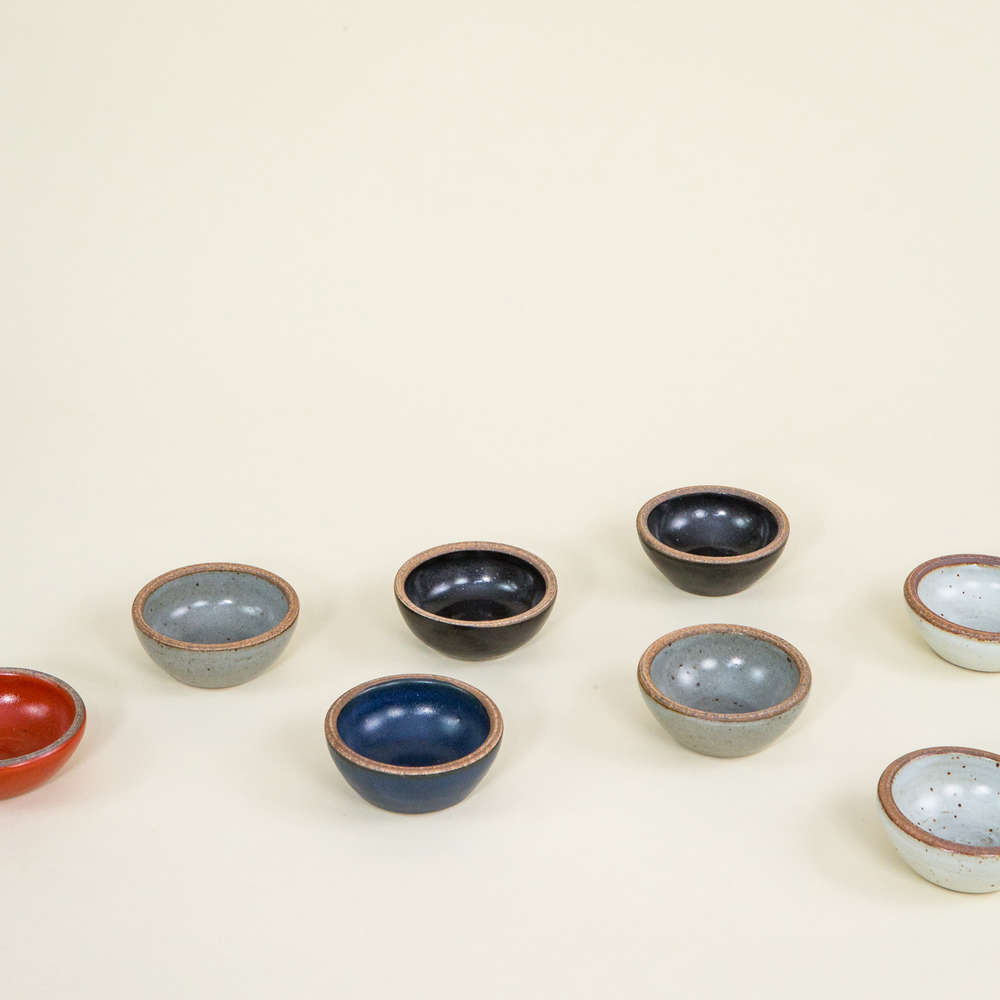
Some kitchenware announces itself with the confidence of a copper stockpot. East Fork Pottery’s Extra Small Potter’s Bowl takes the opposite approach. It sits quietly near the stove, holds a spoonful of salt, catches a used tea bag, and somehow becomes the little ceramic object you reach for ten times a day.
This petite stoneware bowl reflects East Fork’s broader design philosophy: everyday objects should be practical, durable, pleasing to touch, and attractive enough to leave on the counter. Its modest proportions also make a persuasive argument that useful dinnerware does not always need to be dinner-sized.
What Is the Extra Small Potter’s Bowl?
The Extra Small Potter’s Bowl is a miniature member of East Fork’s rounded Potter’s Bowl family. An older East Fork gift guide specifically recommended it as a resting place for an Earl Grey tea bag between steeps. The company’s current size guide identifies its smallest Potter’s Bowl form as the Bitty Bowl, measuring approximately 3 inches across and 1.4 inches high, with a capacity of about 2 ounces.
That is genuinely small. It is not a cereal bowl after a difficult wash cycle. It is closer to a refined pinch bowl, condiment dish, ring holder, or miniature prep vessel. The steep sides, rounded bottom, and flat foot distinguish it from a shallow saucer and help small ingredients remain contained.
East Fork describes its Potter’s Bowl series as having steeper sides and rounded bottoms, designed to contain more than they visually present. The forms are also intended to nest neatly, allowing the extra-small bowl to feel like part of a coordinated family rather than a random dish that wandered into the cupboard.
Extra Small Potter’s Bowl at a Glance
- Approximate dimensions: 3 inches wide by 1.4 inches high
- Approximate capacity: 2 ounces or one-quarter cup
- Material: Regionally sourced stoneware clay blend
- Shape: Rounded interior, relatively steep sides, and a flat foot
- Best uses: Salt, spices, sauces, garnishes, tea bags, jewelry, and small snacks
- Care: Designed for normal dishwasher and microwave use
A Tiny Bowl With Serious Design Credentials
The Extra Small Potter’s Bowl looks simple because a great deal of work went into removing anything unnecessary. Its profile avoids decorative flourishes, dramatic handles, and ornamental rims. Instead, the visual interest comes from proportion, glaze, clay texture, and the contrast between finished and exposed surfaces.
Alex Matisse has described the Potter’s Bowl silhouette as a tall, simple bowl with a flat bottom and a gently curving sidewall. According to him, the form took considerable time to refine because it needed the right balance between containment and openness. That silhouette was distinctive enough to inspire a later lighting collaboration between East Fork and Schoolhouse.
At full size, those proportions help a bowl accommodate soup, noodles, or popcorn. At extra-small scale, they keep peppercorns from escaping across the counter and give a teaspoon of sauce a surprisingly handsome home.
The Beauty of Restrained Proportions
A miniature bowl can easily become overly cute, but East Fork’s substantial stoneware and earthy palette keep the design grounded. The bowl feels like a functional tool that happens to be adorable, not a novelty object waiting to become clutter.
The flat foot provides visual stability, while the curved wall softens the shape. Because the opening is not excessively wide, the bowl can hold a small amount of oil, dipping sauce, or finishing salt without spreading it into a nearly invisible film.
Materials and the Signature East Fork Look
East Fork develops its stoneware clay blend in-house using clays and minerals sourced from the American Southeast. The company says regional sourcing helps keep production connected to its surroundings while reducing the distance raw materials must travel.
The clay’s iron content contributes to the speckled appearance associated with East Fork pottery. During firing, iron can become visually prominent at the surface, creating natural freckles beneath or through the glaze. This texture gives even a quiet neutral color more depth than a perfectly uniform factory-white dish.
Independent reviewers have also noted that East Fork’s matte-looking glazes retain a subtle glow and allow the clay’s speckles to remain visible. The result is pottery that photographs beautifully without looking glossy or overly formal.
Why Natural Variation Matters
Variations in speckling, glaze movement, and tone are part of the appeal of stoneware. Two bowls in the same glaze may not look digitally identical, especially under different lighting. That slight irregularity reminds the owner that clay, minerals, heat, and glaze are physical materials rather than pixels selected from a color menu.
East Fork’s visual language usually combines a colored glazed body with visible clay details at the rim or foot. The exposed areas provide contrast and reveal the material beneath the finish. In a three-inch bowl, those details are concentrated, making the object feel almost like a sample of the company’s entire pottery vocabulary.
Where the Bowl Fits in East Fork’s Story
East Fork began with a small group making wood-fired pottery and selling it through kiln events and craft shows in North Carolina. From 2009 through 2015, the operation remained closely tied to a Southern folk-pottery tradition before expanding into a larger ceramics company.
The brand has since become known nationally for sturdy contemporary dinnerware, carefully engineered shapes, proprietary glazes, and a devoted community of collectors. Food & Wine has highlighted the company’s intense attention to clay, glaze, and utility, while Architectural Digest has described East Fork pieces as thoughtfully made everyday dining essentials.
That context matters because the Extra Small Potter’s Bowl is not merely a scaled-down accessory. It represents the same effort to make ordinary routines more tactile and deliberate. A pinch of salt is still a pinch of salt, but placing it in a handsome ceramic bowl makes dinner preparation feel less like kitchen administration.
Practical Uses for the Extra Small Potter’s Bowl
1. Salt and Pepper at the Stove
Place kosher salt in one bowl and freshly cracked pepper in another. The rounded interior makes it easy to pinch seasonings, while the small capacity encourages regular refilling instead of leaving a large open container near heat and cooking splatter.
2. Mise en Place for Small Ingredients
Use the bowl for minced garlic, grated ginger, citrus zest, chili flakes, toasted seeds, or chopped herbs. It is especially helpful for recipes in which a powerful ingredient needs to be added at exactly the right moment.
3. Condiments and Dipping Sauces
The bowl can hold soy sauce, chili crisp, mustard, aioli, olive oil, honey, or softened butter. Its 2-ounce scale is appropriate for individual servings, preventing half a bottle of sauce from accidentally joining lunch.
4. Tea and Coffee Rituals
Rest a used tea bag, tea infuser, or stirring spoon inside it. East Fork itself once suggested the extra-small form as a temporary landing place for a tea bag that would be steeped again. It can also hold sugar cubes, cardamom pods, or a small piece of chocolate beside an espresso.
5. Nuts, Olives, and Tiny Treats
A few almonds, chocolate-covered espresso beans, wasabi peas, or marinated olives fit comfortably. The portion is intentionally petite, which makes the bowl useful when you want a snack rather than a personal mountain range of cashews.
6. Jewelry and Small Household Objects
Outside the kitchen, it becomes a bedside ring dish, entryway key bowl for very tiny keys, paper-clip holder, or safe place for loose buttons. East Fork’s current guidance also suggests using its smallest Potter’s Bowl form for jewelry and other easy-to-lose items.
7. Table Styling
Mix several glazes to create a small condiment station. East Fork’s uncomplicated shapes and coordinated colors make mixing and matching relatively easy, whether the table uses quiet neutrals or a more energetic palette. Domino has specifically praised the brand’s pieces for their compatibility across different colors and forms.
Durability and Everyday Care
East Fork pottery is intended for daily use rather than ceremonial shelf duty. The company states that its dishes tolerate home dishwashers and are also used in commercial dishwashing environments. Its care guidance approves normal microwave use as well.
That practicality is important for a small bowl because tiny dishes tend to accumulate quickly during cooking. Hand-washing six miniature prep bowls after dinner can make a person question every life decision that led to making homemade curry. Dishwasher compatibility keeps the ritual enjoyable.
How to Keep It Looking Good
- Load it securely in the dishwasher so water pressure cannot flip it around.
- Avoid striking it against cast iron, stone countertops, or heavier dishes.
- Do not move stoneware directly from extreme cold into extreme heat.
- Use a soft sponge for stubborn sauce or oil residue.
- Place a liner beneath the unglazed foot when using it on a delicate table.
Stoneware is durable, but small does not mean indestructible. Its greatest danger may be disappearing beneath a larger bowl in the sink or being mistaken for something a cat should push off the counter.
Is the Extra Small Potter’s Bowl Worth Buying?
Its value depends on whether you enjoy well-designed specialty objects. A basic ramekin can hold salt. A stainless-steel condiment cup can hold soy sauce. Neither option, however, delivers the same combination of tactile weight, glaze character, and visual warmth.
East Fork is commonly positioned as an investment dinnerware brand rather than a budget choice. Bon Appétit has identified an East Fork dinnerware set as a worthwhile investment, while Architectural Digest contributors have praised the pottery’s pleasant hand-feel and durability.
The extra-small bowl can be a sensible entry point for someone curious about East Fork but not ready to replace an entire cabinet. It also works as a thoughtful gift because it is useful without demanding that the recipient reorganize the kitchen.
Who Will Appreciate It Most?
- Home cooks who prepare ingredients before turning on the stove
- Tea drinkers who need a place for infusers and tea bags
- Collectors who enjoy mixing East Fork glazes
- Minimalists who prefer small, multipurpose objects
- Hosts who serve individual sauces, salts, or garnishes
- Anyone whose rings currently live in a dangerous relationship with the bathroom drain
Who May Not Need It?
It may feel unnecessary if you dislike single-purpose-looking dishes, need large portions, or prioritize the lowest possible price. It is also not the best first bowl for cereal, soup, oatmeal, or ice cream unless your appetite belongs to a particularly disciplined squirrel.
How It Compares With Other Small Bowls
Many small bowls use thin porcelain, glass, or mass-produced ceramic. Those materials can be perfectly functional, but East Fork’s stoneware typically feels heavier and more grounded. The exposed clay, visible speckles, and matte glaze give it a handcrafted visual identity.
Its 2-ounce capacity is notably smaller than a breakfast or dessert bowl. For comparison, a modern East Fork Breakfast Bowl holds about 10 ounces and is designed for yogurt, oatmeal, fruit, and snacks. The extra-small Potter’s Bowl is closer to a kitchen assistant: it holds the honey going into the yogurt rather than the yogurt itself.
Compared with a flat dipping dish, the steeper sides provide better containment. Compared with a standard ramekin, the curved silhouette and restrained foot appear more sculptural. Compared with leaving salt in the torn paper box, nearly anything is an aesthetic promotion.
A Realistic Ownership Experience: Living With the Bowl
The most accurate way to imagine owning East Fork Pottery’s Extra Small Potter’s Bowl is not to picture a formal dinner party. Picture an ordinary Tuesday morning. Coffee is brewing, toast is becoming slightly more toasted than planned, and a tea bag needs somewhere to rest. The little bowl is already on the counter, so it gets the job.
Later, during lunch preparation, the same form holds a spoonful of chili crisp. Its rounded interior makes the oil easy to scoop, and the raised sides keep the red droplets away from the tablecloth. After lunch, the bowl goes into the dishwasher rather than receiving precious-artifact treatment.
At dinner, three extra-small bowls can transform an unorganized countertop into a convincing mise en place station. One holds minced garlic, one contains grated ginger, and one carries scallion slices. Their small size prevents them from taking over the cutting board, yet their weight keeps them from sliding around whenever an elbow approaches.
The experience is partly visual. In a neutral glaze, the bowl makes bright ingredientsred pepper flakes, chopped parsley, turmeric, or citrus zestlook especially vivid. In a saturated seasonal glaze, the bowl itself becomes the accent. Because the design is quiet, it rarely competes with patterned napkins, wooden boards, stainless-steel tools, or colorful food.
There is also an unexpectedly satisfying hand-feel. A substantial miniature bowl feels different from a thin dipping saucer. Picking it up has a small sense of ceremony, even when its contents are merely three olives and a questionable number of chocolate chips.
The limitations become obvious quickly. You cannot use it for a meaningful serving of oatmeal. Two ounces of soup is not lunch; it is a trailer for lunch. Large tortilla chips may treat it as decorative scenery rather than a functional salsa bowl. Anyone buying it should embrace its tiny scale instead of expecting it to become an all-purpose cereal vessel.
Another realistic issue is storage. Although it occupies little room, small bowls can hide behind mugs or nest so completely inside larger vessels that they briefly disappear from civilization. Keeping several together in a shallow drawer, open shelf, or dedicated prep-bowl stack makes them easier to use.
Over time, the bowl is likely to migrate beyond the kitchen. It may spend a week holding flaky salt, then move beside the bed for earrings, then appear on a desk full of pushpins. That adaptability is part of its charm. The object does not require a single official purpose; it simply gives small things a more dignified place to exist.
The strongest ownership experience is therefore cumulative. No individual use feels revolutionary. Instead, the bowl earns affection through repetition: a dab of mustard, a lemon wedge, a tea infuser, a handful of pistachios, a missing button, a wedding ring removed before kneading dough. It becomes useful in the background, which is often the highest compliment an everyday object can receive.
Final Thoughts
East Fork Pottery’s Extra Small Potter’s Bowl proves that scale can sharpen good design. Its stoneware construction, rounded Potter’s Bowl profile, compact capacity, and tactile glaze make it both a practical tool and a small piece of functional art.
It will not replace the bowls already holding soup, pasta, or cereal. It handles the details around those meals: the salt, garnish, sauce, spoon, tea bag, or piece of jewelry that otherwise ends up wandering across the counter.
For cooks, collectors, and anyone who appreciates thoughtful American-made pottery, this tiny bowl offers an easy way to bring East Fork’s material character into daily life. It is small enough to overlook, useful enough to miss when it is unavailable, and charming enough to make soy sauce feel like it has dinner reservations.


