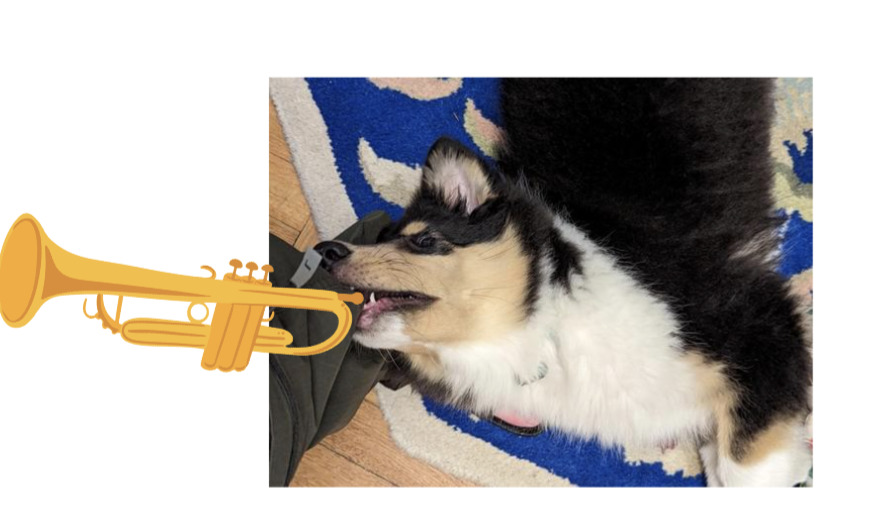
Some creative prompts arrive wearing a serious hat. Others burst through the door with muddy paws, jazz hands, and a brass section. “Draw a dog playing a trumpet and post the result” belongs firmly in the second group. It is funny, specific, visual, and just weird enough to make people stop scrolling. That is the secret sauce of a strong art prompt: it gives the artist a clear subject while leaving plenty of room for personality.
At first glance, a trumpet-playing dog sounds like a silly doodle challenge. But look closer and it becomes a surprisingly useful exercise in character design, visual storytelling, composition, humor, and online content strategy. You are not just drawing a dog. You are deciding whether that dog is a confident jazz legend, a nervous puppy at band practice, a street performer with floppy ears, or a golden retriever who has absolutely no idea how trumpets work but is committed to the performance.
This article explores how to approach the idea, how to make the drawing more memorable, and how to post the result in a way that people actually want to click, share, and comment on. Whether you are sketching by hand, using a tablet, designing in vector software, or creating an illustration for a blog, this playful prompt can become a surprisingly effective creative project.
Why This Drawing Prompt Works So Well
The phrase “draw a dog playing a trumpet” works because it combines familiar things in an unexpected way. Dogs are instantly recognizable and emotionally appealing. Trumpets are bold, shiny, loud, and packed with personality. Put them together, and the viewer immediately understands the joke before reading a single caption.
That instant recognition matters. Online audiences make fast decisions. A viewer may give an image only a second or two before moving on. A dog with a trumpet creates a clear visual hook: cute animal, unusual action, musical comedy. It has the same energy as a tiny parade that got lost and ended up in your living room.
A Strong Prompt Has Contrast
Good visual prompts often contain contrast. A dog is soft, warm, and expressive. A trumpet is metallic, structured, and dramatic. The dog may be clumsy; the trumpet suggests precision. The dog may look innocent; the trumpet looks like it is about to announce a royal entrance. This contrast gives the artist room to create comedy without needing a complicated scene.
It Also Encourages Storytelling
One of the easiest ways to improve a drawing is to ask, “What just happened?” Maybe the dog stole the trumpet from a marching band. Maybe it is auditioning for a jazz club. Maybe it lives in New Orleans and has been practicing all summer. Maybe it is playing one heroic note to announce dinner. The more story you build into the pose, expression, and setting, the more memorable the final illustration becomes.
Planning the Drawing Before You Start
Before putting pencil to paper or stylus to tablet, spend a few minutes planning. You do not need a full storyboard. You just need a clear visual direction. Is the image supposed to be cute, chaotic, vintage, cartoonish, realistic, or meme-ready? A simple decision at the beginning can save you from drawing a dog that looks like it is holding plumbing equipment instead of a trumpet.
Choose the Dog’s Personality
The breed or dog type changes the entire mood. A beagle playing trumpet might feel cheerful and mischievous. A bulldog could look like a grumpy jazz veteran who has seen things. A poodle might become a glamorous stage performer. A corgi could deliver instant comedy because its short legs make the oversized trumpet feel even more dramatic.
You can also skip a specific breed and create a general cartoon dog. This often works best for a funny art prompt because you can exaggerate features: bigger ears, rounder eyes, a huge grin, tiny paws, and a tail that practically conducts the music.
Pick the Moment
A dog “playing” a trumpet can mean several things. It could be pressing the valves with one paw while blowing proudly into the mouthpiece. It could be sitting on a stool like a serious performer. It could be marching with the trumpet angled upward. Or it could be accidentally blasting a note so loud that birds flee the scene.
The best moment is usually the one with the clearest emotion. Proud, surprised, focused, confused, or delighted expressions all work. A drawing becomes stronger when the viewer can immediately guess what the character feels.
How to Draw the Dog
Many artists start animal drawings with basic shapes because it makes proportion easier to control. For a cartoon dog, the head might begin as a circle or rounded rectangle. The snout can be an oval. The body can be a larger bean shape. The paws can be small circles or mitten-like forms. This simple construction method keeps the pose readable and makes the drawing easier to adjust.
Start With Simple Shapes
Begin with a loose sketch. Draw a circle for the head, an oval for the muzzle, and a rounded body shape beneath it. Add guidelines for the eyes and nose. Then block in the ears. Floppy ears can frame the face and create movement, while pointy ears can make the dog look alert and excited.
For the body, decide whether the dog is standing, sitting, or marching. A sitting pose may be easier because the trumpet can rest across the front paws. A standing pose feels more energetic but requires more attention to balance. If the dog is marching, angle the body slightly forward so it looks like it is moving with purpose.
Make the Face Do the Heavy Lifting
The face is where the joke lands. Wide eyes can show surprise. Half-closed eyes can make the dog look like a smooth jazz professional. A raised eyebrow can suggest, “Yes, I do requests, but only if you brought treats.”
Because the trumpet mouthpiece will cover part of the mouth, use the eyes, eyebrows, cheeks, and ears to communicate expression. A puffed cheek on one side can make the dog look like it is blowing into the instrument. A slightly tilted head can add charm and avoid stiffness.
How to Draw the Trumpet
A trumpet can seem intimidating because it has tubes, valves, curves, and a flared bell. But for a playful illustration, you do not need technical perfection. You need enough accuracy for viewers to recognize the instrument instantly.
Break the Trumpet Into Parts
Think of the trumpet as a few main shapes: a small mouthpiece, a long tube, three valves, curved tubing, and a bell at the end. The bell is the most important silhouette. If the flared bell reads clearly, the viewer will understand that the dog is playing a brass instrument even if the tubing is simplified.
Draw the trumpet at an angle across the dog’s face or body. A diagonal instrument creates energy and keeps the composition from feeling flat. The bell can point toward the viewer for a dramatic “ta-da!” effect, or to the side for a classic band-poster look.
Add Shine Without Overworking It
Trumpets are usually associated with bright brass, so highlights help. Add a few curved white or light-colored strokes along the bell and tubing. Keep the highlights simple. Too many reflective details can distract from the dog’s expression. The goal is not to produce a museum-level instrument study. The goal is to make people smile and instantly think, “That dog is giving a concert.”
Composition Ideas That Make the Drawing Pop
A good composition guides the viewer’s eye. In this drawing, the most important elements are the dog’s face, the trumpet, and the musical action. Everything else should support those elements.
Use a Clear Silhouette
Before adding details, zoom out or step back. Can you recognize the dog and trumpet from the outline alone? If the trumpet overlaps the dog’s body too much, it may become visually confusing. Leave enough negative space around the bell, ears, and paws so each part remains clear.
Add Music Notes for Motion
Floating music notes are a simple but effective visual cue. They tell the viewer the trumpet is making sound. You can draw tiny eighth notes, wavy sound lines, or comic-style bursts near the bell. For extra humor, add one startled cat, a dancing squirrel, or a coffee cup vibrating on a nearby table.
Keep the Background Simple
The background should match the story without stealing attention. A small stage, sidewalk, parade banner, living room rug, or jazz club spotlight can give context. If the illustration is meant for social media, a clean background often performs better because it remains readable on small screens.
Turning the Prompt Into Shareable Content
Posting the result is part of the prompt, not an afterthought. A drawing can be charming on its own, but presentation helps it travel. A strong post includes a clear image, a useful caption, and enough context for people to understand the creative challenge.
Write a Caption With Personality
A caption should do more than repeat the title. Try something playful, such as: “He only knows one note, but he plays it with confidence.” Another option: “Local dog joins jazz band, refuses to read sheet music.” Captions like these invite comments because they continue the story.
You can also ask a question: “What song is this dog playing?” or “What should I draw this dog doing next?” Questions make it easier for viewers to engage without overthinking their response.
Use Descriptive File Names and Alt Text
If the drawing will appear on a blog or portfolio, image SEO matters. Rename the file something descriptive, such as dog-playing-trumpet-cartoon-illustration.jpg instead of IMG_4829.jpg. Add alt text that accurately describes the image, for example: “Cartoon dog playing a brass trumpet with music notes.” This helps search engines understand the image and improves accessibility for people using screen readers.
Post in the Right Format
For Instagram, a square or vertical image often works well. For Pinterest, vertical graphics usually have more room for detail and text. For a blog post, use a fast-loading image with a clear title, caption, and surrounding text that matches the subject. The same drawing can be adapted into several formats: a clean portfolio image, a process carousel, a short video reveal, and a blog illustration.
Creative Variations on the Idea
Once you have the basic drawing, the prompt can evolve in many directions. This is where the fun begins. The dog does not need to stand alone like a sticker. It can belong to a larger world.
Jazz Club Dog
Place the dog under a spotlight with a tiny bow tie and a smoky blue background. Add a microphone stand, a small stage, and a sign that says “Paw Note Jazz Club.” The mood becomes stylish and funny at the same time.
Marching Band Puppy
Give the dog a little marching hat, a sash, and an oversized trumpet. Add confetti and a parade line behind it. This version feels energetic and works well for bright, cheerful content.
Classical Concert Dog
Draw the dog sitting in an orchestra chair with sheet music in front of it. The humor comes from making the dog look very serious, as if it studied at a prestigious conservatory and definitely does not chew the baton.
Street Performer Dog
A dog sitting on a sidewalk with a trumpet case open for coins creates a cute mini-story. Add a sign that says “Tips accepted in biscuits.” It is simple, memorable, and perfect for a shareable illustration.
Why Funny Art Prompts Help Artists Improve
Funny prompts are not just warm-up exercises. They can build serious skills. Drawing a dog playing a trumpet requires anatomy, object drawing, perspective, expression, gesture, and composition. The humor makes the practice feel less intimidating.
When an artist draws something playful, perfection becomes less important than communication. Does the dog look excited? Does the trumpet read clearly? Does the scene make sense? These questions train visual thinking. Over time, that kind of practice improves both technical skill and creative confidence.
Common Mistakes to Avoid
Making the Trumpet Too Complicated
Too much detail can make the instrument confusing. Simplify the tubing and emphasize the mouthpiece, valves, and bell. Viewers do not need a blueprint. They need a readable trumpet.
Hiding the Dog’s Expression
If the trumpet covers too much of the face, the drawing may lose charm. Keep the eyes visible and expressive. Use ears and eyebrows to add emotion.
Forgetting the Story
A technically clean drawing can still feel flat if nothing is happening. Add a reason for the moment. Is the dog performing, practicing, surprising someone, or causing musical chaos? Story gives the image staying power.
Personal Experience: What Happens When You Actually Draw and Post It
Drawing a dog playing a trumpet sounds easy until you sit down and realize that dogs do not have hands, trumpets are basically shiny spaghetti with valves, and the mouthpiece has to meet the snout in a way that does not look like a veterinary emergency. That is part of the fun. The challenge forces you to solve small visual problems with humor instead of panic.
My favorite way to approach this kind of prompt is to begin with the dog’s attitude. I imagine the character before I worry about the instrument. Is this dog talented? Absolutely not. Is it confident? Dangerously. That decision changes every line. The chest lifts. The ears perk up. The paws press the trumpet like the dog has been waiting its whole life for this solo. Even a rough sketch starts to feel alive when the character has a goal.
The first sketch usually looks strange. The trumpet may be too large, the paws may float, and the dog may appear to be eating the instrument rather than playing it. That is normal. A second pass fixes the biggest problems. I angle the trumpet slightly upward, move the bell away from the face, and make the dog’s cheeks puff out a little. Suddenly, the drawing reads better. It becomes less “confused puppy with metal object” and more “tiny jazz legend having a breakthrough.”
Posting the result adds another layer of learning. A simple caption can change how people respond. When the caption says, “He practiced for seven minutes and now wants a record deal,” viewers understand the joke instantly. Comments often build on the story. Someone may name the dog. Someone else may request a saxophone-playing cat. That interaction turns one drawing into a series idea.
Process posts can work especially well. Showing the rough sketch, the cleaned-up line art, and the final colored version helps viewers appreciate the work behind the joke. It also makes the post more useful for other artists. People like seeing that a polished cartoon started as a messy collection of circles, ovals, and questionable decisions.
The biggest lesson is that silly art is not lesser art. A funny prompt can teach composition, character acting, visual clarity, and audience engagement. It can also remind artists why they started drawing in the first place. Not every project needs to be profound. Sometimes the best creative exercise is a dog with a trumpet, blasting one heroic note into the internet while everyone applauds, laughs, and asks for an encore.
Conclusion
“Draw a dog playing a trumpet and post the result” is more than a goofy sentence. It is a compact creative brief with built-in humor, character, and shareability. The subject is simple enough for beginners but flexible enough for experienced illustrators to turn into a polished piece. By focusing on personality, clear shapes, readable composition, and smart posting practices, you can transform a silly prompt into an illustration people remember.
Start with simple forms, make the dog expressive, simplify the trumpet, and give the scene a story. Then post it with a caption that extends the joke and image details that help people find and understand the artwork. The internet may not need more noise, but it can always use one more enthusiastic dog playing brass.