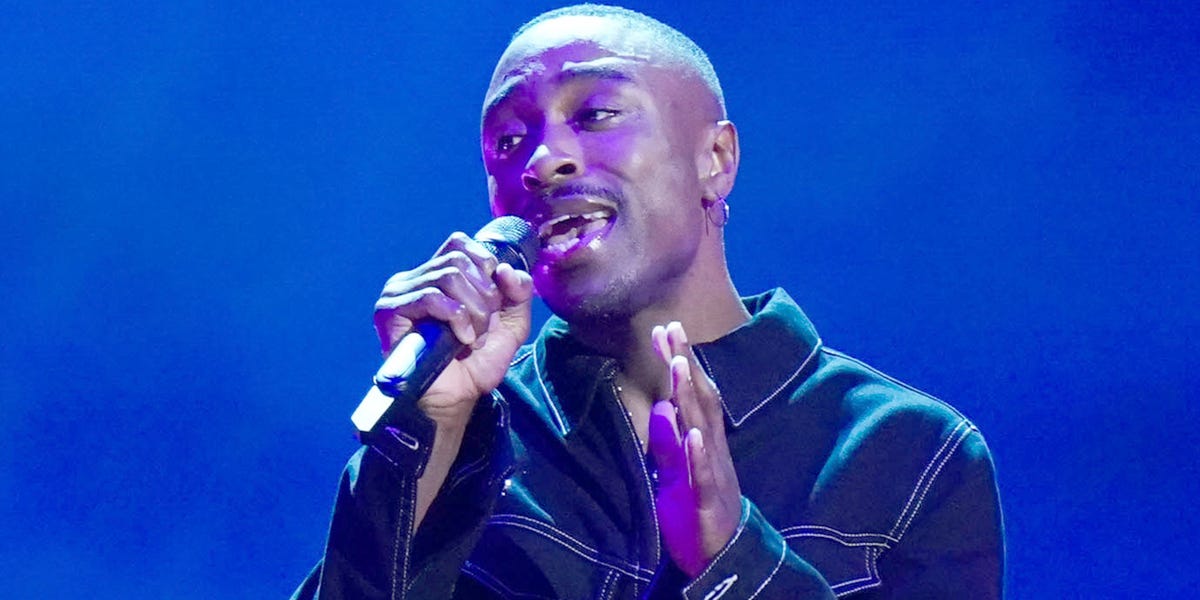
Note: This article is based on verified episode information, entertainment reporting, official show details, and public fan-reaction coverage from reputable U.S. media sources. No source-link elements are embedded in this web copy.
On The Voice, a single performance can turn four chairs, shake up a coach’s strategy, and convince the internet that the confetti cannon should be fired immediately. That is exactly what happened when Cameron Wright walked onto the Season 26 stage and delivered a soulful, polished, goosebump-friendly version of Barbra Streisand’s “The Way We Were.” Before viewers had even finished blinking, Michael Bublé, Gwen Stefani, Reba McEntire, and Snoop Dogg were facing the stage. The chairs turned fast. The comments came faster.
So, did The Voice fans already declare Cameron Wright the winner of Season 26? In spirit, many certainly tried. After Wright’s Blind Audition, fans online treated the performance like an early finale moment, praising their voice, control, tone, confidence, and stage presence. Some viewers predicted they would reach the finals. Others went bigger, suggesting the season might already have its champion. Reality television, however, has a tiny little habit of not ending after one audition. How rude of it.
The real answer is more layered: Cameron Wright became one of Season 26’s most talked-about contestants and an early fan favorite, but they did not win the season. Wright advanced through the Battles and Knockouts on Team Michael Bublé, then was eliminated during the Playoffs when Bublé selected Shye and Sofronio Vasquez to move into the Live Shows. Sofronio Vasquez later won Season 26, giving Bublé a victory in his debut season as a coach. Still, Cameron’s run remains one of the season’s most memorable “what if?” stories.
Who Is Cameron Wright on The Voice Season 26?
Cameron Wright entered Season 26 as a 34-year-old artist connected to Minneapolis, Minnesota, and brought with them the kind of musical background that makes coaches sit up a little straighter. Raised around gospel music, Wright had been singing since childhood, and that experience showed immediately. Their Blind Audition did not feel like someone cautiously asking for a chance. It felt like someone opening the door, stepping through it, and politely redecorating the room.
Wright also stood out because they brought a complete artistic identity to the show. Their vocals had power, but they were not just power for power’s sake. They mixed gospel influence, theatrical phrasing, soul, emotional restraint, and dramatic lift in a way that gave the performance shape. Add in their fashion-forward presence and confident self-expression, and Wright quickly became more than “a contestant with a big voice.” They became a performer viewers remembered.
The Blind Audition That Started the Winner Talk
The moment that launched the Cameron Wright hype train was their Blind Audition performance of “The Way We Were.” It was a brave choice. Barbra Streisand songs are not casual karaoke strolls; they are vocal mountain hikes with emotional weather conditions. Pick the wrong one and suddenly everyone is checking their shoes. Wright, however, handled the classic with elegance and authority.
Michael Bublé and Gwen Stefani turned almost immediately. Reba McEntire and Snoop Dogg followed soon after. A four-chair turn is always a major signal on The Voice, but this one felt especially electric because Wright’s audition blended technical control with emotional storytelling. They did not simply sing notes; they built a moment. That is the difference between “nice audition” and “wait, did we just meet a finalist?”
Why the Coaches Reacted So Strongly
Gwen Stefani praised the perfection and emotional force of the performance. Reba McEntire recognized Wright’s seasoned command, noting the confidence of someone who had clearly lived with music for a long time. Snoop Dogg, who became one of the season’s most charismatic new coaches, responded to the feeling behind the vocal. Bublé, meanwhile, saw the kind of artist who could thrive in a competition built around vocal interpretation.
That combination mattered. The Voice is not only about range, even though range certainly helps when you want to make viewers spill popcorn in surprise. It is about taste, identity, adaptability, and whether a singer can make a familiar song feel like it has just been freshly polished. Wright did that in the Blinds, which is why fan reaction arrived with such confidence.
Did Fans Really Think Cameron Wright Could Win?
Yes, many fans clearly believed Cameron Wright had winner potential after the Blind Audition. Online reaction described Wright as one of the strongest singers of the season, with some comments essentially treating the audition like a championship preview. Fans praised the richness of their voice, the emotional detail in the performance, and the way Wright seemed ready for a professional stage rather than a beginner’s spotlight.
That kind of reaction is common when a four-chair turn hits at the right time. Viewers love to crown a frontrunner early because it makes the season feel like a horse race. The only difference is that on The Voice, the horses sing ballads, wear excellent jackets, and occasionally make Reba McEntire look deeply concerned in the best possible way.
However, fan enthusiasm is not the same as a voting result. At the stage when Wright went viral among viewers, the competition was still under coach control. That meant Wright needed not only fan support, but also the right coach decisions at every round. In Season 26, that path became especially difficult because Team Bublé was stacked with major vocal talent.
Team Bublé Was a Powerhouse, Which Was Great and Terrible News
Joining Michael Bublé’s team seemed like a smart move for Wright. Bublé is a vocalist’s vocalist, a singer known for phrasing, tone, musicality, and classic showmanship. For an artist like Wright, who could blend old-school soul with theatrical polish, Team Bublé looked like a natural fit.
The problem? Team Bublé was crowded with serious contenders. Sofronio Vasquez, Shye, Sloane Simon, and other strong performers made the team one of the season’s toughest lanes. Being on a strong team can help a contestant grow, but it also means every round feels like trying to find a parking space at a mall on Christmas Eve. Technically possible. Emotionally dramatic.
Cameron Wright’s Battle Round Proved the Hype Was Not a Fluke
After the Blinds, Wright faced Cassidy Lee in the Battle Rounds on Mariah Carey’s “Hero.” That song is not exactly a casual vocal handshake. It demands control, emotional lift, and the ability to build without sounding like you are trying to bench-press the melody. Wright won the Battle, and Bublé praised their execution, style, and panache.
The Battle confirmed what fans suspected: Wright was not a one-performance wonder. They could hold their own in a duet format, adjust to a coach’s direction, and still keep a clear artistic signature. Cassidy Lee also impressed enough to be stolen by Reba McEntire, which made the matchup feel less like one singer losing and more like both contestants proving they belonged.
The Knockout Win Kept Cameron in the Conversation
Wright’s Knockout Round against Sloane Simon added another chapter to their Season 26 story. The matchup became a two-person Knockout after Tanner Frick left the competition, and Wright performed “You’re All I Need to Get By.” Once again, they delivered a vocal that Bublé considered professional and deserving of advancement.
Bublé chose Wright as the Knockout winner and used his save to keep Sloane Simon in the competition. That decision showed how competitive Team Bublé had become. Wright was still rising, but so were the singers around them. The season was no longer asking, “Is Cameron good enough?” It was asking, “How many outstanding singers can one team possibly carry before math ruins everyone’s evening?”
Why Cameron Wright Was Eliminated Before the Live Shows
The turning point came during the Playoffs. At that stage, each coach could advance only two artists to the Live Shows. For Team Bublé, the remaining group included Cameron Wright, Shye, Jaukeem Fortson, Sloane Simon, and Sofronio Vasquez. Bublé ultimately chose Shye and Sofronio Vasquez to move forward, which meant Wright’s journey ended before America could vote for them in the live rounds.
That detail is important. Cameron Wright did not lose a public vote in the finale. They were eliminated in a coach-decided round before the Live Shows. For fans who had already imagined Wright in the final lineup, the decision felt abrupt. It also explains why some viewers continued to talk about Wright as someone who “should have” gone further.
Was the Elimination Surprising?
For many fans, yes. Wright had the kind of vocal maturity and stage command that usually signals a deep run. But from a strategy perspective, Bublé had an extremely difficult choice. Sofronio Vasquez had been a powerhouse from the beginning, and Shye brought a distinctive tone and youthful artistry that made her stand out. Bublé selected two artists who eventually became the final two contestants of the entire season, so his decision was painful for Cameron fans but hard to call careless.
In other words, Wright was not eliminated because they lacked talent. They were eliminated because the competition format created a brutal bottleneck. Sometimes The Voice feels less like a singing competition and more like a luxury vocal traffic jam.
Who Actually Won The Voice Season 26?
Sofronio Vasquez won The Voice Season 26 on December 10, 2024. He represented Team Michael Bublé and became the first Filipino winner of the U.S. version of the show. Shye finished as runner-up, Sydney Sterlace placed third, Danny Joseph came in fourth, and Jeremy Beloate finished fifth.
Vasquez’s win gave Bublé his first championship as a coach in his debut season. That made Team Bublé’s Season 26 arc look even stronger in hindsight. The same team that housed Cameron Wright also produced the winner and runner-up. That is not a team. That is a vocal obstacle course with matching chairs.
Why Fans Still Talk About Cameron Wright
Even though Wright did not win, their run left a lasting impression because they had three qualities fans love: a breakout audition, a clear artistic identity, and a sense of unfinished business. The strongest reality competition contestants are not always the ones who win. Sometimes they are the ones viewers remember because they sparked debate, made people rewind performances, and left fans wondering what could have happened with one more round.
Wright also connected with viewers beyond technique. Their presence as a queer Black artist using they/them pronouns mattered to fans who saw themselves reflected on a major network stage. Representation alone does not win singing competitions, but when paired with serious talent, it creates a connection that feels bigger than a scoreboard.
What Made Cameron Wright’s Voice Stand Out?
Wright’s voice worked because it combined contrast. There was warmth in the lower register, shine in the upper range, and a theatrical sense of timing that made their performances feel intentional. They knew when to stretch a phrase, when to pull back, and when to let a note bloom. That kind of control often separates experienced singers from contestants who only know how to sing loudly.
Their gospel foundation also gave their performances emotional weight. Gospel-trained singers often understand how to build intensity without losing the message of the song. Wright brought that instinct to pop standards, soul classics, and competition arrangements. They made familiar songs feel personal, which is one of the most valuable skills a singer can have on The Voice.
Was Cameron Wright Robbed?
“Robbed” is one of reality TV’s favorite words. It comes out whenever a fan favorite goes home, usually followed by capital letters and a suspicious number of exclamation points. In Wright’s case, it is understandable why some fans felt that way. They delivered strong performances, earned coach praise, and had obvious finalist-level talent.
But calling the result a robbery ignores how strong the competition was. Sofronio Vasquez and Shye both proved to be major contenders, and Bublé’s picks ultimately reached the top two. That does not erase Wright’s impact. It simply means Season 26 had more talent than available slots. Wright may not have been robbed by ability, but they were squeezed by format.
What Cameron Wright’s Journey Says About The Voice
Cameron Wright’s Season 26 journey highlights one of the show’s biggest truths: a contestant can win the audience’s imagination without winning the trophy. The Blind Audition is often where fans fall in love. The Playoffs are where strategy gets ruthless. The finale is where public voting writes the last chapter. Wright dominated the first part, survived the middle, and then became one of the season’s biggest “gone too soon” conversations.
That is not a small achievement. In a season with 56 artists, two new coaches, returning favorites, fresh format twists, and a finale stacked with powerhouse singers, Wright still managed to become one of the names people remembered. In the crowded world of televised singing competitions, being memorable is its own kind of win.
Experience Section: Watching Cameron Wright Felt Like Seeing a Star Arrive Early
There is a specific feeling that happens when a contestant walks onto The Voice stage and instantly changes the temperature of the room. You can almost sense viewers at home leaning toward the television, remote in hand, snacks forgotten, group chat suddenly typing in all caps. Cameron Wright’s Blind Audition had that feeling. It was not just that the coaches turned. It was how quickly the performance made everyone behave as if the season had suddenly found its plot.
As a viewer, Wright’s audition felt satisfying because it had shape. The opening was controlled, the tone was rich, and the emotional build never felt forced. Some competition performances try to grab attention by sprinting toward the biggest note like it owes them money. Wright did the opposite. They let the song breathe. They trusted the lyric. They gave the audience enough drama to feel swept away, but not so much that the performance became a vocal fireworks display with no melody left standing.
That is why the fan reaction made sense. Viewers were not only responding to a technical voice. They were responding to confidence. Wright looked and sounded like an artist who already knew what kind of performer they wanted to be. In a show where many contestants are still discovering their identity, that kind of certainty is magnetic. It makes fans start imagining album covers, tour lighting, and finale confetti long before the competition schedule allows it.
The experience of following Wright through the season also came with a familiar reality-TV emotional roller coaster. First, there was the thrill of the four-chair turn. Then came the Battle Round, where they proved the audition was not a lucky lightning strike. The Knockout win added more momentum. By the time the Playoffs arrived, it felt reasonable to expect Wright to stay in the mix. Then came the cut. For fans, that moment probably felt like ordering dessert and being handed the check instead.
Still, the disappointment says something positive. Fans were upset because they cared. Wright gave viewers a reason to invest, and that is not easy to do in a competition where new talented singers appear every few minutes. Their performances had replay value, but their story had staying power. They represented artistry, vocal discipline, personal style, and visibility in a way that felt fresh for the show.
Looking back, Cameron Wright’s Season 26 run is a reminder that winning The Voice is not the only way to leave with momentum. Some contestants exit early and fade quickly. Others leave fans still arguing, still sharing clips, still saying, “But what if?” Wright belongs in the second group. They may not have been crowned the official winner, but they absolutely won a place in the season’s most memorable conversations.
Conclusion: Did Fans Declare Cameron Wright the Winner?
Yes, many The Voice fans treated Cameron Wright like a potential Season 26 winner almost immediately after their four-chair Blind Audition. The excitement was understandable. Wright had the voice, the polish, the emotional intelligence, and the stage presence of a serious contender. Their performances gave viewers every reason to picture them in the finale.
But the official Season 26 winner was Sofronio Vasquez, not Cameron Wright. Wright’s journey ended during the Playoffs when Michael Bublé advanced Shye and Vasquez to the Live Shows. Even so, Wright’s impact remains significant. They were one of the season’s brightest early stars, a fan favorite whose elimination sparked debate, and a performer whose artistry outlasted their time on the show.
So did fans already declare Cameron Wright the winner? In the comments section, maybe. In the official results, no. In the memory of Season 26’s most unforgettable voices, absolutely.
