The Comedy Wildlife Photography Awards 2016 finalists proved that nature does not need a scriptwriter, a laugh track, or a tiny animal-sized director’s chair. Sometimes all it needs is one fox, one snowbank, and one very bad day at the office.
When Wildlife Photography Decided to Stop Being So Serious
Wildlife photography is often associated with golden sunsets, dramatic predator stares, and majestic animals looking like they just signed a modeling contract with the wilderness. Then came the Comedy Wildlife Photography Awards, a contest that politely tapped the genre on the shoulder and said, “That’s lovely, but do you have anything where a pelican drops its lunch?”
The 2016 edition became one of the most memorable years in the competition’s early history. It was only the second year of the awards, yet it already had the feel of an international event with personality, purpose, and enough perfectly timed animal awkwardness to make the internet collectively spit out its coffee. The shortlist featured 40 finalists chosen from more than 2,200 entries submitted from around the world. These images captured animals in moments that felt oddly familiar: confusion, clumsiness, surprise, sibling drama, bad posture, and the universal experience of trying to look dignified while failing spectacularly.
But the Comedy Wildlife Photography Awards 2016 finalists were not just about quick laughs. The contest was created to use humor as a doorway into conservation. Instead of showing wildlife only through crisis, loss, or distant grandeur, the awards invited viewers to laugh first, care second, and remember third. A funny animal photo can be surprisingly persuasive. It says: these creatures are not abstract symbols of “nature.” They are alive, expressive, strange, vulnerable, and sometimes hilariously unprepared for gravity.
The Big Winner: “A Tough Day at the Office”
The overall winner of the Comedy Wildlife Photography Awards 2016 was Angela Bohlke’s unforgettable image, “A Tough Day at the Office.” The photograph shows a fox face-first in the snow, caught in the middle of a hunting dive that did not exactly end in a corporate promotion. Taken in Yellowstone National Park, the image became an instant classic because it works on several levels at once.
First, it is technically excellent. The timing is precise, the setting is clean, and the subject is frozen at the peak of absurdity. Second, it is relatable. Everyone has had a day when ambition met reality at high speed. The fox was likely hunting rodents beneath the snow, using a real technique that can look dramatic and graceful when successful. In this frame, however, the fox looks like Monday morning became a physical object.
That is the charm of the image. It does not mock the animal; it celebrates the honest messiness of life in the wild. Nature is not always a documentary narrator whispering over slow-motion footage. Sometimes it is a hungry fox, a snowy field, and a landing that probably deserved a tiny workplace injury report.
Why the 2016 Finalists Were So Memorable
The 2016 finalists stood out because they covered nearly every style of visual comedy. Some photographs relied on timing, such as a bird apparently dropping its catch mid-flight. Others leaned into expression, including animals that looked shocked, proud, irritated, or far too aware of the camera. A few finalists used optical illusion, turning ordinary animal behavior into a scene that seemed almost impossible until the brain caught up.
Comedy Through Timing
Great comedy photography often comes down to a fraction of a second. Nicolas de Vaulx’s “Damn!” won the Kenya Airways Creatures in the Air category with a pelican losing its meal in midair. The title alone deserves applause because it captures the exact emotional energy of the image. You can almost hear the bird’s internal monologue: “I had one job.”
Timing also powered several other finalist images. A fox entering the snow at the wrong angle, a turtle climbing onto another turtle, or a bird caught in a pose that looks like dance choreography all remind us that wildlife photographers must be patient, alert, and probably very good at not laughing while pressing the shutter.
Comedy Through Expression
Some finalists were funny because the animals appeared to be reacting like tiny, furry, feathered, or scaly humans. A frog seemed to grin. Zebras looked as if they were posing for a family photo. A mountain hare looked unexpectedly cheerful. A group of burrowing owls appeared curious enough to start their own neighborhood watch committee.
This is where the Comedy Wildlife Photography Awards shine. The humor often comes from anthropomorphism, the human habit of reading emotion into animal faces. Of course, the animals are not actually telling jokes, gossiping, or judging our life choices. But the resemblance is irresistible. The finalists invited viewers to see familiar expressions in unfamiliar bodies, creating a bridge between human emotion and wild behavior.
Comedy Through Illusion
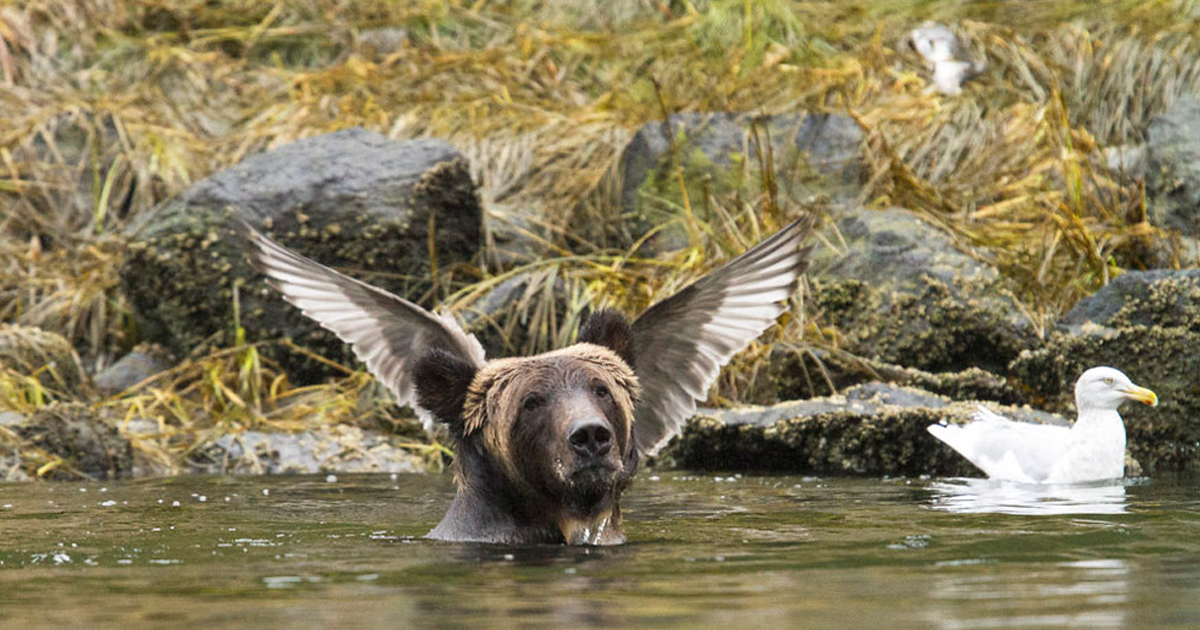
One of the funniest tricks in the 2016 shortlist was visual illusion. A pair of rhinos positioned back-to-back looked like a strange two-headed creature. A bear appeared to sprout wings because a bird was perfectly aligned behind its head. Penguins seemed headless. These photographs are funny because the viewer’s brain takes one quick, wrong guess before correcting itself.
That split-second confusion is comedy gold. It is the photographic version of a double take. First thought: “What on earth is that?” Second thought: “Oh, I see it now.” Third thought: “I need to send this to someone immediately.”
Notable Comedy Wildlife Photography Awards 2016 Finalists and Winners
While “A Tough Day at the Office” took the overall crown, the broader field of finalists made the 2016 contest feel like a full animal comedy festival. The finalists included mammals, birds, reptiles, fish, and amphibians, which made the shortlist feel wonderfully unpredictable. No species had a monopoly on ridiculousness.
“Damn!” by Nicolas de Vaulx
This category-winning image featured a pelican losing its catch in mid-flight. It is a perfect example of comic timing: the action is clear, the accident is harmless, and the bird’s posture seems to express immediate regret. It also shows why wildlife photography requires more than a good camera. The photographer must anticipate action, track movement, and react faster than the subject can recover its dignity.
“Excuse Me” by Jim Chen
Jim Chen’s underwater winner, “Excuse Me,” featured painted frogfish in a moment that looked like one fish interrupting another’s close-up. Underwater wildlife photography is already difficult because of light, movement, equipment, and visibility. Capturing a moment that is both technically strong and genuinely funny adds another layer of difficulty. This image worked because the animals seemed to have wandered into a sitcom scene beneath the sea.
“Say Cheese!” by Thomas Bullivant
The junior category winner, “Say Cheese!” by 15-year-old Thomas Bullivant, featured zebras in a perfectly cheerful arrangement. The photo captured the spirit of the contest beautifully: approachable, bright, and funny without being forced. It also showed that the competition was not only for seasoned professionals. A young photographer with timing, patience, and a sense of humor could stand beside adults in an international contest.
“Angel Bear” by Adam Parsons
Among the highly commended images, “Angel Bear” became a favorite because of its brilliant alignment. A bird’s wings appeared to emerge from a bear’s head, turning the animal into a temporary wilderness angel. It is the kind of image that would be almost impossible to stage ethically in the wild, which makes the natural coincidence even better.
The Cheetah and the Speed Limit
Another widely discussed image showed a cheetah near a speed limit sign, creating the visual joke of nature’s fastest land animal being told to slow down. The comedy is simple, clean, and instantly readable. It also shows how a photographer can use context, not just animal expression, to build humor.
Other Scene-Stealing Finalists
The 2016 finalists also included headless-looking penguins, a mountain hare with a friendly attitude, a reptile in what looked like a warrior pose, babblers peeking from behind branches, tortoises engaged in awkward physical comedy, and owls looking as if they had just been caught discussing office gossip. Together, these finalists made the contest feel less like a gallery and more like a yearbook of nature’s most accidentally theatrical students.
The Serious Mission Behind the Silly Photos
The funniest thing about the Comedy Wildlife Photography Awards is that the humor is not the whole point. The contest was built around conservation. Its founders understood that people often turn away from environmental messaging when it feels too heavy, too hopeless, or too distant. Comedy offers another route. It lowers the emotional drawbridge.
When viewers laugh at a fox in snow or a frogfish interrupting a photo, they spend a little more time looking. That extra attention matters. It creates affection. Affection can lead to curiosity, and curiosity can lead to concern. In that sense, the 2016 finalists did more than entertain. They helped reframe wildlife as something close, expressive, and worth protecting.
This approach is especially useful in an online culture where images travel faster than long reports. A funny animal photograph can cross borders, languages, and age groups almost instantly. A child can enjoy it. A professional photographer can admire it. A conservationist can use it to begin a conversation. That is rare communication power for one image of a fox having a snowy disaster.
What Photographers Can Learn From the 2016 Finalists
The Comedy Wildlife Photography Awards 2016 finalists offer several lessons for anyone interested in wildlife photography, nature writing, or visual storytelling.
Patience Beats Luck
Funny wildlife photos may look accidental, but the best ones usually come from patience. A photographer must spend time watching animal behavior, learning patterns, and waiting for a moment that may last less than a second. Luck helps, but luck favors the person already holding the camera in the right direction.
Respect Comes First
The humor in these images works because the animals are not harmed, staged, or harassed. Ethical wildlife photography depends on distance, patience, and respect for natural behavior. The best comedy comes from observation, not interference. If the animal has to be stressed for the photo to happen, the joke is not funny anymore.
Context Creates the Punchline
A funny animal expression can carry a photo, but context often makes it stronger. The cheetah and speed sign, the pelican and falling fish, the fox and snowbankall of these images use setting as part of the joke. The viewer understands the scene quickly, and the humor arrives without explanation.
Simple Images Travel Far
The strongest finalists were easy to understand at a glance. That is one reason they performed so well online. A great comedy wildlife photograph does not require a long caption. It should deliver the first laugh visually, then reward a longer look with details.
Why These Photos Still Matter Today
Years later, the Comedy Wildlife Photography Awards 2016 finalists still feel fresh because the humor is timeless. Technology changes. Social media platforms rise and fall. Camera gear improves. But a pelican dropping lunch will never stop being funny. A fox face-planting into snow remains a universal mood.
The 2016 contest also helped establish the awards as more than a novelty. It showed that funny wildlife photography could attract global attention while keeping conservation at the center. That balance is difficult. Too much seriousness, and casual audiences scroll away. Too much comedy, and the conservation message disappears. The 2016 finalists found the sweet spot: joyful, memorable, and quietly meaningful.
For publishers, bloggers, photographers, and animal lovers, the 2016 finalists are a reminder that storytelling does not always need to begin with fear. Sometimes it begins with delight. People protect what they love, and they often love what makes them smile.
Experience: Looking at the Comedy Wildlife Photography Awards 2016 Finalists Like a Viewer, Writer, and Nature Fan
Spending time with the Comedy Wildlife Photography Awards 2016 finalists feels a bit like walking into a museum where every painting whispers, “Don’t take yourself too seriously.” At first, the photos are funny in the obvious way. You see the fox in the snow and laugh because it looks like slapstick. You see the pelican lose its fish and laugh because the timing is painfully perfect. You see the rhino illusion and laugh because your brain briefly accepts the possibility of a two-headed rhino before politely correcting itself.
But after the first laugh, a slower appreciation begins. These images are not random memes. They are the result of real fieldwork. Someone stood in the cold, waited near water, watched birds, tracked behavior, carried heavy gear, adjusted settings, and stayed alert long enough to catch one ridiculous fraction of a second. That changes the experience. The joke remains funny, but the craft becomes visible.
As a viewer, the 2016 finalists also create a feeling of closeness with animals. Traditional wildlife photography can sometimes make animals seem untouchable and distant, almost mythic. The Comedy Wildlife finalists do the opposite. They make wild creatures feel strangely familiar. The awkward turtle, the surprised bird, the grinning zebra, and the failed fox all remind us of human moments: tripping on a sidewalk, dropping lunch, posing badly in a family photo, or pretending everything is fine when everything is clearly not fine.
As a writer, these photographs are a gift because each one contains a tiny story. A good comedy wildlife photo has a beginning, middle, and punchline inside one frame. The beginning is the natural behavior. The middle is the unexpected position, expression, or accident. The punchline is the viewer’s interpretation. That is why titles matter so much. “A Tough Day at the Office” turns a fox’s hunting attempt into workplace comedy. “Damn!” gives a pelican the voice of every person who has ever watched a sandwich fall filling-side down.
As a nature fan, the most important experience is gratitude. The finalists make wildlife feel alive in a way that statistics alone cannot. Conservation facts are necessary, but emotion often decides what people remember. Laughter is emotion. It is warm, fast, and shareable. The 2016 finalists used that warmth to pull people closer to the natural world.
That may be the real genius of the Comedy Wildlife Photography Awards. The contest does not ask viewers to choose between joy and responsibility. It says both can exist in the same frame. You can laugh at a fox’s failed dive and still respect the fox. You can enjoy a funny frogfish and still care about healthy oceans. You can smile at a silly zebra and still understand that wild habitats need protection.
In the end, the experience of revisiting the 2016 finalists is more than a nostalgia trip through funny animal photos. It is a reminder that nature is not only grand and dramatic. It is also clumsy, expressive, unpredictable, and wonderfully weird. And honestly, that makes it even more worth saving.
Conclusion
The Comedy Wildlife Photography Awards 2016 finalists gave the world a rare combination: excellent photography, natural behavior, global humor, and a conservation message that did not feel like homework. From Angela Bohlke’s winning fox face-plant in Yellowstone to Nicolas de Vaulx’s airborne pelican mishap and Jim Chen’s underwater frogfish comedy, the 2016 shortlist captured the animal kingdom at its most charmingly imperfect.
These images continue to resonate because they reveal something simple and powerful: wildlife does not have to appear majestic every second to be valuable. Sometimes the goofy moments make animals feel even more alive. They invite us to laugh, look closer, and care more deeply. In a world full of heavy environmental news, that kind of joyful connection is not just refreshing. It is useful.
The 2016 finalists remain a high point in funny animal photography because they show that conservation can begin with a smile. And if that smile comes from a fox losing a battle with a snowbank, so be it. Nature has always had excellent comic timing.
SEO Tags
Note: This article is written in original American English for web publication and is based on verified information about the 2016 Comedy Wildlife Photography Awards finalists, winners, categories, and conservation purpose.