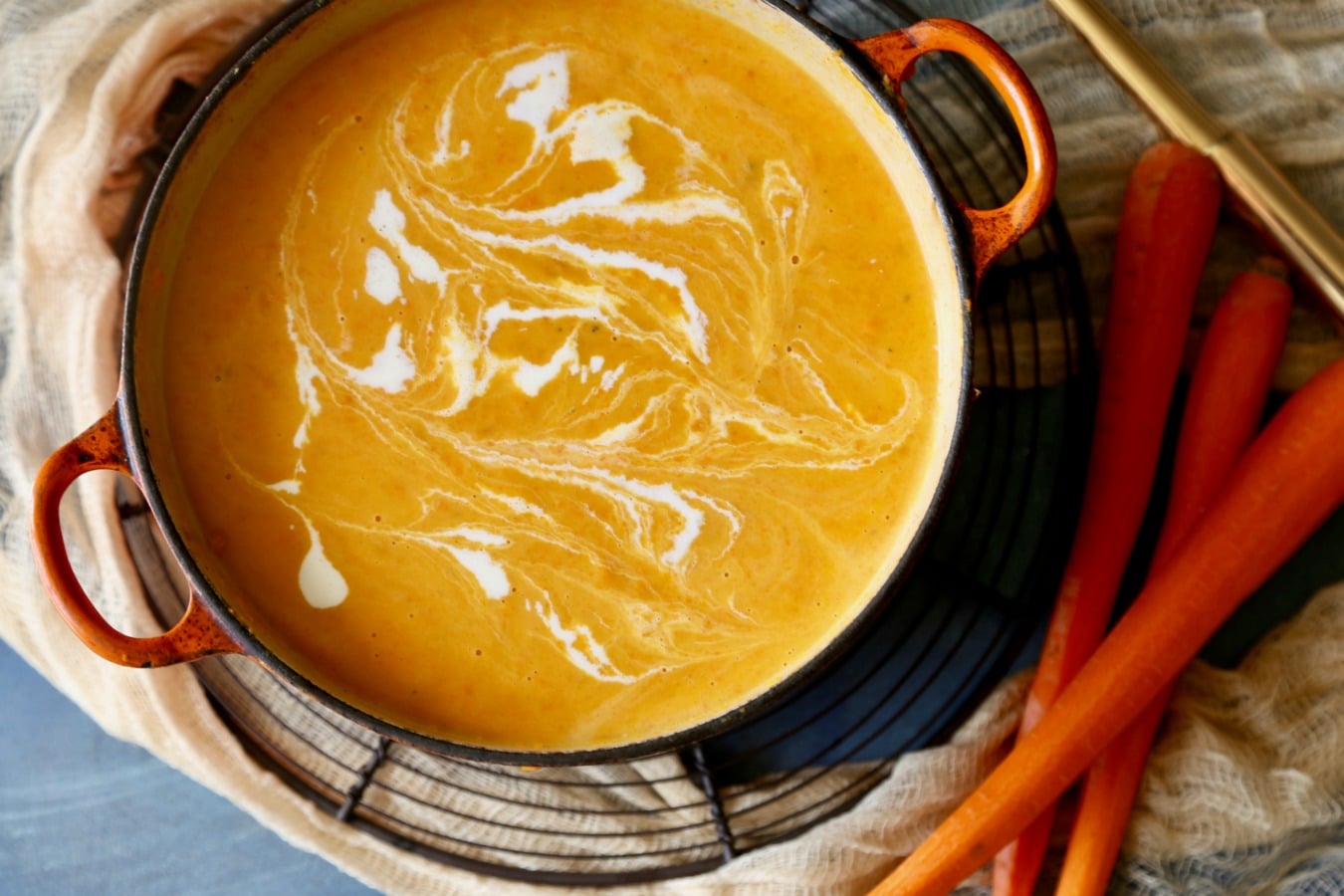
Coconut curry carrot soup is what happens when a humble bag of carrots gets a passport, a spa day, and a very good blender. The soup is silky without heavy cream, warmly spiced without being aggressive, and bright enough to keep every spoonful interesting. Sweet carrots provide the foundation; onion, garlic, and ginger add savory depth; curry powder brings earthy warmth; coconut milk rounds the edges; and fresh lime keeps the finished bowl from becoming one long orange lullaby.
This version is designed for real weeknights. It uses one pot, widely available ingredients, and a flexible formula that welcomes substitutions. Serve it as a light dinner with crusty bread, as a starter before roasted chicken or fish, or as a make-ahead lunch that will make the office microwave smell suspiciously impressive.
Why This Coconut Curry Carrot Soup Works
Pureed vegetable soup can drift into baby-food territory when it lacks contrast. This one layers sweet carrots, savory aromatics, bloomed spices, rich coconut milk, bright lime, and crunchy toppings. That same balance appears across respected carrot and coconut soup recipes, even when the exact seasonings differ.
Carrots Create Sweetness and Body
Simmered until very tender, carrots puree into a naturally thick, velvety base. Cut them evenly so they soften at the same rate and no stubborn carrot coin survives the blender.
Coconut Milk Balances the Spice
Full-fat canned coconut milk gives the soup a plush texture and softens chile heat. Shake the can before opening because the cream and liquid may separate. Light coconut milk works, but produces a thinner result.
Lime Keeps It Lively
Carrots and coconut are naturally sweet, so lime juice added after blending provides essential contrast. Add it gradually; the goal is brightness, not a soup that lost a fight with a margarita.
Coconut Curry Carrot Soup Recipe
Yield: 4 generous servings or 6 starter portions
Prep time: 15 minutes
Cook time: 35 minutes
Total time: About 50 minutes
Ingredients
- 2 tablespoons avocado oil, olive oil, or coconut oil
- 1 medium yellow onion, diced
- 1 teaspoon kosher salt, divided, plus more to taste
- 3 garlic cloves, minced
- 1 tablespoon finely grated fresh ginger
- 1 tablespoon mild or medium curry powder
- 1/2 teaspoon ground cumin
- 1/4 teaspoon ground turmeric
- Pinch of cayenne pepper or red pepper flakes, optional
- 2 pounds carrots, trimmed and sliced into 1/2-inch rounds
- 4 cups low-sodium vegetable broth
- 1 can (13.5 ounces) full-fat unsweetened coconut milk
- 1 to 2 tablespoons fresh lime juice
- 1 teaspoon maple syrup or brown sugar, optional
- Freshly ground black pepper, to taste
Optional Toppings
- Chopped cilantro, Thai basil, or scallions
- Toasted pumpkin seeds, cashews, peanuts, or coconut flakes
- A swirl of coconut milk
- Chile crisp, chili oil, or sliced fresh chile
- Lime wedges
- Crunchy chickpeas or small croutons
Step 1: Build the Aromatic Base
Heat the oil in a Dutch oven over medium heat. Add the onion and 1/2 teaspoon salt. Cook for 7 to 9 minutes, stirring occasionally, until soft and lightly golden. This removes the onion’s raw bite and builds a savory base.
Step 2: Bloom the Spices
Add the garlic and ginger; stir for 30 seconds. Add the curry powder, cumin, turmeric, and optional cayenne. Cook for 30 to 60 seconds, stirring, until fragrant. Do not let the spices scorch; burned curry powder has the charm of a smoke alarm.
Step 3: Simmer the Carrots
Add the carrots, broth, and remaining 1/2 teaspoon salt. Bring to a boil, then reduce to a steady simmer. Partially cover and cook for 20 to 25 minutes, until the carrots crush easily with a spoon. “Fork-tender” is acceptable; “practically surrendered” is better.
Step 4: Add Coconut Milk and Blend
Stir in three-quarters of the coconut milk and remove from the heat. Puree with an immersion blender until smooth. For a countertop blender, cool the soup slightly, work in small batches, and vent the lid as directed by the manufacturer; hot liquid can create dangerous steam pressure.
Step 5: Balance the Final Flavor
Stir in 1 tablespoon lime juice and black pepper. Add more salt if the flavor is muted, more lime if it is too sweet, and optional maple syrup only if the carrots taste earthy or the curry is bitter. Thin with broth, water, or coconut milk as needed.
Step 6: Garnish with Contrast
Ladle into warm bowls. Add coconut milk, herbs, something crunchy, and chile heat. Toppings restore texture and freshness, turning a smooth orange puree into a complete dish.
Ingredient Choices and Smart Substitutions
Curry Powder or Curry Paste?
Curry powders vary from mild and turmeric-forward to hot and peppery, so start with one tablespoon and adjust after blending. For a Thai-inspired version, replace the dry spices with 1 to 2 tablespoons red or yellow curry paste. Check labels when cooking for vegans or people with shellfish allergies because some curry pastes contain seafood ingredients.
Easy Swaps
Use 1 teaspoon ground ginger when fresh ginger is unavailable. Vegetable broth keeps the soup vegan; chicken broth gives it a fuller savory note. To make the soup heartier, blend in chickpeas, cooked red lentils, or a small cooked sweet potato. You can also serve it over jasmine rice or add crisp tofu at the table.
Common Problems and How to Fix Them
The Flavor Is Flat
Add salt first, then lime. If the soup still seems sleepy, stir in a small amount of curry paste, ginger, or chile crisp. Make one adjustment at a time so you know what actually helped.
The Soup Is Too Spicy or Too Thick
For excessive heat, add coconut milk, broth, or more pureed carrots. Thin a dense soup gradually with warm broth or water. To thicken a loose soup, simmer it uncovered or blend in cooked chickpeas. Remember that it will thicken further as it cools.
The Texture Is Grainy
Simmer the carrots longer and blend again. For restaurant-style smoothness, pass the puree through a fine-mesh sieve. This is optional, but it creates the sort of finish that makes guests assume you own an unnecessary copper pan.
Nutrition, Storage, and Make-Ahead Tips
Carrots are rich in beta-carotene, an orange pigment the body can convert into vitamin A, which supports normal vision and other functions. Coconut milk adds richness and saturated fat, so pair the soup with beans, lentils, tofu, chicken, or fish for a more balanced meal.
Refrigerating
Cool leftovers promptly in shallow, airtight containers. Properly handled soup generally keeps for 3 to 4 days in the refrigerator. Reheat only what you plan to eat.
Freezing
Freeze meal-size portions with a little headspace and label them. Thaw overnight in the refrigerator, then whisk while reheating; a brief blend fixes minor coconut separation. Frozen leftovers retain best quality for roughly 3 to 4 months.
Making It Ahead for Guests
Prepare the soup one or two days in advance, but keep herbs, toasted nuts, seeds, and chile toppings separate. Reheat the soup gently, loosen it with broth, and add the final lime juice just before serving. This preserves the bright flavor and prevents the garnishes from becoming soft little relics of their former selves.
Serving Ideas
Pair a medium bowl with naan, grilled cheese, chickpea salad, or crusty bread. As a starter, serve it before roasted salmon, chicken thighs, or a grain bowl. For toppings, combine one fresh element and one crunchy element: cilantro with pumpkin seeds, scallions with crispy shallots, or lime zest with roasted peanuts. Chile crisp is welcome when the room needs waking up.
The core techniquecooking carrots with aromatics, simmering until very tender, enriching with coconut, blending, and finishing with contrasting garnishesaligns with methods published across major U.S. food outlets and recipe authorities.
Kitchen Experience Notes: What You Learn After Living With This Soup
The most useful experience with coconut curry carrot soup begins before the first spoonful: the carrots matter more than their appearance. Thick, mature carrots are often less watery and can produce a robust soup, while slender young carrots may taste sweeter and cook faster. Either works. What changes the outcome is consistency. When the rounds are roughly the same thickness, they soften together, blend more evenly, and spare you from discovering one crunchy survivor after the blender has already been washed.
The onion stage is where patience pays rent. A hurried cook may toss everything into the pot at once, and the result will still be edible, but the flavor can seem strangely hollow. Letting the onion soften and catch a little color creates a deeper background. The difference is subtle in a spoonful and obvious by the end of a bowl. It is the difference between “carrots plus curry” and a soup that tastes as though the ingredients held a meeting before dinner.
Spice intensity is another lesson that recipes cannot completely standardize. One brand of curry powder may be gentle enough for a toddler; another may arrive wearing combat boots. Smell it before using it. If the aroma is mild, one tablespoon is a sensible start. If it is sharp, hot, or heavily clove-scented, begin with two teaspoons. Blooming the spices briefly makes them fuller and more fragrant, but it also reveals their power, so the pot will tell you what you are dealing with long before serving time.
The first blend often looks thicker than expected. That is normal. Add liquid slowly because thinning soup is easy and re-thickening it is an awkward sequel. An immersion blender gives a rustic-silky result and creates fewer dishes. A high-powered countertop blender produces a glossier puree, especially if the carrots are completely tender. The real secret is not expensive equipment; it is giving the blender enough time. Many cooks stop when the chunks disappear, but another 30 seconds can transform “smooth enough” into genuinely velvety.
Tasting after the coconut milk goes in can be confusing because richness mutes seasoning. A soup that tasted lively before blending may suddenly seem quiet. This is when lime and salt should enter separately. Add salt, stir, and taste. Then add lime, stir, and taste again. Salt makes the carrot, ginger, and curry more distinct; lime makes the whole bowl feel lighter. Learning that distinction is useful far beyond this recipeit applies to squash soup, lentil soup, bean puree, and many creamy sauces.
Garnishes also teach an important lesson: texture is part of flavor. Toasted pumpkin seeds make the soup feel nuttier. Cilantro makes it seem fresher. Chile crisp adds heat, crunch, and savory depth at once. A coconut swirl contributes visual drama but not much contrast, so it is best paired with something crisp. The strongest bowl usually has at least one fresh topping and one crunchy topping.
Finally, this soup is a gifted leftover. By the second day, the curry and ginger taste more integrated and the texture becomes thicker. Broth and lime revive it quickly. Reheated carefully and topped with something fresh, it still feels intentionalnot like a compromise excavated from the freezer.
Conclusion
Coconut curry carrot soup proves that inexpensive ingredients can create a bowl with real complexity. The carrots supply sweetness and body, aromatics provide depth, curry spices bring warmth, coconut milk creates a creamy dairy-free finish, and lime keeps everything bright. Once you understand that balance, the recipe becomes less of a strict formula and more of a dependable template. Adjust the heat, change the toppings, add chickpeas or lentils, and make the bowl your own. Just do not skip the lime unless your dinner plans specifically include blandness.
Note: Curry powders, broths, and coconut milks vary by brand, so final salt, spice, consistency, and nutrition will vary. Taste and adjust before serving.