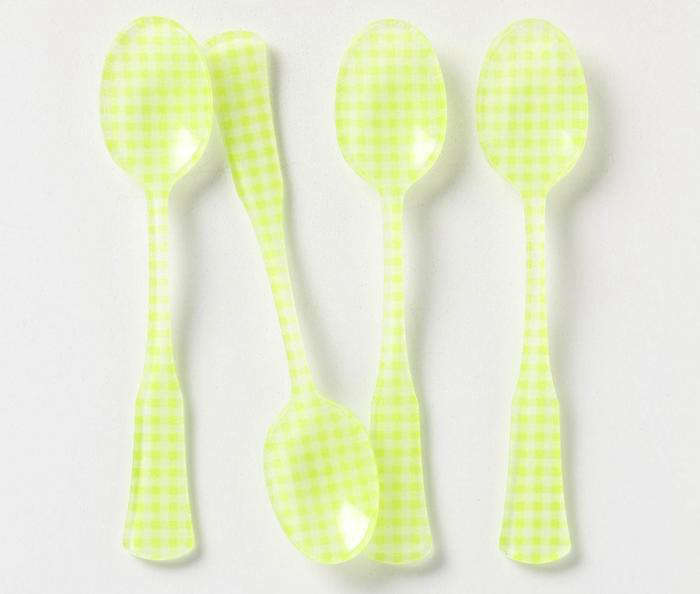
Some kitchen items are strictly practical. Others are here to make you smile before caffeine has had a chance to do its job. Checkered tea spoons belong in the second camp. They stir your Earl Grey, clink cheerfully against a porcelain cup, and somehow make an ordinary tea break feel like it was planned by someone with excellent taste and suspiciously good lighting.
In a design world that keeps circling back to playful patterns, the checkered look has become one of those rare motifs that feels both nostalgic and current. It can read retro diner, English cottage, artsy maximalist, or modern eclectic depending on the colors, materials, and table setting around it. That is exactly why checkered teaspoons, checkerboard espresso spoons, and patterned flatware accents have started winning hearts in kitchens, coffee bars, and gift boxes alike.
This guide covers what checkered tea spoons really are, why they work so well as décor-meets-function pieces, what materials are worth your money, how to style them without making your table look like it lost a bet, and how to care for them so they stay charming instead of chipped, scratched, or sadly mysterious.
Why Checkered Tea Spoons Are Suddenly Everywhere
The return of checkerboard and check-inspired patterns in American home design has been impossible to miss. The motif keeps showing up in kitchens, tile, rugs, table linens, pottery, and accessories because it does something many patterns cannot: it adds energy without becoming visual chaos. A check pattern has order. It has rhythm. It has just enough attitude to wake up a neutral space.
That makes it perfect for smaller tabletop items. A full checkerboard floor is a commitment. A set of checkered tea spoons is a flirtation. You get the fun, the contrast, and the vintage wink without renovating a thing. They are ideal for people who want their kitchen to have personality, but not so much personality that it starts introducing itself to guests.
Checkered spoons also fit neatly into the larger move toward expressive everyday objects. People are paying more attention to the details that make home routines feel better: a mug with a satisfying handle, a tray that looks good left on the counter, a spoon that feels a little special even when all it is doing is stirring honey into chamomile.
What Counts as a Checkered Tea Spoon?
The phrase can mean a few different things, so let’s tidy up the silver drawer for a moment.
1. Decorative tea spoons for serving tea or coffee
These are the most common. They are sized like traditional teaspoons and meant for stirring tea, coffee, sugar, and small desserts. The checkered detail usually appears on the handle, though some designs use enamel, printed finishes, or contrasting materials to create a checkerboard effect.
2. Espresso spoons and demitasse spoons
These are shorter, more delicate, and often sold in giftable sets. If you love serving espresso after dinner or keeping your coffee corner looking polished, checkered espresso spoons are the tiny overachievers of the group.
3. Sugar spoons and accent spoons
Some collections include coordinating sugar spoons, serving spoons, or small decorative pieces that carry the same check motif. These are less about daily cereal duty and more about presentation, entertaining, and the kind of hosting that makes people ask where you bought everything.
4. Not the same as measuring teaspoons
Here is the practical reality check: a tea spoon and a measuring teaspoon are not interchangeable. In the United States, a teaspoon used for labeling is standardized as 5 mL, but decorative household spoons vary in shape and capacity. That means your adorable checkered spoon may be fabulous for stirring jam into yogurt, but it is not the hero you want for exact medicine dosing or recipe precision.
The Best Materials for Checkered Tea Spoons
When shopping for checkered teaspoons, the pattern grabs your attention first, but the material determines whether you will still love them six months from now.
18/10 stainless steel
This is the gold standard for many quality flatware collections. The numbers refer to chromium and nickel content, which help stainless steel resist rust, keep its shine, and feel more substantial in the hand. If you want checkered tea spoons that can handle regular use, stainless steel is usually the most practical place to start.
A checkered design can be added to stainless steel in different ways: etched detail, coated handles, enamel accents, or mixed-material construction. The advantage of a stainless base is durability. Even if the decorative layer is the star of the show, the structure underneath matters.
Enamel-coated or hand-painted handles
This is where things get interesting. Many of the most charming checkerboard-inspired pieces use enamel or hand-painted finishes on the handle. These spoons often look more artistic and distinctive, especially if you like black-and-white checks, jewel tones, or slightly whimsical tableware.
The trade-off is care. Hand-painted or enamel-coated pieces may need gentler washing, softer handling, and a bit less dishwasher bravado. Think of them as the stylish friend who will absolutely join the party but should not be shoved into a crowded dishwasher basket next to steak knives.
Zinc alloy or silver-plated accent spoons
These show up more often in decorative espresso spoon sets and gift collections. They can look elegant and detailed, especially with enamel striping or check accents, but they are generally better for light use and hand-washing than for daily, heavy-duty life.
How to Choose the Right Set
Buying checkered tea spoons is not complicated, but a little strategy helps. The prettiest set is not always the one you will enjoy using.
Pay attention to size
If you want a true everyday spoon for tea, yogurt, and dessert, choose standard teaspoon size. If the look is more refined and the bowl is smaller, it may be an espresso spoon. That is not a bad thing; it just changes where it shines.
Think about the finish
Mirror-finish stainless feels polished and formal. Satin or brushed metal looks softer and more relaxed. High-contrast black-and-white checks lean graphic and bold, while softer colors such as cream, sage, blush, or emerald feel more layered and current.
Consider your table personality
If your dinnerware is simple, checkered tea spoons can be the accent that wakes everything up. If your table already has florals, ruffles, or colored glass, go for a check pattern that echoes one of those tones rather than fighting every item in sight like it is auditioning for a decorating reality show.
Check care instructions before falling in love
This sounds obvious, yet it is the step most shoppers skip until they are standing by the sink in mild disbelief. Some patterned spoons are dishwasher-safe. Some are technically dishwasher-safe but last longer when hand-washed. Others should be hand-washed only. Read first, swoon second.
How to Style Checkered Tea Spoons Without Overdoing It
The beauty of checkered tea spoons is that they do not need much help. Because they are small, they can carry a strong pattern without overwhelming the table. Still, the right styling makes them look intentional rather than accidental.
Pair them with solid mugs or cups
A checkered spoon loves a calm background. White porcelain, cream stoneware, matte black ceramics, and soft neutrals give the pattern room to breathe. This is the easiest way to make the spoon feel elevated.
Repeat the pattern once, not seven times
A checkered napkin, tray edge, or tiny dessert plate can echo the look beautifully. A checkered spoon, checkered mug, checkered tablecloth, checkered wallpaper, and checkered apron all at once? That is less “designer table” and more “optical illusion with snacks.”
Mix with brass, wood, or linen
Checks can feel graphic, so natural textures help balance them. A linen napkin softens the edges. A walnut tray adds warmth. A brass sugar bowl or candleholder makes the whole setup look thoughtful instead of theme-y.
Use them in a coffee or tea station
Few things look more pulled together than a small crock of beautiful spoons next to tea tins, a sugar bowl, and neatly stacked cups. Checkered tea spoons are especially good in open shelving or countertop setups because the pattern reads instantly from a distance.
Care Tips That Keep Them Looking Good
If your spoons are stainless steel, they are usually the easiest to maintain. Even then, better care leads to better longevity. Wash promptly after use, especially if they have been in contact with tea, coffee, vinegar, salt, or acidic foods. Drying them soon after washing helps reduce water spots and keeps the finish looking brighter.
For patterned handles, enamel details, or plated finishes, gentleness wins. Use a mild, non-abrasive cleanser. Avoid harsh scrubbing pads. If the maker advises against citrus-heavy cleaners or high heat, believe them. Decorative finishes tend to last longer when hand-washed and dried right away.
If a spoon has chipping, cracking, or damaged coating on a food-contact surface, retire it from regular serving duty. Pretty tableware should not turn into a tiny safety lecture, but this is one of those moments where common sense deserves a standing ovation.
Are Checkered Tea Spoons Worth Buying?
Yes, if you want everyday tools that do a little mood-lifting. They are not a necessity, and that is part of the charm. A checkered tea spoon is a small luxury: affordable compared with larger décor purchases, easy to gift, easy to store, and surprisingly effective at making a routine cup of tea feel less routine.
They are especially worth it for people who like layered tables, giftable kitchen accessories, or design details that feel playful rather than formal. They also make sense if you enjoy hosting. Guests notice the little things, and a checkered spoon beside an espresso cup or dessert plate says, “Yes, I thought this through,” even if you absolutely assembled the table five minutes before everyone arrived.
What Living With Checkered Tea Spoons Is Actually Like
Here is the part glossy shopping guides often skip: what are checkered tea spoons like in real life? In practice, they are the kind of small object that changes the mood more than the mechanics. Nobody’s life becomes dramatically easier because a spoon has checks on it. But mornings can feel more cheerful. A tray can look more finished. A casual tea break can stop feeling like a pit stop and start feeling like a tiny ritual.
Imagine opening the drawer on a gray Tuesday and reaching for a spoon with a crisp black-and-cream check handle. It is still just a spoon, sure, but it has a little personality. It nudges the moment away from “fueling up” and closer to “I deserve civilized tea, even if my inbox says otherwise.” That emotional shift is a real part of why decorative flatware has appeal.
Checkered tea spoons also earn their keep when company comes over. They start conversations. People notice them when they set down a coffee cup or stir sugar into after-dinner tea. Unlike larger décor choices, they are low-risk. You are not asking anyone to admire your wallpaper for twenty minutes. You are just giving the table one smart, stylish detail that makes it memorable.
They are also surprisingly flexible. In one setting, they can look vintage and playful next to scalloped china and jam tarts. In another, they can look clean and modern beside matte mugs, linen napkins, and a minimalist tray. That range is part of their staying power. They do not belong to only one aesthetic tribe. They travel well between cottage, classic, maximalist, retro, and modern kitchens.
There are practical lessons, too. If you buy a highly decorative set with enamel or plating, you will probably become more disciplined about washing and drying. That is not necessarily a bad thing. People tend to care for objects they enjoy, and objects that are cared for tend to stay attractive longer. It is the domestic version of watering a plant because the pot is too cute to disappoint.
Another real-world perk is gifting potential. Checkered tea spoons work beautifully in hostess gifts, tea-lover gift boxes, housewarming baskets, and bridal shower bundles. They feel thoughtful without being too expensive or too personal. Add a loose-leaf tea tin, shortbread, or a beautiful mug, and suddenly you look like someone who has a secret gift-styling department.
Of course, there are limits. If you want one spoon to survive years of constant dishwasher cycles, sink collisions, and general kitchen chaos, a simpler stainless design may outlast a delicate hand-painted one. If you have young kids who treat drawers like treasure chests under pirate attack, ultra-fancy accent spoons might spend more time in hiding than on the table. And if you want precise measuring, you still need actual measuring spoons. Decorative teaspoons are charming companions, not calibration devices.
Still, the everyday experience of using them is what makes them more than a passing trend. They invite you to notice a small moment: the steam rising from a mug, the sound of a spoon against ceramic, the little pause before the first sip. In a world where many household objects are optimized into blandness, checkered tea spoons feel refreshingly human. They are practical enough to use, decorative enough to enjoy, and cheerful enough to justify their place in the drawer.
Note: If you buy checkered tea spoons for beauty, use them for beauty. If you need exact kitchen or medication measurements, keep calibrated measuring spoons or dosing tools nearby. That way your table stays stylish and your measurements stay accurate. Everyone wins, including the tea.
Conclusion
Checkered tea spoons prove that even the smallest kitchen tools can carry real design power. They bring pattern, charm, and personality to tea service, coffee routines, dessert settings, and gift boxes without demanding a major budget or a major lifestyle shift. Choose durable materials, match the finish to your style, care for decorative surfaces properly, and let the check pattern do what it does best: make ordinary moments look just a little more delightful.