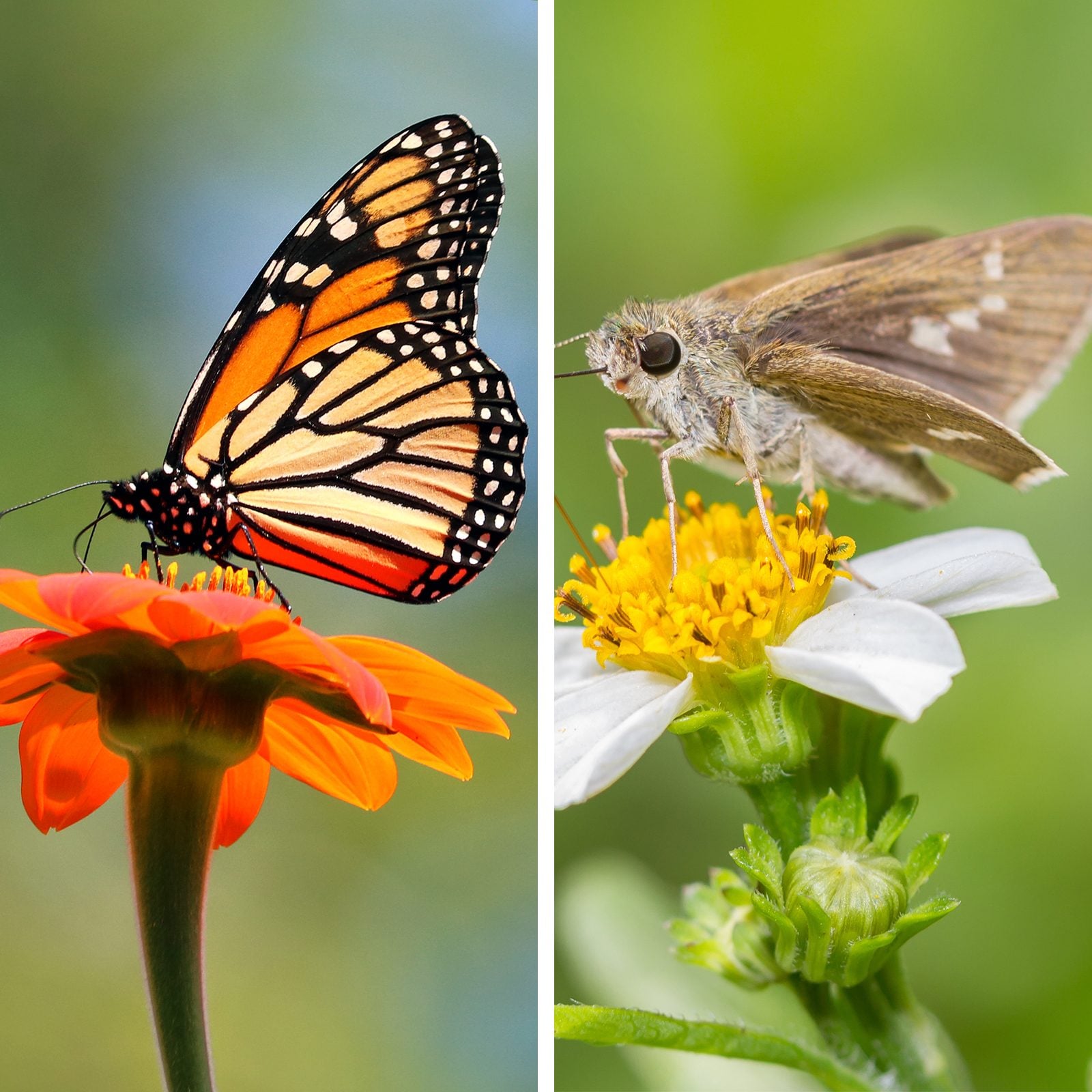
Butterflies get the good press. They float through gardens in bright colors, pose politely on coneflowers, and somet. Moths, meanwhile, work the late shift in fur coats and are often mistaken for “the thing that keeps bonking into my porch light.”
But when it comes to pollination, appearances can be wildly misleading. Both butterflies and moths belong to the order Lepidoptera, both drink nectar with a long, straw-like proboscis, and both move pollen as they travel from flower to flower. Yet they work different hours, visit different types of blooms, and can be more useful to different plants.
So, which is the better pollinator: butterfly or moth? The honest answer is delightfully inconvenient: neither wins every contest. Butterflies are valuable daytime pollinators, especially for sun-loving wildflowers. Moths are essential nighttime pollinators and may be the star players for pale, fragrant flowers that open after dark. The real winner is a garden or landscape that makes room for both.
Butterfly vs. Moth Pollination: The Quick Answer
If this were a gardening reality show, the judges would refuse to send either contestant home.
- Butterflies are most active during the day and commonly visit bright, open flowers with broad landing platforms.
- Moths often work at dusk and overnight, visiting pale, white, tubular, or heavily scented flowers that are easier to find in low light.
- Butterflies are highly visible ambassadors for pollinator conservation, but they are not usually as efficient at carrying pollen as bees.
- Moths are frequently overlooked, yet some species are highly specialized and can be critical pollinators for certain plants.
- The better pollinator depends on the plant. A flower that opens in full sun may benefit more from butterflies. A flower that releases fragrance at night may depend more heavily on moths.
In other words, asking whether butterflies or moths are better pollinators is a bit like asking whether breakfast or dinner is the better meal. Both are useful. Both are delicious in the right setting. And skipping either one can leave the ecosystem feeling a little underfed.
How Butterflies and Moths Pollinate Flowers
Pollination happens when pollen moves from the male part of a flower to the female part of the same plant species. That transfer helps many flowering plants produce seeds, fruits, and future generations of plants. Pollinators do not usually set out with tiny clipboards and a mission statement. They are mostly looking for nectar, pollen, shelter, or a good place to lay eggs. The plant gets reproductive help as an accidental bonus.
Butterflies and moths pollinate while feeding. Their legs, mouthparts, heads, eyes, or fuzzy bodies may brush against pollen-bearing structures. That pollen can then hitch a ride to the next compatible flower.
However, not every flower visitor is equally effective. A pollinator can be frequent but sloppy, carrying pollen to the wrong plant. Another may visit fewer flowers but transfer pollen precisely where it needs to go. That is why pollination is not just about how many insects arrive at a flower party. It is about whether they leave useful pollen in the right place.
Why Butterflies Are Valuable Pollinators
They Cover the Day Shift
Butterflies are diurnal, meaning they are active during daylight. They are drawn to flowers that are easy to spot in sunshine: bright reds, oranges, yellows, pinks, purples, and clusters of blooms that look like a floral food court.
Many butterflies prefer flowers with flat or clustered surfaces where they can land comfortably. Think asters, coneflowers, zinnias, milkweed, Joe-Pye weed, lantana, bee balm, ironweed, goldenrod, and black-eyed Susans. A butterfly usually wants an easy landing, a steady nectar supply, and a flower that does not require advanced gymnastics.
They Move Pollen Across Open Landscapes
Butterflies can travel between patches of wildflowers, gardens, meadows, hedgerows, and woodland edges. Some species cover impressive distances, which can help connect plant populations across a larger area. Monarchs are the celebrity example, but many other butterflies also move through landscapes in search of nectar, host plants, sun, and shelter.
This movement matters because plants do better when pollen comes from another individual of the same species rather than repeatedly circling within one flower cluster. A butterfly may not be the fuzziest pollen magnet in the garden, but it can be an effective pollen courier when it travels between flowering plants.
They Are Powerful Conservation Messengers
Butterflies have another advantage that is hard to measure with pollen counts: people notice them. A backyard full of butterflies often inspires homeowners, schools, parks, and neighborhoods to plant more native flowers, reduce pesticide use, and leave more natural habitat in place.
That makes butterflies excellent gateway pollinators. Someone who plants milkweed for monarchs may also add asters for fall nectar, native grasses for shelter, and flowering shrubs for other insects. The butterfly gets the applause, but bees, moths, beetles, flies, birds, and countless other creatures benefit from the upgraded neighborhood.
Where Butterflies Fall Short
Butterflies are helpful, but they are not automatically the most efficient pollinators in every situation. Their long, thin legs keep much of their body elevated above the flower. Unlike many bees, butterflies do not have specialized pollen-collecting structures, and they often pick up less pollen on their bodies.
That does not make butterflies poor pollinators. It simply means they are usually more accidental pollen carriers than precision specialists. A butterfly can absolutely pollinate a flower while sipping nectar, but it may not transfer pollen as efficiently as a bee, fly, beetle, hummingbird, or moth that makes stronger contact with the flower’s reproductive parts.
Butterflies also need sunlight and favorable weather. A cool, cloudy, rainy, or windy day can reduce activity. When the sun goes down, their pollination shift is essentially over. That is where moths enter the picture, usually without a red carpet and almost never with enough appreciation.
Why Moths May Be the Unsung Pollination Champions
They Work When Butterflies Are Sleeping
Moths are often associated with darkness, and for good reason. Many species are active at dusk, overnight, or before sunrise. While daytime pollinators settle down, moths begin visiting flowers that remain open after dark.
This creates a second pollination shift. Instead of competing directly with butterflies, moths often complement them. A flower may receive butterfly visits in the morning, bee visits at noon, and moth visits after sunset. That around-the-clock activity can make a plant’s pollination system more resilient, especially when weather or seasonal changes reduce daytime insect activity.
They Match Night-Blooming Flowers Beautifully
Flowers that rely on moths often have a recognizable style. They may be pale, cream-colored, or white, which makes them easier to see in dim light. They may produce a stronger fragrance at night, because scent becomes more useful when color is harder to notice. They may also offer abundant nectar hidden in long tubes.
Hawkmoths and sphinx moths are particularly impressive in this role. Some hover in front of flowers like tiny, extremely determined hummingbirds. With long proboscises, they can reach nectar tucked deep inside tubular blooms. This makes them excellent partners for flowers that are too deep for short-tongued visitors.
Plants such as evening primrose, moonflower, nicotiana, four o’clocks, certain orchids, and other fragrant evening bloomers can benefit from moth activity. Native plants vary by region, so the best choices for your landscape will depend on where you live. Still, the design principle remains the same: pale flowers plus night fragrance equals a very good chance that moths are invited.
Some Moths Have Specialized Jobs
The most famous example is the relationship between yucca plants and yucca moths. Yucca moths do more than accidentally brush pollen around. Female moths actively collect pollen, carry it to another yucca flower, and deliberately place it where pollination can occur. They also lay eggs in the flower, and the larvae later consume some developing seeds.
It sounds like a strange business arrangement, but it works because neither side can fully succeed without the other. The yucca receives reliable pollination. The moth receives a nursery and food source for its offspring. It is one of the clearest examples of coevolution in the pollinator world, and it proves that moths are far more than nighttime background extras.
So, Which Is the Better Pollinator?
For a specific flower, the better pollinator is the one that fits the flower’s design, timing, and habitat.
Butterflies may be more useful for sunny, colorful, flat-topped flowers that bloom during the day. Moths may be more useful for pale, fragrant, tubular flowers that open in the evening or hold nectar deep within the bloom.
Moths may also have an edge in situations where nighttime pollen transfer is the missing piece of the puzzle. A garden that supports only daytime pollinators has a gap in its schedule. It is like opening a restaurant for lunch and wondering why nobody orders dinner.
That said, neither group replaces the other. Butterflies and moths serve different niches, and both are part of broader pollination networks that also include native bees, flies, beetles, wasps, hummingbirds, bats, and other animals.
The best answer is not “butterflies win” or “moths win.” The best answer is that pollination works best when ecosystems support diverse pollinators across different times of day, seasons, flower types, and habitats.
Butterfly vs. Moth Pollinator Comparison
| Feature | Butterflies | Moths |
|---|---|---|
| Typical activity time | Daytime | Dusk, nighttime, and early morning |
| Preferred flower traits | Bright colors, broad landing surfaces, clustered blooms | Pale colors, strong fragrance, tubular shapes, nighttime nectar |
| Visibility to gardeners | Very high | Often unnoticed |
| Pollination style | Mostly incidental while feeding | Incidental in many species; highly specialized in some relationships |
| Best conservation role | Daytime wildflower networks and public engagement | Night-blooming plants and after-dark pollination networks |
How to Build a Garden for Both Butterflies and Moths
Plant for Day and Night
A pollinator garden should not clock out at sunset. Include colorful daytime flowers for butterflies alongside pale, fragrant plants that can support moths in the evening. The goal is not to create a butterfly garden with a token moonflower in the corner. The goal is to create a living habitat that offers food throughout the day and across the growing season.
For daytime visitors, choose regionally appropriate native flowers such as coneflowers, asters, milkweeds, bee balm, blazing star, black-eyed Susans, goldenrod, mountain mint, and Joe-Pye weed. For nighttime visitors, consider native evening-blooming or fragrant plants suited to your region, as well as evening primrose and other nectar-rich flowers that remain useful after dark.
Include Caterpillar Host Plants
Adult butterflies and moths need nectar, but their caterpillars need something even more important: host plants. Many species can only develop on specific plant families. Monarch caterpillars need milkweed. Fritillary caterpillars rely on violets. Many moth caterpillars use native trees, shrubs, grasses, and wildflowers.
That means a truly useful pollinator garden cannot be built from nectar flowers alone. A garden that offers adult insects a snack but nowhere to raise young is a little like opening a hotel with a beautiful lobby and no rooms.
Reduce Outdoor Lighting
Bright outdoor lighting can interfere with moth behavior. Porch lights, landscape lights, and decorative spotlights can lure moths away from flowers, disrupt normal movement, and make them more vulnerable to predators.
Use motion sensors, timers, shields, or warmer low-intensity lighting where possible. Better yet, turn unnecessary lights off. Your garden will still look lovely, your electricity bill may become less dramatic, and the moths can focus on their actual nighttime job instead of auditioning for a lamp.
Use Fewer Pesticides
Broad-spectrum insecticides can harm butterflies, moths, bees, and beneficial insects along with the pests you are trying to control. Whenever possible, start with nonchemical solutions: hand removal, barriers, improved plant spacing, pruning, beneficial insects, and choosing plants suited to local conditions.
If treatment is necessary, avoid spraying open flowers and never apply insecticides when pollinators are actively foraging. Small choices can make a meaningful difference for the insects that keep plants reproducing around your home.
Experience: What Butterfly and Moth Pollination Looks Like in Real Life
Most people notice butterfly pollination because butterflies make it easy. They show up when the garden is bright, the coffee is fresh, and someone is already standing outside with a phone camera. A swallowtail lands on a purple coneflower, opens and closes its wings like it is posing for an album cover, and suddenly everyone feels like they are living in a nature documentary.
Moth pollination is different. It is quieter, stranger, and often much more rewarding once you know where to look. You may step outside around dusk and catch a sphinx moth hovering near bee balm or evening primrose. For one second, it can look exactly like a hummingbird. Then the wings blur, the body seems too fuzzy, and your brain briefly has to reboot.
That moment changes how you see a garden. During the day, flowers look like decoration. At night, they become a working landscape. White blossoms glow against dark leaves. Sweet fragrances become stronger. Tiny insects flicker between stems. What seemed like an ordinary patch of plants becomes a night-shift cafeteria for creatures you rarely notice.
One useful experience for gardeners is to spend ten minutes outside at three different times: midmorning, late afternoon, and an hour after sunset. Bring a flashlight with a red filter if possible, or keep your regular light pointed downward and use it sparingly. Watch a few flower clusters instead of sweeping the whole yard with a bright beam.
In the morning, you may see butterflies warming their wings in the sun before visiting nectar plants. By afternoon, bees, flies, wasps, beetles, and butterflies can crowd the busiest blooms. At dusk, activity may shift. Some flowers close, others become more fragrant, and moths may begin arriving almost as if someone quietly changed the guest list.
A small backyard experiment can make the differences even clearer. Plant a cluster of brightly colored, flat-topped flowers in one area and pale, fragrant evening flowers in another. Keep a simple notebook. Record what visits during the day and what appears after dark. You do not need to identify every insect perfectly. “Large white moth hovering near flowers at 9:15 p.m.” is useful information. “Tiny brown bug doing mysterious things” is also a perfectly respectable first draft.
Over time, patterns emerge. The butterfly patch may be busiest in warm, sunny weather. The moth-friendly patch may become more active on calm evenings. You may notice that some flowers receive visitors throughout the day, while others have a surprisingly specific schedule. This is a practical reminder that pollination is not one universal service performed by one universal insect. It is a collection of relationships shaped by color, scent, flower structure, temperature, light, season, and luck.
Another experience that surprises many gardeners is seeing how important “messy” habitat can be. A perfectly sterilized yard may look tidy to people, but it can be difficult for moths and butterflies to use. Fallen leaves, stems left standing through winter, native grasses, shrubs, and a few less-managed corners can provide shelter for eggs, pupae, caterpillars, and overwintering insects.
You do not need to turn your yard into a wilderness preserve overnight. Even a small pollinator pocket can help. A container with nectar-rich flowers, a patch of milkweed, a few asters, a native shrub, and reduced night lighting can make a real difference. The point is not perfection. The point is making the landscape more hospitable than a lawn that has been treated like a green carpet with trust issues.
When gardeners begin noticing moths, they often stop thinking of them as lesser butterflies. Moths have their own extraordinary diversity: patterned wings, feathered antennae, unusual body shapes, camouflage, long tongues, and relationships with plants that may be more specialized than anything happening on the patio during the day.
Butterflies may win the popularity contest, but moths deserve a standing ovation for working after everyone else has gone home. The most pollinator-friendly garden is not built around a single favorite insect. It is built around the idea that flowers, caterpillars, moths, butterflies, bees, birds, and countless other creatures all need a place in the story.
Conclusion: Celebrate the Day Shift and the Night Shift
Butterflies and moths are both valuable pollinators, but they do their best work in different ways. Butterflies bring visibility, daytime flower visits, and broad public interest in pollinator conservation. Moths bring nighttime coverage, specialized relationships, and essential pollination services that often happen while we are inside scrolling through photos of butterflies.
Rather than choosing one, build a landscape that welcomes both. Plant native flowers with different bloom times, include caterpillar host plants, provide shelter, reduce pesticide use, and dim unnecessary outdoor lights. A garden that supports pollinators from morning through midnight is more resilient, more interesting, and much more alive.
Note: Pollination success varies by plant species, local habitat, weather, season, and the pollinator community in your region. For the strongest results, choose native plants recommended by a local extension office, native plant society, or conservation organization.