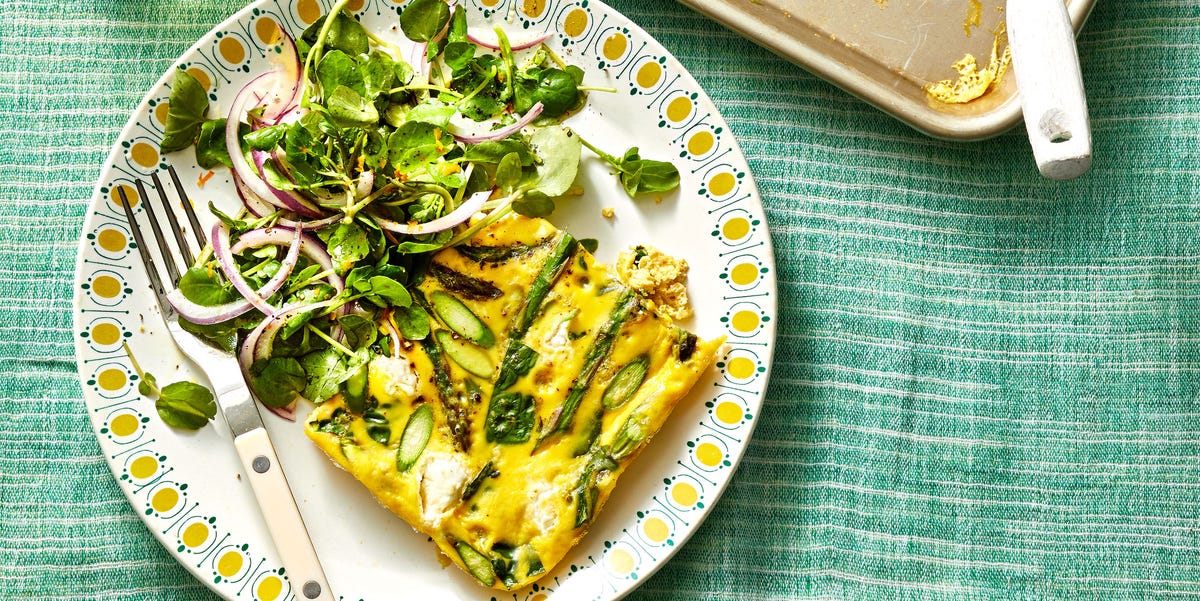
A sheet pan asparagus frittata is what happens when an elegant spring brunch meets the practical person wder, golden, packed with fresh asparagus, and easy to cut into neat squares for a crowd. Better yet, the oven does most of the work while you make coffee, slice fruit, or pretend the kitchen cleaned itself overnight.
This version combines roasted asparagus, sweet shallots, creamy ricotta, nutty Gruyère, fresh herbs, and a bright finish of lemon. Roasting the vegetables before adding the eggs is the small step that makes the biggest difference: the asparagus becomes crisp-tender, the shallots mellow, and excess moisture evaporates instead of turning the frittata watery. The result is a fluffy sheet pan frittata that tastes equally good hot, warm, or straight from the refrigerator during a suspiciously early snack break.
Why Make an Asparagus Frittata on a Sheet Pan?
A traditional frittata is usually started in a skillet and finished in the oven. That method is excellent for four or six servings. A rimmed sheet pan, however, spreads the egg mixture into a thinner, even layer that cooks quickly and can feed a larger group. It also produces tidy portions that slide easily into breakfast sandwiches, meal-prep containers, and lunch boxes.
The sheet pan method is especially useful for Easter brunch, Mother’s Day, baby showers, graduation breakfasts, or any morning when several hungry people appear at once. Instead of standing at the stove making individual omelets like a short-order cook who has made questionable life choices, you pour, bake, slice, and serve.
What Makes This the Best Sheet Pan Asparagus Frittata?
- Roasted vegetables: Precooking prevents a watery egg base and develops deeper flavor.
- Two cheeses: Gruyère melts into the eggs while ricotta creates creamy pockets.
- A balanced egg mixture: Whole milk adds tenderness without making the frittata heavy.
- Fresh finishing flavors: Lemon zest, chives, and parsley keep the rich eggs tasting lively.
- Flexible serving: Enjoy it for breakfast, brunch, lunch, dinner, or meal prep.
Sheet Pan Asparagus Frittata Recipe at a Glance
- Prep time: 20 minutes
- Cook time: 22 to 28 minutes
- Total time: About 45 minutes
- Yield: 10 to 12 servings
- Pan: One 13-by-18-inch rimmed half-sheet pan
- Oven temperature: 425°F for roasting, then 375°F for the eggs
Ingredients
- 1 pound fresh asparagus
- 2 medium shallots, thinly sliced
- 2 tablespoons extra-virgin olive oil
- 1 teaspoon kosher salt, divided
- 1/2 teaspoon freshly ground black pepper, divided
- 12 large eggs
- 1 cup whole milk
- 1 teaspoon Dijon mustard
- 1/2 teaspoon garlic powder
- 1 cup shredded Gruyère or Swiss cheese
- 1/2 cup whole-milk ricotta
- 2 tablespoons chopped fresh chives
- 2 tablespoons chopped fresh parsley
- 1 teaspoon finely grated lemon zest
- Cooking spray or softened butter for the pan
- Optional for serving: arugula, hot sauce, sliced avocado, toasted bread, or lemon wedges
How to Make Sheet Pan Asparagus Frittata
Step 1: Heat the Oven and Prepare the Pan
Place a rack in the center of the oven and preheat it to 425°F. Coat a 13-by-18-inch rimmed sheet pan generously with cooking spray or softened butter, paying special attention to the corners. Eggs are talented at finding the one ungreased spot and forming a lifelong attachment to it.
Use a sturdy pan with a rim at least 1 inch high. A flat cookie sheet is not suitable because the uncooked egg mixture can escape over the edges, creating an exciting but unnecessary oven-cleaning project.
Step 2: Trim and Cut the Asparagus
Rinse the asparagus and dry it well. Snap or cut away the woody bottom ends, then slice the spears into 1-inch pieces. Leave a few tips slightly longer if you want the finished frittata to look especially pretty. Thin and medium spears are ideal because they become tender quickly; very thick asparagus may need to be sliced lengthwise before chopping.
Step 3: Roast the Vegetables
Spread the asparagus and sliced shallots on the prepared sheet pan. Drizzle with olive oil and season with 1/2 teaspoon salt and 1/4 teaspoon black pepper. Toss until evenly coated, then arrange the vegetables in a single layer.
Roast for 8 to 10 minutes, just until the asparagus turns bright green and begins to brown in spots. It should still have some bite. Remember that it will cook again with the eggs, so do not roast it into submission.
Step 4: Whisk the Egg Mixture
While the vegetables roast, crack the eggs into a large bowl. Add the milk, Dijon mustard, garlic powder, remaining 1/2 teaspoon salt, and remaining 1/4 teaspoon black pepper. Whisk until the yolks and whites are completely combined and the mixture looks uniform, but do not beat so aggressively that it becomes a foam party. Too much air can make the frittata puff dramatically and then collapse.
Stir in the shredded Gruyère, chives, parsley, and lemon zest. Reserve a small handful of cheese and herbs for the top if presentation matters.
Step 5: Add the Eggs Carefully
Remove the hot pan from the oven and reduce the temperature to 375°F. Give the vegetables a quick stir and spread them evenly. Slowly pour the egg mixture over the asparagus and shallots, moving around the pan so the cheese does not collect in one corner.
Dollop small spoonfuls of ricotta across the surface. Sprinkle on the reserved Gruyère and herbs. Transfer the pan back to the oven carefully; uncooked eggs and sudden turns are not close friends.
Step 6: Bake Until Just Set
Bake for 12 to 16 minutes, rotating the pan once if your oven browns unevenly. The frittata is ready when the edges are set, the center no longer looks wet, and the surface springs back lightly when touched. For food safety, an egg dish should reach 160°F in the center when checked with an instant-read thermometer.
Do not wait for the top to become deeply browned. Eggs continue cooking from residual heat after leaving the oven, and overbaking is the fastest route from tender frittata to office-break-room sponge.
Step 7: Rest, Slice, and Serve
Let the frittata rest for 5 to 10 minutes. Run a thin spatula around the edges, then cut it into 10 to 12 squares. Finish with extra herbs, black pepper, or a squeeze of lemon. Serve warm or at room temperature.
Tips for a Fluffy, Tender Frittata
Precook Ingredients That Release Water
Asparagus, mushrooms, spinach, zucchini, and tomatoes all contain moisture. Roast or sauté them before they meet the eggs. This concentrates flavor and protects the frittata from becoming watery. Cooked meats should also be fully prepared before they are added.
Use Full-Fat Dairy for Better Texture
Whole milk gives the eggs a tender, custard-like texture without overwhelming them. Half-and-half can be substituted for a richer result. Low-fat milk works, but the finished frittata may be slightly firmer. For a dairy-free version, use an unsweetened, neutral plant milk and replace the cheese with a dairy-free alternative or additional vegetables and herbs.
Do Not Overload the Pan
A frittata is flexible, but it is not a moving truck. Too many vegetables, especially damp ones, prevent the egg mixture from setting evenly. For this pan size, approximately 3 to 4 cups of cooked add-ins is plenty.
Watch the Center, Not the Clock
Ovens vary, sheet pans vary, and eggs enjoy keeping cooks humble. Begin checking early. The center should be set but still soft, with no puddles of raw egg. If you prefer a browned top, switch on the broiler for 30 to 60 seconds after baking, watching constantly.
Easy Ingredient Variations
Asparagus and Feta
Replace the Gruyère and ricotta with crumbled feta, then add dill and a pinch of red pepper flakes for a brighter Mediterranean-style version.
Ham and Cheddar
Add 1 to 1 1/2 cups diced cooked ham and use sharp cheddar. Reduce the added salt slightly because both ingredients are naturally salty.
Mushroom and Goat Cheese
Sauté 8 ounces of mushrooms until their liquid evaporates, then add them with the asparagus. Finish with small pieces of goat cheese and fresh thyme.
What to Serve With Sheet Pan Asparagus Frittata
For brunch, pair the frittata with roasted potatoes, fresh fruit, muffins, or toast. For lunch or dinner, add a lemony arugula salad. Squares also make excellent breakfast sandwiches with English muffins, Dijon, and avocado, or portable wraps with greens and salsa.
Make-Ahead, Storage, and Reheating Instructions
Make ahead: Roast the asparagus and shallots up to one day in advance. Refrigerate them in a covered container, then assemble and bake the frittata when needed. You may also bake the entire dish ahead and serve it at room temperature.
Refrigerate: Cool leftovers promptly and store them in an airtight container for up to 3 to 4 days. Place parchment paper between stacked pieces to prevent sticking.
Freeze: Wrap individual squares tightly and freeze for up to 2 months. Thaw overnight in the refrigerator. The texture may be slightly less delicate after freezing, but it remains useful for breakfast sandwiches and busy mornings.
Reheat: Warm portions in a 325°F oven for 8 to 10 minutes, or microwave briefly at reduced power. Avoid overheating, which can make the eggs rubbery. The frittata is also delicious cold, especially when the alternative is cooking before coffee.
Common Problems and Simple Fixes
Watery center: Precook moist vegetables thoroughly and rest the frittata before cutting. Sticking: Grease every corner of the pan or use lightly greased parchment. Tough eggs: Remove the frittata as soon as the center is set; residual heat will finish the cooking. A small rise and fall is normal, but vigorous whisking and overbaking can cause a dramatic collapse.
Cook’s Experience Notes: What Home Cooks Learn After a Few Batches
The first practical lesson is that the sheet pan matters almost as much as the eggs. A thin, warped pan can tilt in the oven and send the uncooked mixture toward one side, creating a frittata with a thick end and a paper-thin end. A heavy rimmed aluminum pan heats more evenly and is easier to carry. Setting the pan on the open oven door before pouring is tempting, but filling it on a stable counter is safer. Once the eggs are in, carry it with two hands and move like you are transporting a very calm aquarium.
The second lesson is that dry vegetables are happy vegetables. Freshly rinsed asparagus should be patted dry before roasting. If water clings to the stalks, they steam rather than brown. That may sound like a tiny detail, yet it changes both flavor and texture. Browning adds sweetness and nuttiness, while steaming can leave the vegetables bland and the egg layer damp.
Another common discovery is that cheese distribution deserves attention. Shredded cheese tends to settle at the bottom of the mixing bowl. If the egg mixture is poured all at once without a final stir, the first half of the pan receives mostly eggs while the last corner gets a glorious cheese landslide. Stir immediately before pouring, then move the bowl around the sheet pan instead of emptying it in one spot.
Ricotta is best added in small dollops, not heroic scoops. Large mounds can stay cool and wet in the center, making nearby eggs take longer to set. Teaspoon-size portions create creamy bites without disrupting the bake. The same principle applies to goat cheese, cream cheese, or any soft cheese.
Timing becomes easier after you learn what “just set” looks like. The edges usually firm first and may pull away slightly from the pan. The center should lose its glossy appearance but retain a gentle softness. Waiting until the entire surface is browned guarantees that the underside has gone too far. A thermometer removes the guesswork, but visual cues become reliable with practice.
Finally, resting is not optional decoration. Fresh from the oven, the frittata is delicate and its internal moisture is still moving. Five to ten minutes gives the proteins time to settle, improves slicing, and helps the squares hold together. This is also the perfect window for making toast, dressing a salad, or locating the hot sauce that someone put back in a completely unreasonable cabinet.
Once these habits become automatic, the recipe turns into a useful framework rather than a one-time dish. Change the herbs, swap the cheese, add leftover vegetables, or include cooked ham. Keep the egg-to-pan ratio similar, control moisture, and avoid overbaking. That is the real pleasure of a sheet pan frittata: it looks polished enough for brunch guests but behaves like a forgiving weeknight meal.
Final Thoughts
This sheet pan asparagus frittata delivers the best parts of a spring breakfastfresh vegetables, creamy cheese, golden eggs, and bright herbswithout requiring individual omelets or complicated technique. Roasting the asparagus first keeps the texture crisp-tender, while Gruyère and ricotta make every slice savory and satisfying. Serve it for a crowd, pack it for the week, or eat a square over the sink while deciding whether that counts as lunch. It does.
Note: Cook egg dishes to an internal temperature of 160°F, refrigerate leftovers promptly, and use refrigerated portions within 3 to 4 days.