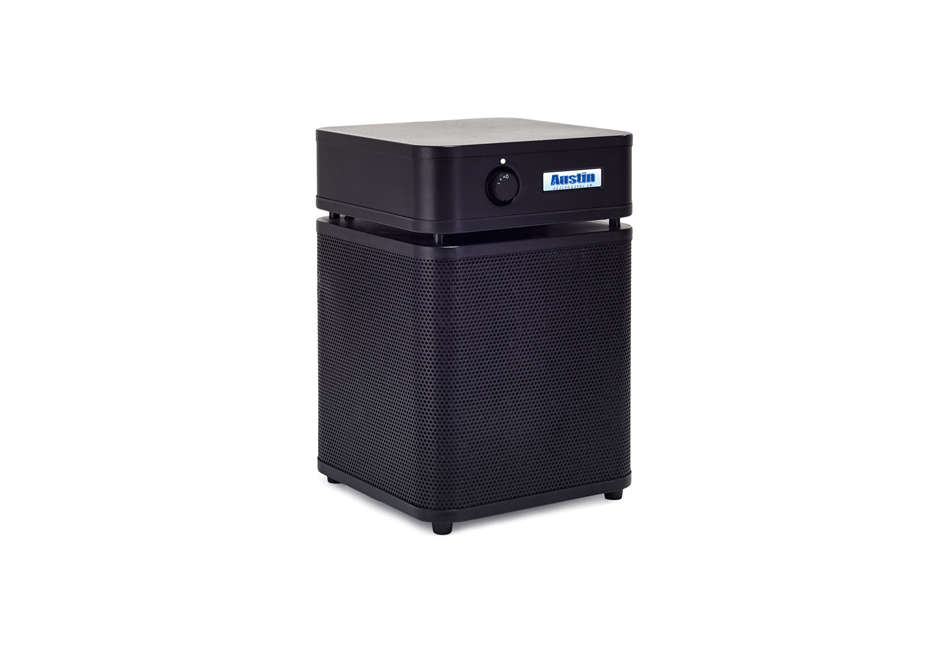
The Austin Air HealthMate Junior Plus is not the kind of air purifier that tries to impress you with a glowing screen, a rainbow air-quality ring, or an app that sends notifications while you are already staring at the machine. Its approach is considerably less theatrical: a steel cabinet, one control knob, a substantial combination filter, and a fan designed to keep running.
That simplicity makes the HealthMate Junior Plus unusual in a market filled with Wi-Fi connections and wafer-thin carbon sheets. It combines medical-grade HEPA material with a relatively deep bed of activated carbon, potassium iodide-impregnated carbon, and mineral-based filtration. The design targets both airborne particles and gaseous contaminants, including odors and volatile organic compounds, commonly called VOCs.
However, an expensive filter and a sturdy cabinet do not automatically make an air purifier ideal for every room. Airflow, room size, noise, filter costs, and the pollutants you actually need to address matter just as much. Here is a detailed look at where the Austin Air HealthMate Junior Plus shines, where it feels dated, and who is most likely to appreciate it.
Quick Verdict: Is the HealthMate Junior Plus Worth It?
The Austin Air HealthMate Junior Plus is best viewed as a specialized compact air purifier for people who place unusual importance on chemical, gas, odor, and VOC filtration. Its generous carbon-based filter media distinguishes it from many small purifiers that include only a thin carbon-coated pad.
It is less convincing as a general-purpose particle cleaner for a large bedroom or living area. Austin Air describes the unit as appropriate for smaller spaces but does not prominently publish conventional smoke, dust, and pollen CADR figures on the product page. That omission makes objective room-size comparisons difficult because the Environmental Protection Agency, ENERGY STAR, and the Association of Home Appliance Manufacturers recommend using CADR when matching an air cleaner to a room.
Best for: Small bedrooms, nurseries, home offices, studios, and other compact spaces where VOCs, renovation odors, traffic pollution, wildfire-related gases, or chemical sensitivity are major concerns.
Less suitable for: Buyers seeking the highest particle-cleaning speed per dollar, smart controls, automatic operation, real-time air-quality data, or clearly certified coverage for a large room.
What Is the Austin Air HealthMate Junior Plus?
The HealthMate Junior Plus is the compact version of Austin Air’s chemical-focused HealthMate Plus. The cabinet measures approximately 11 inches long, 11 inches wide, and 16.5 inches high. It weighs about 21 pounds and uses perforated steel on all four sides to create a 360-degree air intake. A three-speed centrifugal fan pulls contaminated air through the cylindrical filter before returning filtered air through the top outlet.
The machine is handcrafted in Buffalo, New York, according to the manufacturer. Its powder-coated steel construction feels more like commercial equipment than a typical plastic bedroom appliance. It is compact, but 21 pounds is not exactly featherweight. Moving it from room to room is possible; carrying it around the house like a Bluetooth speaker is less charming after the third trip upstairs.
There is no touchscreen, particle sensor, automatic mode, timer, remote control, or smartphone application. The control panel consists of a mechanical knob with off, low, medium, and high settings. For some buyers, this is refreshingly straightforward. For others, it may feel like buying a premium car and discovering that the dashboard contains one switch labeled “go.”
How the Four-Stage Filtration System Works
The central attraction is the large combination filter. Austin Air divides its filtration system into four stages, each addressing a different class of pollutant.
Stage 1: Large-Particle Pre-Filter
The outer pre-filter catches visible material such as hair, lint, larger dust particles, and some pet-related debris. Its main job is to prevent larger contaminants from loading the more expensive filter media too quickly.
A pre-filter does not eliminate the need to vacuum, dust, or groom a shedding pet. It simply gives the inner layers a fighting chance against the tumbleweed of fur rolling dramatically across the hallway.
Stage 2: Medium-Particle Pre-Filter
The second stage captures smaller material, including pollen, mold spores, and medium-size dust particles. This layer further protects the HEPA media and helps distribute incoming air around the cylindrical filter.
Stage 3: Carbon, Potassium Iodide, and Mineral Media
The HealthMate Junior Plus contains more than 270 cubic inches of activated carbon, potassium iodide-impregnated carbon, and mineral-based filtration. Austin Air markets this blend for the reduction of VOCs, formaldehyde, benzene, chemical vapors, gases, and odors.
This is the feature that most clearly separates the Plus Junior from ordinary compact HEPA purifiers. Many inexpensive machines use a lightweight carbon sheet that may reduce mild smells but can become saturated quickly. A deeper volume of adsorbent material generally offers more capacity for gaseous pollutants, although effectiveness varies by chemical, concentration, humidity, airflow, and contact time.
The EPA notes that activated carbon can help filter gases when a purifier contains a substantial quantity of it. The agency also cautions that there is no widely adopted consumer rating system comparable to particle CADR for measuring gas-removal performance. In other words, carbon quantity is meaningful, but shoppers should remain cautious about sweeping claims that one machine removes every chemical equally well.
Stage 4: Medical-Grade HEPA Material
The final stage contains approximately 30 square feet of HEPA material. Austin Air states that it captures 99.97% of particles measuring 0.3 microns and 99% of particles down to 0.1 microns when air passes through the filter.
HEPA filtration can capture airborne pollen, fine dust, pet dander, smoke particles, and other particulates. The American College of Allergy, Asthma & Immunology notes that HEPA-equipped purifiers may help remove airborne pet-allergen particles, although an air cleaner should be part of a broader allergen-control plan rather than the entire plan wearing a metal box.
Where the HealthMate Junior Plus Stands Out
Substantial Gas and Odor Media
The unit’s strongest selling point is its focus on gaseous pollution. It may appeal to people dealing with fresh paint, new flooring, composite-wood furniture, cleaning chemicals, traffic exhaust, smoke odors, or emissions from hobbies such as crafting and 3D printing.
The American Lung Association recommends considering activated carbon alongside HEPA filtration when odors or VOCs are a concern. It also emphasizes that portable air cleaners are most effective in the individual rooms where people spend the most time.
Durable, Low-Complexity Construction
The steel housing, mechanical switch, and absence of delicate displays reduce the number of electronic features that can fail. There is no app to abandon, no cloud account to forget, and no firmware update arriving at 2:17 a.m. to improve the emotional intelligence of your fan.
This simplicity can be especially attractive for people who want a purifier to run continuously without interacting with it. Austin Air rates the motor for continuous operation and recommends operating the machine around the clock for consistent filtration.
Long Advertised Filter Life
Austin Air designs the main filter for up to five years of normal residential use and supports it with a five-year prorated filter warranty. The purifier itself carries a five-year mechanical warranty, subject to the company’s registration and residential-use conditions. A 30-day return period is also advertised.
Five years should be treated as a design target rather than a universal expiration date. A purifier operating near wildfire smoke, heavy renovation fumes, tobacco smoke, frequent candle use, or intense pet contamination may load its filter faster. Carbon can also lose adsorption capacity before the HEPA portion appears visibly dirty.
Important Limitations to Consider
Room-Size Performance Is Not Clearly Communicated
The biggest purchasing challenge is the lack of prominently published CADR ratings for smoke, dust, and pollen. CADR combines filter efficiency and airflow into a measure of how quickly a complete machine delivers filtered air. A highly efficient filter paired with limited airflow can still clean a room slowly.
Washington State Department of Health guidance recommends selecting a mechanical HEPA purifier with a smoke CADR equal to at least two-thirds of the room’s floor area. Under that rule, a 150-square-foot bedroom would ideally use a smoke CADR of roughly 100 CFM. Taller ceilings increase the required capacity because the purifier must process a larger volume of air.
Independent testing by RTINGS measured the standard Austin Air HealthMate Juniornot the Plus Juniorat a PM1.0 CADR of approximately 36 CFM on its highest setting. RTINGS consequently recommended that tested sibling model for only very small spaces. The Plus Junior has different gas-filter media, so that result should not be treated as a direct laboratory measurement of the HealthMate Junior Plus. It does, however, raise a reasonable question about airflow through the compact platform’s dense filter.
Buyers primarily concerned with pollen, dust, pet dander, or wildfire particles should request verified CADR data from the manufacturer or compare the unit with an AHAM-certified purifier that publishes all three ratings.
No Sensor, Auto Mode, or Filter Indicator
The HealthMate Junior Plus cannot detect a pollution spike and automatically increase its speed. It will not alert you when someone burns toast, sprays cleaner, or opens a window during a smoky afternoon. You choose the speed manually and keep track of filter age yourself.
A separate PM2.5 monitor can help evaluate particle pollution, but inexpensive consumer monitors usually provide limited information about individual VOCs. Your nose may detect an odor change, yet the absence of smell does not prove that every gas has disappeared.
It Is a Premium-Priced Specialist
The purchase price is considerably higher than that of many compact HEPA purifiers. Part of that cost pays for the steel construction and large quantity of carbon-based media. Nevertheless, buyers interested mainly in fast particulate removal may obtain higher measured CADR from less expensive models.
The replacement filter is also a significant future expense, even if it lasts several years. Calculate ownership cost using a conservative filter-life estimate rather than assuming perfect five-year service under every condition.
An Air Purifier Cannot Replace Source Control
No portable purifier can solve active mold growth, a leaking combustion appliance, unsafe carbon monoxide, radon, excessive humidity, or an ongoing chemical spill. It also does not remove carbon dioxide produced by occupants. Ventilation, source removal, moisture repair, exhaust fans, and professional testing may still be necessary.
The EPA emphasizes that no air cleaner removes every indoor pollutant. ASHRAE similarly describes portable filtration as a supplement rather than a substitute for appropriate ventilation and contaminant control.
Best Uses for the HealthMate Junior Plus
The purifier makes the strongest case in a relatively small, enclosed room where gaseous and particulate pollutants occur together. Practical examples include:
- A bedroom containing new furniture or recently installed flooring
- A nursery where parents want mechanical filtration without ionization or bright displays
- A home office near a busy road, garage, workshop, or construction area
- A craft room exposed to adhesives, paints, markers, resin, or cleaning agents
- A compact “clean room” used during wildfire-smoke events
- An apartment where cooking odors or neighboring smells occasionally enter
During wildfire smoke, public-health guidance supports creating a closed clean room and operating an appropriately sized portable air cleaner. HEPA filtration can reduce airborne smoke particles, while carbon media may help with some accompanying gases and odors. The purifier must still have enough airflow for the room, and windows should generally remain closed when outdoor smoke levels are high.
Setup and Placement Tips
Austin Air’s manual recommends placing the purifier on a stable, dry surface with at least four inches of clearance from the wall. The outlet should face away from the wall so filtered air can circulate through the room. On first use, the company advises running the machine on high for approximately one hour before selecting a lower speed.
For better real-world performance:
- Keep all four intake sides clear of curtains, bedding, boxes, and furniture.
- Place the purifier in the room where you spend the most time.
- Close doors and windows when filtering outdoor smoke or pollen.
- Use high speed during active pollution events and lower speeds when conditions stabilize.
- Do not hide the machine in a corner simply because it clashes with the decorative pillows.
- Reduce indoor pollution sources by avoiding smoking, excessive candle use, and unnecessary aerosol products.
ENERGY STAR and ASHRAE placement guidance likewise stresses keeping intake and discharge paths unobstructed. A premium purifier pushed behind a sofa becomes a premium-priced machine for cleaning the air trapped behind a sofa.
HealthMate Plus Junior vs. Full-Size HealthMate Plus
The full-size HealthMate Plus contains approximately 60 square feet of HEPA media and about 780 cubic inches of carbon and mineral-based filtration. The compact Plus Junior provides roughly 30 square feet of HEPA and 270 cubic inches of gas-filter media.
The Junior is easier to place in a bedroom or office, while the larger version offers substantially more media for demanding environments. People with a large open-plan space or continuous exposure to chemical pollutants should not choose the Junior merely because it costs less or fits neatly beside a nightstand. The machine must be matched to the volume of air and the intensity of contamination.
Who Should Buy It?
Consider the Austin Air HealthMate Junior Plus when your priority list begins with VOCs, chemical odors, formaldehyde, smoke-related gases, and sturdy construction. It is particularly appealing when you prefer a filter-only device without ionization, ozone-generating features, UV lamps, or complicated electronics. Washington State health guidance generally favors mechanical HEPA filtration over electronic air-cleaning technologies that may generate unwanted byproducts.
Choose something else when your main goal is to clear particles from a medium or large room as quickly and quietly as possible. In that case, prioritize verified smoke CADR, noise at the speed you will actually use, energy consumption, and replacement-filter cost. Smart sensors and automatic mode may also provide more practical value than a large carbon bed if gases are not your central concern.
Conclusion
The Austin Air HealthMate Junior Plus is a focused, old-school air purifier built around a serious combination filter. Its steel housing, uncomplicated controls, 360-degree intake, HEPA material, and unusually deep carbon-based stage make it an interesting choice for small spaces affected by both particles and chemical pollutants.
Its weaknesses are equally clear. The unit lacks modern monitoring features, requires manual operation, carries a premium price, and does not make objective room-size comparison easy through prominently published CADR figures. Buyers should not confuse excellent filter-media specifications with guaranteed rapid air cleaning in every room.
For a compact office, nursery, studio, or bedroom where VOCs and odors matter as much as dust and pollen, the HealthMate Junior Plus may justify its specialist price. For broad, high-speed particle cleaning, a less expensive purifier with independently verified CADR may be the more sensible choice. The cleanest decision comes from identifying the pollutant firstnot from choosing the machine with the longest list of impressive filter ingredients.
Daily Ownership Experience: What Living With It Is Likely to Feel Like
The first impression is physical. The HealthMate Junior Plus is smaller than a full-size Austin Air unit, but its steel construction gives it more presence than a lightweight plastic purifier. When you lift it from the box, the 21-pound weight signals that most of the interior is occupied by real filter material rather than decorative empty space. The design is functional and slightly industrial. It will not disappear visually like a tiny white cylinder, although its compact footprint makes it easy to position beside a desk or dresser.
Setup is pleasantly uneventful. There is no account creation, Wi-Fi pairing, Bluetooth permission, or request to share your location with a fan. You remove the packaging, give the unit breathing room, plug it in, and turn the knob. Running it on high produces an obvious rush of air. After the initial clearing period, medium or low will usually feel more comfortable for routine use.
In a small home office, the machine’s practical appeal becomes clearer during activities that create noticeable odors. Imagine assembling flat-pack furniture, opening a freshly delivered foam chair, using a strong adhesive, or cleaning with a scented product. The HealthMate Junior Plus is designed for this mixed environment, where fine particles and gaseous compounds may be present together. Odor reduction will not always be instant, and the purifier cannot stop new emissions at their source, but a substantial carbon bed is more reassuring than the flimsy black sheet found in many budget machines.
The experience is less dramatic when the problem is ordinary dust. You should not expect dusting chores to vanish. Heavy particles settle on furniture and floors before a purifier can capture them, while activity can continually reintroduce material into the air. The machine may reduce airborne particles passing through it, but housekeeping remains stubbornly employed.
Nighttime use depends on personal noise tolerance. A steady mechanical fan sound can be soothing for people who enjoy white noise, while sensitive sleepers may prefer the lowest setting. Independent testing of the related standard HealthMate Junior measured approximately 37.3 decibels on low and 54.2 decibels on high, although those figures should not be treated as direct measurements of the Plus Junior. The absence of a bright display is a genuine bedroom advantage: no glowing air-quality ring turns the ceiling into a low-budget planetarium.
The lack of automation changes how you use the purifier. A sensor-equipped model can increase speed after cooking or when outdoor smoke enters. With the Austin Air, you become the sensor. When pollution rises, you turn the knob to high. When the room clears, you decide whether to reduce it. This is simple, but it rewards owners who pay attention and penalizes those who set every appliance once and emotionally move on.
Maintenance is similarly low-tech. Periodically vacuuming accumulated dust from the intake surface can help preserve airflow. The main HEPA and carbon filter should not be washed. As the years pass, watch for reduced airflow, persistent odors, visible contamination, or a noticeable return of symptoms associated with a known exposure. Write the installation date somewhere sensible because the machine will not remember it for you. A calendar reminder is far cheaper than replacing a filter two years earlyor discovering three years late that the “new filter” was installed during a previous presidential administration.
Overall, ownership feels dependable rather than interactive. The HealthMate Junior Plus is most satisfying when treated as a dedicated small-room appliance with a specific job: continuously processing air through substantial particle and gas filtration. It is unlikely to delight gadget lovers, but it may appeal strongly to people who value solid construction, minimal electronics, long service intervals, and filtration media that looks prepared for actual work.