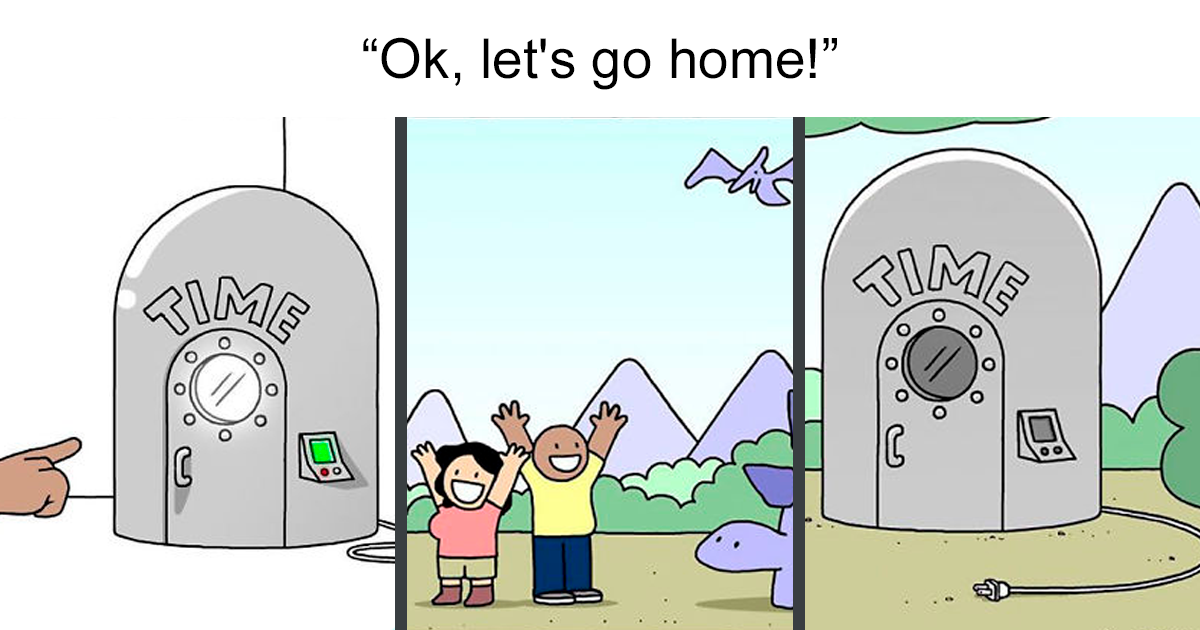
A cheerful cartoon character walks into an ordinary situation. The colors are friendly, the faces are simple, and nothing appears remotely dangerous. Then the final panel arrives, kicks over the furniture, and reveals that the entire setup was quietly leading toward disaster. Welcome to Berkeley Mews, where childhood nostalgia goes in for a routine checkup and somehow leaves with an existential crisis.
Meet the Artist Behind Berkeley Mews
Ben Zaehringer is the cartoonist behind Berkeley Mews, a webcomic known for combining approachable artwork with dry wit, dark humor, and ruthless reinterpretations of familiar stories. Born in Glendale, California, Zaehringer studied film at the University of California, Berkeley and launched the comic in 2009. He later became the writer and illustrator of the syndicated sports comic In the Bleachers.
His artistic education included high school and community-college classes covering life drawing, anatomy, and even carsa subject he has jokingly described as a recurring headache for cartoonists. Long before publishing professional work, he created homemade comic books with a friend after school, often parodying properties such as Pokémon and Dragon Ball Z. That early practice helped shape his instinct for compact storytelling, recognizable characters, and punchlines that arrive without asking permission.
The comic eventually expanded into published collections. Sorry I Ruined Your Childhood, released in 2019, focuses heavily on the pop culture, commercial mascots, fairy tales, and animated stories familiar to people who grew up during the 1980s and 1990s. A second collection, How Not to Get into Heaven, followed in 2021 with more jokes about Santa Claus, religion, mortality, and the cheerful lies society tells children before sending them a bill for adulthood.
Why These Dark Humor Comics Look So Innocent
The Artwork Lowers Your Defenses
The visual style is deliberately welcoming. Many characters have round heads, dot eyes, uncomplicated expressions, and thick outlines. Zaehringer has explained that he experimented with different approaches before settling on bold lines and purple characters, partly because readers responded positively to that combination. His influences include short-form webcomics such as The Perry Bible Fellowship, Three Word Phrase, and Chainsawsuit.
This simplicity is not a shortcut. It is camouflage. A highly detailed horror illustration tells the audience to prepare for something unpleasant. A round purple person standing beside a birthday cake tells the audience to relax. That is precisely when the trapdoor opens.
Nostalgia Completes Half the Setup
Many Berkeley Mews comics begin with cultural material readers already understand: Disney-style romance, Christmas traditions, superhero logic, fairy-tale wishes, talking animals, childhood games, and family-friendly entertainment. Zaehringer does not need six panels to explain these worlds. The audience carries the rules into the comic automatically.
He can therefore spend the first panel establishing something familiar and use the remaining space to break it. A magical wish becomes an administrative nightmare. A charming animal reveals a horrifying survival strategy. A wholesome childhood character encounters the realities of aging, debt, death, or customer service. Somewhere, a fairy godmother quietly updates her résumé.
The Final Panel Rewrites Everything
The strongest comics do more than add a random shocking image. Their endings force readers to reinterpret what came before. Psychologists often describe humor as involving incongruity: the audience forms one expectation, notices that the outcome violates it, and then quickly understands the hidden connection. Dark humor intensifies that mechanism by making the new interpretation uncomfortable as well as funny.
In other words, the punchline works because it is surprising but not meaningless. The ending feels impossible for half a second and obvious a moment later. That tiny delay is where the laugh lives.
30 Things to Notice Across the Dark Humor Comics
The individual situations change, but these 30 recurring ingredients help explain why the gallery feels so consistently unpredictable.
- Fairy tales with consequences: Magical solutions frequently create problems that the original story conveniently forgot to mention.
- Childhood heroes behaving badly: Familiar figures are treated like flawed adults rather than permanently cheerful mascots.
- Literal interpretations: An innocent phrase becomes dangerous when a character follows it with unreasonable precision.
- Romance without protective padding: Grand declarations of love collide with rejection, incompatibility, biology, or terrible timing.
- Death as an employee: The Grim Reaper often seems less like a monster and more like someone finishing an exhausting shift.
- Animals with private agendas: Cute creatures may understand the situation better than the humans, which is rarely good news.
- Wish fulfillment gone wrong: Characters get exactly what they request and immediately discover why wording matters.
- Holiday traditions under investigation: Santa, gifts, family rituals, and seasonal cheer receive an unofficial psychological audit.
- Pop culture stripped of plot armor: Heroes and princesses face outcomes that would never survive a studio test screening.
- Adulthood invading fantasy: Taxes, work, insecurity, and exhaustion enter worlds originally designed to exclude them.
- Cheerful faces during catastrophe: Minimal expressions make the darkest moments even more absurd.
- Monsters with practical concerns: Supernatural beings may worry about schedules, relationships, or disappointing performance reviews.
- Optimism punished efficiently: Hope often survives for two panels, which is practically a long-term lease in this universe.
- Expectation reversals: The apparent victim may be the threat, while the frightening character may be strangely reasonable.
- Silent punchlines: Some jokes need no dialogue because the final visual contradiction delivers everything.
- Existential questions in tiny packages: Life, meaning, faith, and mortality appear without turning the comic into a lecture.
- Technology as temptation: Phones, notifications, and digital distractions reveal how easily attention can be manipulated.
- Family conversations derailed: Ordinary exchanges between parents and children can become brutally honest within seconds.
- Villains winning through competence: Evil occasionally succeeds because someone actually planned ahead.
- Heroes defeated by technicalities: Courage is useful, but it remains surprisingly vulnerable to fine print.
- Religion viewed through bureaucracy: Heaven, judgment, and divine authority sometimes resemble poorly managed institutions.
- Physical comedy with an aftertaste: The initial laugh may be followed by the realization that the situation is objectively awful.
- Wordplay with sharp edges: Puns are not always harmless here; some arrive carrying gardening tools and suspicious paperwork.
- Nostalgia used as bait: Recognition creates comfort, allowing the twist to land with greater force.
- Everyday anxiety made visible: Embarrassment, loneliness, self-doubt, and fear become literal characters or physical obstacles.
- Background details doing extra work: A sign, facial expression, or small object may quietly reveal the real joke.
- Impossible worlds with consistent rules: The scenarios are absurd, but the internal logic remains clear enough to support the punchline.
- Kindness meeting suspicious circumstances: Good intentions do not guarantee good outcomes, especially when monsters are nearby.
- Sudden changes in scale: A small domestic problem may expand into cosmic destruction with impressive efficiency.
- Endings that linger: The best jokes keep unfolding mentally after the reader has already moved to the next comic.
Why Dark Humor Can Feel Surprisingly Comforting
Dark humor allows people to approach subjects that are difficult to discuss directly. Mortality, loneliness, failure, disappointment, and fear become easier to examine when compressed into a cartoon world. The joke creates a little emotional distance. Readers can recognize something uncomfortable, laugh at its absurdity, and continue with their day without scheduling an emergency meeting with the universe.
That does not mean every grim joke is automatically clever. Shock alone becomes predictable very quickly. If every comic ended with random violence, readers would soon stop being surprised. Zaehringer’s strongest work succeeds because the darkness grows naturally from the setup. The punchline is not simply “something terrible happened.” It is “something terrible happened for a reason we should have noticed.”
The contrast also matters. Cute drawings and bleak conclusions produce more tension than bleak drawings and bleak conclusions. When the form promises safety but the story delivers chaos, readers experience two emotions at once. They may laugh, wince, and feel slightly guiltyall before the next scroll.
What Separates Clever Dark Humor From Cheap Shock
The Joke Needs a Real Target
Effective satire usually aims at an idea, convention, institution, or shared cultural assumption. A comic that exposes the strange logic of fairy tales has a recognizable target. A joke about corporate optimism can reveal how empty motivational language sounds during a crisis. A panel about a superhero’s impractical costume can challenge an entire genre with one visual gag.
Cheap shock, by contrast, often relies on making a vulnerable person suffer without offering a larger observation. The surprise may earn a reaction, but there is little reason to revisit the joke.
Timing Matters More Than Gore
Many memorable Berkeley Mews strips are not visually graphic. Their darkness comes from implication, timing, or emotional reversal. The reader understands what has happened without being shown every detail. That restraint makes the work more accessible and often more unsettling. The imagination, after all, has an unlimited special-effects budget.
The Characters Stay Earnest
The people and creatures inside these comics rarely announce that they are participating in a joke. They treat absurd circumstances as normal, preserving the deadpan rhythm. A character may confront divine judgment, romantic collapse, or an approaching monster with the same expression someone might use while choosing a sandwich.
This seriousness keeps the humor from becoming noisy. The comic does not elbow the reader and shout, “Did you see the funny part?” It trusts the final panel to do its job.
A Reader’s Experience: Spending Time With 30 Innocent-Looking Comics
Reading a single dark comic is a quick surprise. Reading 30 in a row becomes a game between the artist and the audience. At first, the reader accepts each setup normally. A child speaks to a parent. A couple shares a tender moment. An animal appears ready to offer helpful advice. Then the ending arrives, and the reader realizes that trusting the first panel was an adorable mistake.
After several comics, the experience changes. Suspicion enters the room. Every object becomes evidence. Is the birthday cake poisoned? Is the smiling dog planning something? Why is that cloud shaped like a legal notice? The audience begins scanning backgrounds and studying expressions, determined to predict the next turn.
That heightened attention is part of the fun. Simple artwork encourages readers to assume that every visible detail has a purpose. A door left slightly open may matter. A character standing too close to a cliff probably matters. A cheerful sign in the background almost certainly contains information that will ruin somebody’s afternoon.
Predicting the punchline, however, remains difficult because the comics do not rely on one formula. One strip may use wordplay. Another may transform a childhood memory into a horror scenario. A third may end with nothing more violent than an awkward truth. The variety prevents the gallery from becoming a repetitive parade of unfortunate purple people.
The emotional rhythm is equally unpredictable. Some comics produce an immediate laugh. Others cause a delayed reaction: the reader reaches the next image, pauses, scrolls backward, and finally understands the previous ending. A few are funny primarily because they are painfully accurate. The supernatural material may be exaggerated, but disappointment, procrastination, insecurity, and social embarrassment are recognizable enough to have their own reserved seats.
There is also a peculiar warmth beneath the darkness. The comics may mock childhood stories, but they generally do so with detailed knowledge of why those stories mattered. A parody works best when the artist understands the source material. The familiar characters, narrative shortcuts, and moral lessons are not selected randomly; they are chosen because readers remember them clearly.
That recognition creates a small community between artist and audience. The comic seems to say, “You remember this too, right?” The reader agrees. Then the final panel says, “Excellent. I will now damage it.”
By the end of 30 comics, readers may feel more alert, slightly concerned about Santa Claus, and less willing to trust talking animals. They may also appreciate how much storytelling can fit inside three or four panels. A successful strip establishes a world, directs attention, creates an expectation, overturns it, and exits before the reader has time to demand emotional compensation.
The overall experience resembles walking through a brightly decorated funhouse. Everything is colorful and familiar, but the mirrors are angled just enough to make ordinary ideas look strange. You laugh because the distortion is clever. You keep moving because the next room appears harmless. By then, of course, you should know better.
Conclusion
Ben Zaehringer’s Berkeley Mews demonstrates that dark humor does not require gloomy artwork, complicated dialogue, or buckets of cartoon blood. A clean visual style, a recognizable setup, and one carefully aimed reversal can be far more effective.
These comics invite readers into worlds built from fairy tales, holiday traditions, romantic fantasies, and childhood entertainment. Once everyone is comfortable, they reveal the loopholes, consequences, and uncomfortable truths hidden beneath the surface. The result is funny because it is unexpected, satisfying because it follows its own logic, and memorable because the innocent opening never fully prepares us for the ending.
So enjoy the 30 pictures, study every background detail, and remember the central rule of Berkeley Mews: when a comic begins with a smiling character in a peaceful setting, something dreadful is probably completing the required paperwork.