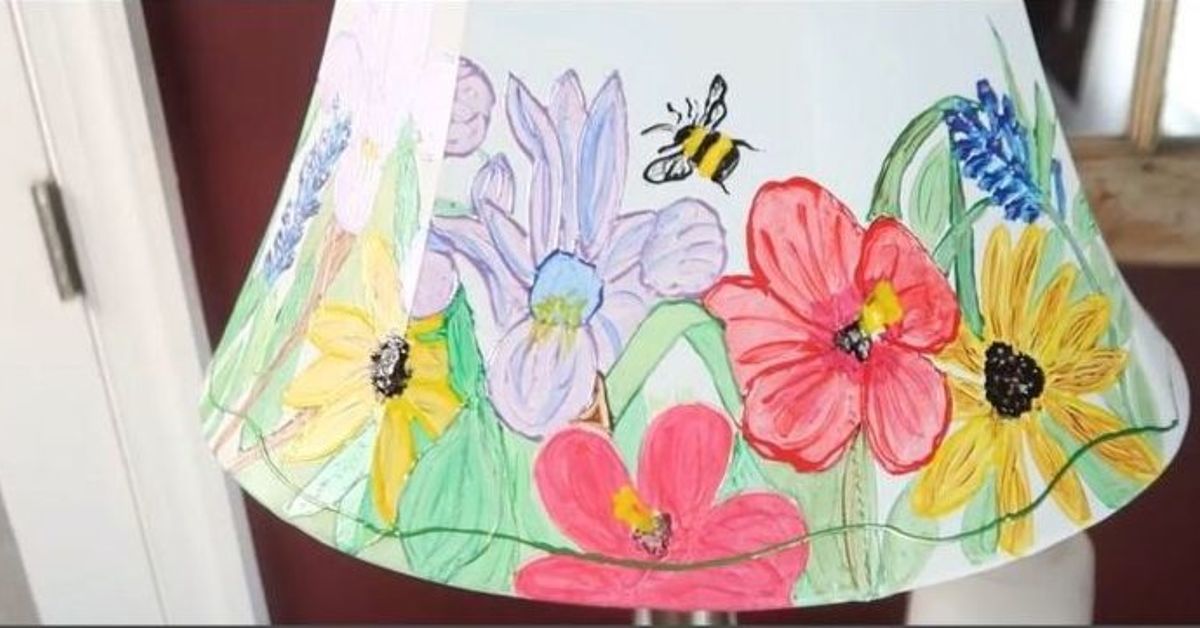
If you searched for an Anthropology Inspired Lampshade, there is a good chance you are actually chasing the colorful, collected, slightly bohemian lighting aesthetic associated with Anthropologie-style interiors. Think printed cotton, cheerful pleats, scalloped edges, contrast piping, raffia texture, unexpected color combinations, and the general feeling that your lamp recently returned from a very stylish vacation.
The good news is that you do not need to replace an entire lamp to get that effect. A plain or outdated lampshade can become a decorative focal point with fabric, trim, adhesive, and a little patience. Better still, the project works beautifully with thrift-store lamps, leftover fabric, vintage textiles, and inexpensive neutral shades.
This guide explores how to design an Anthropologie-inspired lampshade without simply copying a particular product. You will learn how to choose a shade, select fabric and trim, build a convincing color palette, avoid common DIY mistakes, and create something that looks intentionally handmade rather than accidentally attacked by a glue gun.
What Makes an Anthropology Inspired Lampshade Look Special?
The secret is not one pattern or one lampshade shape. It is the layering of several decorative ideas.
Current designer-style shades often combine traditional forms such as empire, tapered drum, or straight drum silhouettes with playful materials and details. Printed fabric, shirring, pleating, velvet, raffia, scallops, contrasting borders, and botanical patterns can transform an otherwise ordinary lamp into a miniature piece of furniture.
Pattern Does Much of the Heavy Lifting
A plain white lampshade disappears into a room. A patterned fabric lampshade participates in it.
Botanical prints are especially effective because they work naturally with eclectic, cottage, grandmillennial, and boho interiors. Block-print-inspired florals, vines, small geometric motifs, stylized leaves, birds, and hand-drawn patterns all have the slightly imperfect character that makes this style interesting.
Large prints can be dramatic, but smaller repeating patterns are usually easier for a first DIY lampshade because seams and overlaps are less obvious.
Pleats Add Instant Designer Character
A pleated lampshade has more dimension than a flat fabric shade. Light catches the folds differently throughout the day, creating tiny highlights and shadows that make even inexpensive cotton look richer.
There are several levels of difficulty. You can create true sewn pleats, make gathered or shirred fabric panels, or fake the effect by folding lightweight fabric before attaching it to a plain shade.
If your crafting personality is more “enthusiastic beginner” than “Victorian costume department,” simple evenly spaced folds are perfectly adequate.
Contrast Trim Creates the Finished Look
Trim is often what separates a charming handmade shade from something that looks unfinished.
Consider:
- bias tape around the top and bottom;
- velvet ribbon;
- braided decorative trim;
- tiny pom-poms;
- fringe;
- ric-rac;
- contrasting cotton tape;
- decorative cord.
A blue floral fabric with cherry-red trim, for example, feels far more intentional than the same floral fabric with exposed raw edges. Likewise, olive fabric with pink edging or mustard fabric with navy trim can provide the slightly unexpected color combination associated with eclectic designer lighting.
Choose the Right Lampshade Before Decorating
Before falling emotionally in love with six yards of floral fabric, make sure the shade itself fits your lamp.
Lampshades commonly use drum, empire, bell, oval, square, and tapered shapes. Drum shades are versatile and contemporary, while empire shades provide the wider lower edge that works particularly well with pleating and traditional prints.
Check the Proportions
There is no single mathematical law enforced by the Lampshade Police, but basic proportions provide a useful starting point.
For many table lamps, a shade roughly two-thirds the height of the visible lamp base can look balanced. Another common guideline is to choose a lower shade diameter approximately twice the width of the lamp base. These are starting points rather than commandments; sculptural and vintage lamps often look better when proportions are deliberately exaggerated.
Whatever size you choose, the shade should generally be wider than the broadest portion of the lamp base and large enough to visually conceal the socket and much of the lamp hardware.
Identify the Fitter
Do not overlook how the shade physically connects to the lamp.
Common fittings include:
- Spider fitters: sit on a lamp harp and are usually secured with a finial.
- Uno fitters: connect around the socket.
- Clip-on fitters: attach directly to an appropriate bulb.
A gorgeous handmade shade with the wrong fitting is basically an unusually expensive fabric bucket, so check before decorating.
Best Materials for an Anthropologie-Inspired Lampshade
Cotton
Lightweight cotton is one of the easiest materials for DIY work. It accepts folds well, comes in thousands of prints, and can be attached without excessive bulk.
Look for fabric similar in weight to quilting cotton or cotton voile rather than upholstery material.
Linen and Linen Blends
Linen creates a softer, more relaxed appearance. Its visible weave provides texture even when the fabric is a solid color.
A plain flax-colored linen shade can still feel special when finished with raspberry, moss green, navy, or mustard edging.
Block-Print-Style Fabric
A block print lampshade is particularly effective for this look because irregular-looking motifs create the impression of hand craftsmanship.
Indigo florals, rust-colored vines, green leaves, dusty pink flowers, and small repeating geometric forms are easy to coordinate with vintage and modern lamp bases.
Raffia and Natural Fibers
Raffia introduces another direction: less colorful, more textural. A natural woven shade paired with dark or colorful trim can bring warmth to wood, ceramic, glass, or aged-brass lamp bases.
It is particularly attractive in coastal, organic modern, tropical, or bohemian rooms.
How to Make a Simple Fabric-Covered Anthropology Inspired Lampshade
The easiest version starts with an existing hard-backed lampshade. You are decorating rather than constructing the internal shade from scratch.
Supplies
- plain hard-backed lampshade;
- lightweight cotton or linen fabric;
- measuring tape;
- fabric scissors;
- pencil or removable fabric marker;
- kraft paper for creating a pattern;
- fabric-safe spray adhesive or suitable lampshade adhesive;
- fabric glue for finishing edges;
- ribbon, bias tape, or decorative trim;
- clothespins or clips.
Step 1: Make a Pattern
Place the shade on kraft paper with its seam facing downward. Mark your starting position.
Slowly roll the shade across the paper while tracing the top and bottom edges. Stop when the seam returns to the paper. Connect the ends to create your template.
Add a small allowance around the pattern so you have enough fabric to create a neat overlap.
Step 2: Position the Fabric
Place the template on the wrong side of your fabric.
Before cutting, pay attention to pattern direction. Trees should generally grow upward. Birds should not appear to be falling toward the floor. A flower turning sideways is charming; an entire botanical garden experiencing a gravitational emergency is less charming.
Cut carefully and test-wrap the fabric around the shade before applying adhesive.
Step 3: Attach the Fabric
Apply adhesive according to the product instructions, working carefully to prevent wrinkles.
Start near the existing lampshade seam and smooth the fabric gradually around the shade. Do not attempt to stick everything at once. Working in smaller areas gives you more control.
At the finishing seam, fold under the raw edge before gluing it over the starting edge.
Step 4: Finish the Top and Bottom
Carefully trim excess fabric while leaving enough material to produce a clean edge.
Depending on the construction of the shade, the fabric can be folded neatly around the rims or concealed beneath decorative trim.
Attach ribbon, bias tape, braid, or another trim around both edges. This final step can dramatically improve the finished appearance.
How to Create a Pleated Lampshade Look
A true handmade pleated shade takes more work, but a simplified version is achievable.
Choose thin fabric because thick material becomes bulky as the folds accumulate. Begin by testing several pleats on a scrap to decide their depth and spacing.
Fold the fabric consistently, pressing each pleat lightly when the material allows. Position the pleated strip around the lampshade and temporarily secure it with clips.
Only after checking the spacing should you begin permanent attachment.
Contrast trim is especially useful on pleated shades because it hides the attachment areas and defines the overall silhouette.
For a more traditional effect, use a tapered empire shade. For something slightly cleaner and contemporary, apply shallow folds to a drum shape.
Try a Scalloped Lampshade for Extra Personality
The scalloped lampshade has become popular because it provides visual movement without requiring an extremely bold print.
The safest beginner approach is to begin with a professionally constructed scalloped blank or add decorative scalloped trim rather than cutting deeply into the structural material of an existing shade.
You can also create the illusion of scallops through contrasting braid or painted curved borders.
Pair scalloped edges with restrained patterns so the design does not become overwhelmed. A small blue floral print with green edging, for instance, can feel playful yet polished.
Color Combinations That Work
An Anthropologie-inspired lampshade should feel collected rather than perfectly matched.
Try combinations such as:
- indigo floral fabric with tomato-red trim;
- sage green with blush pink edging;
- mustard yellow with navy blue;
- brown botanical print with sky-blue piping;
- cream linen with emerald velvet ribbon;
- pink gingham with burgundy trim;
- natural raffia with chartreuse or black edging.
One useful design trick is to borrow a minor color already present elsewhere in the room and repeat it on the lampshade trim. That small connection helps an adventurous shade feel intentional.
Pairing the Shade With the Right Lamp Base
The shade does not need a fancy base. In fact, a detailed shade often looks best with something comparatively simple.
Ceramic Bases
Glazed ceramic works beautifully with patterned cotton. Try bottle green, cream, rust, pale blue, chocolate brown, or glossy black.
Brass Bases
A narrow antique-brass or brushed-brass base pairs naturally with pleats, botanical prints, and scalloped edges. Brass introduces warmth without competing heavily with the fabric.
Glass Bases
Clear or colored glass is a useful choice when the lampshade already contains several colors. The visual lightness of glass prevents the finished lamp from becoming too busy.
Thrifted Bases
Secondhand lamps are particularly suited to a DIY lampshade makeover. An inexpensive lamp with awkward proportions can suddenly look intentional after a new shade and perhaps a replacement finial.
Check the wiring and hardware of older lamps before use, especially if their electrical condition is uncertain.
Lighting and Safety Matter Too
A lampshade is decorative, but it also sits around an electrical light source. Treat that part seriously.
Always observe the maximum bulb wattage specified for your lamp or fixture. Do not assume that adding fabric, trim, paper, tassels, or other decorative materials makes it acceptable to install a hotter bulb.
Energy-efficient LED bulbs are useful for decorative lamps because they typically generate substantially less waste heat than traditional incandescent bulbs while producing comparable visible light. Even so, an LED bulb and its electronics can still become warm, so adequate clearance remains important.
Never drape loose fabric over a working bulb. Decorative elements should be securely attached to a properly constructed shade and kept away from the bulb and socket.
After completing your project, turn on the lamp and inspect it periodically during the first few uses. If adhesive softens, fabric smells unusually hot, trim moves toward the bulb, or any component appears damaged, switch the lamp off and correct the problem.
How to Keep a Decorative Lampshade Clean
Pleats, fringe, and textured fabric have one natural enemy: dust.
For routine maintenance, turn off the lamp and let the bulb cool. A clean soft-bristle brush, microfiber duster, gentle vacuum brush attachment, or lint roller can remove surface dust depending on the delicacy of the material.
A small clean paintbrush is particularly handy for getting between pleats.
Avoid automatically soaking handmade fabric shades. Adhesives, paper liners, trims, dyes, and structural materials may react badly to water. Spot-clean cautiously according to the fabrics and adhesives used in your project.
Common DIY Lampshade Mistakes
Using Fabric That Is Too Thick
Heavy upholstery fabric can create bulky seams and poorly defined pleats. Lightweight fabric is usually easier.
Skipping the Test Wrap
Always position the material before applying adhesive. Discovering that your beautiful peacock print ends with half a peacock at the center seam is an avoidable tragedy.
Using Too Many Decorative Ideas at Once
Print plus pleats plus fringe plus tassels plus pom-poms plus embroidery can work in a deliberately maximalist room, but restraint often looks more expensive.
Pick two or three stars. For example: floral print, pleats, red trim. Everyone else can remain in the audience.
Ignoring the Lamp Base
The shade and base should have some visual conversation. They do not need to match, but they should look like they agreed to attend the same party.
Where an Anthropology Inspired Lampshade Works Best
This style can fit surprisingly diverse rooms.
In a bedroom, use a small pleated floral shade to soften a simple bedside table. In a living room, place an oversized patterned shade on a substantial ceramic base. In an entryway, a colorful lampshade can act almost like artwork.
For a home office, choose a design with enough personality to brighten the desk without reducing useful illumination. In a reading corner, combine a patterned shade with layered ambient lighting instead of relying entirely on one bright overhead fixture.
Even minimalist interiors can accommodate one decorative lamp. Against neutral walls and straightforward furniture, a patterned shade becomes a controlled dose of eccentricity.
Experience-Based Lessons From Making an Anthropology Inspired Lampshade
The most useful lessons from projects like this are rarely the glamorous ones. The finished photographs show the flowers, pleats, ribbon, and cozy evening glow. They do not show the ten minutes spent crawling around the floor looking for the fabric scissors that were sitting under the fabric the entire time.
A typical DIY experience starts with excessive confidence. A plain lampshade appears simple enough, so it is tempting to cut fabric immediately. The smarter approach is slower: measure first, make a paper template, and test everything before reaching for adhesive.
Pattern placement becomes surprisingly important. Small florals are forgiving, while large motifs demand planning. If the fabric contains a bird, flower bouquet, medallion, or other prominent element, deciding where that motif appears on the front of the shade can make the difference between custom-looking and random-looking.
Another lesson is that perfection is not necessary, but neat finishing is. Tiny inconsistencies in handmade pleats often add charm. A crooked exposed seam does not. Spending additional time on the back overlap and edge trim normally improves the project more than fussing over every individual fold.
Color also changes once the lamp is switched on. A cream fabric may turn warmer. Thin cotton may reveal more of the internal structure than expected. Reds and oranges can become richer, while some pale prints lose contrast. Testing fabric by holding it in front of a lamp before permanently attaching it is therefore genuinely useful.
One of the most satisfying experiences is realizing that an inexpensive lamp base can support an adventurous shade better than an already ornate lamp. A thrifted ceramic lamp that seemed boring in the store may suddenly become the perfect foundation for a pleated floral shade. Instead of competing, the plain base gives the textile room to perform.
Trim also tends to create the biggest “before and after” moment. Before trim, the project can look suspiciously like fabric glued to household equipment. After adding a clean contrasting border, it begins to look like an intentional decorative object. This is why it is worth buying slightly more ribbon or bias tape than calculations suggest. Running out with three inches left to finish is a character-building experience nobody needs.
Pleats require their own dose of patience. The first few may look wonderfully uniform, followed by a gradual migration as the fabric travels around the shade. Marking regular intervals beforehand helps. So does occasionally stepping away from the project and viewing the shade from several feet away. Minor differences that seem catastrophic at six inches are often invisible at normal viewing distance.
There is also a practical lesson about maximalism: more decoration does not automatically mean more personality. Some of the strongest results use one memorable pattern and one surprising trim color. When every available embellishment enters the project, individual details begin fighting for attention.
Finally, the best outcome is not necessarily a convincing imitation of something sold in a store. The advantage of an Anthropology Inspired Lampshade project is personalization. You can use a scrap from old curtains, a vintage textile, fabric that repeats the color of your favorite chair, or trim found at a flea market. Those choices give the lamp a history that a mass-produced shade cannot duplicate.
That is usually the moment when the project becomes more than a budget decorating trick. You stop thinking, “I made something that looks expensive,” and start thinking, “Why did I ever accept that sad beige lampshade in the first place?”
Conclusion
An Anthropology Inspired Lampshade is one of the most approachable ways to give an existing lamp more character. Patterned cotton, lightweight linen, pleating, scalloped details, contrast trim, and natural fibers can all produce the layered, eclectic look associated with boutique-style lighting.
Start with the right shade size and fitting, choose one strong decorative idea, and finish the edges carefully. A thrifted lamp and a modest amount of fabric can become a surprisingly convincing statement piece without requiring an entire room makeover.
Most importantly, use inspiration as a starting point rather than a blueprint. The memorable version is the one that fits your room, your colors, and your slightly irrational attachment to that perfect piece of floral fabric.
Note: This project is independently inspired by the eclectic decorative lampshade aesthetic commonly associated with Anthropologie-style interiors. It is not affiliated with or endorsed by Anthropologie.