Animal spirits are supposed to make markets feel alive. They are the confidence, fear, greed, optimism, and occasional caffeine overdose that push investors and business owners to act before every spreadsheet has been politely completed. But when trade policy starts changing by headline, social post, executive order, and surprise pause, those animal spirits can turn from racehorse to raccoon in a garbage can. That is the essence of the tariff tantrum: a market mood swing powered by uncertainty, politics, prices, and the uncomfortable realization that “free trade” is not always free of drama.
The phrase “Animal Spirits: The Tariff Tantrum” captures two related stories. The first is psychological: how investors, consumers, and executives react when they no longer know what imported goods will cost next month. The second is practical: how tariffs ripple through stock markets, supply chains, household budgets, small businesses, and corporate planning. Put those together and you get a very modern economic movie: part Wall Street thriller, part grocery receipt horror film, part group therapy session for portfolio managers.
What “Animal Spirits” Really Means
The term animal spirits is most closely associated with economist John Maynard Keynes, who used it to describe the emotional forces behind economic decisions. People do not invest, hire, spend, or save based only on perfect calculations. They act because they feel confident, worried, impatient, excited, or afraid. A CEO may delay opening a new factory because the outlook feels foggy. A household may buy a washing machine early because prices might rise. An investor may dump growth stocks not because every future cash flow changed overnight, but because the room suddenly smells like recession.
That matters because markets are not machines. They are crowds with keyboards. When confidence rises, companies expand, consumers spend, and investors take risk. When confidence cracks, the same people start hoarding cash, postponing decisions, and refreshing market charts like they are checking the weather before a tornado.
What Is the Tariff Tantrum?
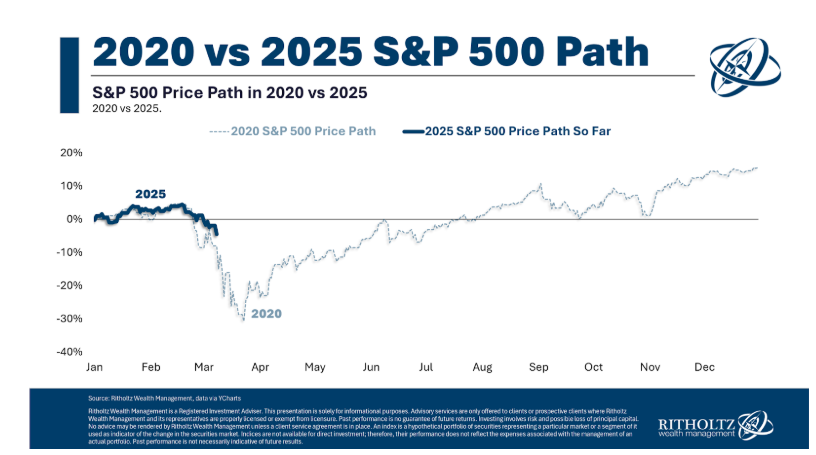
The tariff tantrum refers to the sharp emotional and financial reaction triggered by aggressive tariff policy and the uncertainty surrounding it. In 2025, U.S. trade policy became one of the biggest market-moving stories of the year. The Trump administration announced sweeping reciprocal tariffs, including a baseline duty on many imports and higher rates for selected trading partners. China became the center of the storm as the U.S. and China escalated tariff threats and countermeasures.
Markets did not simply dislike the tariffs. They disliked the unpredictability. Investors can price bad news. They can price slower growth. They can even price higher costs. What they struggle to price is a policy environment that feels like someone keeps changing the rules while the game is already in the fourth quarter.
That is why the stock market’s reaction was so dramatic. After tariff announcements shook global markets, a later 90-day pause on many reciprocal tariffs produced a massive relief rally. The S&P 500 jumped sharply in one of its strongest single-day performances in years. That is classic animal spirits: fear floods the room, then hope kicks down the door wearing sunglasses.
Why Tariffs Hit More Than Wall Street
A tariff is technically a tax on imports. In real life, it is also a negotiation tool, a political message, a business cost, and sometimes a price increase wearing a fake mustache. When the government imposes tariffs on imported goods, the immediate payer is usually the importer. But importers are not magical cost-absorbing sponges. They often pass some or all of that cost to wholesalers, retailers, and eventually consumers.
This is where the tariff tantrum moves from trading desks to kitchen tables. Imported products include electronics, apparel, toys, home goods, car parts, machinery, furniture, tools, food ingredients, and countless business inputs. Even products labeled “Made in America” may rely on imported components. A domestic manufacturer using imported steel, circuit boards, packaging, or machinery can face higher costs without importing the final product itself.
The Consumer Price Problem
Economists have warned that broad tariffs can lift consumer prices, especially when applied across a wide range of countries and products. Some estimates from economic research groups projected meaningful short-term price increases, with lower-income households feeling the pressure more intensely because essentials take up a larger share of their budgets. A tariff on a luxury handbag is annoying. A tariff-driven increase on children’s clothing, groceries, school supplies, or car repairs is a household budget ambush.
Consumers also react before prices fully change. If shoppers believe tariffs will make goods more expensive later, they may buy now. That can temporarily boost sales, but it also creates weird demand patterns. Retailers see a rush, then a slump. Inventory managers get migraines. Economists call it “pulling demand forward.” Everyone else calls it “buying the dishwasher before it gets $200 more expensive.”
The Business Planning Problem
For small and mid-sized businesses, tariff uncertainty can be more damaging than the tariff rate itself. A large multinational may have teams of lawyers, trade consultants, logistics experts, and financial hedging tools. A small importer of furniture, toys, auto parts, specialty foods, or boutique consumer goods may have a laptop, a warehouse lease, and a prayer candle.
When tariff rates change suddenly, businesses must decide whether to raise prices, shrink margins, delay orders, renegotiate contracts, switch suppliers, or cut costs elsewhere. None of those choices are painless. Raise prices too much and customers disappear. Absorb the cost and profits vanish. Switch suppliers too quickly and quality or delivery can suffer. Wait too long and competitors may adapt first.
This is how policy uncertainty becomes economic friction. It slows decisions. It delays hiring. It can freeze investment. A business owner who planned to expand may decide to wait. A manufacturer may delay equipment purchases. A retailer may reduce seasonal orders. Multiply that caution across thousands of firms and animal spirits start limping.
Why Investors Reacted So Strongly
Investors care about tariffs because tariffs can influence nearly every major input in a valuation model: revenue growth, profit margins, inflation, interest rates, currency values, and recession risk. That is not a small list. That is basically the whole financial lasagna.
Growth stocks can be especially vulnerable because their valuations depend heavily on expectations about the future. If investors believe tariffs will slow the economy, raise costs, and keep inflation sticky, they may demand a lower price for future earnings. At the same time, defensive assets such as bonds may look more attractive if recession fears rise. But even bonds can become volatile if investors worry tariffs will keep inflation higher for longer.
The tariff tantrum also reminded investors that markets are not only about fundamentals. They are about narrative. At the start of 2025, many investors expected deregulation, tax cuts, artificial intelligence growth, and pro-business energy to keep risk appetite high. Then tariffs complicated that story. Suddenly, the narrative shifted from “animal spirits are back” to “what if policy uncertainty eats the expansion?”
Tariffs, Inflation, and the Federal Reserve
Tariffs create a tricky problem for the Federal Reserve. If tariffs raise prices, inflation measures can move higher. But if tariffs also slow growth, the economy may weaken. That creates a messy combination: inflation pressure on one side and growth risk on the other. Central bankers do not enjoy this combination. It is like being asked to cool the soup and warm it at the same time.
If the Fed cuts interest rates too quickly, inflation expectations may become harder to control. If it keeps policy too tight, tariff-related weakness could worsen. The challenge is determining whether tariff-driven price increases are temporary one-time adjustments or the beginning of broader inflation psychology. Once consumers and businesses expect prices to keep rising, behavior can change in ways that make inflation more persistent.
This is why consumer sentiment surveys matter. When households expect higher inflation, they may accelerate purchases, demand higher wages, or become more pessimistic about real income. When businesses expect higher input costs, they may raise prices preemptively. Animal spirits are not just a Wall Street phenomenon. They can live in checkout lines, payroll meetings, and supplier contracts.
Why the Stock Market Can Rally During Bad News
One confusing part of the tariff tantrum is that markets sometimes rallied even while the underlying policy picture remained uncertain. This is not as strange as it looks. Markets move based on expectations. If investors feared a worst-case trade war and then received a partial pause, stocks could jump simply because the disaster scenario became less immediate.
Think of it like hearing a loud noise in the basement. At first, you imagine a burglar, a bear, or your washing machine achieving consciousness. Then you discover it was only a fallen broom. You are relieved, even though the basement is still a mess. Markets often rally on “less bad” news, not necessarily good news.
The 90-day tariff pause worked this way. It did not erase all tariffs. It did not solve every trade dispute. It did not guarantee a stable long-term policy path. But it gave investors a break from the most frightening version of the story. That was enough to unleash a relief rally.
The China Factor
No discussion of the tariff tantrum is complete without China. The U.S.-China trade relationship is deeply integrated, politically sensitive, and economically enormous. Tariffs on Chinese imports affect consumer goods, industrial inputs, electronics, machinery, and countless supply chains. Companies that spent decades optimizing production around China cannot redesign everything overnight.
Some businesses have already diversified supply chains into Vietnam, Mexico, India, and other markets. But supply chains are not light switches. Moving production requires new factories, trained workers, supplier networks, quality control systems, shipping routes, financing, and time. Even when diversification makes strategic sense, it is expensive and slow.
That is why tariff escalation with China can produce such a strong reaction. Investors are not only pricing today’s tariff rate. They are pricing the risk of retaliation, export controls, currency moves, diplomatic strain, and a long-term split in global commerce. In plain English: they are asking whether the world’s two largest economies are about to make everything more complicated for everyone.
Winners and Losers in a Tariff Tantrum
Tariffs are often presented as a way to protect domestic industries. In some cases, selected U.S. producers may benefit if foreign competitors become more expensive. A steel producer, for example, might gain pricing power if imported steel faces higher duties. Some manufacturers may see new demand if companies reshore production.
But the benefits are uneven. A company that produces protected goods may win, while another company that uses those goods as inputs may lose. A domestic appliance maker may face higher steel costs. A small retailer may face higher import costs. A consumer may face higher final prices. A farmer may be hurt if trading partners retaliate against U.S. agricultural exports.
This is why tariffs are not a simple “foreign countries pay” story. The economic burden can spread through importers, producers, workers, consumers, and investors. The final result depends on product category, supply alternatives, currency moves, demand strength, and how much cost businesses can pass along.
What the Tariff Tantrum Teaches Investors
1. Policy Risk Is Real Risk
Investors often focus on earnings, interest rates, and technology trends. The tariff tantrum shows that policy can move markets just as quickly. Executive orders, trade negotiations, court decisions, and diplomatic responses can change the outlook for entire sectors.
2. Diversification Still Matters
During tariff volatility, international stocks, bonds, commodities, and defensive sectors can behave differently from U.S. growth stocks. A diversified portfolio will not eliminate losses, but it can reduce the chance that one political shock ruins the whole picnic.
3. Headlines Are Not a Strategy
Reacting to every tariff headline can turn investing into a full-time panic hobby. Long-term investors need a process that can survive policy noise. That means rebalancing, understanding risk tolerance, keeping cash needs separate from long-term investments, and not confusing volatility with permanent damage.
4. Inflation Psychology Matters
If tariffs change what consumers and businesses expect about future prices, the impact can outlast the initial policy. Watch inflation expectations, consumer sentiment, business surveys, and corporate earnings calls. They often reveal how the mood is spreading.
Experiences and Real-World Lessons From the Tariff Tantrum
The most useful way to understand the tariff tantrum is not through a chart alone. It is through the lived experience of people making decisions under uncertainty. Imagine a small home-goods retailer in Ohio that imports ceramic dinnerware and kitchen accessories. In January, the owner places spring orders based on expected shipping costs and wholesale prices. By March and April, tariff headlines start changing the math. The owner now has three choices: raise prices, accept lower margins, or cancel part of the order. None of these options feels heroic. Raising prices risks losing customers to big-box competitors. Lowering margins means less money for payroll, rent, and debt payments. Canceling inventory means empty shelves during peak shopping season. That is not an abstract macroeconomic issue. That is Tuesday afternoon.
Now consider a family planning to replace an aging car. They hear that auto parts and imported vehicles may become more expensive. Even if the exact price effect is unclear, the fear of higher costs can push them to buy sooner. The dealership sees a burst of demand. A few months later, demand softens because some buyers already pulled purchases forward. The data may look strong one month and weak the next, confusing analysts and businesses alike. This is how tariff uncertainty distorts normal behavior.
Investors experienced their own version of the same problem. A long-term investor with a balanced portfolio may have watched stocks fall on tariff fears, then surge on pause headlines, then wobble again as China tensions remained unresolved. The emotional temptation is obvious: sell after the drop, buy after the rally, repeat until the portfolio looks like it was assembled by a squirrel. The better lesson is that volatility is the cost of admission. If an investor’s plan cannot survive a tariff headline, it probably was not a plan. It was a mood.
Business executives also learned that supply-chain flexibility has value. For years, companies optimized for the lowest cost. The tariff tantrum pushed many of them to think about resilience: multiple suppliers, regional production, larger inventory buffers, and better contract terms. These changes can reduce risk, but they also raise costs. The cheapest supply chain is not always the strongest one. In a world of tariff uncertainty, “just in time” can become “just kidding.”
For consumers, the lesson is practical. Tariffs can show up in small ways before they become obvious in official inflation data. A favorite imported coffee brand gets smaller. A backpack costs more. A repair estimate jumps because parts are pricier. A retailer runs fewer discounts. Not every price increase is caused by tariffs, but tariffs can become one more layer in the cost-of-living sandwich.
The broad experience of the tariff tantrum is that uncertainty itself has a price. It changes behavior before the final bill arrives. It makes investors twitchier, consumers more cautious, and businesses slower to commit. That is why animal spirits matter. Confidence is not a decorative economic accessory. It is fuel. When policy uncertainty drains that fuel, markets can still run, but the engine sputters.
Conclusion: The Market Can Handle Tariffs, But It Hates Confusion
Animal Spirits: The Tariff Tantrum is ultimately a story about confidence under pressure. Tariffs can raise costs, reshape supply chains, and alter inflation expectations. But the bigger market shock often comes from not knowing what comes next. Investors can adapt to a clear tariff regime. Businesses can plan around stable rules. Consumers can adjust to visible prices. What causes the tantrum is the fog.
The key takeaway is simple: trade policy is no longer background noise. It is a front-page market force. For investors, that means respecting policy risk without becoming addicted to headlines. For businesses, it means building flexible supply chains and pricing strategies. For consumers, it means understanding that global trade fights can eventually land in the shopping cart.
Animal spirits can recover. They usually do. But they recover faster when the rules are clear, the costs are measurable, and the market does not feel like it is being asked to price tomorrow with yesterday’s map and a blindfold.