If you have ever wanted a crash course in how smart investors think without enrolling in a stuffy finance seminar that smells faintly of burnt coffee and regret, Animal Spirits Episode 29: The Podcast Boot Camp comes surprisingly close. Hosted by Michael Batnick and Ben Carlson, the episode works like a compact investing workshop disguised as a conversation. One minute they are talking about ETF bubble fears, the next they are dissecting private-market illusions, airline credit cards, hedge fund ambition, retirement myths, and the eternal human hobby of being confidently wrong about the future.
That is what makes this episode feel like a boot camp. It is not a single-topic deep dive. It is a fast-moving, big-idea session built around market behavior, investor psychology, and the stories people tell themselves to avoid the obvious. In other words, it is an education in how money really works when theory meets human nature, and human nature shows up wearing panic shoes.
Why Episode 29 Still Works So Well
Some podcast episodes age like milk left on a dashboard. Episode 29 ages more like a practical handbook. Its themes are durable because they are not built on a single headline. They are built on recurring investor mistakes: chasing narratives, mistaking complexity for intelligence, assuming smooth returns are safe returns, and treating every new product as either salvation or doom.
The brilliance of this episode is that Batnick and Carlson do not lecture from a marble podium. They move quickly, compare ideas, question assumptions, and connect articles that seem unrelated at first glance. By the end, listeners are not just hearing about markets. They are learning how to think about markets without getting hypnotized by every dramatic headline that stumbles onto their screen.
The “Boot Camp” Format: Fast Topics, Real Lessons
Episode 29 covers a wide spread of topics, but the real subject is judgment. Each segment acts like a drill. Instead of yelling at you to drop and give them twenty, the hosts push listeners to examine how narratives form, why incentives matter, and how often financial fear is really just marketing with a spreadsheet.
That structure matters. The best financial education often comes from contrast. Put ETFs next to private assets. Put retirement math next to retirement behavior. Put hedge fund dreams next to hedge fund reality. Suddenly, you stop seeing finance as a pile of disconnected facts and start seeing it as a system powered by incentives, psychology, and the occasional overconfident PowerPoint deck.
Lesson One: The ETF Bubble Panic Was More Sizzle Than Steak
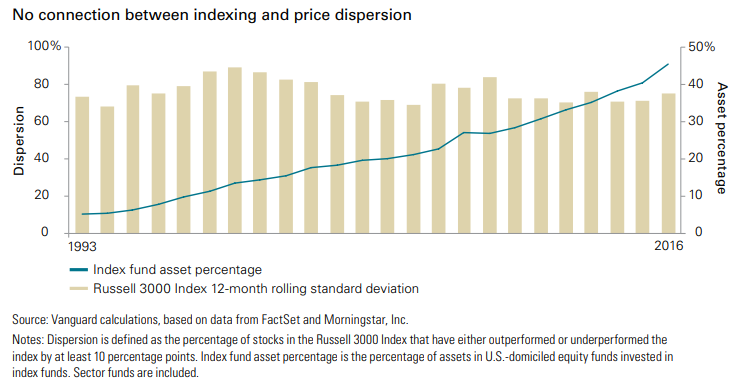
One of the most useful ideas in the episode is the argument that calling ETFs a “bubble” missed the point. The hosts treat ETFs less like a speculative mania and more like a better delivery system. That distinction is huge. A bubble usually implies prices detached from reality. But low-cost index funds and ETFs largely represented a structural shift toward cheaper access, lower fees, and broader participation.
That does not mean ETFs are perfect. Far from it. The real danger is not that ETFs exist, but that investors can misuse them. A low-cost fund becomes a high-cost personal mistake the second someone trades it compulsively, chases performance, or uses “passive” investing as a costume while behaving like a caffeinated day trader. Episode 29 makes this point elegantly: the vehicle is not the villain. Investor behavior usually is.
This is one reason the episode still resonates. It rejects the lazy argument that every financial innovation must either save civilization or burn it down. Sometimes a tool is just a tool. A hammer can build a house or destroy a wall. The ETF is not the issue. The hand swinging it matters a lot.
Lesson Two: Wealth Often Looks Boring Until It Looks Brilliant
The story of the secretary who quietly built an enormous fortune is one of the episode’s most memorable examples because it reminds listeners of a truth that modern finance often tries to airbrush out: real wealth is frequently built through patience, consistency, and a severe lack of showing off.
That story lands because it challenges the fantasy that successful investing requires a cinematic moment of genius. Usually, it requires time, discipline, and the ability to keep living your life while compounding does the heavy lifting. The market is less impressed by swagger than social media is. Episode 29 knows that. It gently mocks the idea that every fortune needs a dramatic origin story. Sometimes the real miracle is that someone kept showing up, kept saving, and did not feel the need to announce it with a ring light.
Lesson Three: Private Assets Can Look Calm Because They Are Measured Differently
Here is where the episode starts handing out intellectual push-ups. The discussion around private investment values gets at a common blind spot: people often mistake a lack of visible price movement for a lack of risk. Public assets move around in real time, so they look noisy. Private assets are priced less frequently, so they can look tranquil. But “tranquil” and “safe” are not synonyms.
That is one of the sharpest insights in the episode. If an asset is hard to price, thinly traded, or only marked occasionally, the smoothness on paper may reflect reporting mechanics more than economic reality. In plain English, a portfolio can look calm because nobody is checking it often enough. That is not safety. That is delayed awkwardness.
The podcast does a good job showing why this matters to ordinary investors. People are naturally attracted to smooth lines and stable numbers. Volatility feels scary. But sometimes volatility is just honesty. Public markets tell you the truth too often. Private markets tell you the truth later, with a straight face.
Lesson Four: Airline Credit Cards Are a Master Class in Incentives
At first glance, the segment on airline credit cards seems like a side quest. It is not. It is another lesson in incentives, loyalty, and how businesses make money by understanding habits better than customers understand themselves.
Airline cards endure because they bundle psychology with perks. Free checked bags, boarding privileges, bonus miles, status nudges, and travel identity all work together. People do not just buy a financial product. They buy convenience, aspiration, and the feeling that they are “winning” at travel. Episode 29 uses this topic to show how consumer finance often succeeds by being emotionally smart, not just mathematically attractive.
That matters for investors too. Companies tied to habit, loyalty, and recurring user behavior can be sturdier than they first appear. The humble airline credit card is not just a wallet accessory. It is an example of how incentives, branding, and customer stickiness become serious business.
Lesson Five: Uncertainty Is Not a Bug in Markets
One of the most durable ideas in the episode is the comparison between uncertainty and gravity. Investors hate uncertainty because it refuses to sit still and explain itself. But uncertainty is not a temporary market glitch. It is part of the design. It is the cost of admission.
This is where the podcast becomes quietly philosophical. Good investing is not about predicting a future that becomes neat and polite. It is about making decisions in a world where outcomes stay messy, information stays incomplete, and people continue acting like the latest plot twist changes everything forever. Episode 29 frames uncertainty as a permanent feature of investing, which is a lot healthier than treating every surprise like a cosmic betrayal.
If that sounds bleak, it is actually freeing. Once you stop expecting certainty, you can build around uncertainty. Diversification, patience, realistic expectations, and humility suddenly make more sense. They stop looking like compromise and start looking like survival skills.
Lesson Six: The Myth of Corporate Short-Termism Deserves Skepticism
The episode also questions the fashionable belief that public companies are hopelessly trapped in quarter-to-quarter thinking. That claim sounds good because it flatters everyone repeating it. Executives can blame Wall Street. Commentators can sound thoughtful. Critics can shake their heads theatrically. But the hosts highlight a more uncomfortable possibility: the evidence for sweeping claims about short-termism is often weaker than the rhetoric.
This is classic Animal Spirits. Instead of grabbing the loudest narrative and riding it like a parade float, the hosts ask whether the data really support the story. Sometimes companies do make bad short-term decisions. Of course they do. Humans are involved. But that does not mean every buyback, every earnings focus, or every strategic change is proof that capitalism has the attention span of a goldfish.
The episode invites listeners to separate anecdote from pattern. That is a habit worth stealing.
Lesson Seven: Hedge Fund Stardom Sounds Better Than It Usually Plays Out
If the title “The Podcast Boot Camp” has an unofficial mascot, it might be the hedge fund boot camp segment. The idea is irresistible: smart people paying real money to learn how elite investing works. There is ambition in it, maybe some insecurity, and definitely at least a trace of expensive notebook energy.
But the deeper lesson is that investment success is not easily downloadable. There is no four-day transformation that turns curiosity into repeatable edge. Training matters. Community matters. Experience matters. Yet the episode smartly hints that the industry’s romance with exclusivity can oversell what is teachable. Knowing the vocabulary of hedge funds is not the same as having durable judgment under pressure.
This is one of the reasons the episode still feels honest. It does not sneer at ambition, but it refuses to glamorize it. Wanting to be excellent is admirable. Wanting to look excellent can get expensive fast.
Lesson Eight: Argentina’s 100-Year Bond Is a Great Reminder That Markets Have a Sense of Humor
Few stories capture financial optimism better than a country issuing a 100-year bond and then running into deep trouble not long after. Episode 29 uses Argentina’s bond saga as a reminder that markets can flip from confidence to concern with impressive speed. One day, investors are nodding along to a long-term story. The next day, reality barges in without knocking.
The point is not that long bonds are inherently foolish or that every bold market move ends in disaster. The point is that appetite for risk can look perfectly rational right up until conditions change. When money is easy and narratives are warm, investors can stretch farther than they realize. Then the room temperature changes, and suddenly yesterday’s “vision” becomes today’s cautionary tale.
Episode 29 handles this beautifully because it does not merely laugh at the mistake. It shows how easy it is for entire markets to lean into optimism when timing seems generous and consequences feel remote.
Lesson Nine: Retirement Fear Can Cause Its Own Kind of Failure
The retirement section may be the most quietly important part of the entire episode. Many people fear outliving their savings, so they prepare for retirement like they are packing for a hundred-year snowstorm. Caution is sensible. But the episode points to a less discussed problem: some retirees underspend so dramatically that they never really use the money they worked so hard to save.
That does not mean retirement risk is fake. It means the popular image of retirement failure is incomplete. Running out of money is one risk. Never allowing yourself to enjoy your money is another. Episode 29 captures this balance well. Good planning is not only about avoiding disaster. It is also about funding a life.
This is where the show’s tone really helps. A dry finance textbook might present this as a withdrawal-rate issue. Animal Spirits treats it as a human issue. People do not retire into spreadsheets. They retire into emotion, habit, family, memory, caution, and hope. The math matters, but so does the psychology attached to the math.
What Makes the Hosts Effective
Batnick and Carlson are effective here because they do not try to sound invincible. The chemistry of the episode depends on conversational intelligence rather than performance. They are informed without becoming pompous, funny without becoming sloppy, and skeptical without becoming cynical. That is harder than it sounds.
There is also a rhythm to how they move through ideas. They keep the pace brisk, which gives the episode a boot-camp feel, but they still leave enough room for interpretation. Listeners are not force-fed conclusions. They are given frameworks, examples, and enough room to think. For a finance podcast, that is a nice change of pace from the usual genre options: alarm bell, victory lap, or man yelling at chart.
Why “Animal Spirits Episode 29: The Podcast Boot Camp” Still Matters
The episode matters because it teaches a modern investing skill that rarely gets enough attention: how to filter. Not every scary headline deserves panic. Not every smooth return deserves trust. Not every complex product deserves admiration. Not every popular narrative deserves belief. Episode 29 trains listeners to resist easy stories and ask better questions.
And that, really, is the boot camp. It is not about memorizing facts. It is about building judgment. Listen closely and you hear the same message over and over: markets are complicated, people are emotional, incentives are powerful, and the best defense is not certainty. It is perspective.
500 More Words on the Experience of Listening to This Episode
Listening to Animal Spirits Episode 29: The Podcast Boot Camp feels a lot like sitting in on a smart conversation you were lucky enough to overhear, except this time nobody tells you to leave the room because you are not wearing a tie or because you asked what a basis point is. The experience is fast, curious, and oddly reassuring. Even when the topics are serious, the mood never gets self-important. That matters because investing content can become unbearably dramatic in a hurry, as if every market move is either the end of civilization or the start of your billionaire origin story.
This episode avoids that trap. As a listener, you come away with the sense that financial literacy is less about mastering secret formulas and more about learning how to react sanely. That may not sound glamorous, but it is incredibly useful. Most people do not blow up financially because they forgot one clever statistic. They blow up because they believed the wrong story at the wrong time and acted on it with confidence usually reserved for people who have absolutely not read the footnotes.
The episode also creates a strange but enjoyable effect: it makes you want to keep reading after it ends. Every topic opens a door. The ETF discussion pushes you toward market structure and investor behavior. The private-market section makes you think about pricing, liquidity, and whether “boring” numbers are always honest. The retirement segment nudges you into questions about what money is actually for. By the end, the podcast feels less like a finished product and more like a launchpad.
That is probably why the “boot camp” label works so well. Good boot camps do not just fill your head with information. They change your reflexes. After this episode, you are more likely to raise an eyebrow when someone says a new investment product has changed everything forever. You are more likely to wonder whether smooth returns are hiding stale prices. You are more likely to notice that many money problems are actually behavior problems wearing a finance costume.
There is also a human warmth to the experience. Batnick and Carlson do not talk like distant experts handing down commandments from the financial mountaintop. They sound like people who know the material, respect the audience, and understand that humor is not a distraction from learning. Sometimes it is the delivery system. A well-timed joke can make a hard truth stick better than ten solemn warnings ever could.
For anyone interested in markets, media, or just clearer thinking, this episode is worth revisiting because it models a style of conversation that feels increasingly rare: informed but not smug, skeptical but not joyless, analytical but still alive. That is why the experience lingers. You do not just remember the topics. You remember the feeling of becoming a slightly sharper thinker while being entertained at the same time. In finance, that is almost suspiciously efficient.
Conclusion
Animal Spirits Episode 29: The Podcast Boot Camp succeeds because it turns a broad collection of articles and market stories into a practical lesson on investor judgment. The hosts move from ETFs to private assets, from airline credit cards to retirement behavior, from hedge fund ambition to sovereign debt risk, and somehow keep the whole thing coherent. The result is a podcast episode that feels educational without sounding like homework.
For listeners, the biggest takeaway is simple: better investing usually starts with better thinking. Not louder predictions. Not shinier products. Not fake certainty. Just better thinking, practiced consistently, with enough humility to admit the market does not owe anyone an easy narrative.