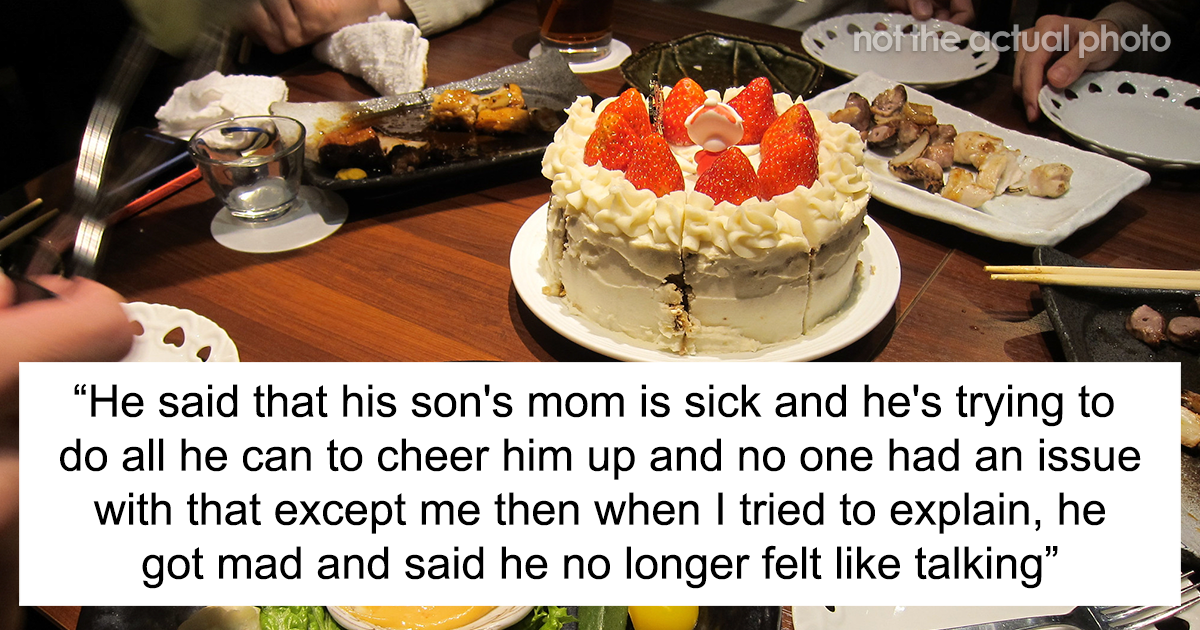
Some restaurant birthdays are quiet affairs. A candle appears. A child grins. The adults clap politely like they are attending a tiny Oscars ceremony for turning five. Other birthdays? Absolute theater. Someone starts singing, someone else joins in off-key, the kid looks delighted, and the whole dining room briefly becomes a community choir with mozzarella sticks.
That is exactly why this kind of family conflict gets people talking. On the surface, it sounds like a simple question about public behavior: was it embarrassing for a grown man to sing “Happy Birthday” to his 5-year-old son at a restaurant? But underneath that question is a much bigger one about love, parenting, blended family dynamics, social anxiety, and what counts as “cringe” when a child is involved.
In this relationship dilemma, the fiancé says she felt embarrassed when her partner started singing to his son in public. He likely saw the moment as sweet, playful, and completely normal for a child’s birthday. She likely saw it as awkward, attention-grabbing, and maybe a little too performative for a restaurant. So who is actually in the wrong here?
The honest answer is more nuanced than a dramatic internet verdict, but here is the core truth: feeling embarrassed is not a crime, yet treating a loving parent-child moment like a social disaster usually lands badly. Especially when the child is five. Especially when the parent is celebrating his own son. Especially when the “offense” is… singing a birthday song. We are not exactly dealing with a fog machine and backup dancers.
The Dilemma in Plain English
Let’s strip the story down to its emotional essentials. A father celebrates his young child in public. His partner feels uncomfortable with the attention. Later, she tells him that he embarrassed her. He hears that not as helpful feedback, but as criticism of a tender moment with his son.
That is why so many people react strongly to this scenario. The issue is not just the song. It is what the song represents. To the father, it probably represented joy, pride, and a memory his son might carry for years. To the fiancé, it may have represented secondhand embarrassment, loss of control, or fear of public judgment. One person felt love. The other felt awkward. The collision was almost guaranteed.
Was He Actually Embarrassing, Or Just Being a Dad?
Let’s say the quiet part out loud: singing “Happy Birthday” to a 5-year-old at a restaurant is very normal. Not universally adored, sure. Not every adult loves public attention. Not every diner wants surprise karaoke next to their fries. But in the grand hierarchy of public embarrassment, this is pretty low on the scale. It is not rude, dangerous, cruel, or inappropriate. It is a parent celebrating a child.
And that matters. A lot.
Five-year-olds do not experience birthdays the way adults do. Adults may think, “Please no public singing, I would rather dissolve into the booth.” Kids often think, “This is my day, this candle is magic, and yes, I would like the entire universe to notice.” Childhood rituals feel enormous because they are enormous to the child living them.
That does not mean every birthday must become a public production. It does mean that parents often lean into simple rituals because rituals help children feel seen. A song, a candle, a favorite dessert, a goofy tradition, or a family joke may look small to outsiders, but to a child it says, “You matter. We celebrate you. We are glad you are here.” That is not embarrassing. That is parenting with heart.
Why Birthday Rituals Matter So Much
Children tend to understand love through repetition. The same bedtime phrase. The same lucky pancake breakfast. The same weird family birthday hat that should have been retired years ago but somehow survives. Repeated rituals create emotional structure. They tell kids what kind of family they belong to.
So when a dad sings to his son in a restaurant, he may not be trying to impress strangers. He may simply be reinforcing a ritual: on your birthday, we celebrate you out loud. We make the moment special. We do not act too cool to be loving. Frankly, that is a pretty healthy family message.
Why the Fiancé Might Have Felt Embarrassed Anyway
Now for the important part: her feelings are still real. People experience public attention very differently. Some are naturally expressive. Some are private to the point that being noticed by two tables and a bread basket feels like a federal hearing. Public singing can make certain people deeply uncomfortable, even if nothing objectively wrong is happening.
Secondhand embarrassment is powerful because it is tied to identity. When your partner does something you think others may judge, it can feel as if that judgment splashes onto you too. In that moment, the fiancé may not have been thinking, “A loving father is creating a sweet memory.” She may have been thinking, “Everyone is staring, I hate this, and I want to disappear into the upholstery.”
That reaction does not automatically make her mean. It makes her human. But what she did with that feeling is where the trouble starts.
Feeling Embarrassed Is Valid. Framing the Moment as Wrong Is Different.
There is a difference between saying, “Public moments like that make me anxious,” and saying, “You embarrassed me.” The first statement reveals vulnerability. The second delivers blame. One invites conversation. The other sounds like a verdict.
That wording matters even more in a family with a child from a previous relationship. When you tell a parent that their affectionate behavior toward their child embarrassed you, the parent may hear something much heavier: “Your bond with your kid is inconvenient for me.” Even if that is not what you meant, it can land that way.
And once that message lands, the conflict is no longer about a song. It becomes about acceptance, safety, and whether the child is truly welcome in the emotional life of the relationship.
Why This Hits Harder in a Blended Family
When you are engaged to someone who already has a child, you are not stepping into a blank slate romance. You are entering an existing emotional ecosystem. That child is not a side character. The child is part of the main plot, the soundtrack, and half the scheduling conflicts.
That is why little moments matter so much. A restaurant birthday song may look tiny from the outside, but inside a blended family dynamic it can function like a signal flare. Is the new partner irritated by the child-centered attention? Do they understand the parent’s protective instincts? Are they flexible about kid rituals, or do they treat them like awkward interruptions to adult dignity?
Parents notice those signals fast. Many of them have to. If you have a child, you are always scanning for whether the person you love will also respect the life you built before they arrived.
So if the fiancé’s comment made him feel judged not just as a man but as a father, that reaction makes perfect sense. He likely was not defending a song. He was defending what the song stood for: joy with his son, in public, without shame.
The Child’s Presence Changes the Moral Math
If this had been a fiancé standing on a chair and singing to his adult friend while wearing a novelty sombrero the size of a satellite dish, the embarrassment argument might be stronger. But a parent singing to a five-year-old child lands in a different category. Children need warmth more than coolness. They need adults who are willing to be a tiny bit silly on purpose.
That is one reason internet readers tend to side with the dad in stories like this. They understand instinctively that adults can survive a little awkwardness. A five-year-old’s birthday memory should not have to pass a test for social elegance.
So, Was She the Villain?
Not necessarily. But she probably mishandled the moment.
If she quietly felt uncomfortable, that is understandable. If she later brought it up gently and said, “I know you meant well, but public singing makes me anxious,” that could have opened a thoughtful conversation. If she instead told him he embarrassed her, in a way that sounded judgmental or dismissive, then yes, she likely became the unfair one in the exchange.
The reason is simple. The father’s action came from affection. Her response, as phrased, sounds like social correction. And between affection and image-management, most readers will back affection every time.
There is also a practical relationship lesson here: when you criticize someone for acting lovingly toward their child, you are stepping into emotionally radioactive territory. You better be extremely careful, extremely specific, and extremely kind. Otherwise the message will sound less like honesty and more like rejection.
What She Could Have Said Instead
If the goal was connection rather than conflict, there were better ways to handle it. She could have said, “I know your son loved it. I just get overwhelmed by public attention.” She could have added, “I never want to make you feel bad for celebrating him. I just want to be honest that those moments are hard for me.”
That version respects both truths. His joy was real. Her discomfort was real. Neither person has to be humiliated for the other one to be heard.
What does not work is acting as if the restaurant moment proved he was socially defective. That approach practically guarantees defensiveness, because now he is not discussing a preference. He is defending his character.
What He Should Understand Too
To be fair, the father also has a job here. If his partner is someone who hates public attention, he should care about that, even if he does not agree with it. Love is not just “accept my style.” It is also “tell me what makes you uncomfortable, and I will try to understand.”
That does not mean apologizing for singing to his son. It means hearing the underlying message without rolling his eyes and mentally sentencing her to the Court of Joyless Adults. Maybe public displays feel easy to him because he is secure in them. Maybe they feel hard to her because she grew up in a family where drawing attention was punished, mocked, or simply avoided.
Healthy couples get curious before they get cruel.
The Bigger Lesson: Not Everything Awkward Is Wrong
Modern adult life has a strange problem. We often confuse embarrassment with moral failure. If something makes us cringe, we start acting like it should not have happened at all. But awkwardness is not automatically bad. Sometimes awkwardness is just evidence that someone was sincere in public.
A dad singing “Happy Birthday” to his kid may be a little cheesy. Fine. Cheese is not a character defect. In many families, it is basically a love language.
And honestly, children benefit from adults who are not obsessed with looking cool. A parent who is willing to clap, sing, laugh, and celebrate without constant self-editing teaches a child something powerful: joy does not need permission from strangers.
A Fair Verdict on the AITA Question
If the fiancé told him he embarrassed her in a harsh, dismissive, or shaming way, then yes, she was probably in the wrong. Not because she had feelings, but because she treated a tender father-son moment like a social mistake to be corrected.
If she simply admitted, later and gently, that public singing makes her uncomfortable, then this is less an “AITA” story and more a “two adults with different comfort zones need better communication” story.
But if we are choosing sides based on the headline alone, the stronger case belongs to the dad. A five-year-old birthday at a restaurant is exactly the kind of moment where love gets to be a little loud. That is not embarrassment. That is family life with the volume turned up for one very small guest of honor.
How Couples Can Avoid This Fight in Real Life
The smartest takeaway from this story is not “never criticize” or “always sing.” It is this: discuss values before the next emotional moment happens. Talk about public affection. Talk about parenting style. Talk about what birthdays should feel like. Talk about how to disagree when a child is involved. It is much easier to negotiate expectations on a calm Tuesday than in the emotional smoke after a restaurant conflict.
And if you are joining a family that includes children, remember that your reaction to small rituals tells a bigger story. You do not have to enjoy every tradition. You do have to respect what those traditions mean to the people you love.
Because sometimes the issue is not the song at all. Sometimes the issue is whether everyone at the table feels equally allowed to belong.
Experience-Based Reflections on Birthday Moments, Public Embarrassment, and Blended Families
Many adults have lived some version of this scene, even if no restaurant cake was involved. One person is spontaneous and affectionate. The other person is private, self-conscious, and deeply allergic to becoming “the table everyone notices.” Neither person is evil. They are just operating with different definitions of safety. For one person, safety looks like emotional expression. For the other, safety looks like not being stared at by strangers while holding a fork.
Imagine a father who grew up in a loud family where every milestone was celebrated like the home team had just won a championship. In that house, singing was not performative. It was proof of love. Now imagine his fiancé grew up in a home where emotions were quieter, where attention felt risky, and where drawing eyes to yourself was something to avoid. Put those two people at a restaurant with a five-year-old birthday boy and a slice of cake with a candle, and suddenly the dessert comes with a personality clash.
There are also experiences unique to blended families that make moments like this feel bigger than they look. A new partner might already worry that they do not understand the parent-child bond well enough. A biological parent might already worry that their child will be treated like an inconvenience. So a comment that might have been minor in another relationship becomes symbolic here. “That embarrassed me” can feel, to the parent, like “your child’s joy is too much.” Meanwhile, the partner may mean nothing that harsh. They may simply be thinking, “I panicked and hated being the center of attention by association.”
That is why tone, timing, and tenderness matter so much. Couples who survive these moments usually do one thing well: they translate before they accuse. Instead of saying, “You made this weird,” they say, “Here is what I felt in that moment.” Instead of saying, “You embarrassed me,” they say, “Public attention is hard for me, and I want to talk about it without taking away from your son’s happiness.” That small change can save a lot of hurt.
And perhaps the most relatable experience of all is realizing, a little too late, that children are watching how adults handle joy. If a child sees one adult celebrate them with delight and another adult react with visible annoyance, that contrast can linger. Kids may not remember every word, but they often remember the vibe. They remember who leaned in. They remember who looked uncomfortable. They remember whether their big little moment felt welcome or inconvenient. That is why adults should be careful not to turn their own discomfort into a child’s emotional weather.
In the end, most families are not destroyed by one birthday song. They are shaped by the conversations that follow. A good repair can actually strengthen trust. A bad repair can harden resentment. So if this story feels familiar, the best lesson is simple: protect the child’s joy first, then talk honestly and kindly about your adult feelings afterward. The cake will disappear. The memory will not.
Conclusion
So, was it wrong to tell a fiancé he was embarrassing for singing “Happy Birthday” to his 5-year-old son at a restaurant? In most cases, yes, that criticism misses the heart of the moment. A loving, harmless, child-centered celebration is not something that needs to be managed like a public relations disaster.
Adults are allowed to feel awkward. Adults are not required to enjoy public singing. But when a child is being loved in a simple, joyful way, the better move is usually to make room for the sweetness first and process your discomfort later. The healthiest families are rarely the coolest-looking ones. They are the ones where affection is not treated like a social error.