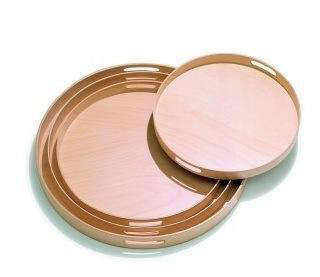
A round wooden serving tray is one of those quiet household heroes that can carry cocktails, organize a coffee table, rwobbling glasses, and make a random pile of remotes look suspiciously intentional. The high/low question is not simply whether one tray costs more than another. It is whether better wood, finer construction, a safer finish, and stronger proportions deliver enough everyday pleasure to justify the upgrade.
The Small Accessory That Does an Embarrassing Amount of Work
Some accessories decorate. Others work. A round wooden serving tray does both while asking for almost no floor space and no complicated assembly involving an Allen key and a minor emotional crisis. It can move coffee from the kitchen to the sofa, hold appetizers at a party, organize oils beside the stove, create a centerpiece on a dining table, or turn a soft ottoman into a stable landing zone.
The original “high/low” inspiration for this topic came from a Remodelista comparison published in 2010. The editors paired a lightweight Luca Villa bentwood Luna Tray with IKEA’s clear-lacquered birch Skala tray. At the time, the premium option was listed at around $150 for an 18-inch size, while the 17-inch IKEA version was $14.99. Those figures are historical, but the design question remains fresh: When two round trays perform the same basic task, what are you really paying for?
The answer lives in the details: wood species, veneer quality, rim construction, balance, finish, handle design, weight, durability, and visual refinement. A budget tray may serve perfectly for years. A premium tray may offer cleaner joinery, richer grain matching, a thinner profile, and the sort of tactile finish that makes you pick it up simply because it feels good. Neither choice is automatically smarter. The smartest choice is the one whose strengths match how you actually live.
Why the Round Shape Works So Well
It Softens Rooms Full of Straight Lines
Most homes are secretly rectangle conventions. Sofas, books, cabinets, televisions, rugs, and tables all arrive with corners. A circular tray interrupts that geometry and makes a room feel less rigid. Designers often use round forms to soften boxy furniture, and the same principle applies on a smaller scale when a wooden tray sits on a square coffee table, long console, or upholstered ottoman.
It Creates an Instant Visual Boundary
A tray tells the eye, “These six unrelated objects are now a collection.” Candles, matches, a small vase, coasters, and the remote control stop looking abandoned and start looking styled. Pottery Barn recommends trays as movable organizers for coffee-table displays, while Better Homes & Gardens repeatedly uses them to group objects, add material contrast, and control clutter on coffee tables and consoles.
It Is Friendly From Every Seat
A round tray has no obvious front or back. Guests can reach it from several directions, which makes it useful for drinks, nuts, chocolates, condiments, or small plates. Current round wooden trays commonly fall within the 15- to 17-inch range: large enough for practical service, yet compact enough to remain on display without annexing the whole table. IKEA’s walnut-veneer OMBONAD, for example, measures 17 inches across and is marketed for snacks, sweets, breakfast, and decorative use.
High Versus Low: What Changes as the Price Rises?
Wood and Grain Selection
Affordable trays often use plywood, bamboo, rubberwood, engineered wood, or decorative veneer. These are practical materials: Plywood can be light and stable, while veneer delivers the look of walnut or ash without solid hardwood’s weight and cost. Premium models may add tighter grain matching, thicker hardwood, hand finishing, or more refined profiles. Crate & Barrel’s Kanso tray, for example, paired FSC-certified ash with food-safe lacquer and integrated cutout handles, while its solid mango-wood Ike tray emphasized natural variation and a chunkier rim.
Construction and Rim Quality
The rim keeps glasses, bowls, and loose objects from sliding into freedom. Budget rims may be thicker or more visibly joined; refined bentwood sidewalls can look continuous and unusually thin. Inspect the base-to-rim transition for rough edges, gaps, splinters, glue, or lifting veneer, then place the tray on a flat counter. It should not rock like a café table waiting for a folded napkin under one leg.
Finish and Food Contact
A tray intended for direct contact with cheese, fruit, or pastries should be clearly labeled food safe. Decorative trays may use finishes that are perfectly suitable for holding glasses or objects but are not marketed for direct food service. When in doubt, use plates, bowls, parchment, or a washable liner rather than treating every handsome circle of wood as an honorary cutting board.
Finishes also determine maintenance. Lacquered trays are usually wipe-clean and relatively resistant to everyday splashes. Oiled wood feels more natural and can be renewed, but it may require periodic conditioning. IKEA advises wiping its oiled OMBONAD tray with a damp cloth, drying it with a clean cloth, and re-treating it occasionally. Crate & Barrel advises wiping its mango-wood tray clean and specifically warns against submerging it.
Handles, Weight, and Balance
A gorgeous tray that is awkward to carry is a decorative plate with ambition. Cutout handles improve grip but reduce interior space; a raised rim may be harder for small hands to grasp. Imagine carrying four filled glasses. Lightweight bentwood suits frequent trips between rooms, while heavier solid wood works well as a permanent coffee-table or ottoman platform.
How to Choose the Right Round Wooden Serving Tray
Choose the Size by Task, Not by Optimism
A 12- to 14-inch tray suits one mug and a small plate. The 15- to 17-inch range is the versatile middle ground for drinks, snacks, countertop organization, and most coffee tables. Larger trays make stronger centerpieces but need storage and a comfortable carrying path. Measure first, leave visible surface around the tray, and make sure an ottoman supports the entire base.
Match the Finish to the Room
Light ash, birch, and pale oak suit Scandinavian or minimalist rooms; walnut adds midcentury warmth; mango wood offers stronger variation and a handcrafted mood. Do not chase a perfect match. Coordinating undertones usually look more layered than making every wooden object appear selected from one enormous dropdown menu.
Inspect Sustainability Claims With Care
For shoppers concerned about sourcing, FSC certification is a useful signal. The Forest Stewardship Council describes its system as promoting forest management that is environmentally appropriate, socially beneficial, and economically viable. Retailers now offer trays made from FSC-certified ash or mango wood, as well as products made from manufacturing offcuts or orchard trees that no longer produce fruit. Certification does not tell you everything about a product, but it gives more substance than a vague green leaf icon floating near the price.
Styling Ideas That Keep the Tray Useful
The Coffee-Table Formula
Start with three elements of different heights: a low stack of books, a medium bowl or candle, and a taller vase or sculptural object. Add one practical item, such as coasters or a small box for remotes. Leave at least one open area so the tray can still receive a drink. Interior-design guidance commonly recommends varying height, texture, and scale while preserving negative space.
Kitchen, Cocktails, and the Entryway
On a kitchen counter, group oil, salt, pepper, and seasonings, placing drippy bottles on small saucers. For cocktails, use linen beneath cold bottles and serve wet or oily foods in bowls unless direct contact is approved. In an entryway, a compact tray controls keys, sunglasses, and coins. Add felt pads beneath it to protect a delicate console.
Cleaning and Care: Keep the Wood Out of the Dishwasher
Wood and dishwashers are not friends who should attempt a road trip together. High heat, prolonged water exposure, and strong detergent can strip finishes, swell fibers, encourage warping, and contribute to cracking. Food Network and Southern Living both recommend gentle hand cleaning and prompt drying for wooden kitchen and serving pieces.
For a lacquered decorative tray, follow the maker’s directionsusually a soft, damp cloth followed by immediate drying. Do not soak it. Do not leave wet glasses sitting overnight. Do not attack a sticky spot with steel wool because the tray once looked at you disrespectfully.
For unfinished or oil-finished wood approved for food service, wash only as needed with mild soap and warm water, rinse quickly, and dry thoroughly. USDA guidance for wooden cutting surfaces similarly emphasizes hot, soapy washing after use and complete drying, although a serving tray should always be maintained according to its own manufacturer’s instructions.
If the wood appears dry and the manufacturer permits conditioning, apply a suitable food-grade product. Martha Stewart and Real Simple recommend food-grade mineral oil or appropriate board conditioners for unfinished wooden food-preparation surfaces, while warning that ordinary cooking oils can turn rancid. This advice should not be applied blindly to lacquered, painted, or specialty-finished trays; those surfaces may need nothing more than wiping.
Is the Premium Tray Worth It?
Spend more when the tray will remain visible daily, tactile quality matters, or fine bentwood construction is part of the appeal. Choose the budget version for breakfast duty, pantry organization, outdoor use, children, or heroic quantities of spills. The original comparison worked because both products captured the same lightweight idea at dramatically different prices.
Ask whether the premium option improves something you will notice every time: grip, weight, grain, edge smoothness, or proportion. A logo, a poetic name, and a photograph featuring one lonely fig are not enough.
Experience Notes: What Living With a Round Wooden Tray Is Really Like
The first surprise is how quickly a tray becomes permanent. You buy it for serving drinks, then place it on the coffee table “for now.” Within days it has acquired coasters, a candle, two remotes, a tiny bowl, and a book nobody is currently reading but everyone agrees looks intelligent. This is not failure. It is the tray revealing its second career as a portable island of order.
In a typical morning routine, a medium round tray comfortably carries two mugs, a small plate, and a folded napkin. A raised rim inspires confidence on the walk from the kitchen to the living room, especially when a pet believes every human carrying food is opening a mobile restaurant. The practical difference between a good and mediocre tray becomes obvious here: Balanced weight and comfortable edges matter more than decorative drama.
On an ottoman, the experience changes completely. The tray turns a soft surface into a usable table and gives drinks a level base. A heavier solid-wood model often feels reassuring because it does not shift easily. However, weight becomes a drawback when the tray must be moved every evening. A lighter bentwood or plywood option is easier to lift with one hand while the other hand manages a blanket, a laptop, or the consequences of choosing snacks with crumbs.
During a small gathering, round trays encourage relaxed sharing. Bowls can be arranged around the perimeter, with napkins or utensils in the center. Guests reach from different directions, and the lack of corners makes circulation around a crowded table feel smoother. The lesson is to avoid overloading. A tray that looks beautifully abundant while stationary can become a physics demonstration once lifted. Serve in two trips rather than attempting to win an imaginary catering championship.
Daily maintenance also shapes satisfaction. A lacquered tray is forgiving: Wipe the ring from a cold glass, dry the surface, and continue with life. An oil-finished tray feels warmer and more tactile, but it asks for more awareness. Spills should be handled quickly, and the surface may occasionally need conditioning. Some owners enjoy that ritual because the wood develops character. Others discover that their preferred maintenance schedule is “never.” Those people should choose a sealed finish and enjoy their self-knowledge.
Style changes are pleasantly easy. In spring, the tray might hold a clear vase and pale ceramics. In fall, a candle, small pumpkin, and darker books create a warmer arrangement. During the holidays, it can carry ornaments, greenery, and a bowl of wrapped sweets. The tray makes seasonal decorating reversible: Lift one object instead of relocating seven small pieces while wondering where they lived in February.
The most useful experience, however, is not serving or styling. It is cleanup. When guests arrive unexpectedly, the tray lets you gather loose objects into one deliberate group. When the table must become a game surface, everything moves in a single trip. When dusting, the whole arrangement lifts at once. That modest convenience explains why a well-chosen round wooden serving tray often earns more use than showier accessories. It is beautiful, mobile, adaptable, and quietly bossy about clutterthe exact personality many rooms need.
Conclusion
A high-end round wooden serving tray can deliver superb craftsmanship, elegant proportions, carefully matched grain, and a finish that improves every interaction. A lower-priced tray can provide the same essential utility with practical materials and a more relaxed attitude toward spills. The winning choice is not defined by price alone. It is defined by proportion, comfort, finish, construction, care requirements, and the number of jobs the tray can perform in your home.
Look for a stable base, a useful rim, comfortable handling, clear care instructions, and food-safe labeling when direct food contact matters. Choose a size that fits both the furniture and the task. Then use it often. A serving tray should not spend its life waiting in a cabinet for guests important enough to deserve it.
SEO Metadata
Note: Historical product prices are identified as 2010 figures. Product availability, specifications, and care directions can change; verify the current manufacturer’s instructions before purchase or maintenance.