If marketing had a group chat, social proof would be the loud friend saying, “See? Everybody else likes it too.” And honestly, that friend is annoyingly effective.
Social proof works because people rarely make decisions in a vacuum. We look for clues. We scan ratings, peek at testimonials, notice who else is buying, and quietly ask ourselves, “Am I about to make a smart choice or a very expensive character-building moment?” That’s where smart brands win. They do not just say, “Trust us.” They show that real people, respected voices, and recognizable companies already do.
But here’s the catch: most brands use social proof like they’re tossing parsley on bad pasta. A few logos here. One vague testimonial there. Maybe a “trusted by thousands” claim with all the emotional force of a fax machine. Good social proof is not decoration. It is evidence.
So if you want inspiration, skip the bloated list of 37 random tactics. These are the only six social proof examples you should really study. They are practical, persuasive, and flexible enough to work for ecommerce brands, SaaS companies, service businesses, creators, and just about anyone else who would like more trust and fewer skeptical side-eyes.
What Makes Social Proof Actually Work?
Before we get to the examples, let’s set one thing straight: social proof works best when it reduces uncertainty. That means the strongest examples answer at least one of these questions:
- Has anyone like me used this before?
- Did they get good results?
- Can I trust this brand with my money, time, or reputation?
- Is this option popular for a reason?
When your social proof answers those questions clearly, it feels helpful. When it does not, it feels like a neon sign screaming “PLEASE BELIEVE US,” which is less persuasive than most marketers hope.
1. The Review-and-Rating Stack
If social proof had a hall of fame, customer reviews and star ratings would have their own wing, gift shop, and dramatic documentary.
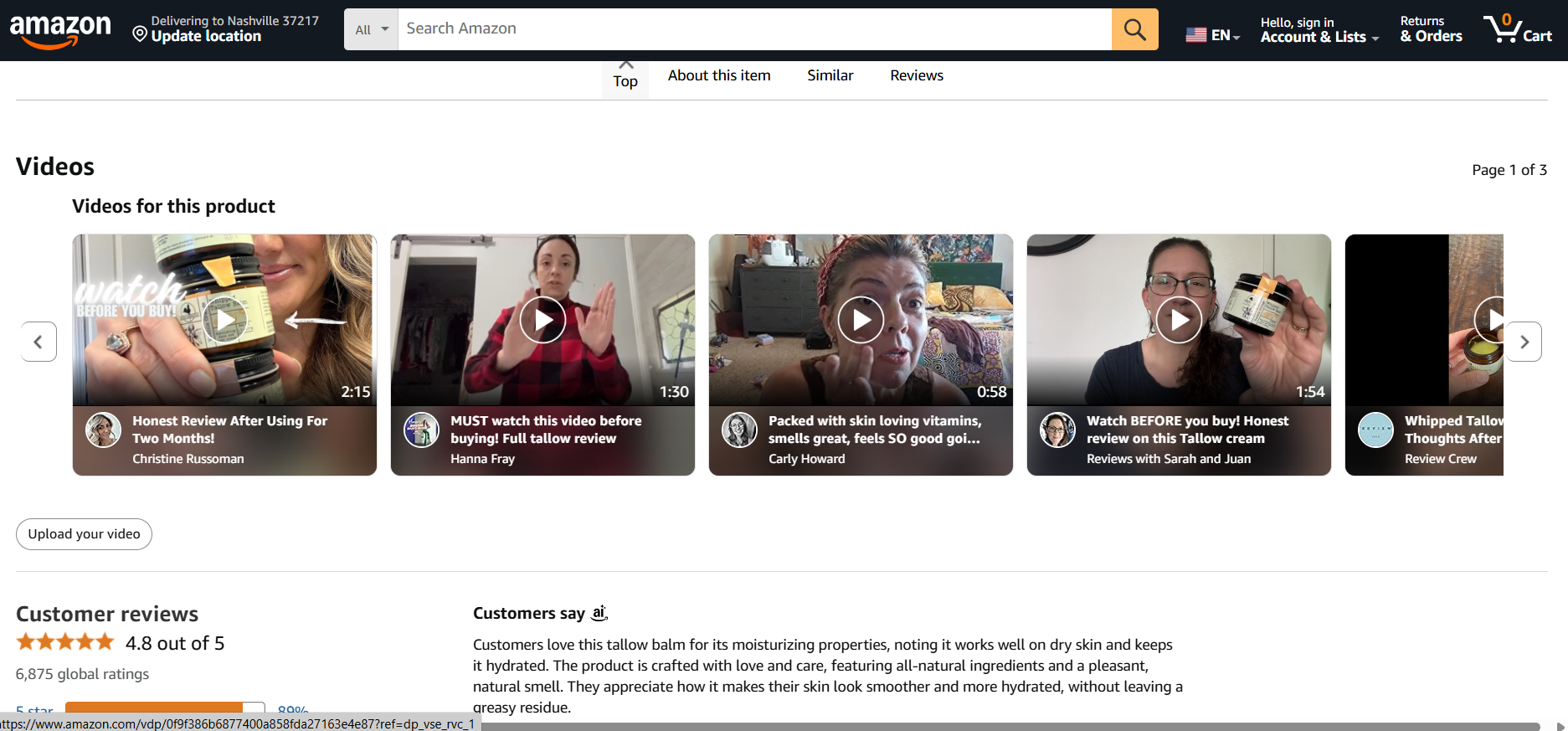
This is the most familiar form of social proof because it appears almost everywhere people buy things online. Product pages, local services, vacation rentals, software directories, marketplaces, and app stores all rely on reviews because they give buyers a shortcut to trust. They turn a brand’s claims into customer evidence.
Why this example works
A strong review-and-rating stack does three jobs at once. First, it gives a quick signal with a visual score. Second, it adds context through written feedback. Third, it helps buyers compare expectations with reality. That combination is powerful because people do not just want praise. They want detail.
The best review systems also feel fair. Verified purchase markers, review dates, sorting tools, and review highlights make the content more believable. In other words, the magic is not just the stars. It is the structure around the stars.
What to be inspired by
Take inspiration from the “show your work” approach. Instead of hiding reviews on a lonely tab nobody visits, smart brands place ratings near the product title, feature snippets from actual customers, and include photos or videos when possible. This helps the proof do its job before buyers wander off to “think about it” for the next three fiscal quarters.
How to use it well
- Show the average rating near the main call to action.
- Feature helpful, specific reviews instead of only glowing one-liners.
- Include images, videos, and verified-purchase indicators when possible.
- Do not delete every imperfect review. A little realism builds trust.
A five-star wall with no nuance looks suspicious. A mix of praise, detail, and honest feedback looks real. Real wins.
2. The Testimonial That Sounds Like a Human Wrote It
Not all testimonials are created equal. Some sound convincing. Others sound like they were written by a committee trapped in an elevator with a legal department.
A weak testimonial says, “Great service. Highly recommend.” Fine. Lovely. Completely forgettable.
A strong testimonial says, “We were losing leads because our response time was slow. Within two weeks of switching, our team cut reply times in half and stopped missing hot prospects.” Now we’re listening.
Why this example works
Specificity creates credibility. The more a testimonial sounds like a real person describing a real problem, the more persuasive it becomes. It gives prospects a mirror. They can see their own frustration, risk, or goal inside someone else’s story.
This is especially important for service businesses, consultants, coaches, agencies, and B2B brands. In those spaces, buyers are not only asking, “Is this good?” They are asking, “Will this work for my situation?” Great testimonials answer that question without sounding rehearsed.
What to be inspired by
Use testimonials that include three ingredients: the customer’s starting problem, the reason they chose you, and the result they noticed. Bonus points if the quote also reveals emotion. Relief, excitement, confidence, and even surprise make a testimonial more believable because humans tend to buy emotionally and justify logically.
How to use it well
- Attach a full name, company, title, or context when appropriate.
- Use short pull quotes on landing pages and longer versions deeper in the funnel.
- Prioritize customer language over polished brand language.
- Match testimonials to the page topic so they feel relevant, not random.
The best testimonials do not sound like ads. They sound like a customer pulling you aside and saying, “Okay, this actually helped.”
3. The Customer Story or Case Study With Real Stakes
If reviews are the quick trust signal, case studies are the full movie. They take social proof from “people seem to like this” to “here is what changed, why it changed, and what happened next.”
This is why customer stories are a favorite social proof example in SaaS, B2B, healthcare services, agencies, finance, and high-ticket offers. When the decision is expensive, strategic, or risky, buyers want more than applause. They want proof of transformation.
Why this example works
A case study gives context. It shows the customer’s challenge, the solution, the rollout, and the outcome. Even when the reader is not in the exact same situation, they can still evaluate whether your brand seems competent, credible, and capable of producing results.
Case studies also signal maturity. Any business can claim to be “innovative.” Fewer can walk a reader through a before-and-after story with enough substance to survive scrutiny.
What to be inspired by
The strongest customer stories focus less on the brand and more on the customer. That is the secret. The brand is the guide, not the hero. A good case study makes the customer look smart for choosing the solution and the reader feel smart for paying attention.
How to use it well
- Lead with the customer challenge, not your company biography.
- Use concrete outcomes whenever possible, but explain the context too.
- Include quotes from the customer to add personality and trust.
- Turn one case study into multiple assets: a page, a quote card, an email, and a sales enablement tool.
If your testimonials are appetizers, case studies are the main course. Still persuasive, just with more protein.
4. Visual User-Generated Content That Feels Unscripted
User-generated content, or UGC, is what happens when customers become your unofficial creative department. It can be photos, videos, unboxings, tutorials, tagged social posts, or everyday snapshots that show real people using your product in the wild.
And yes, “in the wild” is important. A polished studio photo says, “We styled this beautifully.” A customer photo says, “This exists in actual human life, where lighting is weird and countertops are messy.” That realism is exactly why it works.
Why this example works
Visual UGC lowers imagination effort. Prospects do not have to guess what the product looks like on a person, in a home, on a desk, or during normal use. They can see it. That helps answer some of the most common buying questions: Will it fit? Will it flatter? Will it look cheap? Will I regret this by Thursday?
UGC is especially useful in fashion, beauty, fitness, home, food, travel, and creator-led brands, but it also works for software and service brands when customers share workflows, screenshots, or “here’s how we use it” moments.
What to be inspired by
Take inspiration from brands that curate community content instead of controlling every pixel. The point is not to look messy. The point is to look honest. A clean gallery of customer photos, video testimonials, or social mentions can often outperform another brand-made asset because it feels less like persuasion and more like observation.
How to use it well
- Collect permissioned customer photos and videos.
- Place UGC near product pages, checkout pages, and emails.
- Highlight diverse use cases so more people can see themselves in the product.
- Do not over-edit the content until it loses its authenticity.
If reviews tell people what happened, UGC helps them picture themselves in the story.
5. Authority Signals That Borrow Trust the Right Way
Sometimes buyers are not only influenced by peers. They are also influenced by credible institutions, recognized experts, professional standards, and familiar platforms. That is where authority-based social proof comes in.
This can include media mentions, certifications, awards, expert endorsements, industry accreditations, security badges, compliance signals, or “as seen in” logos. Used well, these cues say, “You do not have to start from zero. Someone credible has already vetted this.”
Why this example works
Authority signals reduce perceived risk. For many buyers, especially in healthcare, finance, SaaS, education, and ecommerce, trust is not just emotional. It is procedural. People want to know that your business is legitimate, secure, and recognized by standards beyond your own opinion of yourself.
That does not mean slapping 14 logos in the footer and hoping one of them does the Lord’s work. It means using the right signal in the right place. Security badges near checkout. Credentials near expert content. Awards near the homepage. Media mentions where they support your positioning.
What to be inspired by
The best authority proof is relevant, recent, and easy to verify. A niche industry certification may matter more than a vague “winner” badge from 2018. A respected publication mention may help more than a dozen tiny logos no one recognizes.
How to use it well
- Use only authority signals that match the buyer’s concerns.
- Keep them visually clean and close to the moment of doubt.
- Explain unfamiliar badges so they carry meaning.
- Never fake expertise, awards, or endorsements. That road ends badly.
Good authority proof feels reassuring. Bad authority proof feels like a teenager wearing a fake backstage pass.
6. Crowd Signals and “Most Popular” Cues
This is the social proof example that quietly nudges behavior at scale. Crowd signals include labels like “best seller,” “most popular,” “trending now,” “customers also bought,” “join the waitlist,” or “500 people booked this in the last week.”
When used honestly, these cues reduce decision fatigue. They help people choose without needing to analyze 47 options like they are defending a dissertation on toothpaste.
Why this example works
Crowd signals tap into the wisdom-of-the-crowd effect. If lots of people have chosen one option, a buyer assumes there is probably a reason. That does not replace product quality, of course, but it helps narrow attention and create momentum.
This is particularly effective on category pages, pricing pages, menus, booking platforms, and product comparison tables. In those environments, buyers are not only evaluating value. They are trying to simplify choice.
What to be inspired by
The most persuasive crowd cues are precise and believable. “Most popular plan” works well when paired with a clear explanation. “Bestseller” works when it is supported by visible review volume or placement logic. A waitlist works when it feels organic, not manufactured.
How to use it well
- Use crowd labels sparingly so they remain meaningful.
- Support claims with adjacent evidence such as reviews or usage context.
- Do not fake scarcity or popularity. Customers can smell pretend urgency.
- Use these cues to guide decisions, not manipulate them.
Think of crowd signals as a friendly nudge, not a pressure tactic. The goal is confidence, not panic-buying scented candles at 1:12 a.m.
How to Choose the Right Social Proof for Your Brand
Not every brand needs all six examples on day one. The better strategy is to choose based on your buyer’s biggest hesitation.
- If buyers worry about quality, lead with reviews and UGC.
- If buyers worry about results, lead with testimonials and case studies.
- If buyers worry about legitimacy, lead with authority signals.
- If buyers are overwhelmed by options, use crowd signals.
Then layer your proof across the customer journey. Homepage visitors may need logos and broad trust cues. Product-page visitors may need reviews and images. Sales-page visitors may need customer stories. Checkout visitors may need security and reassurance. In other words, social proof should behave like a system, not a random pile of stickers.
Conclusion
The best social proof examples do not beg for attention. They remove doubt. That is the difference.
So if you are looking for inspiration, study the review-and-rating stack, the human testimonial, the customer story, visual UGC, relevant authority signals, and honest crowd cues. These six examples cover the full trust spectrum. Together, they help people feel what every brand wants them to feel: “This looks credible, this feels relevant, and I would not be the first brave fool to try it.”
Use them with restraint, honesty, and context. Do that, and your marketing will not just look more persuasive. It will actually be more trustworthy.
Experience-Based Lessons From the Field
In real-world marketing, one of the most revealing experiences with social proof is how often brands overestimate what customers care about. A company might obsess over a polished hero section, while visitors scroll straight past it and head for the reviews. That happens because customers are usually not searching for brand poetry. They are searching for reassurance. They want proof that someone else showed up first, tested the waters, and came back alive with a recommendation.
Another common experience is that volume alone does not always win. A page with hundreds of shallow reviews can be less persuasive than a page with fewer but more detailed responses. Buyers tend to notice quality. They pay attention to comments that mention fit, setup time, customer support, durability, ease of use, or results after a few weeks. That is why brands that ask better follow-up questions often collect better social proof. The lesson is simple: do not just gather praise. Gather useful context.
Teams also learn quickly that social proof performs differently depending on the stage of the buyer journey. On a cold first visit, customer logos and media mentions can create a strong initial impression. But once a buyer gets closer to purchase, they often want more specific evidence. That is where testimonials, use-case examples, and review snippets become much more powerful. One of the most practical lessons here is placement. Social proof buried at the bottom of a page behaves like forgotten leftovers. Social proof placed beside a decision point behaves like a trusted friend.
There is also a surprisingly human lesson in all this: imperfections help. A testimonial that sounds too polished can lose credibility. A product review that mentions one minor drawback can make the rest of the praise feel more believable. Even visual UGC tends to work better when it looks natural rather than overproduced. Customers do not expect perfection. They expect honesty. When brands understand that, their social proof becomes less performative and more persuasive.
Many marketers also discover that the best social proof is often already sitting inside the business. Sales calls, support tickets, onboarding feedback, community posts, DMs, and renewal conversations are full of language customers naturally use to describe value. That language is gold because it sounds like reality, not copywriting theater. When brands turn those real customer insights into testimonials, case studies, FAQ sections, and review prompts, conversion content gets stronger almost immediately.
Finally, one experience shows up again and again: social proof works best when the product actually deserves it. No review widget can rescue a confusing offer. No “most popular” badge can fix weak customer experience forever. The strongest brands treat social proof as evidence of value, not a substitute for value. That mindset changes everything. It pushes teams to improve the offer, listen harder to customers, and use trust-building proof as a reflection of something real. And when social proof reflects reality instead of trying to cover it up, it becomes one of the most durable conversion tools a brand can have.