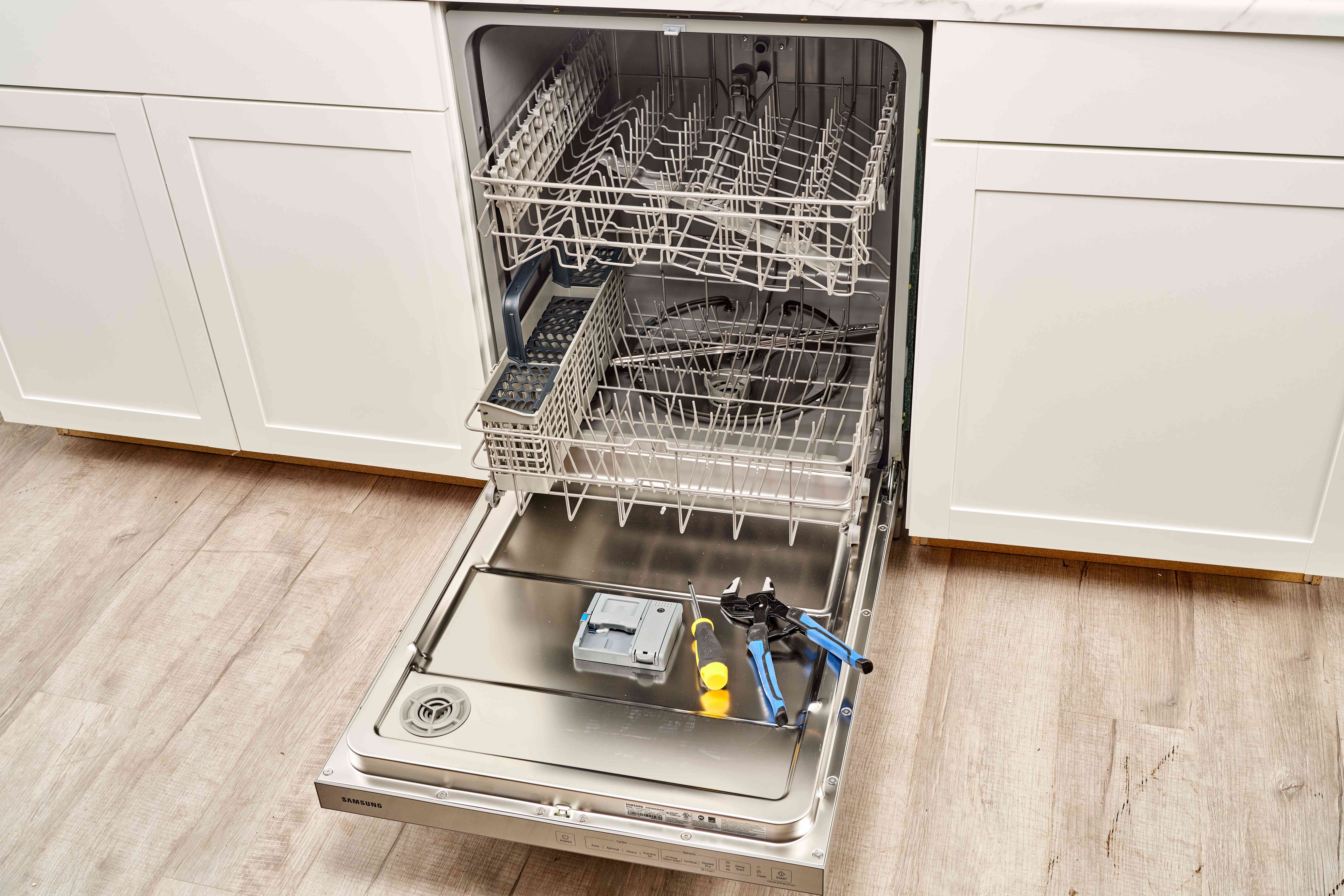
Your dishwasher has one job: turn crusty plates, cloudy glasses, and suspiciously sticky forks into clean, civilized kitchenware. So when it starts leaving oatmeal fossils on bowls or a puddle on the floor, it feels personal. The good news? Many dishwasher problems are less “expensive appliance disaster” and more “tiny clog wearing a dramatic cape.”
This dishwasher troubleshooting guide walks you through common issues, simple repair steps, safety tips, and the moment when it is smarter to call a professional. Whether your dishwasher is not draining, not cleaning, leaking, smelling like a swamp, or refusing to start, start here before declaring war on your kitchen.
Before You Touch Anything: Dishwasher Repair Safety
Dishwashers mix electricity, hot water, sharp metal edges, and plumbing. That combination deserves respect. Before doing any inspection beyond opening the door and checking racks, turn off power to the dishwasher at the breaker or unplug it if accessible. If you are working near the water supply line, shut off the water valve under the sink.
Wear gloves if you are reaching into the filter area. Broken glass loves to hide near the drain like a tiny villain. Keep towels nearby, take photos before removing parts, and check your owner’s manual for model-specific instructions. If you smell burning, see sparks, find melted wiring, or notice water near electrical components, stop and call a qualified appliance repair technician.
Common Dishwasher Problems and What They Usually Mean
Dishwasher repair begins with symptoms. A machine that will not drain points to a different set of causes than one that will not dry. Use the problem as your clue, then work from the easiest fix to the more advanced one.
Dishwasher Not Draining
A dishwasher not draining is one of the most common repair complaints. You may open the door and find standing water in the bottom, a soggy smell, or dishes that look rinsed in soup. Start with the simple stuff.
First, remove the bottom rack and inspect the filter. Most modern dishwashers have a removable filter at the bottom of the tub. Twist it out gently, rinse it under warm water, and use a soft brush to remove greasy buildup. Do not attack it with a wire brush; the filter is not a grill grate.
Next, check the drain area for food bits, labels, toothpicks, seeds, and tiny pieces of glass. If your dishwasher drains through a garbage disposal, run the disposal with cold water. A clogged disposal can block dishwasher drainage. If the disposal was recently installed, the dishwasher knockout plug may still be in place, which means water has nowhere to go.
Look under the sink at the drain hose. It should not be kinked, crushed, or sagging. Many installations require a high loop, where the hose rises near the underside of the countertop before connecting to the drain or disposal. That loop helps prevent dirty sink water from flowing backward into the dishwasher.
If the filter, disposal, air gap, and hose all look fine but water remains, the drain pump may be jammed or failing. At that point, you may need a professional diagnosis, especially if the pump hums but does not move water.
Dishwasher Not Cleaning Dishes
When a dishwasher is not cleaning, people often blame the machine. Sometimes the real culprit is loading style, detergent, hard water, or a spray arm clogged with mineral flakes. The dishwasher may be innocent. Mostly.
Start with loading. Plates should face the center, bowls should be angled downward, and tall pans should not block the spray arms. Spin the spray arms by hand before running a cycle. If they hit a cookie sheet, cutting board, or rogue spatula, water cannot reach the dishes properly.
Clean the filter and inspect the spray arm holes. Food particles and hard water deposits can clog the tiny jets. Remove the spray arms if your model allows it, rinse them, and use a toothpick or soft brush to clear debris. Avoid forcing anything into the holes hard enough to damage them.
Use only automatic dishwasher detergent. Regular dish soap creates foam, leaks, and regret. If you use too much detergent, you can get cloudy film. If you use too little, food soil may remain. Pods, tablets, powders, and gels can all work, but they must be stored dry and used according to package directions.
Water temperature matters too. Run the kitchen sink hot before starting the dishwasher so the first fill begins with warmer water. If your dishes are still dirty after cleaning the filter and spray arms, the circulation pump, wash motor, inlet valve, or heating system may need repair.
Dishwasher Leaking
A leaking dishwasher can be as minor as a dirty door gasket or as serious as a damaged tub. The location of the leak matters.
If water leaks from the front, inspect the door gasket. Food grime, mineral deposits, or a loose section can prevent a tight seal. Wipe the gasket with warm, soapy water and check for cracks, gaps, or hardened rubber. Also inspect the door latch. If the door does not close firmly, water can escape during the wash cycle.
If water appears under the dishwasher, check the water supply line, drain hose, and connections under the sink. A loose clamp or cracked hose can cause slow leaks. If the dishwasher is overfilling, the float switch or water inlet valve may be involved. The float is usually a small dome or cylinder in the tub that rises with the water level. If it is stuck under debris, the machine may fill incorrectly.
Leaks caused by a corroded tub, pump seal, or internal component are usually professional repairs. Water damage spreads quickly, so do not keep running the dishwasher “just one more time” to see if it magically becomes emotionally mature.
Dishwasher Will Not Start
If your dishwasher will not start, begin with the obvious checks. Is the door fully latched? Is the control lock on? Is the breaker tripped? Is the machine plugged in? Is delay start enabled? Many “dead” dishwashers are simply waiting for a setting to be canceled.
Reset the dishwasher by turning off power for a minute, then restoring it. Some models only need a short power cycle. If the control panel lights up but nothing happens, the door latch, thermal fuse, control board, or wiring may be faulty. If there is no power at all and the outlet or breaker is good, call a technician or electrician.
Dishwasher Not Drying
A dishwasher not drying dishes is often not broken. Many newer dishwashers use condensation drying instead of a powerful exposed heating element, which saves energy but may leave plastic items damp. Plastic does not retain heat like glass or ceramic, so it dries poorly even in a healthy machine.
Use rinse aid. It helps water sheet off dishes instead of clinging in droplets. Choose the heated dry, extended dry, or sanitize option if your model offers it. Load cups and bowls at an angle so water does not pool on top. Open the door slightly after the cycle to release steam if your manual allows it.
If everything is soaked, including ceramic plates and metal utensils, the heating element, vent, fan, or high-limit thermostat may need service. Because those repairs involve electrical testing, they are best left to someone with the right tools and training.
Dishwasher Smells Bad
A smelly dishwasher is usually asking for cleaning, not replacement. Food debris in the filter, grease on the door gasket, and buildup in the drain area can create odors. Remove and clean the filter, wipe the door edges, scrub the gasket gently, and check the bottom of the tub for hidden debris.
Run an empty hot cycle with a dishwasher cleaner recommended for your model. Some people use vinegar, but check your manual first because repeated acidic cleaning may not be ideal for all rubber parts. If the smell is more like sewage than old food, inspect the drain hose high loop or air gap. Sewer-like odors can happen when dirty water backs up into the appliance.
Step-by-Step Dishwasher Troubleshooting Checklist
Step 1: Reset the Dishwasher
Cancel the current cycle. If your model has a drain or reset button, use it according to the manual. Then turn power off at the breaker for about one minute and turn it back on. A reset can clear minor control glitches.
Step 2: Clean the Filter
Remove the bottom rack, unlock the filter, and rinse it under warm water. Use a soft brush for stubborn residue. Reinstall it securely. A loose filter can allow debris into areas where debris should never be invited.
Step 3: Inspect the Spray Arms
Spin each spray arm. It should rotate freely. Remove visible debris from the holes. If the arms are removable, rinse them thoroughly and reinstall them correctly.
Step 4: Check the Drain Path
Look at the sump area, drain hose, garbage disposal, and air gap if your sink has one. Clear clogs carefully. Confirm the hose is not kinked and has the proper loop or installation style.
Step 5: Review Loading and Detergent
Do not overload. Do not block the detergent dispenser. Do not nest spoons together like they are hiding from responsibility. Use dishwasher detergent only, and add rinse aid if drying or spotting is a problem.
Step 6: Look for Leaks and Loose Parts
Check the door gasket, latch, water line, drain hose, and under-sink connections. Tighten only what you understand. If a part is cracked, brittle, burned, or corroded, replacement may be safer than a temporary patch.
When to Repair vs. Replace Your Dishwasher
Dishwasher repair makes sense when the issue is small: a clogged filter, blocked drain hose, dirty spray arm, worn door gasket, or simple installation problem. These fixes are often inexpensive and can restore performance quickly.
Replacement becomes more reasonable when the dishwasher is older, repairs are frequent, parts are hard to find, or the machine has major failures such as a bad control board, failing motor, corroded tub, or repeated leaks. If the repair cost approaches half the price of a new dishwasher, compare your options carefully.
Also consider efficiency. A newer dishwasher may use less water and energy, clean better, and run more quietly. But do not replace a machine just because it had one dramatic afternoon. Diagnose first. Dishwashers, like people, sometimes just need a clean filter and a fresh start.
Preventive Dishwasher Maintenance
The easiest dishwasher repair is the one you never need. Clean the filter monthly if you use the dishwasher often. Wipe the door gasket and edges every few weeks. Run a cleaning cycle as recommended by the manufacturer. Keep rinse aid filled, especially if you live in a hard water area.
Scrape large food scraps before loading, but do not obsessively prewash every plate. Modern dishwashers and detergents are designed to work with some food soil. Over-rinsing wastes water and may even reduce cleaning performance on sensor-based cycles.
Every month, spin the spray arms, check for blocked jets, and look under the sink at the drain hose. Make sure no one has shoved cleaning supplies against it and created a kink. Your dishwasher cannot drain properly if its hose is folded like a garden snake in a bad mood.
Real-World Experience: What Usually Works First
In everyday dishwasher troubleshooting, the most reliable first fix is boring but powerful: clean the filter. Many homeowners skip this because the filter is hidden under the bottom rack, and anything hidden under a bottom rack feels like a secret engineering exam. But once you remove it, the mystery often ends quickly. A greasy filter can cause poor cleaning, slow draining, odors, and gritty residue. One small part can create four annoying problems at once.
The second real-world lesson is that loading matters more than people want to admit. A dishwasher is not a magic cabinet with water. It is a spray system. If a baking sheet blocks the lower spray arm, the top rack may come out dirty. If bowls face upward, they collect water. If utensils nest together, they protect each other from cleanliness like a tiny spoon union. Better spacing often improves results immediately.
Another common experience: the garbage disposal connection is overlooked. After a new disposal installation, a dishwasher may suddenly stop draining because the knockout plug was never removed. The dishwasher is blamed, but the poor thing is just pumping water into a wall. If drainage problems began right after plumbing work, look under the sink before ordering parts.
Rinse aid is another humble hero. People often think it is optional, like a decorative throw pillow for appliances. In many homes, especially where water is hard, rinse aid makes a noticeable difference in drying and spotting. It helps water slide off dishes instead of drying into dots. If glasses look cloudy or plastic stays wet, refill the rinse aid dispenser before assuming the heating element failed.
For leaks, the door gasket deserves suspicion. A dirty gasket can mimic a damaged one. Food residue along the bottom edge of the door can break the seal just enough to let water escape. Cleaning it takes minutes and costs almost nothing. However, if the gasket is cracked, flattened, or pulling away, replacing it is usually the correct move.
The final experience-based rule is simple: do not ignore new noises. A soft swish is normal. Grinding, buzzing, rattling, or humming with no water movement is a clue. Sometimes it is just a seed or glass shard near the pump. Sometimes it is a failing motor. Either way, stopping early can prevent a small repair from becoming a full appliance funeral.
Conclusion
Learning how to fix your dishwasher starts with calm troubleshooting. Reset the machine, clean the filter, inspect the spray arms, check the drain hose, review loading habits, and use the right detergent and rinse aid. Many dishwasher problems come from clogs, buildup, installation issues, or simple maintenance gaps.
Still, know your limits. If the repair involves live electrical testing, internal wiring, pump replacement, control boards, heating elements, or major leaks, call a professional. A fixed dishwasher is great. A safe kitchen is better.