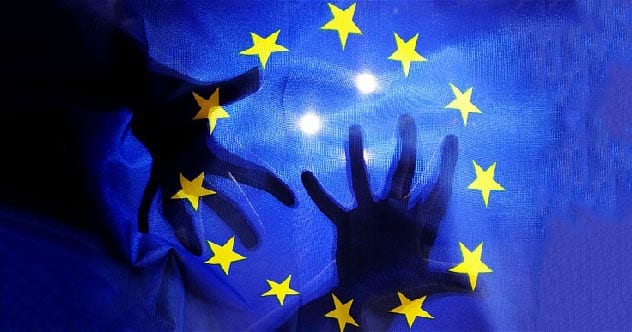
The European Union is many things: a political project, a single market, a bureaucracy with more acronyms than a government printer should legally be allowed to handle, and, depending on whom you ask online at 2:13 a.m., the headquarters of every secret plot since the invention of sliced bread. Or, given some EU food regulations, perhaps sliced bread with very carefully labeled allergens.
Conspiracy theories about the European Union have existed for decades. Some are comic-book dramatic, imagining Brussels as a villain’s lair where officials in sensible shoes plot world domination over espresso. Others are more dangerous, mixing fear of immigration, distrust of public health, climate anxiety, and anger toward elites into a thick soup of misinformation. The EU’s real complexity helps these stories travel. When a system has the European Commission, European Council, Council of the European Union, European Parliament, Court of Justice, and a committee for nearly everything except explaining committees, confusion becomes fertile soil.
This article looks at ten of the most persistent conspiracy theories about the European Union, why they spread, what real issue they distort, and what facts make the story less thrilling but far more useful. Think of it as a guided tour through the EU rumor museum, where the exhibits are loud, dramatic, and occasionally shaped like a banana.
1. The “Brussels Superstate” Plot
The theory
One of the grandest EU conspiracy theories claims that Brussels is secretly turning European countries into a single superstate, erasing national identity, abolishing local democracy, and replacing every flag with a tasteful circle of yellow stars.
The reality
The European Union does involve shared sovereignty. Member states voluntarily agree to common rules in areas such as trade, competition, environmental standards, consumer protection, and parts of migration policy. That can feel intrusive, especially when national politicians blame “Brussels” for unpopular decisions while quietly attending the meetings where those decisions were negotiated.
But the EU is not a hidden empire. Its laws generally require approval from elected members of the European Parliament and national ministers in the Council. The European Commission can propose legislation, but it cannot simply wake up, eat a croissant, and declare France illegal before lunch.
The superstate theory works because it takes a real debatehow much power should be shared across bordersand dresses it in a black cape. The honest version of the argument is about democratic accountability, national autonomy, and the trade-offs of integration. The conspiracy version skips the policy seminar and goes straight to “secret takeover.”
2. The “Unelected Bureaucrats Control Everything” Theory
The theory
This claim says the EU is run entirely by unelected bureaucrats who impose laws on helpless European citizens while cackling behind stacks of paperwork.
The reality
There is a kernel of truth here: the European Commission is not directly elected by voters in the same way a national parliament is. However, Commission leadership is nominated by elected national governments and must be approved by the directly elected European Parliament. EU legislation also needs approval from the Parliament and the Council, where national governments sit.
That does not mean the system is simple. It is not. EU governance is complicated enough to make a civics teacher stare out a window for a while. But “complex” is not the same as “secret dictatorship.”
The “unelected bureaucrats” phrase is politically powerful because it converts institutional complexity into emotional clarity. It gives people a villain. Unfortunately, it also hides the role national governments play. When citizens dislike an EU rule, they should ask not only “What did Brussels do?” but also “How did my country vote?” That question is less catchy on a bumper sticker, but it is much better for democracy.
3. The Bendy Banana Conspiracy
The theory
No EU myth has achieved greater fruit-bowl fame than the claim that Brussels banned bendy bananas. According to the legend, EU officials decided bananas must be straight, because apparently the road to tyranny begins at produce inspection.
The reality
The EU did create marketing standards for bananas, including categories based on quality and size. The rules mentioned “abnormal curvature,” but they did not ban naturally curved bananas from existence, nor did they require supermarkets to sell fruit shaped like rulers.
The myth survived because it is funny, visual, and easy to understand. “EU trade classification rules” is boring. “Brussels bans bendy bananas” is a tabloid headline with legs. Or peels.
This conspiracy theory is relatively harmless compared with darker narratives, but it shows how EU misinformation often works: a dull technical rule gets exaggerated into a symbol of bureaucratic madness. The joke then becomes political evidence. Someone hears it enough times and concludes, “Well, if they control bananas, what else are they controlling?” Probably not your breakfast, but the question keeps the myth alive.
4. The Secret EU Army Theory
The theory
Another long-running claim says the EU is secretly building a European army that will override national militaries, conscript citizens, and place troops under the command of Brussels officials who have never once polished a boot.
The reality
The EU does have defense cooperation programs. European governments have discussed rapid response forces, joint procurement, military mobility, and ways to strengthen Europe’s defense industry. Russia’s war against Ukraine and uncertainty about U.S. commitments to NATO have intensified these debates.
However, cooperation is not the same as a secret army. Defense remains highly sensitive and largely controlled by national governments. EU countries have different threat perceptions, military traditions, budgets, and constitutional limits. Some EU members are also NATO members; others are not. A single Brussels-controlled army is far easier to imagine on social media than to create in real life.
The theory succeeds because defense touches national identity. People worry about who can send soldiers into danger. That concern is legitimate. But the leap from “European countries are coordinating defense” to “Brussels will seize your army” is a leap over a canyon, and the bridge is made of Facebook posts.
5. The “Eurabia” and Great Replacement Theory
The theory
One of the most toxic conspiracy theories about Europe claims that EU elites are deliberately using migration to replace native European populations, destroy Christian or secular European culture, and transform the continent into “Eurabia.”
The reality
This theory blends demographic anxiety, anti-Muslim prejudice, and distrust of institutions. Europe has experienced major migration flows, especially during the 2015 refugee crisis, and many countries continue to debate border policy, integration, asylum rules, labor shortages, and social cohesion.
But demographic change is not proof of a secret replacement plan. Pew Research Center projections have shown that Europe’s Muslim population may grow under different migration scenarios, yet even high-growth scenarios do not support the idea of a continent-wide Muslim majority by 2050. Brookings scholars have also argued that Europe’s real challenge is integration, not an inevitable civilizational takeover.
The Great Replacement narrative is especially dangerous because it turns ordinary peoplemigrants, refugees, religious minorities, and their childreninto supposed weapons in a plot. That framing has appeared in extremist propaganda and has been linked to real-world violence. It is not just a bad argument. It is a bad argument with a fuse attached.
6. The Digital ID “Social Credit” Theory
The theory
This theory claims the EU’s digital identity wallet will become a mandatory surveillance tool, creating a Chinese-style social credit system in which citizens can be tracked, scored, punished, and perhaps denied access to society for insufficient enthusiasm about recycling.
The reality
The EU has been developing digital identity tools so citizens can verify identity and share documents online. Critics raise real concerns about privacy, cybersecurity, over-sharing, and the risk of mission creep. Those concerns deserve serious attention.
But fact-checks have found false claims that EU lawmakers made digital ID mandatory through unrelated votes. The official concept is a voluntary digital wallet for documents and identity verification, not a public obedience scoreboard.
The conspiracy theory thrives because digital systems are genuinely hard to understand and because many people already feel watched by apps, advertisers, platforms, and governments. When public trust is low, even a convenience tool can look like a leash. The best answer is not blind reassurance. It is strong privacy law, transparent design, independent audits, and a public that refuses to click “accept all cookies” like it is swatting a fly.
7. The Digital Euro “End of Cash” Theory
The theory
Closely related is the claim that the EU and European Central Bank want a digital euro so they can abolish cash, monitor every purchase, freeze political opponents’ money, and know exactly who bought the suspiciously large wheel of cheese.
The reality
The digital euro is a real project under development. It is intended as a central bank-backed digital payment option that could reduce dependence on non-European payment networks and function alongside cash. Reuters has reported that lawmakers and central bankers have discussed privacy, holding limits, merchant fees, pilot timing, and offline functionality.
There are legitimate questions. Would a digital euro be private enough? Would it compete unfairly with banks? Would it be useful, or just another app on a phone already begging for updates? Those debates are real.
The conspiracy theory, however, jumps from “public digital money is being designed” to “cash will vanish and freedom will be deleted.” That is not supported by the project’s stated goals. Still, public skepticism is not irrational. Money is intimate. People may not care who sees their grocery receipt until the grocery receipt includes medicine, political donations, or twelve emergency cupcakes. Privacy must be designed, not promised with a smile.
8. The “Climate Lockdown” Theory
The theory
This theory claims EU climate policies are a pretext for controlling personal movement, banning cars, restricting diets, trapping people in neighborhoods, and using environmental rules as the new lockdown.
The reality
Climate policy in Europe is real, ambitious, and controversial. The EU has debated vehicle emissions, agricultural rules, energy standards, industrial competitiveness, and carbon neutrality targets. Farmers, automakers, consumers, and governments have all pushed back against parts of the agenda.
But “climate lockdown” claims often misrepresent urban planning ideas such as the 15-minute city. That concept aims to make essential servicesschools, shops, parks, healthcarereachable within a short walk, bike ride, or public transport trip. Fact-checkers have found no evidence that the concept means people will be imprisoned in neighborhoods.
The phrase “climate lockdown” is effective because it borrows emotional residue from COVID-19 restrictions. People remember real limits on movement and fear a repeat. Conspiracy influencers then attach that fear to bike lanes, bus routes, and zoning reform. Suddenly, a proposal for a nearby pharmacy becomes a global plot. The pharmacy, for the record, just wanted to sell cough drops.
9. The “EU Will Force Everyone to Eat Insects” Theory
The theory
This claim says Brussels has a secret plan to replace steaks, sausages, and Sunday roasts with crickets, mealworms, and other insects slipped into food without warning. It is usually presented as the culinary wing of the Great Reset: “You will own nothing, eat bugs, and be grateful.”
The reality
The EU has approved certain insect-based ingredients under its novel food rules. That means specific products can be sold if they meet safety and labeling requirements. It does not mean citizens are being forced to eat insects, nor that bugs will be hidden in food without disclosure.
Food regulation is a perfect playground for conspiracies because eating is emotional. People may accept complicated financial policy with a shrug, but tell them Brussels is coming for their burger and suddenly everyone becomes a constitutional scholar with barbecue sauce on their shirt.
The sensible view is simple: some consumers may choose insect protein; many will not. Clear labeling matters. Food safety matters. Cultural preference matters. But permission is not compulsion, and a niche protein product is not the fall of Western civilization with extra legs.
10. The Pfizer, COVID-19, and “Secret EU Vaccine Regime” Theory
The theory
During and after the COVID-19 pandemic, conspiracy theories accused EU leaders of hiding vaccine dangers, illegally approving vaccines, colluding with pharmaceutical companies, or using health policy to build a permanent control system.
The reality
The pandemic produced legitimate controversies: emergency procurement, transparency, vaccine contracts, public communication, side-effect monitoring, and the balance between public health and civil liberties. The European Commission’s vaccine purchasing and communications have faced criticism, including political disputes over messages and contracts.
But fact-checkers have debunked claims that the EU declared COVID-19 vaccines illegally approved. AP also found that viral claims about Pfizer testimony before the European Parliament often omitted key context about what was known before vaccine rollout regarding transmission studies.
Health misinformation spreads because fear seeks certainty. A pandemic is chaotic; a conspiracy offers a plot, a villain, and a strange comfort: at least someone is in control. The truth is less cinematic. Institutions made urgent decisions under pressure, sometimes communicated poorly, and became targets for people selling simple answers to complex trauma.
Why EU Conspiracy Theories Spread So Easily
EU conspiracy theories are not random. They usually grow where real concerns meet poor understanding. The EU is powerful but complicated. It affects daily life but often feels distant. Its decisions can be technically correct and emotionally tone-deaf at the same time, which is an impressive bureaucratic hat trick.
Several patterns appear again and again. First, a real policy exists: digital identity, defense cooperation, migration reform, climate regulation, novel food approval. Second, the policy is simplified into a scary slogan. Third, the slogan is shared by accounts that benefit from outrage. Fourth, the correction arrives wearing sensible shoes and carrying a PDF. Guess which one gets more clicks?
Foreign disinformation campaigns can also amplify anti-EU narratives, especially when the goal is to weaken trust in democratic institutions. But not all misinformation is imported. Plenty is homegrown. Politicians, influencers, activists, tabloids, and ordinary users can all turn half-truths into viral myths. The internet did not invent rumor, but it did give rumor a sports car and no brakes.
How to Read EU Claims Without Losing Your Mind
When you encounter a dramatic claim about the European Union, ask five questions. What is the original source? Is the claim about a proposal, a law, or a rumor about a proposal? Did elected national governments participate in the decision? Is the claim confusing permission with compulsion? And does the post make you feel terrified before giving you evidence?
That last question is useful. Conspiracy content often sells emotion first and information second. It wants you angry, frightened, or smug. Good analysis can also be passionate, but it should survive contact with documents, dates, votes, and boring institutional facts.
Healthy skepticism is not the problem. Democracies need skeptical citizens. The problem is lazy suspicion, the kind that treats every official statement as false and every viral screenshot as sacred scripture. A serious citizen can criticize the EU without pretending bananas are a constitutional crisis.
Experiences and Reflections: What These Theories Teach Us About Trust
Spend enough time reading claims about the European Union and you notice something interesting: many conspiracy theories are emotional biographies disguised as political analysis. They reveal what people fear losing. Sovereignty theories are often about national pride. Migration theories are about identity and cultural change. Digital ID theories are about privacy. Climate lockdown theories are about freedom. Insect-food panics are about dignity, tradition, and the right to enjoy dinner without imagining a cricket doing backstroke in the soup.
My experience analyzing these narratives is that the best response is rarely mockery alone. Humor helps, especially because some claims are genuinely absurd. A secret world government run through banana curvature regulations deserves at least one raised eyebrow. But behind the absurdity are real anxieties. People worry that decisions affecting their lives are made far away. They worry that technology is moving faster than law. They worry that migration changes neighborhoods faster than governments can manage integration. They worry that climate policy may cost them money while elites continue flying to conferences to discuss sacrifice over catered salmon.
Those worries should not be dismissed. They should be separated from falsehood. A person can oppose a digital euro because they fear surveillance without claiming it is definitely a plan to erase cash next Tuesday. A farmer can criticize environmental rules without sharing fake stories about compulsory insect meals. A voter can dislike EU centralization without imagining that every national parliament has been replaced by a secret committee named Directorate-General for Sinister Vibes.
The most useful experience is learning to slow down. Conspiracy theories move fast because they reward instant reaction. The EU moves slowly because it is made of 27 countries, legal procedures, translations, committees, elections, compromises, and people who can argue for three hours about a comma. That slowness is frustrating, but it also means many “secret overnight takeovers” are structurally unlikely. The machinery is too visible, too leaky, and too full of rival interests.
Another lesson is that transparency must be felt, not merely announced. Institutions often say, “The information is public,” while placing it inside a 96-page document with a title that sounds like a printer error. Technically public is not the same as publicly understandable. If the EU wants fewer myths, it needs communication that sounds less like a treaty footnote and more like a human explaining what changes, who voted, who benefits, who pays, and what safeguards exist.
For readers, the practical habit is simple: treat viral certainty as suspicious. When someone claims, “The EU just banned X,” look for the actual law. When someone says, “They will force you to do Y,” check whether the policy permits, incentivizes, regulates, or mandates. Those words matter. Permission is not force. Coordination is not dictatorship. A pilot program is not a prison. A food label is not a prophecy.
The European Union deserves scrutiny. It is powerful, imperfect, and sometimes spectacularly bad at explaining itself. But criticism works best when it aims at reality. Conspiracy theories may feel exciting, but they often protect the powerful by distracting from what can actually be changed. If citizens are busy fighting imaginary bug menus and banana police, they have less energy to demand clearer laws, better privacy protections, fairer migration systems, smarter climate policy, and more accountable leadership.
In the end, the wildest thing about EU conspiracy theories is not that people distrust Brussels. Distrust is easy to understand. The wild part is how often a real issue gets buried beneath a cartoon version of itself. The challenge is to keep the concern, lose the fantasy, and remember that democracy is not strengthened by believing everything. It is strengthened by checking carefully, arguing honestly, and occasionally admitting that the banana was allowed to be bendy all along.
Conclusion
Conspiracy theories about the European Union are popular because the EU is powerful, complicated, and distant enough to become a screen for almost any fear. Some myths are funny, like the legendary war on bendy bananas. Others are deeply harmful, especially those targeting migrants, minorities, public health workers, or democratic institutions.
The best way to understand the EU is not to worship it or demonize it. It is to examine it. The bloc makes real decisions that deserve real debate. But real debate requires facts, context, and the patience to read beyond the headline. Brussels may be bureaucratic, imperfect, and occasionally allergic to plain English, but not every confusing regulation is a conspiracy. Sometimes a banana standard is just a banana standard.