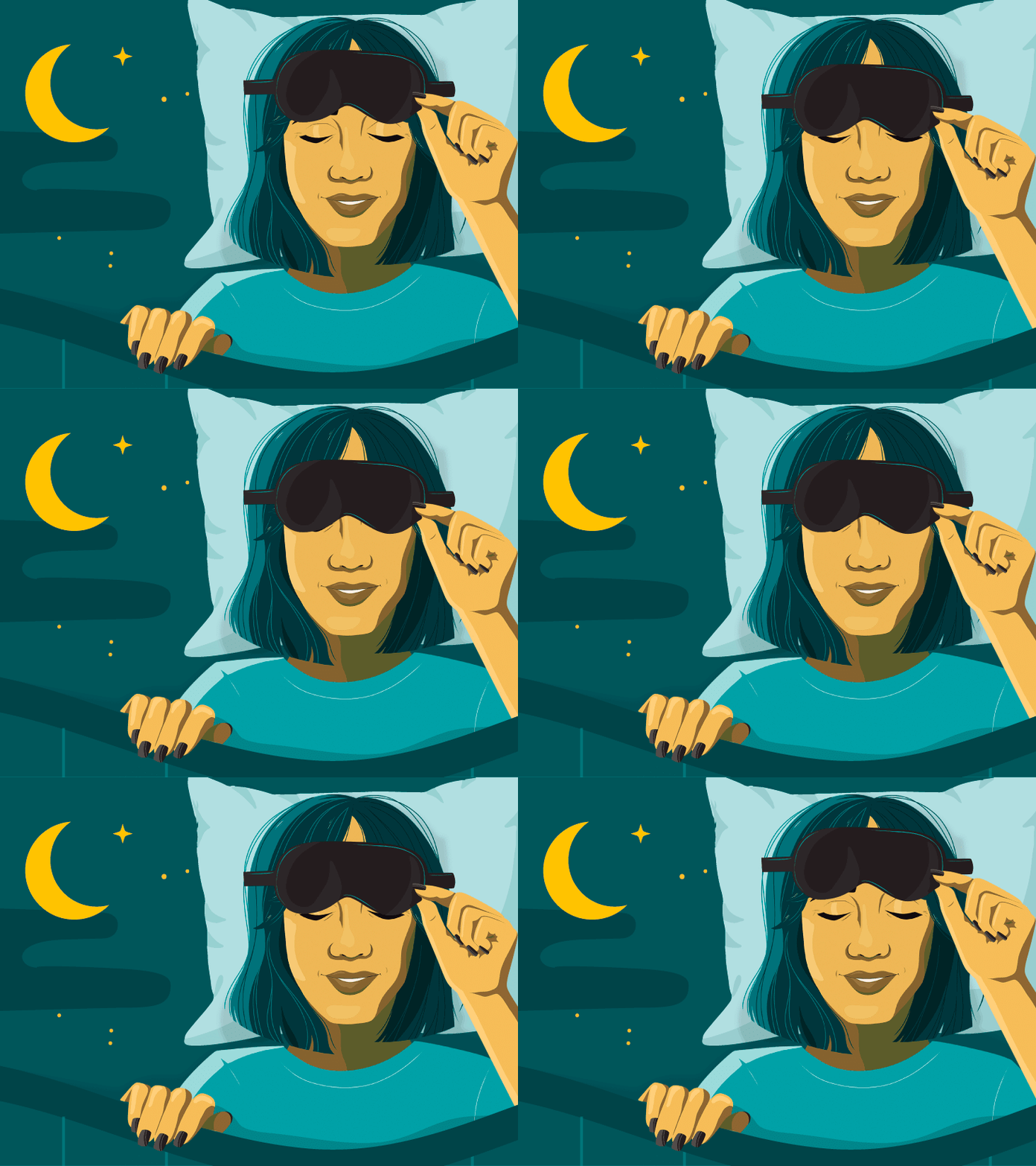
It is 2:13 a.m. The room is quiet, the pillow is perfectly fluffed, and your brain has decided this is an excellent time to replay an awkward conversation from 2017. You turn over. You rearrange the blanket. You calculate how many hours remain before the alarm rings. Somehow, this advanced mathematics does not make you sleepy.
Almost everyone has an occasional restless night. Stress, travel, an irregular schedule, caffeine, physical discomfort, hormonal changes, medications, and an overly enthusiastic afternoon nap can all interfere with sleep. The frustrating part is that trying harder to fall asleep often makes sleep feel even farther away.
So, what should you actually do when you cannot sleep? The most useful strategies are surprisingly gentle. Instead of wrestling with the night, you can lower stimulation, calm your nervous system, and rebuild the connection between your bed and sleep. Here is a practical, science-informed guide for Pandas who are tired of staring at the ceiling as though it owes them money.
First, Stop Treating Sleep Like a Test You Must Pass
One of the biggest sleep thieves is the pressure to sleep immediately. Thoughts such as “I must fall asleep now” or “Tomorrow will be a disaster” increase mental and physical alertness. Your jaw tightens, your breathing becomes shallower, and your mind begins monitoring every minute that passes.
Sleep is not a performance. You cannot force it in the same way you can force yourself to finish the laundry. A more helpful thought is: “Rest is still useful, and my body knows how to sleep when it is ready.” This does not magically knock you unconscious, but it removes some of the panic that keeps the nervous system switched on.
Cognitive behavioral therapy for insomnia, commonly called CBT-I, specifically addresses anxious thoughts and habits that maintain sleeplessness. It is widely recommended as the first-line treatment for chronic insomnia rather than relying only on sleeping pills.
Do Not Keep Checking the Clock
Clock-watching turns the night into a countdown. At 1:30 a.m., you think you still have time. At 2:45, you begin bargaining with the universe. By 4:00, you are composing your own obituary.
Turn the clock away, place your phone face down, and resist calculating your remaining sleep opportunity. Knowing the exact minute rarely helps. It usually adds urgency, and urgency is not famous for producing relaxation.
What to Do When You Cannot Fall Asleep
1. Get Out of Bed When You Feel Wide Awake
If you have been lying awake for roughly 15 to 20 minutes and feel increasingly frustrated, leave the bed. You do not need to measure the time precisely; the important signal is that you are clearly awake and beginning to struggle.
Move to a dimly lit room and choose a quiet, low-stimulation activity. Read a mildly interesting book, listen to soft music, fold towels, or sit comfortably while practicing slow breathing. Return to bed when your eyelids feel heavy. Repeat the process if necessary.
This approach is known as stimulus control. It helps teach the brain that the bed is associated with sleeping rather than worrying, scrolling, working, or holding an emergency meeting about tomorrow’s schedule.
2. Try Slow, Comfortable Breathing
Breathing exercises are useful because they give the mind a simple task while encouraging the body to relax. Try inhaling gently through your nose for four counts and exhaling for six. Continue for several minutes without forcing an unusually deep breath.
A longer exhale may feel calming, but the exact numbers are not sacred. You are breathing, not trying to unlock a secret level in a video game. Choose a rhythm that feels smooth and comfortable. People with respiratory or cardiovascular conditions should avoid breath-holding exercises that cause dizziness or discomfort.
3. Relax Your Muscles One Area at a Time
Progressive muscle relaxation can help when your body is tense even though you feel exhausted. Begin with your feet. Gently tighten the muscles for a few seconds, release them, and notice the difference. Continue through your calves, thighs, abdomen, hands, shoulders, jaw, and forehead.
Use mild tension rather than squeezing with heroic intensity. The goal is to recognize and release tension, not to conduct a midnight strength-training session. Deep breathing, guided imagery, mindfulness, and progressive muscle relaxation are commonly suggested as low-risk relaxation techniques for sleepless nights.
4. Give Your Racing Thoughts Somewhere Else to Go
Many people become sleepy until their head touches the pillow. Then the brain opens seventeen tabs: unpaid bills, unfinished projects, family concerns, tomorrow’s errands, and whether penguins have knees.
Keep a notebook near the bed. Write down whatever feels urgent, along with one possible action for tomorrow. For example: “Email the contractor after breakfast” or “Review the presentation at 10 a.m.” You are not solving the problem at night. You are reassuring your brain that the problem has been recorded and will not vanish by morning.
A scheduled “worry period” earlier in the evening can also help. Spend 10 to 15 minutes listing concerns before the bedtime routine begins. This prevents the pillow from becoming your unofficial office.
5. Choose Boring Over Stimulating
If you leave the bed, avoid activities that wake you further. Online shopping, competitive games, breaking news, work email, and emotionally charged conversations can all increase alertness. Even a relaxing-looking social media feed can become a 90-minute archaeological dig through strangers’ vacation photos.
Choose something calm and repetitive. Read a paper book you already know. Listen to a quiet audiobook with the screen off. Work on a simple puzzle that does not make you determined to “win.” Your activity should gently occupy the mind without rewarding it for staying awake.
Build a Bedroom That Does Not Fight Back
A sleep-friendly bedroom is generally cool, dark, quiet, and comfortable. Blackout curtains, an eye mask, earplugs, or steady background sound may help when light and noise are difficult to control. Bedding should keep you comfortable without causing overheating.
Use the bed primarily for sleep and intimacy. Working, eating, watching dramatic television, and holding long debates in bed can weaken the mental association between bed and sleep. National sleep guidance consistently recommends a restful environment and a regular sleep schedule as foundations of healthier sleep.
Reduce Light Without Becoming Afraid of Every Screen
Bright light in the evening can delay the body’s preparation for sleep. Screen content can also be stimulating even when the brightness is low. A tense work message remains tense in night mode.
During the final hour before bed, dim the lights and shift toward calmer activities. Put the phone beyond easy reach if you tend to pick it up automatically. The goal is not to treat technology as a supernatural villain. It is to stop feeding your brain novelty when you want it to become pleasantly bored.
What You Do During the Day Matters at Night
Keep a Consistent Wake-Up Time
A regular wake time is one of the strongest anchors for the sleep-wake cycle. After a bad night, sleeping until noon may feel like justice. Unfortunately, it can reduce sleepiness the following evening and continue the cycle.
Get up near your usual time, including on weekends whenever practical. Seek natural morning light and move your body during the day. Morning or lunchtime outdoor light can reinforce the daytime signal, while regular physical activity may support better sleep at night.
Be Strategic About Naps
A short nap can be helpful after an unusually bad night, but long or late naps can reduce your drive to sleep at bedtime. When possible, keep naps brief and earlier in the afternoon. People who work nights, have medical conditions, or follow nontraditional schedules may need a more individualized approach.
Watch the Afternoon Coffee
Caffeine can remain active for hours. Coffee is the obvious source, but tea, energy drinks, cola, chocolate, pre-workout products, and some medications may also contain stimulants. If sleep is troublesome, experiment with moving your caffeine cutoff earlier.
Nicotine is also stimulating. Alcohol may initially cause drowsiness, but it can fragment sleep later in the night and worsen certain breathing problems. A “nightcap” may therefore produce sleep that is quicker to begin but less refreshing overall.
Avoid Going to Bed Stuffed or Starving
Large, spicy, or heavy meals close to bedtime can cause discomfort or reflux. On the other hand, strong hunger is not especially soothing. Finish large meals earlier and choose a modest snack when needed. There is no universal magic bedtime food, despite what the internet’s most confident smoothie influencer may claim.
What Not to Do During a Sleepless Night
- Do not repeatedly calculate how little sleep remains. This increases pressure and frustration.
- Do not stay in bed for hours while becoming angry. Move somewhere quiet until sleepiness returns.
- Do not use alcohol as a sleep treatment. It can disrupt sleep quality later in the night.
- Do not take someone else’s medication. Sleep medicines can cause interactions, next-day impairment, falls, dependence, and unusual behaviors.
- Do not drive when dangerously sleepy. Arrange another form of transportation or delay the trip.
- Do not punish yourself the next day. One poor night is unpleasant, but catastrophic predictions can strengthen sleep anxiety.
Should You Take Melatonin or an Over-the-Counter Sleep Aid?
Melatonin is a hormone involved in sleep timing, but a supplement is not a universal knockout button. It may be more useful for certain circadian-timing problems, jet lag, or selected cases of occasional sleeplessness than for every form of insomnia. Product strength and purity can vary, and melatonin may interact with medications or be unsuitable for some people.
Over-the-counter products containing sedating antihistamines may cause next-day grogginess, dry mouth, constipation, confusion, or urinary difficulties. Risks can be greater for older adults. Prescription sleep medicines also have benefits and risks and should not be borrowed, combined casually, or taken with alcohol.
Discuss supplements and sleep medications with a physician or pharmacist, especially if you are pregnant, breastfeeding, older, managing a chronic condition, or taking other medicines. Behavioral approaches remain the preferred foundation for chronic insomnia, with medication considered selectively rather than automatically.
When Sleeplessness Deserves Professional Attention
Occasional sleep trouble is common. Professional evaluation becomes more important when difficulty falling asleep, staying asleep, or waking too early occurs repeatedly and interferes with concentration, mood, safety, relationships, or work.
Contact a healthcare professional when sleep problems happen at least several nights a week for months, when you depend on substances or medication to sleep, or when fatigue is affecting daily life. A sleep diary documenting bedtime, wake time, awakenings, naps, caffeine, alcohol, medications, exercise, and daytime sleepiness can help identify patterns.
Seek evaluation sooner if you experience loud snoring with gasping or breathing pauses, an uncontrollable urge to move your legs, severe pain, unusual nighttime behaviors, frequent nightmares related to trauma, significant depression, or periods of unusually high energy with little need for sleep. Sudden confusion, breathing difficulty, chest pain, suicidal thoughts, or dangerous behavior requires urgent assistance.
Real-Life Sleepless-Night Experiences: Five Familiar Panda Scenarios
The following are composite experiences based on common sleep patterns rather than accounts attributed to specific individuals.
The Panda Who Tried Too Hard
One familiar experience begins with an early bedtime before an important morning. The sleeper gets into bed at 9:30 p.m. despite not feeling tired. At 10:00, nothing has happened. By 10:30, sleep has become a mission. Every position is tested, the pillow is flipped repeatedly, and tomorrow’s performance is declared doomed.
The useful change is surprisingly small: getting out of bed, sitting under a dim lamp, and reading something calm until genuine sleepiness appears. Returning to bed without demanding immediate results reduces the struggle. The lesson is that an earlier bedtime does not guarantee more sleep when the body is not ready.
The Panda With the 3 A.M. Committee Meeting
Another sleeper falls asleep easily but wakes around 3 a.m. The moment consciousness returns, the internal committee begins reviewing finances, family responsibilities, and every embarrassing sentence spoken during the previous decade.
Keeping a notebook nearby changes the routine. The sleeper writes, “Pay bill tomorrow,” “Call Mom after lunch,” and “The 2019 office-party joke is no longer an active emergency.” Slow breathing follows. Some nights sleep returns quickly; other nights require a quiet trip to another room. The biggest improvement comes from refusing to turn wakefulness into a crisis.
The Panda Who Accidentally Took a Two-Hour Nap
This story begins innocently at 4:30 p.m. with the phrase, “I will close my eyes for ten minutes.” The sleeper wakes after sunset, refreshed enough to reorganize a garage but still expects to fall asleep at the usual bedtime.
After several restless evenings, the pattern becomes obvious. The solution is not to ban naps forever but to make them shorter and earlier. An alarm is placed across the room, and long late-afternoon naps are replaced with a walk, a shower, or a brief rest on the couch. Bedtime sleepiness gradually returns.
The Panda Who Scrolled Until the Birds Started Singing
A phone offers comfort during a sleepless night: one harmless video, one quick message, one tiny check of the news. Then an hour disappears. The content is not restful, and the brain remains alert because something new arrives every few seconds.
This sleeper starts charging the phone outside the bedroom and uses a basic alarm clock. At first, the room feels suspiciously empty. After several nights, the absence of endless novelty becomes helpful. A paperback and a quiet audio track provide alternatives without inviting an accidental tour of the entire internet.
The Panda Who Needed More Than Sleep Hygiene
Some people already have dark curtains, a consistent schedule, limited caffeine, and a relaxing routine. Yet sleep remains difficult for months. They may assume they are failing at bedtime or need an even more elaborate collection of herbal tea.
In this scenario, a medical evaluation reveals that the problem requires structured treatment rather than another generic tip sheet. The sleeper begins CBT-I with a qualified provider and tracks sleep in a diary. Progress is gradual, but bedtime becomes less frightening and sleep becomes more reliable. The experience offers an important reminder: persistent insomnia is not a character flaw, and asking for professional help is not admitting defeat.
Conclusion: Make the Night Less of a Battle
When you cannot sleep, the most effective response is usually not to fight harder. Stop watching the clock, leave the bed when frustration builds, choose a quiet activity, and return only when you feel sleepy. Use gentle breathing or muscle relaxation, keep the room cool and dark, and protect a consistent wake-up time the following morning.
Improvement often comes from repeating simple habits rather than discovering one spectacular trick. Some nights will still be messy. Bodies are inconveniently biological, not programmable household appliances. The goal is not perfect sleep every night; it is a healthier relationship with sleep and a practical plan for the nights when it refuses to cooperate.
Note: This article provides general educational information and is not a diagnosis or a substitute for individualized medical care. Persistent, severe, or safety-related sleep problems should be discussed with a qualified healthcare professional.