If you’ve ever been minding your own businessjust casually scrolling through a perfectly normal video feed full of recipes, sports highlights, and someone power-washing a driveway for the 9,000th timeyou’ve probably met the newest creature in the internet petting zoo:
the A.I.-generated “Simpsons-ish” cartoon ad.
The formula is simple: borrow the vibe of America’s most recognizable animated family, slap it onto a moral-warning storyline, add a suspiciously catchy jingle, and funnel people into an “anti-masturbation” or “dopamine detox” app.
It’s weird. It’s funny in the way a clown in a dentist’s office is funny. And it’s also a surprisingly sharp lens on where advertising, generative A.I., and modern platform moderation are headed.
What’s Actually Happening With These A.I. “Simpsons” Ads?
The specific story that kicked this conversation into the daylight involves a short-form video ad promoting a wellness app called “Liven.” In the ad, a cartoon couple appears in a style that strongly resembles The Simpsonsyellow skin, simplified facial features, and that unmistakable “Saturday evening on Fox” silhouettewhile the video warns about “unrecognized masturbation addiction.”
At one point, the animation reportedly shifts into a glossy, Pixar-like look with no explanation, like the ad itself got bored and opened a new filter tab mid-sentence.
The humor writes itself, but the takeaway isn’t just “the internet is cursed.” It’s that A.I. has made it cheap and easy for marketers to manufacture familiarity.
They can summon a near-instant emotional shortcutnostalgia + recognitionwithout paying licensing fees, hiring artists, or clearing brand usage.
Why Marketers Love the “Simpsons” Look (Even When It’s Not Really The Simpsons)
1) Familiarity is the fastest drug in advertising
“Stop the scroll” has always been the core business model of social media. A “Simpsons-style” character is basically a neon sign for your brain:
you recognize it before you even decide you’re watching it.
And once you recognize something, your skepticism dropsjust enough for an ad to wedge in a message like, “Hey buddy, maybe your life problems are caused by… a single habit we can fix for $9.99/month.”
2) A.I. makes knockoff creativity a subscription, not a craft
Twenty years ago, ripping off a famous cartoon style still required an animator who could imitate it convincingly.
Today, a marketer can generate characters, scenes, voices, and even music cues with a handful of promptsthen iterate endlessly:
different faces, different hooks, different guilt lines, different “before/after” outcomes.
The ad doesn’t need to be good. It just needs to be good enough to convert.
3) “Wellness” language is the perfect costume
The wellness category is broad, emotionally loaded, and often lightly regulated compared to medical products.
“Self-improvement” sounds responsible. “Habit change” sounds scientific.
And “dopamine” has become the internet’s favorite lab-coat word, even when people are using it the way toddlers use glitter: generously and with no real plan.
When The Simpsons Itself Played With A.I.And Why That Matters Here
The timing is extra ironic because The Simpsons has already joked about A.I. writing its own grand finale.
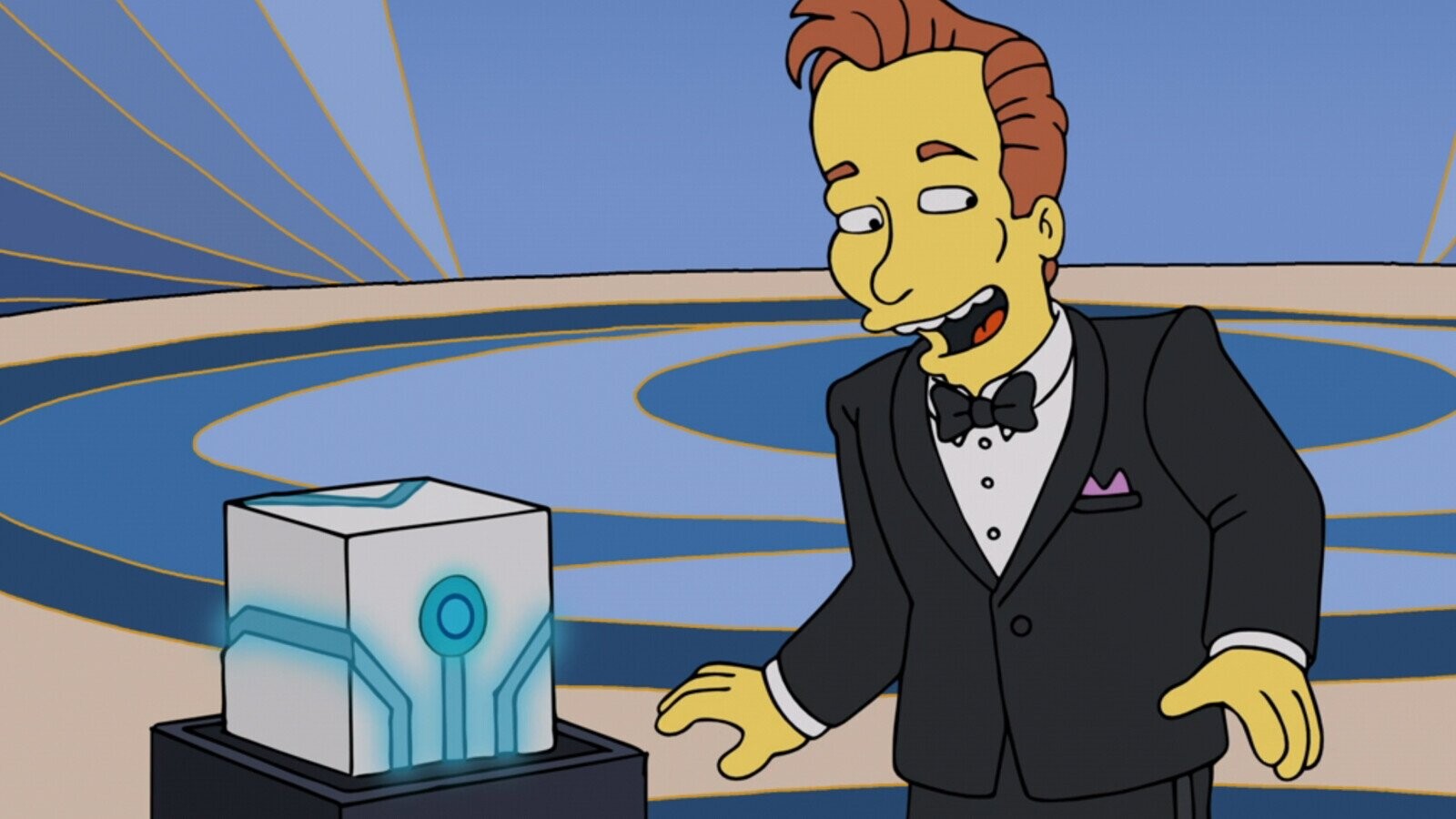
In the show’s Season 36 premiere, the episode plays with the idea of a fake “series finale,” featuring Conan O’Brien and a fictional A.I. (“Hack-GPT”) generating cliché finale moments.
That episode was framed as a meta gag: a commentary on storytelling shortcuts and cultural recycling.
The ad version is the same concept, but without the satire, the writers’ room, or the permission.
The show used A.I. as a punchline. The ad ecosystem uses A.I. as a business plan.
Where These Ads Spread (And Why They Slip Through)
Short-form video feeds are the ideal camouflage
Short-form platforms reward volume and novelty. Ads are often consumed at the same speed as memes.
If something feels vaguely familiar and vaguely animated, it can pass as “just another internet oddity” long enough to get clicks.
Ad review is a scale problem, not a motivation problem
Platforms do remove policy-violating ads, and they invest heavily in enforcement. For example, Google’s Ads Safety reporting has described how large language models and automated systems are used to prevent and remove massive volumes of bad ads and disrupt repeat offenders.
The same reporting emphasizes that bad actors constantly adapt, which is exactly why “looks-like-a-famous-cartoon” ads keep evolving.
The uncomfortable truth: even strong enforcement can still be leaky when the supply of new content is basically infinite.
A.I. doesn’t just generate ads fasterit generates fresh versions faster than moderators can label them.
Is It Legal? Welcome to the Spaghetti Bowl of Copyright, Trademarks, and “Style”
Copyright: characters are protected, but “style” is complicated
In plain English: copying specific characters, scenes, and recognizable elements can trigger copyright issues.
But copying a “vibe” or “look” is where legal arguments get messy.
Scholars and legal experts have debated how much “style” overlaps with protectable expression, especially for images, where similarity judgments can be subjective.
The U.S. Copyright Office has also been actively publishing major reports on A.I., including sections that address digital replicas, copyrightability of A.I. outputs, and training practicesbecause these questions are no longer theoretical.
Trademarks and “false endorsement” vibes
Even if an ad avoids direct character names, it can still create consumer confusion: “Is this associated with the real brand?”
If an ad makes people think a famous property is involvedor that a beloved creator would approvethat’s where trademark and unfair competition concerns can show up.
And it’s not just about being “inspired by.” It’s about trading on public recognition to sell something unrelated.
Rights holders are getting louder (and not quietly)
Big entertainment companies have become increasingly aggressive about A.I. systems that generate content resembling their characters.
Disney, for example, has publicly battled A.I.-related copyright issues while also exploring licensing partnershipsillustrating a future where “authorized A.I.” and “unauthorized A.I.” will be treated very differently.
Regulators vs. Deepfakes: The Rules Are Catching Up (Slowly, but They’re Moving)
One reason A.I. ads feel like a free-for-all is that regulation historically moved at “committee meeting” speed.
But U.S. regulators have been signaling that A.I.-powered impersonation and deception are not going to be waved away as “just tech stuff.”
The FTC, for instance, has proposed stronger protections to combat A.I. impersonation, responding to how easily deepfakes can be used to mislead consumers.
On the legislative side, proposals like the NO FAKES Act aim to address unauthorized digital replicasvoice and visual likenessespecially for real people.
While that’s not directly about cartoon characters, it’s part of the same cultural shift: “You don’t get to copy identities at scale without consequences.”
Meanwhile, the entertainment industry has tried to build consent-based options. For example, Reuters reported on agreements that let performers license A.I. voice replicas for advertising with consent and compensationbasically a “do it ethically or don’t do it” framework.
The “Anti-Masturbation App” Angle: Wellness, Shame, and What Counts as a Real Disorder
“Addiction” is a loaded wordespecially in ads
Here’s where the ads get extra tricky: they often frame masturbation (or porn use) as an “addiction” by default.
But mental health professionals tend to treat this topic with more nuance than a 30-second video with a sad cartoon man in a corner.
Major clinical references and medical organizations have noted that compulsive sexual behavior can be a real problem for some peopleparticularly when it causes distress and functional impairmentwhile also recognizing that diagnostic labels vary.
For instance, Mayo Clinic discusses compulsive sexual behavior and notes it is not listed in the DSM-5-TR as a standalone diagnosis.
The American Psychological Association has also explored the question of whether pornography is addictive, highlighting that research is ongoing and that distress and impairment matter more than moral panic.
Translation: “If it’s messing up your life, it’s worth addressing.” But “this product is evil and you are broken” is not a clinical modelit’s a sales tactic.
Evidence-based help looks boring (which is how you know it’s real)
If someone truly struggles with compulsive sexual behavior or feels out of control, real support usually involves therapy approaches like CBT, addressing triggers, stress, anxiety, depression, relationship issues, and shame.
It may involve support groups or medical consultation depending on the situation.
Cleveland Clinic and Mayo Clinic resources emphasize treatment and support rather than quick-fix moral judgment.
The punchline: the most trustworthy help is rarely delivered by a knockoff cartoon character with a dramatic soundtrack.
Privacy: If an App Tracks Your Sexual Habits, Treat It Like Health Data (Because It Basically Is)
A quiet risk hiding behind “habit change” apps is data.
Anything that logs intimate behaviors, urges, or mental health-style questionnaires is sensitive by natureeven if the company calls it “wellness.”
U.S. regulators have repeatedly gone after companies for mishandling sensitive data in health-adjacent contexts.
The FTC has taken enforcement actions and issued rule updates involving health apps and sensitive data disclosures, and high-profile cases (like those involving health services sharing data for advertising) show how easily personal information can be misused once it enters an ad-tech ecosystem.
If an app’s pitch leans on shame, urgency, or secrecy, that’s your cue to become the most boring person alive:
read the privacy policy, check what data is collected, see whether deletion is possible, and look for clear company contact information.
Boring is the new safe.
How to Spot a Sketchy A.I.-Generated Cartoon Ad (Before It Spots Your Wallet)
- The animation “changes styles” mid-ad (a classic sign of stitched-together generative content).
- Overconfident medical claims (“this is definitely an addiction” without nuance or sourcing).
- Heavy shame language (“you’re failing,” “your brain is broken,” “your relationship is doomed”).
- Pressure tactics (“download now,” countdown timers, “limited offer” for a digital product).
- Missing transparency (no clear company info, no credible clinical advisors, vague “science-backed” buzzwords).
- Famous-style characters with zero attribution (if it looks like a beloved franchise but doesn’t say it is, assume it’s not).
What Platforms Can Do (Besides Saying “We’re Working On It”)
Platforms are already investing in detection, enforcement, and policy updates, but A.I. ups the stakes.
Stronger identity verification for advertisers, faster repeat-offender bans, clearer labeling of synthetic media, and better pathways for rights holders to report infringement can all help.
Some companies have also moved toward labeling and policy updates for manipulated media and A.I.-generated content, especially as realistic synthetic content becomes more common.
The details vary by platform, but the direction is clear: “If it can fool people, it needs context.”
FAQ
Are A.I.-generated “Simpsons-style” ads illegal?
Not automatically. The legal risk depends on how closely the ad copies protected expression, whether it causes consumer confusion, and whether it misuses branding or implies endorsement.
But “not automatically illegal” is not the same thing as “safe to run.”
Why not just license The Simpsons?
Licensing is expensive, tightly controlled, and usually reserved for brands that won’t make the franchise look like it’s selling guilt pills.
A sketchy marketer doesn’t want permissionthey want plausible deniability and fast conversions.
Do anti-masturbation apps work?
Some people benefit from habit tracking and structured support, especially if they’re addressing compulsive behavior and distress.
But effectiveness varies widely, and “shame-driven marketing + vague neuroscience buzzwords” is not evidence.
If you’re struggling, consider evidence-based approaches and professional support.
Conclusion: The Weirdest Part Isn’t the CartoonIt’s the Business Model
A.I.-generated “Simpsons-ish” characters selling anti-masturbation apps are a perfect snapshot of the modern internet:
deeply creative, mildly unethical, occasionally hilarious, and always one algorithm tweak away from becoming everyone’s problem.
This isn’t just about one strange ad. It’s about how cheap synthetic media can hijack trusttrust in familiar art styles, trust in wellness language, trust in the idea that someone is watching the store.
In a world where you can generate a fake cartoon, a fake voice, and a fake authority vibe in minutes, the real premium commodity is going to be credibility.
Extra: of “Been There, Scrolled That” Experiences
Picture this: it’s late, your brain is running on battery-saver mode, and you’re doing that harmless little ritual known as “one last scroll before bed.”
You’ve seen a chef make pasta in a wheel of cheese, a dog learn to skateboard, and a guy explain the Roman Empire with a whiteboard that looks like it survived a small tornado.
Thenbamyour feed serves you a cartoon that feels familiar. Yellow skin. Rounded eyes. The vibe of a show you’ve watched in hotel rooms and at friends’ houses and in that weird phase when cable was still a thing.
For half a second, your brain relaxes. “Oh, it’s that kind of cartoon.” Safe. Nostalgic. Comfort-food content.
And that’s the moment the ad goes in for the emotional pickpocket.
Suddenly the tone shifts into a solemn, finger-wagging mini-lecture: “Here’s what unrecognized addiction looks like.”
The cartoon couple is posed like a stock photo of disappointment. The music swells. The words “dopamine” and “habit” start flying around like confetti at a neuroscience parade.
If you’re like most people, you don’t even get offended at firstyou get confused.
Why is this cartoon talking to you like it’s your disappointed guidance counselor?
Why does the animation look like it was generated by three different tools who don’t speak the same language?
And why does the “solution” involve downloading an app that wants permissions your flashlight app has never even asked for?
The weird part is how quickly your brain starts doing math. Not “serious math.” More like: Is this legit? and Do other people see this? and Why does it feel like a scam wearing a wellness hoodie?
You tap the profile. The brand name is unfamiliar. The website copy reads like it was translated, then retranslated, then passed through a blender of motivational quotes.
Reviews are either suspiciously glowing (“This app changed my DNA”) or deeply angry (“Chargeback speed-run”).
And then comes the oddly modern emotion: you feel annoyed at yourself for pausing.
Not because you did anything wrongbut because the ad stole your attention using borrowed cultural trust.
It didn’t earn your click with clarity or credibility; it tricked your pattern-recognition software with a costume.
After a while, you learn the small survival habits.
You get faster at spotting synthetic weirdness: the uncanny lip-sync, the overly smooth voices, the melodramatic claims, the sudden visual style shifts.
You start treating “famous-looking cartoon + private problem + paid solution” like a riddle where the answer is always: close the app, take a breath, and don’t give strangers your vulnerable data.
The next time one of these ads shows up, you’ll probably do the same thing millions of people do:
you’ll laugh, you’ll cringe, you’ll think, “Surely somebody is going to stop this,” and then you’ll keep scrollingbecause the internet is endless, and so is the hustle.