A factory horn usually has one job: make noise, sound mildly annoyed, and convince the distracted driver in front of you that green means go. A custom car horn, however, can be a whole different animal. It can bark, sing, boom, beep in stereo, or blast out a tone so dramatic it sounds like your sedan suddenly got promoted to locomotive. That is exactly why drivers keep searching for one thing: a custom car horn that makes many sounds.
But this is not just about turning your car into a rolling soundboard for laughs. A multi-sound horn setup can be practical, stylish, and surprisingly smart when done correctly. The right system lets you choose different tones for different situations, keep your factory horn for legal compliance, and add a second or third sound for shows, parades, private property, or off-road fun. The wrong setup, on the other hand, can fry wiring, annoy the neighborhood, and earn you a ticket faster than you can say “La Cucaracha.”
In this guide, we will break down how custom multi-sound horns work, the types available, what matters most when shopping, what installation really involves, and why legality matters more than your inner comedian wants to admit. Then, at the end, you will get a longer real-world experiences section that explores what living with a many-sounds horn system actually feels like.
Why Drivers Want a Custom Car Horn That Makes Many Sounds
Let’s be honest: part of the appeal is fun. Musical horns, animal-effect horns, train-style horns, and programmable electronic horns all add personality to a vehicle. Customizers love them because they turn an otherwise ordinary interaction into a memorable one. Pull into a show, hit a button, and suddenly your car sounds like a jukebox, a rally siren, or a cartoon farmyard. That tends to get attention.
But there is also a serious side. Many drivers want more than one horn sound because not every situation calls for the same noise. A light courtesy beep may be perfect for a parking lot. A stronger dual-tone blast may work better in heavy traffic. An auxiliary air horn may be reserved for special use, off-road situations, or private events. In other words, a multi-sound car horn setup can give you more control over how your vehicle communicates.
That flexibility is a big reason custom horn systems remain popular. Drivers are no longer limited to the stock “meh” sound the automaker chose years ago. With the right setup, a horn can be part safety tool, part style choice, and part “yes, my car does have a sense of humor.”
How a Multi-Sound Custom Car Horn Works
Before you buy the loudest, weirdest, most wonderfully unnecessary horn on the internet, it helps to understand the basics. Most car horns work by turning electrical energy into sound. In many vehicles, the horn button triggers a relay, and that relay lets a higher-current circuit power the horn. Some modern systems also involve the body control module, which helps manage the signal electronically.
A custom horn that makes many sounds usually adds one or more of the following:
- A second horn unit with a different tone
- An air compressor and trumpet assembly
- An electronic speaker and sound module
- A selector switch or toggle to choose between sounds
- A relay-and-fuse setup to protect the wiring
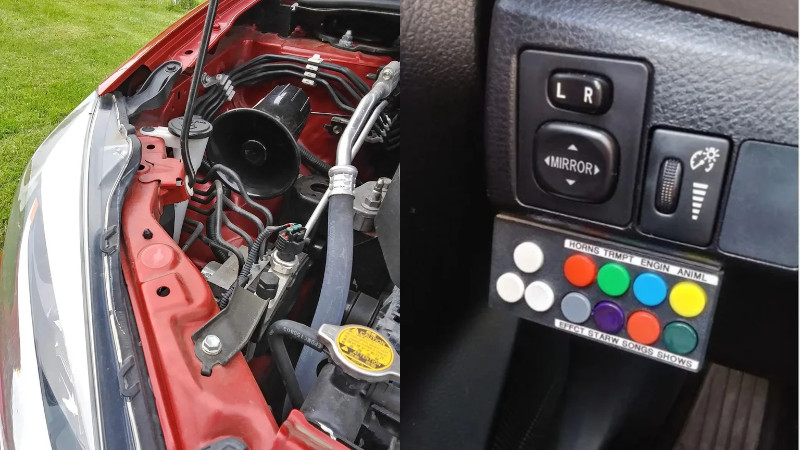
- A separate button panel for novelty or programmable sounds
In simple terms, the horn button or a dedicated switch tells the system which sound to play. Some setups switch between factory horn and aftermarket horn. Others let the driver trigger multiple sound effects from a control panel. A few programmable musical horns even let users choose songs or add custom sequences. So yes, technically, your car can go from “friendly beep” to “mini concert” with the flip of a switch. Whether it should is where judgment enters the chat.
Popular Types of Custom Car Horns That Make Many Sounds
1. Dual-Tone Electric Horns
These are one of the easiest upgrades. Instead of a flat, single note, they produce a richer two-tone sound. They are popular because they sound stronger than stock horns without demanding a giant compressor tank or a circus-grade wiring project. For many daily drivers, this is the sweet spot between practical and noticeable.
2. Air Horns
Air horns use compressed air to create a much louder and more dramatic tone. Some are compact enough for regular passenger vehicles, while others are big, bold, and clearly intended to announce your arrival like royalty entering a medieval banquet hall. Air horns are especially popular on trucks, Jeeps, and show vehicles.
3. Train Horn-Style Systems
These are the heavy hitters. A train-style horn setup is designed to produce an extremely loud, commanding blast. The sound can be impressive, but it also lands closest to the legal danger zone. Many owners keep the original horn intact and use a toggle setup so the factory horn still functions normally. That is often the smarter route.
4. Musical Horns
This is where things get delightfully ridiculous. Musical horns can play pre-programmed songs, novelty melodies, or even a range of chime effects. Some specialty models offer dozens of built-in tunes and allow extra programming. These are most at home in parades, shows, private events, and hobby builds.
5. Electronic Multi-Sound Horn Systems
These systems may include animal sounds, chimes, programmable effects, or multiple warning tones selected through a controller. They are versatile and entertaining, but they also require the most restraint. Just because your car can sound like a rooster, police-style wail, and a marching band in under three seconds does not mean public traffic wants the demo.
Key Features to Look For Before You Buy
A great custom car horn is not just about volume. In fact, loudness alone can be a trap. What matters is how the system fits your vehicle, how reliably it works, and whether it can be used legally and responsibly.
Sound Variety
If your goal is a horn that makes many sounds, start by checking how many tones, songs, or effects the system actually includes. Some “multi-sound” products only switch between two notes. Others offer dozens of songs or effects. Read the product description carefully so you do not end up ordering what you thought was a concert hall and receiving what is basically an aggressive kazoo.
12-Volt Compatibility
Most passenger vehicles use a 12-volt system, and many aftermarket horns are designed around that standard. Still, confirm compatibility, especially if you are installing the horn in a classic car, off-road build, motorcycle, or specialty vehicle.
Relay and Fuse Requirements
This is not glamorous, but it matters. Horns can draw enough current that they should be wired through a relay and protected by the correct fuse. Skipping this step is a classic shortcut that can lead to poor performance, blown fuses, or damaged wiring. The horn may sound awesome for about three minutes, which is not the kind of short-lived fame you want.
Mounting Space
Compact electric horns are usually easier to mount than air horn systems with trumpets and compressors. Measure available space under the hood, behind the grille, or in a protected area before buying. A horn that looks perfect online can become a very awkward piece of garage décor if it does not physically fit your vehicle.
Weather Resistance
Water, grime, salt, and heat are not kind to aftermarket electrical parts. Look for durable housings, solid mounting hardware, and installation instructions that account for moisture and exposure.
Sound Control
Some of the best systems give you options: a toggle switch, a separate button, or a controller that lets you choose which sound plays. That matters because the most useful setup is not the one that is loudest all the time. It is the one that gives you the right sound at the right moment.
Installation Basics: What the Process Usually Involves
Installing a custom horn that makes many sounds is not always difficult, but it is rarely just “plug it in and live your truth.” A basic installation often includes:
- Disconnecting battery power before wiring
- Finding a secure mounting point away from excessive heat and water
- Installing a relay in a dry location
- Running power through the proper fuse
- Using appropriate wire gauge for current demand
- Grounding the horn or compressor correctly
- Testing both the factory horn and the custom horn
- Securing all wires away from moving parts
Air horns add more complexity because they may need a compressor, tubing, and extra room for trumpets or air storage. Electronic musical horns may require a control box or separate button panel. And newer vehicles can complicate matters further if the horn signal is tied into modules rather than a simple old-school switch.
If you are comfortable with relays, fuses, grounding, and routing wires cleanly, this may be a DIY-friendly project. If not, paying a qualified installer is often money well spent. Nothing says “I should have hired someone” quite like a horn that randomly yodels every time you lock the doors.
Is a Custom Multi-Sound Car Horn Legal?
This is where things get real. In many U.S. jurisdictions, a vehicle horn must be in good working order, audible from a certain distance, and controllable by the driver. A very common legal pattern is that the horn must be audible from at least 200 feet under normal conditions. Many laws also prohibit sirens, whistles, or sounds that are unreasonably loud or harsh, especially if they imitate emergency vehicles.
Translation: a custom horn is not automatically illegal, but how it sounds, how it is used, and whether your factory horn remains functional can all matter. Novelty horns, musical horns, and train-style horns often enter gray areas fast. Some setups are fine on private property, at car shows, or off-road, but not ideal for normal street use.
The safest rule is simple: keep your stock horn working, use custom sounds responsibly, and check your state and local regulations before installing anything dramatic. If a sound could be mistaken for a police siren, ambulance tone, or other emergency warning, that is a giant red flag, not a fun design challenge.
Best Use Cases for a Car Horn That Makes Many Sounds
Daily Driver with Personality
A dual-tone or switchable courtesy horn can improve your daily driving experience without becoming a public nuisance. This is a great choice for drivers who want a little personality and a stronger, clearer signal.
Show Car or Parade Vehicle
Musical and programmable horns really shine here. At a show, novelty counts, and a many-sounds horn becomes part of the vehicle’s character. Just do not test all 34 songs at once unless the event specifically awards “Most Likely to Cause Confused Smiling.”
Truck or Off-Road Build
Larger vehicles often have more room for compressors and air horn hardware. These builds can handle bolder systems, especially when drivers want extra presence or a rugged custom look.
Classic Car Restoration
Some owners want a modern horn upgrade while keeping vintage style. In these cases, a hidden relay, cleaner wiring, and a discreet secondary horn can improve reliability without spoiling the classic appearance.
Common Problems and How to Avoid Them
Blown Fuses
This often happens when the horn draws more current than the circuit was designed to handle. Use the recommended fuse and wiring layout.
Weak or Inconsistent Sound
Poor grounding, undersized wire, bad relay connections, or compressor issues can all cause weak output. If the horn sounds more embarrassed than assertive, check the electrical basics first.
Random Honking
A faulty relay, bad switch, sticky horn pad, or wiring short can trigger unwanted honking. This is funny exactly once, and only if it happens to someone else.
Fitment Issues
Always measure space before buying. Trumpets, compressors, and control boxes take room, and crowded engine bays are not known for their generosity.
Legal Trouble
The easiest way to avoid this is to keep the custom system secondary to your factory horn, avoid emergency-style tones, and use novelty sounds only where appropriate.
Should You Upgrade to a Custom Car Horn That Makes Many Sounds?
If you want better sound, more personality, and a horn setup that can do more than one sad little beep, the answer may be yes. A custom multi-sound horn can make a vehicle more expressive, more noticeable, and more fun to own. It can also become part of your build identity, especially if you enjoy shows, customization, or clever functional upgrades.
The trick is balance. The best custom horn setup is not the most obnoxious one. It is the one that works reliably, fits your vehicle, respects the law, and gives you options without causing chaos. Think of it like seasoning food: a little extra flavor is great, but dumping the whole jar on top is how everybody regrets dinner.
Experiences With a Custom Car Horn That Makes Many Sounds
Drivers who add a many-sounds horn often say the biggest surprise is not the noise itself, but how differently they begin using the horn. With a factory setup, the horn is usually an all-or-nothing device. It is either silent or it sounds like panic in button form. A custom setup changes that relationship. Owners who install a softer dual-tone option often report that they use the horn more politely in parking lots, at tight driveways, or when nudging a distracted driver at a stoplight. It feels less confrontational. Instead of sounding like you are declaring war over a missed green light, the tone can come across as a quick, clear heads-up. That difference matters more in daily driving than many people expect.
Show-car owners describe a very different experience. For them, a musical or programmable horn is part entertainment, part conversation starter. At meets and weekend events, people gather around not just to see the paint, wheels, or engine bay, but to hear what the car can do. Kids laugh. Adults suddenly become ten years old again. A driver may hit one novelty melody and instantly turn a normal parking-row moment into a little crowd scene. The horn becomes a feature, not just equipment. Of course, the best stories usually come from owners who know when to use it and when to leave it alone. The custom horn gets admired most when it feels like part of the build, not a nonstop button-mashing performance art experiment.
Truck and off-road enthusiasts tend to talk about presence. A stronger auxiliary horn gives them more confidence in situations where a larger vehicle can be overlooked by distracted drivers. Even when they rarely use the loudest mode, they like knowing it is there. Some describe it as the audio equivalent of carrying a very bright flashlight: you do not use it every minute, but when you need it, you are glad it is not weak. That said, experienced owners usually emphasize restraint. They learn quickly that the most powerful horn setting is not for everyday traffic drama. It is for those rare moments when being instantly noticed could genuinely matter.
There is also the learning curve nobody mentions in the product listing. A multi-sound horn system introduces a human factor: remembering which switch does what. Some first-time owners laugh about pressing the wrong setting and giving the neighborhood a theatrical blast when they only meant a small courtesy beep. Others discover that family members borrowing the car are deeply unprepared for a button panel that can trigger songs, animal noises, and an air horn with the emotional subtlety of a freight train. Over time, though, most settle into a routine. They keep one sound for normal driving, one for fun, and one reserved for very limited situations. Once that habit forms, the system feels less like a novelty gadget and more like a customized communication tool.
The most lasting experience, however, is usually emotional. A custom horn that makes many sounds adds character to a car in a way few upgrades can. It is interactive. It is memorable. It gives the driver a little extra connection to the machine. Even people who begin with pure curiosity often end up appreciating the practical side just as much as the playful side. They enjoy the stronger sound, the better control, and the ability to match the tone to the moment. When done well, the upgrade does not just make the car louder. It makes the car feel more personal. And in a world full of lookalike vehicles and forgettable factory beeps, that is a pretty satisfying thing.
Conclusion
A custom car horn that makes many sounds can be equal parts utility and personality upgrade. It can give your vehicle a stronger voice, more flexible tone options, and a custom touch that stands out whether you are in traffic, at a car meet, or rolling into a parade with way too much confidence. The smartest approach is to choose a system that matches your goals, fits your vehicle, keeps installation safe, and stays on the right side of common-sense legality.
Keep the factory horn working. Use relays, fuses, and proper wiring. Be careful with emergency-style sounds. And above all, remember that the best horn is not the one that scares half the county. It is the one that does its job well, sounds great, and only becomes the star of the show when you actually want it to.