Anger is one of the easiest emotions to feel and one of the hardest emotions to write well. That sounds unfair, but anger is a little dramatic like that. On the page, it can come out flat, repetitive, cartoonish, or so over-the-top that readers feel like they are being chased by a megaphone. You want fire, not a kitchen alarm that will not stop beeping.
The good news is that strong writing does not require you to scream in all caps, throw in ten exclamation marks, or make every character sound like they are auditioning for a soap opera. Great anger in writing feels specific. It has texture. It reveals personality. It shows what hurts, what matters, and what line has just been crossed.
Whether you are writing fiction, memoir, personal essays, journal entries, speeches, or even a strongly worded letter you wisely decided to revise before sending, the same principle applies: anger becomes powerful when it is shaped. Readers do not just need to know that someone is mad. They need to feel the heat, understand the cause, and see the consequences.
In this guide, you will learn ten easy ways to express anger in writing without sounding fake, stiff, or accidentally hilarious. We will also look at examples, common mistakes, and real-life writing experiences that show how anger behaves once it leaves your chest and enters a sentence.
Why Anger Works So Well on the Page
Anger creates movement. It speeds up decisions, sharpens conflict, and exposes values. A calm character can hide behind politeness for chapters. An angry character usually forgets the mask. That is why anger is such a useful writing tool. It reveals what your narrator, speaker, or character cannot tolerate anymore.
But here is the catch: anger without craft becomes noise. Anger with craft becomes tension, honesty, momentum, and emotional depth. That is the sweet spot we are aiming for.
1. Identify the Real Reason Behind the Anger
Before you write the angry sentence, figure out what is fueling it. Anger is often a cover emotion. Beneath it, there may be embarrassment, grief, fear, betrayal, disappointment, exhaustion, or plain old hurt. If you only write the surface emotion, the writing may sound generic. If you understand the deeper wound, the anger starts to feel human.
Ask questions like:
- What exactly triggered this reaction?
- What does the person believe was violated?
- Are they angry because they were insulted, ignored, rejected, lied to, or made powerless?
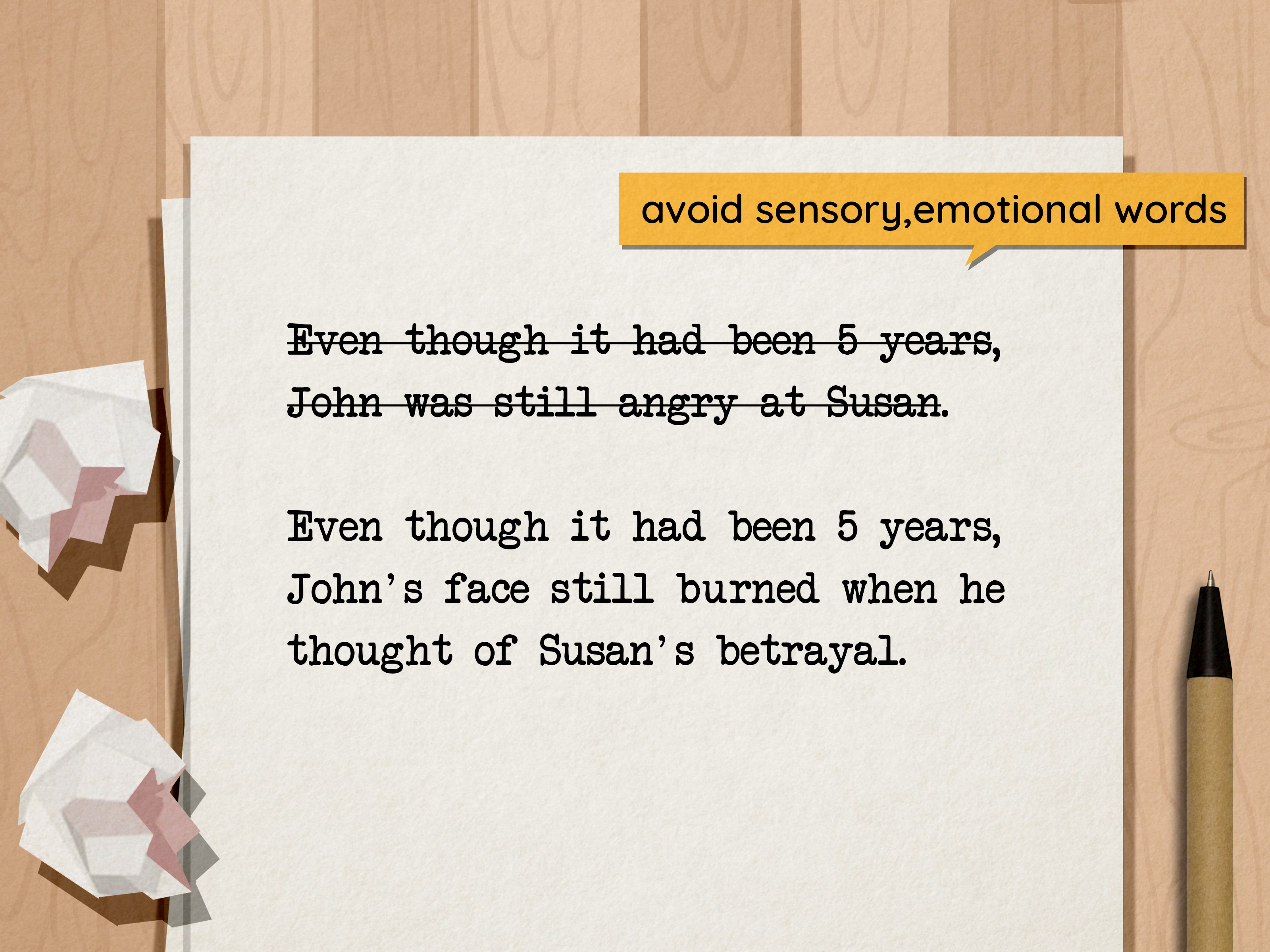
Flat version: She was furious when he forgot her birthday.
Better version: He forgot her birthday, and what stung was not the date itself. It was the sudden, humiliating realization that she had memorized everything about him while he could not remember one thing about her.
Now the anger has roots. Roots make scenes grow.
2. Use Specific Details Instead of Generic Angry Words
Words like mad, angry, furious, and upset are not wrong, but they are often only the headline. Readers usually need the article. Specific details create the emotion more effectively than labels do.
Think about what anger looks like in a room, in a body, or in a small ordinary moment. Did the coffee go cold while the character reread the message? Did someone fold a receipt into a sharp little square until the paper tore? Did a person answer politely while biting every word in half?
Instead of this: He was very angry.
Try this: He read the email twice, set his phone face down, picked it up again, and typed a reply so hard his thumb slipped across the screen.
Specificity is your best friend. It makes anger visible without announcing it with a marching band.
3. Let Body Language Do Some of the Work
Anger lives in the body. Shoulders tighten. Jaws clench. Hands shake. Movements get clipped, fast, or oddly precise. Sometimes anger gets loud. Sometimes it gets cold and still, which can be even scarier.
Body language helps readers feel emotion without being told what to feel. It also keeps the writing grounded in a scene rather than floating around in abstract emotion words.
Useful physical signals of anger:
- A locked jaw
- Tense shoulders
- Short, abrupt gestures
- A forced smile
- Stillness that feels unnatural
- Hands gripping objects too tightly
- A voice that becomes dangerously calm
Example: “I’m fine,” she said, stacking the plates so carefully it sounded like each one had personally offended her.
That line does a nice job of showing anger, and it gets bonus points for bringing in a little personality.
4. Choose Words That Sound Like the Emotion
Diction matters. The words you choose can make a passage feel sharp, blunt, bitter, explosive, or quietly toxic. If you want the writing to carry anger, choose verbs and nouns with force.
Compare these:
- He walked into the room.
- He stormed into the room.
- He shoved the door open and cut across the room.
Each version changes the emotional temperature. Anger often sounds better when the language becomes leaner and more active. Replace weak verbs with stronger ones. Cut filler. Prefer words with edge.
Just do not overdo it. If every sentence contains slammed, snapped, hissed, and exploded, your paragraph starts to sound like a fireworks factory. Variety keeps the emotion believable.
5. Make Dialogue Snap, Not Lecture
Real anger in dialogue rarely arrives as a beautifully organized six-point speech. People interrupt. They deflect. They repeat themselves. They say less than they mean or say the wrong thing because the right thing hurts too much.
Angry dialogue works best when it sounds alive. Keep it sharp. Let tension shape the rhythm. People in conflict often dodge the real issue before finally landing on it.
Weak dialogue:
“I am angry with you because your behavior has consistently shown disrespect, and I feel emotionally invalidated.”
Stronger dialogue:
“Don’t do that.”
“Do what?”
“Act like this is nothing.”
“I said I was sorry.”
“No. You said it fast so you wouldn’t have to mean it.”
That exchange has friction. Friction is gold.
6. Use Sentence Length and Punctuation to Control Heat
Anger changes rhythm. Calm writing often breathes in longer lines. Angry writing can tighten into shorter sentences, fragments, or blunt declarations. That shift in pace makes readers feel pressure.
Example: He had lied before, of course. Little lies. Convenient lies. But this one was different. This one had witnesses.
The short sentences hit harder because they arrive like footsteps down a hallway. You can also use repetition for emphasis, but use it deliberately.
Example: She waited. She listened. She let him finish. Then she told him exactly what she thought.
Punctuation can help too, but keep your dignity. One exclamation mark can be useful. Five exclamation marks look like your keyboard slipped on a banana peel.
7. Add Images, Comparisons, and Metaphors Carefully
Sometimes anger becomes more vivid when it is compared to something physical: heat, pressure, static, splinters, a storm, a fuse, a bruise you keep pressing. Figurative language can turn a common emotion into a fresh image.
Example: His anger sat under his ribs like a lit match in a dry drawer.
That image gives the reader more than information. It gives sensation. But choose your comparisons carefully. Clichés such as “boiling with rage” or “seeing red” can work in moderation, yet they rarely surprise anyone. Fresh images are memorable because they feel earned by the voice of the piece.
If you are writing poetry or lyrical prose, metaphor can carry a lot of emotional weight. If you are writing a professional complaint or personal essay, use it more lightly. Match the image to the form.
8. Let Subtext Carry Part of the Anger
Not all anger should be spoken directly. Sometimes the strongest expression of anger is what a writer allows to hover beneath the line. Subtext is especially useful when the character cannot safely say what they mean, when the relationship is complicated, or when politeness is acting as a thin tablecloth over a very messy table.
Example: “Take your time,” he said, checking his watch for the third time.
That line is not openly explosive, but the irritation is obvious. Subtext makes writing feel smarter because it trusts the reader to participate. It also reflects real life, where many people express anger indirectly through understatement, sarcasm, restraint, or strategic silence.
9. Match the Anger to the Purpose and Audience
Not all writing should express anger in the same way. A novel scene, a journal entry, an op-ed, and a workplace email do not play by identical rules. The smartest writers adjust tone based on purpose and audience.
Here is a simple breakdown:
- Fiction: show emotion through scene, character behavior, and dialogue.
- Personal essay or memoir: be honest, but shape the experience so the reader can follow it.
- Journal writing: be raw first, then reflective if you want insight.
- Professional writing: stay clear, specific, and controlled. State facts, impact, and desired action.
In other words, a furious journal entry might say, “I am tired of being treated like an afterthought.” A professional email about the same issue might say, “I want to address a pattern that has affected deadlines and communication.” Same frustration. Different outfit.
10. Write Hot, Revise Cool
This may be the most useful tip of all. First drafts can carry genuine heat, which is great. Revision gives that heat shape. If you write while angry, let yourself be honest. Then come back later and edit with a calmer brain.
During revision, ask:
- Is this intense or just repetitive?
- Did I explain too much?
- Have I replaced feeling with ranting?
- Does the anger reveal character, or does it flatten character?
- Is there one sharper image or line that could do the work of three weaker ones?
Strong revision keeps the truth while removing the smoke. That is how raw emotion becomes readable and powerful.
Common Mistakes to Avoid
- Telling instead of showing: saying “he was angry” over and over gives the reader the label, not the experience.
- Using all caps as a personality trait: this usually weakens impact instead of strengthening it.
- Making every angry character sound the same: one person goes silent, another gets sarcastic, another becomes terrifyingly polite.
- Overwriting: too many violent verbs, too many metaphors, too much drama can turn anger into parody.
- Ignoring the cause: readers connect more deeply when they understand what the anger protects or mourns.
Quick Example: Weak vs. Strong Anger Writing
Weak: Marcus was furious at his brother for selling the house. He yelled a lot and was extremely mad.
Strong: Marcus stared at the SOLD sign until the red letters blurred. “You sold it,” he said, too quietly. His brother started talking about timing, market value, practical decisions. Marcus laughed once, a dry, unbelieving sound. “You sold our mother’s house,” he said, and this time the word our landed like a brick.
The second version gives us scene, pacing, emotional context, and a detail that carries the real wound.
Experiences Writers Often Have When Trying to Put Anger on the Page
Writing anger is not just a craft issue. It is also an experience issue. Many writers discover that anger behaves differently on paper than it does in the body. In life, anger feels immediate, hot, and obvious. On the page, it can shrink, blur, or come out wearing a disguise.
One common experience is writing a scene that feels explosive in your head but looks strangely dull in draft form. This usually happens because the writer knows the backstory so well that they forget the reader does not. The emotion is real, but the page is missing the trigger, the detail, or the context that would let the reader feel it too.
Another common experience is the opposite: the draft comes out so intense that it feels more like a rant than a piece of writing. Many people who journal through anger know this pattern. You start with one sentence, and suddenly you are five paragraphs deep, accusing a lamp, a sandwich, and possibly the entire month of February. Oddly enough, that draft can still be useful. It gets the emotion out. Later, revision helps you discover the strongest lines hiding inside the storm.
Writers also learn that anger is rarely pure. When people write about family conflict, betrayal, breakups, workplace disrespect, or public injustice, they often begin with fury and end up uncovering sadness, fear, shame, or disappointment. This is not a failure. It is usually the moment the writing gets better. Anger may open the door, but complexity is what keeps readers inside the room.
There is also the very human experience of being afraid to sound too angry. Some writers soften every line because they worry about being judged. Others go too hard because they are afraid subtlety will look weak. Most strong writing lands somewhere in the middle. It lets anger be visible without letting anger drive the whole car into a ditch.
Over time, many writers notice that their best angry writing is not the loudest. It is the clearest. It contains one exact image, one honest sentence, one well-timed silence, or one line of dialogue that reveals everything. That is the strange magic of writing anger: the page does not always need more volume. It usually needs more precision.
So if your first attempt feels awkward, melodramatic, too quiet, too bitter, or weirdly funny in the wrong places, welcome to the club. That is not evidence that you cannot write anger. It is evidence that you are learning how to shape one of the messiest emotions humans have. And frankly, messy emotions are excellent material. They just need a good editor.
Conclusion
If you want to express anger in writing, do not aim to be louder. Aim to be sharper. Focus on the real cause of the emotion, use concrete details, let body language and dialogue carry tension, choose words with force, and control rhythm with sentence structure. Most of all, remember that anger becomes compelling when it reveals something true.
Great anger writing does not merely shout. It exposes. It clarifies. It makes readers feel the sting, the pressure, the unfairness, or the heartbreak underneath the heat. Whether you are writing fiction, essays, journals, or professional communication, the strongest anger on the page is not random noise. It is emotion with direction.
Write it honestly. Revise it intelligently. And maybe do not hit send on the first draft while still pacing the kitchen.