Depression and anxiety are not exactly the kind of houseguests you invite over for coffee. They arrive unannounced, rearrange your furniture, eat the last emotional granola bar, and somehow convince you that opening an email is a full-contact sport. For years, I tried to explain what living with them felt like, but words often stood at the door looking awkward, holding a casserole, unsure what to do next.
So I drew.
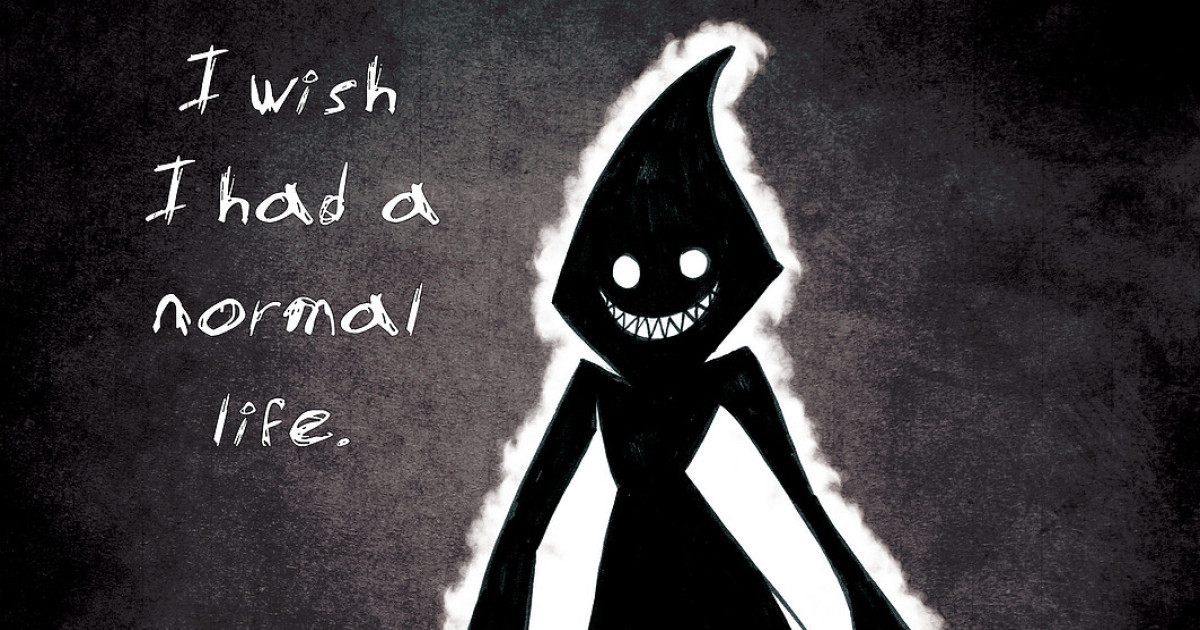
I illustrated my journey through depression and anxiety in a book because pictures could say what my mouth could not. A shadow pressing on my chest. A brain full of bees. A tiny version of myself standing under a thundercloud while everyone else appeared to be enjoying a sunny picnic. Illustration gave shape to invisible pain, and once something had shape, I could finally point at it and say, “There. That is what I have been carrying.”
This article explores the emotional, creative, and mental-health side of turning depression and anxiety into illustrated storytelling. It is not a medical guide or a magical cure wrapped in watercolor paper. It is a personal, research-informed reflection on why creative expression, journaling, art-making, therapy, community, and honest storytelling can help people understand their inner world without needing to make it pretty first.
Why Depression And Anxiety Can Be So Hard To Explain
Depression is more than sadness. It can affect sleep, appetite, concentration, energy, motivation, memory, and the ability to feel pleasure. Anxiety is more than ordinary worry. It can show up as racing thoughts, panic, restlessness, muscle tension, avoidance, stomach issues, and a constant sense that something terrible is preparing to tap-dance across your life.
The tricky part is that both conditions can be invisible. A person may look “fine” while privately negotiating with their brain like a tired lawyer at 2 a.m. Depression may whisper that nothing matters. Anxiety may shout that everything matters immediately and catastrophically. Together, they can create a mental weather system where even simple tasks feel strangely heroic.
That invisibility is one reason illustrated mental health books can be powerful. An image can translate emotional pain into something recognizable. A messy room can become a metaphor for brain fog. A tangled ball of yarn can represent racing thoughts. A small character sitting beside a giant black dog can communicate depression faster than a paragraph full of clinical language.
The First Sketch: Naming The Monster
The first illustration in my book was not elegant. It was a scribble of a person buried under a blanket while a massive speech bubble hovered overhead saying, “You should be doing more.” That drawing looked like it had been made by a raccoon with a marker, but it was honest. And honesty, I learned, is more important than polish when creating from pain.
Depression and anxiety often grow stronger in silence. They like secrecy. They prefer dim rooms, unanswered messages, and the phrase “I’m just tired.” Drawing disrupted that silence. Instead of saying, “I am broken,” I could sketch a scene and ask, “What is this feeling trying to tell me?”
That shift mattered. I stopped treating my symptoms as personal failures and started seeing them as signals. Exhaustion was not laziness. Avoidance was not weakness. Numbness was not proof that I did not care. These were signs that my mind and body needed attention, support, and compassionnot another motivational quote printed over a mountain.
How Illustration Became A Mental Health Language
Some emotions do not arrive in complete sentences. They arrive as colors, textures, pressure, temperature, movement, or strange little mental cartoons. Anxiety felt yellow and sharp. Depression felt blue-gray and heavy. Shame felt like a spotlight. Hope, when it appeared, looked embarrassingly tinylike a matchstick trying to heat a stadium.
By illustrating these sensations, I created a private dictionary. A cracked teacup meant emotional overwhelm. A backpack full of stones represented responsibilities. A tiny umbrella under a storm cloud showed self-care that was imperfect but still useful. Over time, these images became chapters in a visual memoir of survival.
Art Does Not Have To Be Beautiful To Be Useful
One of the biggest myths about creative expression is that you must be talented to benefit from it. This is nonsense wearing a beret. Art-making for mental health is not about producing museum-quality work. It is about externalizing what is happening inside you so you can observe it with a little more distance and a little less shame.
Even a stick figure can be emotionally accurate. A crooked line can be truthful. A chaotic collage can say, “My thoughts are loud today,” better than a perfectly shaded portrait ever could. The goal is not perfection. The goal is contactwith yourself, with the moment, with the truth you have been avoiding because it was too large to hold all at once.
Depression, Anxiety, And The Need For A Story
When you are inside depression, time can flatten. Yesterday, today, and tomorrow may feel like the same gray hallway. Anxiety does the opposite: it throws you into a hundred possible futures, most of them involving disaster, embarrassment, or mysteriously forgetting how doors work.
A book creates sequence. It gives the chaos a beginning, middle, and not-quite-finished-but-still-moving ending. That structure helped me see patterns. I noticed which situations made symptoms louder, which relationships made me feel safe, which habits helped, and which coping strategies were actually just avoidance wearing sunglasses.
Turning mental health struggles into a book did not make them cute. It made them visible. And once they were visible, they became less mystical. I could revise a page. I could redraw a scene. I could return to an old image and realize, with surprise, “I do not live there anymore.”
What Research Suggests About Creativity And Mental Health
Creative practices such as drawing, journaling, music, movement, and expressive writing are increasingly recognized as meaningful tools for emotional well-being. They are not replacements for professional treatment, but they can support self-awareness, stress reduction, emotional processing, and communication.
Art therapy, when facilitated by a trained professional, uses art-making within a therapeutic relationship to help people explore emotions, build coping skills, reduce distress, and communicate experiences that may be difficult to express verbally. Self-directed creative expression is different from formal art therapy, but it can still be a valuable self-care practice.
Expressive writing also has a strong history in psychological research. Writing about thoughts and feelings can help some people organize emotional experiences, reduce mental clutter, and notice patterns in mood and behavior. For someone creating an illustrated mental health book, words and images can work together like two slightly sleep-deprived coworkers trying to file the same emotional paperwork.
The Book As A Mirror, Not A Mask
At first, I worried readers would find the book too dark. Then I worried it was not dark enough. Then I worried the drawings were too simple, too personal, too weird, too honest, too dramatic, too quiet, and possibly too dependent on tiny clouds with faces. Anxiety is nothing if not a very committed editor.
Eventually, I realized the book was not supposed to make me look impressive. It was supposed to make me recognizable. The pages became a mirror, not a mask. They showed the fear of canceling plans again. The guilt of not replying. The strange relief of being alone. The ache of wanting help but not knowing how to ask for it. The awkward comedy of trying to meditate while your brain narrates every mistake you made in 2009.
That honesty made the project feel less like confession and more like connection. When people saw the illustrations, many said, “I know that feeling.” Those four words can be medicine. Not the entire prescription, of course, but definitely the little cup of water that helps you swallow it.
How Drawing Helped Me Notice Symptoms Earlier
One unexpected benefit of illustrating my journey was that it helped me recognize warning signs sooner. Before the book, I often noticed depression only after it had already moved in, unpacked, and started using my favorite mug. Through drawing, I began to catch the early clues.
I drew myself shrinking in crowded rooms. I drew my phone turning into a brick. I drew unopened mail growing teeth. These images helped me identify patterns: isolation, avoidance, irritability, sleep disruption, loss of interest, overthinking, and the classic anxiety hobby of rehearsing conversations that never happen.
When I could spot those signs early, I had more choices. I could message a friend, go outside, schedule therapy, reduce commitments, eat something with actual nutrients, or take a break before my brain filed a formal complaint. Small interventions mattered. They did not erase everything, but they created a little space between me and the spiral.
What Helped Alongside Art
Illustration helped me process my experience, but it was not the whole support system. Depression and anxiety often require a combination of tools. For many people, professional therapy, medication, support groups, healthy sleep routines, movement, reduced substance use, social connection, mindfulness, and crisis resources can play important roles.
Therapy helped me challenge distorted thoughts. Medication, for some people, can reduce symptoms enough to make coping skills more accessible. Supportive relationships made the world feel less like a locked room. Sleep, food, and movement were annoyingly effective basicsthe kind of advice that sounds too simple until you realize your body is not a decorative accessory for your brain.
When To Seek Help
If depression or anxiety lasts for weeks, interferes with daily life, affects work or relationships, causes panic, leads to substance misuse, or includes thoughts of self-harm, it is time to reach out for professional support. Asking for help is not overreacting. It is maintenance. Even cars get check-engine lights, and nobody tells a Honda to “just think positive.”
If you are in immediate danger or thinking about suicide or self-harm in the United States, call or text 988 for the Suicide & Crisis Lifeline. If you are outside the United States, contact local emergency services or a crisis hotline in your country.
How To Start Your Own Illustrated Mental Health Project
You do not need a publisher, a perfect sketchbook, or the ability to draw hands that do not look like confused starfish. Start small. Choose one feeling and give it a shape. Is your anxiety a swarm, a siren, a crowded room, a raccoon in a tiny office? Is your depression a fog, a stone, a locked door, a couch that has developed gravitational powers?
Try drawing one page a day for a week. Add a sentence beneath each image. Do not judge the art. Ask what it reveals. Over time, you may see themes: pressure, loneliness, fear, rest, resilience, humor, tenderness. These themes can become chapters.
Simple Prompts For Visual Journaling
Draw your mood as weather. Draw your anxiety as an object you can put on a shelf. Draw depression as a room, then draw one window in that room. Draw what support feels like. Draw what you wish people understood. Draw the smallest hopeful thing you noticed today, even if it is just a decent cup of coffee behaving heroically.
These prompts are not about forcing optimism. They are about building emotional vocabulary. Sometimes the most healing sentence is not “Everything is fine.” Sometimes it is “This is hard, and I am still here.”
Publishing A Personal Mental Health Story Responsibly
Creating a book about depression and anxiety requires care. Personal storytelling can be powerful, but it should avoid romanticizing suffering or presenting one person’s path as a universal cure. What helped me may not help everyone. What felt safe for me to share may feel too private for someone else. Boundaries are part of the art.
Before publishing, I asked myself several questions: Am I sharing this to connect or to reopen a wound? Have I protected other people’s privacy? Am I describing difficult experiences without turning them into instructions? Have I included hope without pretending recovery is a straight line? Have I left room for professional help, medication, therapy, and different experiences?
Responsible mental health writing should tell the truth without making pain glamorous. Depression is not a quirky aesthetic. Anxiety is not a productivity hack. Healing is not always cinematic. Sometimes it is brushing your teeth, answering one message, making one drawing, and letting that be enough for the day.
The Strange Humor Of Surviving
Humor became a thread throughout the book because my mental health journey was painful, but it was also absurd. Anxiety once convinced me that a two-word text message contained seventeen hidden meanings and possibly a curse. Depression made laundry feel like an Olympic event sponsored by despair. My brain could be terrifying, yes, but it could also be ridiculous.
Laughing at the absurdity did not minimize the seriousness. It gave me oxygen. Humor let me sit beside the pain instead of drowning in it. In the illustrations, I drew anxiety as a tiny frantic manager with a clipboard. I drew depression as a blob who kept suggesting naps in a suspiciously persuasive voice. These characters helped me separate myself from my symptoms. I was not the blob. I was the person noticing the blob.
What Readers May Take From A Book Like This
An illustrated book about depression and anxiety can help readers feel less alone. It can give family members a clearer picture of what their loved one is experiencing. It can help therapists and clients discuss emotions that are difficult to name. It can remind people that recovery is not always dramatic; often, it is quiet, repetitive, and deeply brave.
The best compliment I received was not “Your drawings are beautiful.” It was “I showed this page to someone because I could not explain it myself.” That is the real power of illustrated storytelling. It becomes a bridge. Not a cure. Not a shortcut. A bridge.
Extra Personal Experiences: What It Felt Like To Turn Pain Into Pages
At the end of the book-making process, I understood something I wish I had known earlier: creating did not rescue me all at once. It rescued me in inches. One page gave me five minutes of focus. Another page helped me cry after weeks of feeling numb. Another made me laugh because the sad little character I drew looked like a potato who had just read bad news. Healing, apparently, sometimes wears a potato costume.
There were days when I could not draw anything meaningful. On those days, I drew boxes, clouds, spoons, shoes, or a single line crossing the page. I learned not to force revelation. Some days the page was a diary. Some days it was a napkin for emotional crumbs. Some days it was simply proof that I had touched the world with a pen.
One of the hardest experiences was illustrating loneliness. Not the dramatic kind where rain streaks down a window and violins appear from nowhere, but the ordinary kind: sitting in a room with unread messages, wanting connection, and feeling too heavy to reach for it. I drew myself as a little island with a mailbox. The mailbox was full, but the bridge was missing. That picture hurt. It also helped me understand that I did not need to wait until I felt “better” to ask for connection. I could send one honest message: “I’m having a hard week. Can you sit with me for a while?”
Another recurring image was a staircase. Depression made every step feel enormous. Anxiety stood at the top yelling about all the ways I could fall. In early drawings, I showed myself at the bottom, overwhelmed. Later, I drew the same staircase with tiny lights along the railing. Nothing magical had happened. The stairs were still there. But I had gathered tools: therapy, rest, boundaries, medication conversations, walks, meals, friends, and creative work. The staircase became climbable.
Making the book also changed my relationship with shame. Shame thrives on vague accusations: “You are too much. You are not enough. You should have fixed this by now.” But a drawing asks for specifics. What does “too much” look like? What color is “not enough”? Where does “should” live in the body? Once I turned shame into a character, it became less like a judge and more like a grumpy tenant I did not have to obey.
I also learned that readers do not need a perfect ending. In fact, a perfect ending might have felt dishonest. My journey through depression and anxiety did not conclude with me standing on a mountaintop in linen pants, fully healed and suspiciously backlit. The more truthful ending was smaller: I learned to notice the weather inside me. I learned to ask for help sooner. I learned to make art before the feelings became unmanageable. I learned that a bad day is not a failed life.
The book became a record of survival, but also a record of tenderness. There are pages where the main character does not defeat the monster. She sits beside it with tea. She takes a shower. She opens the curtains halfway. She lets a friend in. She draws the monster smaller the next day. That, to me, is recovery: not the disappearance of struggle, but the growth of choice, language, support, and self-compassion.
Illustrating my journey through depression and anxiety taught me that pain can become a page, a page can become a conversation, and a conversation can become a doorway. I still have difficult days. I still meet the blob. The tiny anxious manager still owns a clipboard. But now I have a pencil, a voice, and a book full of proof that I have been through dark rooms beforeand found ways to draw windows.
Conclusion
I Illustrated My Journey Through Depression & Anxiety In A Book is more than a title. It is a reminder that invisible struggles deserve visible language. Illustration can help translate sadness, fear, numbness, overwhelm, and hope into images people can understand. While creative expression is not a substitute for therapy, medical care, or crisis support, it can be a meaningful companion on the road toward self-awareness and healing.
For anyone living with depression and anxiety, your story does not have to be polished before it matters. You do not need perfect words. You do not need perfect drawings. You can begin with one line, one page, one honest mark. Sometimes that is how the light gets innot as a grand sunrise, but as a tiny sketch of a window.
Note: This article is for educational and personal storytelling purposes only. It is not a substitute for diagnosis, therapy, or medical treatment. If you are in crisis in the United States, call or text 988 for immediate support.