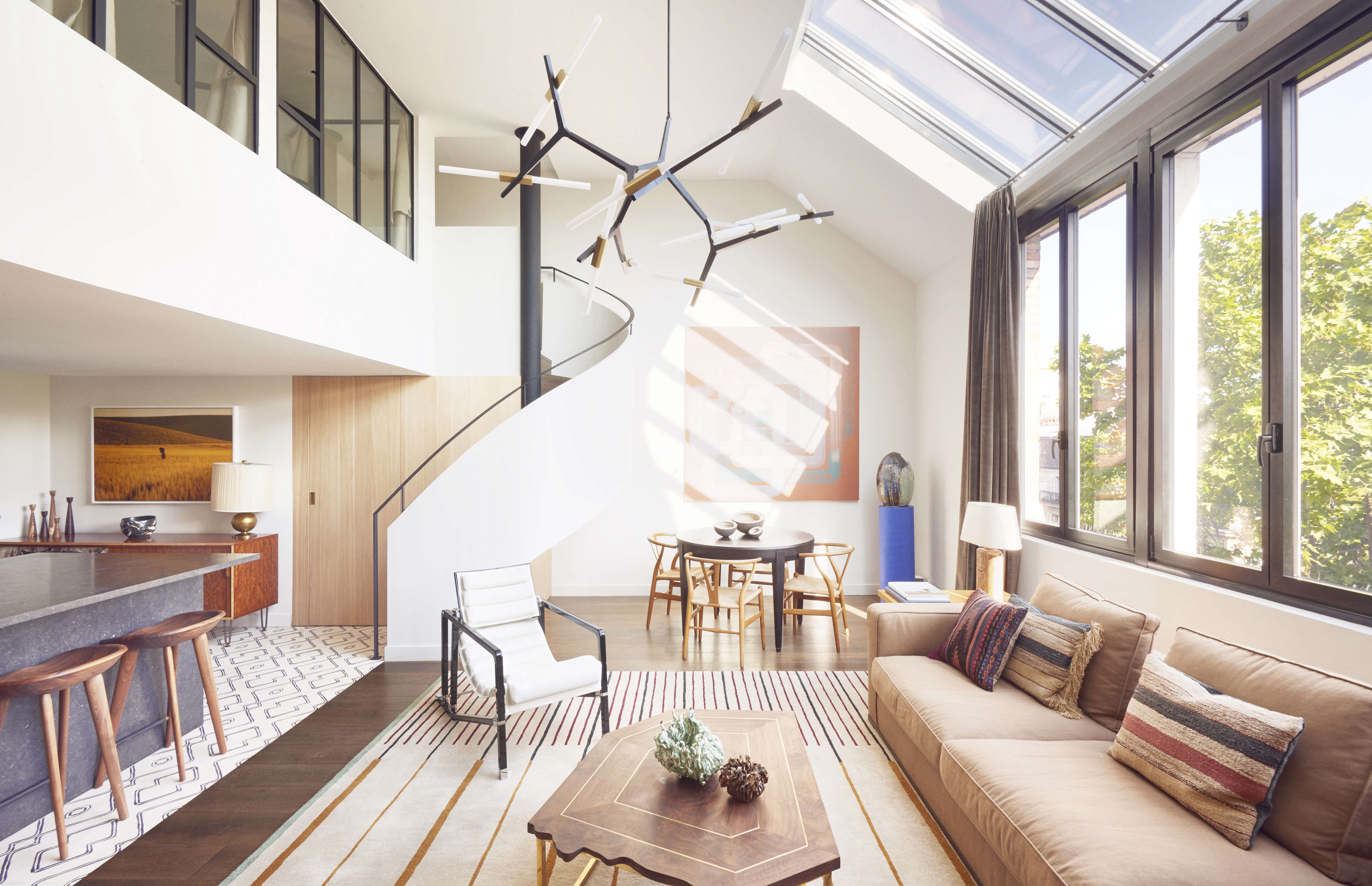
Some rugs whisper. Some rugs shout. And then there is Andrée Putman’s Two Lines Rug, which does something far more sophisticated: it raises one eyebrow from across the room and lets the architecture do the talking.
Designed by the legendary French interior and product designer Andrée Putman and produced by Christopher Farr, the Two Lines Rug is a masterclass in restraint. It does not rely on floral drama, overly busy patterning, or the “look at me” gymnastics of trend-driven décor. Instead, it uses the simplest possible visual languagetwo bold linesto create balance, direction, and quiet tension. In other words, it is minimalism with excellent posture.
Putman, known for her graphic sensibility, refined black-and-white contrasts, and world-shaping interiors such as Morgans Hotel in New York, built a career around the idea that luxury does not have to be loud. The Two Lines Rug continues that philosophy. It is a floor covering, yes, but it is also a design statement, a spatial tool, and a surprisingly powerful lesson in how little a room sometimes needs.
What Is Andrée Putman’s Two Lines Rug?
The Two Lines Rug is a contemporary designer rug associated with Andrée Putman’s archive and produced by Christopher Farr, a company known for treating rugs as serious design objects rather than soft rectangles people step on while carrying coffee. The current product specifications list the rug at a pictured size of 2.44 x 3.05 meters, or 8 x 10 feet, with a hand-knotted weave and handspun wool construction. Custom options are also available, making it adaptable for different interiors.
Earlier design listings have described the piece as part of a limited-edition context, emphasizing its collector appeal. Whether viewed as an art rug, a luxury wool rug, or a minimalist floor piece, the design speaks the same language: calm geometry, disciplined proportion, and the kind of elegance that never needs to clear its throat.
The Genius of Two Lines
At first glance, two lines may sound almost suspiciously simple. Anyone with a pencil and a receipt can draw two lines. But in Putman’s world, simplicity is not emptiness. It is editing. It is the ability to remove everything unnecessary until what remains feels inevitable.
The Two Lines Rug uses linear graphics to organize space. The lines create movement across the surface, but they do not overwhelm the room. They guide the eye without bossing it around. This is where Putman’s design intelligence becomes visible. The rug has enough structure to anchor furniture, yet enough quietness to coexist with art, sculptural chairs, wood flooring, marble, glass, or a moody reading corner that thinks it is in a French film.
Minimalism That Still Feels Warm
Many minimalist objects risk feeling cold, especially when they lean too hard into blankness. The Two Lines Rug avoids that problem through materiality. Handspun wool brings texture, warmth, and slight natural variation. A hand-knotted rug is never perfectly machine-flat in spirit; it carries evidence of craft. That subtle human quality gives the clean geometry a softer emotional landing.
In practical terms, this means the rug can work in a highly modern apartment without making the room feel sterile. It can also bring discipline to a layered interior without erasing its personality. Think of it as the design equivalent of a tailored black coat: simple, useful, and somehow better than whatever everyone else wore to dinner.
Who Was Andrée Putman?
Andrée Putman was born in Paris in 1925 and became one of the most influential design figures of the late 20th century. She was an interior designer, product designer, entrepreneur, and cultural force with a talent for making restraint feel glamorous. Her work crossed hotels, boutiques, private homes, furniture, objects, and scenography.
Putman gained international recognition through projects that challenged conventional luxury. Her best-known American landmark was Morgans Hotel in New York, designed in 1984 for Ian Schrager and Steve Rubell. The hotel helped define the boutique hotel movement, replacing heavy, old-fashioned grandeur with intimate scale, monochrome graphics, gray tones, sharp geometry, and a new kind of urban sophistication.
She was often associated with black and white, checkerboard motifs, and clean modern lines. But reducing her to a palette would miss the point. Putman was interested in contrast, rhythm, proportion, and the emotional confidence of a room that does not beg for approval.
Why the Two Lines Rug Feels So Putman
The Two Lines Rug feels unmistakably connected to Putman’s broader design philosophy. It is graphic, but not noisy. It is elegant, but not fragile. It is modern, but not trend-dependent. Most importantly, it proves that a rug can shape a room without behaving like wallpaper that fell on the floor.
Putman’s interiors often used strong visual systemsgrids, checks, lines, and monochrome contraststo bring order to space. The Two Lines Rug uses the same discipline in a quieter format. Instead of filling the field with pattern, it leaves room for silence. That negative space is part of the design. It allows furniture to breathe and gives the eye a place to rest.
A Rug as Architecture
Many rugs are decorative afterthoughts. The sofa arrives, the coffee table lands, the room looks unfinished, and someone says, “We need a rug.” The Two Lines Rug belongs to a different category. It behaves like a piece of architecture. It defines zones, suggests direction, and creates visual structure underfoot.
In an open-plan living room, for example, it can frame a seating area without building a wall. In a dining room, it can add graphic clarity beneath a table. In a bedroom, it can bring a calm, hotel-like precision without making the space feel impersonal. The lines are simple enough to adapt, but strong enough to matter.
Materials and Craft: Why Hand-Knotted Wool Matters
The listed construction of the Two Lines Rug is hand-knotted handspun wool. That matters for both quality and character. Hand-knotting is one of the most labor-intensive rug-making methods, and it typically produces rugs with durability, depth, and a tactile richness that flat printed surfaces cannot imitate.
Handspun wool also has a distinctive texture. Because the yarn is not mechanically uniform in the same way as many mass-produced fibers, it can create gentle variation in the finished surface. That variation is part of the rug’s charm. It keeps the clean lines from feeling too clinical and gives the design a living surface.
For homeowners, designers, and collectors, this combination of graphic minimalism and artisanal construction is the sweet spot. The rug looks modern, but it is made with traditional skill. It belongs equally to the world of contemporary interiors and the older world of textile craft. That is not a small achievement. Rugs have been trying to balance those two worlds for centuries, usually while being stepped on.
How to Style Andrée Putman’s Two Lines Rug
The beauty of a minimalist rug is that it plays well with many interiors, but that does not mean styling it requires no thought. A rug this restrained rewards careful placement. The goal is to let the lines feel intentional, not accidental.
In a Modern Living Room
Place the Two Lines Rug beneath a low-profile sofa, sculptural lounge chairs, and a simple coffee table in wood, stone, glass, or metal. Keep the surrounding palette calm: ivory, charcoal, taupe, black, warm gray, or natural oak. The rug’s linear design will add enough visual movement that you do not need a circus of throw pillows. One or two textured cushions will do. The pillows can relax; they are not auditioning for Broadway.
In a Dining Room
The rug’s 8 x 10-foot pictured size is well suited to many dining layouts, depending on the table dimensions. Its clean geometry can create a refined base under a rectangular dining table. A black table, walnut table, or pale oak table would all work beautifully. The key is to leave enough rug visible around the table so the lines remain part of the composition rather than disappearing under chair legs like a design secret nobody asked for.
In a Bedroom
In a bedroom, the Two Lines Rug can add quiet luxury. Place it under the bed so the lines extend into the visible walking area. Pair it with crisp bedding, soft lamps, and simple side tables. The result can feel like a boutique hotel suite, but warmer and more personal. Putman’s influence is especially useful here because her best interiors often understood how to make minimalism feel livable rather than severe.
In an Office or Studio
A designer rug with a strong linear motif can help organize a work area. Under a desk, the Two Lines Rug creates a subtle frame and adds softness to a room full of hard surfaces. It is especially effective in creative offices, architecture studios, consulting spaces, or home offices where the goal is to look serious without looking like the inside of a tax form.
Why Minimalist Rugs Are Still Relevant
Interior trends move fast. One year everything is bouclé, the next year everyone is pretending they discovered chrome. But minimalist rugs remain useful because they solve real design problems. They add comfort, absorb sound, define areas, and bring visual order without locking a room into a short-lived trend.
The Two Lines Rug is especially relevant because it avoids decorative overcommitment. It does not scream “2026,” “midcentury revival,” “coastal grandmother,” or “I saw this on social media and panicked.” Instead, it belongs to a longer tradition of graphic modernism. That gives it staying power.
Its restraint also makes it flexible. A homeowner can change artwork, lighting, chairs, or wall color while keeping the rug in place. Designers love pieces like this because they create continuity across evolving rooms. The rug becomes a stable design note, not a seasonal costume.
Two Lines Rug vs. Ordinary Geometric Rugs
There are many geometric rugs on the market, but not all geometry is created equal. Some geometric rugs are busy, high-contrast, and visually tiring. They look exciting online but become exhausting in real life, especially when paired with furniture, books, plants, pets, children, and the mysterious pile of mail that appears on every coffee table in America.
The Two Lines Rug takes a more intelligent approach. Instead of using geometry as decoration, it uses geometry as composition. The lines are not there merely to fill space; they structure it. That difference is subtle but important. It is the difference between a rug that matches a room and a rug that improves a room.
Is Andrée Putman’s Two Lines Rug Worth It?
For someone shopping only by price per square foot, a designer rug may seem indulgent. But for design collectors, architects, interior designers, and homeowners building a long-lasting interior, the value is broader. You are not simply buying wool. You are buying design authorship, craftsmanship, proportion, and a piece connected to one of the most important design minds of the modern era.
The Two Lines Rug is best for people who appreciate quiet luxury. It will not suit someone who wants a rug covered in tropical birds, neon zigzags, or motivational typography. But if your taste leans toward architectural calm, gallery-like rooms, refined materials, and pieces that reveal themselves slowly, this rug makes sense.
Care and Maintenance Tips
A hand-knotted wool rug deserves regular but gentle care. Vacuum it with care, avoiding aggressive brush settings that can disturb the fibers. Rotate it occasionally so sunlight and foot traffic wear evenly. Clean spills quickly with blotting rather than rubbing. For serious stains or periodic deep cleaning, use a professional rug cleaner experienced with hand-knotted wool.
If the rug is placed in a high-traffic area, a quality rug pad can help reduce movement and protect the structure. In sunny rooms, consider window treatments to reduce fading over time. The point is not to treat the rug like a museum object, but to respect the craft. After all, if something is elegant enough to make your sofa look better, it deserves better than being attacked with a random supermarket cleaner.
The Design Lesson Behind the Rug
The most powerful lesson of Andrée Putman’s Two Lines Rug is that good design does not always need complexity. Sometimes it needs confidence. Two lines, placed with intention, can do more than a dozen decorative gestures thrown together in panic.
This is why Putman’s work still feels fresh. She understood that luxury could be intelligent, that simplicity could be sensual, and that black, white, gray, and line could create entire emotional atmospheres. The Two Lines Rug carries that spirit into a single object. It is practical enough to live with and refined enough to study.
Experience: Living With an Andrée Putman-Inspired Rug
Imagine bringing the Two Lines Rug into a room that already seems finished. The sofa is there. The chairs are there. The lamp has finally stopped looking temporary. Yet something feels slightly unresolved, like the room is dressed but forgot shoes. Then the rug arrives, and suddenly everything has a center of gravity.
The first thing you notice is not drama. It is order. The two lines create a visual path across the floor, and your furniture begins to feel more deliberate. The coffee table no longer floats helplessly. The chairs seem to have joined a conversation. Even the empty space around the seating area feels designed, not accidental.
The second thing you notice is texture. A rug like this is not simply a graphic image. The wool softens the geometry. Under bare feet, it feels grounded and warm, not precious. That matters because minimalist interiors can sometimes look better in photographs than they feel in daily life. A hand-knotted wool rug helps close that gap. It brings touch back into the room.
After a few days, the rug starts influencing small decisions. You may remove one patterned pillow because the room no longer needs it. You may move a side table two inches because the line of the rug makes proportion more obvious. You may suddenly understand why designers talk about “editing” so much. The rug quietly teaches restraint. It does not scold you, but it does make your clutter look guilty.
Guests may not immediately say, “What a remarkable example of Putman-esque graphic minimalism.” Most people, thankfully, do not speak like auction catalogues at dinner. Instead, they may say the room feels calm, expensive, or very put together. That is the rug doing its job. It improves the atmosphere without demanding applause.
In daily use, the best part is its flexibility. Morning light makes the surface feel soft and architectural. Evening lamps make the lines more intimate. With books and flowers, the rug feels cultured. With a laptop, coffee mug, and real life scattered around it, it still holds the room together. That is the difference between minimalism as a style and minimalism as a tool.
Living with a rug like the Two Lines Rug can also change how you think about buying home décor. It encourages fewer, better decisions. Instead of filling space with objects that merely occupy it, you begin choosing pieces that clarify it. This is Putman’s quiet influence: she makes simplicity feel not like a compromise, but like a privilege.
Conclusion
Andrée Putman’s Two Lines Rug proves that a rug does not need elaborate patterning to become unforgettable. With hand-knotted wool, clean geometry, and the disciplined spirit of one of modern design’s great figures, it offers a rare combination of craft, intelligence, and visual calm.
For interiors that value restraint, proportion, and timeless sophistication, the Two Lines Rug is more than a floor covering. It is a design anchor. It brings order without stiffness, luxury without noise, and personality without performance. In a world crowded with décor trying too hard, two lines may be exactly enough.