Note: This article is written in standard American English for web publishing and is based on real public discussion around the viral classroom-name incident, combined with widely accepted education research on student identity, respect, belonging, and family-school communication.
When “Close Enough” Is Not Enough
There are tiny classroom moments that seem small to adults but feel enormous to children. A pencil snaps. A classmate laughs. A teacher sighs. Or, in this case, a teacher keeps calling a 7-year-old girl by the wrong name.
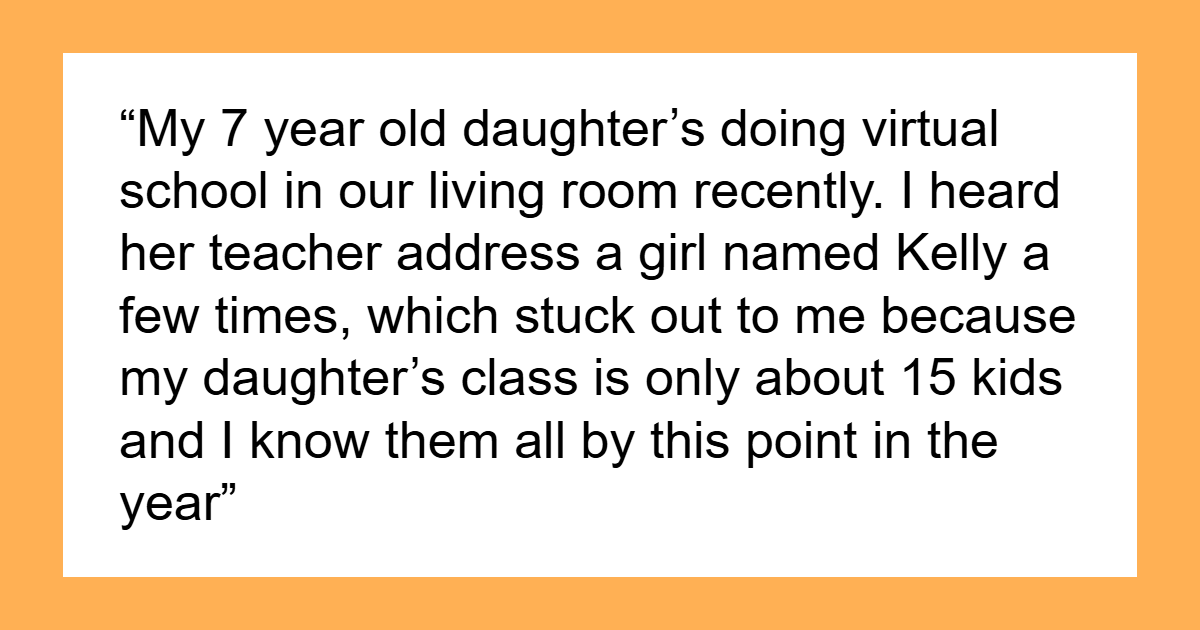
The viral story behind the headline “Dad Has Enough Of Teacher Calling Daughter ‘Kelly,’ Calls Her Out During Online Class” begins with a virtual classroom, a father listening from the living room, and a repeated mistake that had apparently gone on far longer than anyone realized. The girl’s name was Keeley, pronounced “Kee-lee.” Her teacher kept calling her Kelly.
At first glance, some readers might shrug. Keeley and Kelly are similar, right? Same general neighborhood. Same number of syllables. Nobody called her “Bartholomew the Third.” But names are not parking spots where “near enough” counts. A name is personal. It is how a child learns to answer the world. When an authority figure repeatedly gets it wrong after being corrected, the message can become louder than the mistake itself.
That is why the father’s reaction struck a nerve online. He did not burst into the virtual classroom like a courtroom attorney in pajama pants. According to the story, he first asked his daughter about it, learned that she had tried correcting the teacher before, sent an email, and encouraged his daughter to speak up politely one more time. Only after the teacher continued using the wrong name did he step in and say, essentially: this is Keeley, not Kelly.
The school’s response reportedly focused less on the teacher’s repeated error and more on the father “challenging authority” during class. And that is where the story became more than a funny internet squabble. It became a debate about respect, classroom power, parental advocacy, and whether children should be expected to quietly accept being renamed for adult convenience.
The Real Issue: A Name Is Not a Nickname Unless the Child Chooses It
One of the most important details in this story is that the child did not prefer “Kelly.” It was not a nickname. It was not a family joke. It was not a classroom shorthand she liked. It was simply not her name.
That distinction matters. Many children use nicknames happily. A student named Isabella may go by Izzy. A Benjamin may prefer Ben. A Katherine may insist on Kat, Katie, or, depending on the day, “Queen of the Snack Table.” But the key word is “prefer.” When a nickname is chosen by the child, it can feel warm and familiar. When it is imposed by an adult, especially after correction, it can feel dismissive.
In Keeley’s case, the problem was not one accidental slip. Teachers are human. They manage rosters, lesson plans, tech glitches, bathroom emergencies, and at least one child who believes a glue stick is a food group. Mistakes happen. But the story says the child had corrected the teacher repeatedly early in the year. The father then sent an email. The child tried again privately. Still, the teacher said Kelly.
That pattern changes the situation. A single mistake asks for grace. A repeated mistake after multiple corrections asks for accountability.
Why Correct Name Pronunciation Matters in School
Educators often talk about building relationships, creating belonging, and making students feel seen. Learning a student’s name is the starting line for all of that. It is the academic version of knocking before entering. It says, “I recognize you as a person, not just a seat on my roster.”
Research and education organizations have repeatedly emphasized that pronouncing students’ names correctly supports respect, inclusion, and classroom belonging. For children from multilingual, immigrant, minority, or culturally diverse backgrounds, a name may carry family history, language, identity, and pride. Even for a child with a name that is not culturally complex, being repeatedly misnamed by a teacher can still feel embarrassing and belittling.
Names also shape classroom behavior. If a child stops correcting an adult because she has learned it will not work, that is not resilience. That is resignation. And resignation is not exactly what schools should be cultivating unless the curriculum has changed to “Advanced Giving Up 101.”
Small Mistake, Big Signal
Children are expert signal-readers. They notice who gets called on, who gets praised, who gets interrupted, and who gets ignored. When a teacher repeatedly calls a student by the wrong name, classmates may absorb the idea that the student’s correction does not matter. Worse, the child may absorb it too.
That is why “close enough” is such a dangerous phrase. In math, close enough can sometimes estimate the answer. In baking, close enough can produce a cake that looks like a pillow but still tastes acceptable. With names, close enough can become a quiet form of erasure.
Keeley is not Kelly. One is her name. The other is not. That should have been the end of the meeting, not the beginning of a parent-teacher conference with the vice principal.
Was the Dad Wrong to Interrupt the Online Class?
This is where the debate gets interesting. The father corrected the teacher during an online class. Some people believe parents should never interrupt live instruction unless there is an emergency. Others argue that this situation had already passed through the polite channels, and the child needed an adult to back her up in the moment.
Both ideas have some truth. In general, virtual classrooms work best when parents stay in the background. Online school already makes the home feel like a studio apartment, a cafeteria, a tech support desk, and a classroom all at once. If every parent jumps in whenever something goes wrong, the lesson can turn into a town hall meeting with multiplication facts.
However, this was not a parent reacting to the first mistake. The father had already tried the quiet route. He asked his daughter. He emailed the teacher. He coached his daughter to advocate for herself. The child gave the teacher a simple memory aid: Keeley like “really,” not Kelly like “jelly.” That is not only polite; it is practically a phonics lesson gift-wrapped in patience.
When the wrong name happened again almost immediately, the father stepped in briefly. Based on the account, his correction was direct but not abusive. He did not insult the teacher. He did not launch a TED Talk. He clarified the name and backed away.
Could he have waited until after class again? Yes. Was his frustration understandable? Also yes. The fairest reading is that the dad was not trying to dominate the classroom. He was trying to show his daughter that her name mattered after the system had failed to show it.
The “Authority” Problem: Respect Should Not Be One-Way
The school’s reported concern was that the father challenged the teacher’s authority. That phrase deserves a closer look. Teachers do need authority. A classroom without structure quickly becomes a documentary about airborne crayons. But authority in education is not supposed to mean “never correct the adult.”
Healthy authority welcomes reasonable correction. If a teacher writes the wrong date, mispronounces a word, or calls a student by the wrong name, the best response is usually simple: “Thank you for correcting me.” That moment models humility. It teaches children that adults can make mistakes and fix them without turning into a thundercloud.
When authority becomes too fragile to survive a name correction, the lesson students receive is troubling. They learn that adult comfort matters more than student identity. They learn that politeness means staying quiet even when something personal is wrong. And they learn that speaking up may be treated as disrespect, even when it is done respectfully.
That is not classroom management. That is ego management, and the lesson plan needs revision.
What Teachers Can Do When They Mispronounce a Name
Most teachers want to get names right. Many work hard at it, especially in classrooms where students come from different language backgrounds. The solution is not perfection. The solution is effort, correction, and follow-through.
Ask Early and Ask Kindly
At the start of the year, teachers can invite students to say their own names and share phonetic spellings if they want. This does not need to be dramatic. A simple sentence works: “I want to say everyone’s name correctly. Please correct me if I get it wrong.”
Write It Down
If a name is unfamiliar, write a pronunciation note beside it. Keeley could become “KEE-lee.” A seating chart, roster, or private teacher note can prevent repeated errors. Nobody gets extra professionalism points for relying on memory alone when paper exists.
Practice Without Making the Child Perform
It is fine to ask a student to repeat a name. It is not fine to make the student feel like a pronunciation exhibit at a museum. Practice quietly. Use audio tools if needed. Ask a parent or caregiver for help. The goal is to reduce the child’s burden, not turn roll call into a talent show.
Apologize and Move On
If corrected, the best response is short: “Thank you, Keeley. I’ll fix that.” Then actually fix it. A long apology can accidentally make the student responsible for comforting the adult. The child should not have to say, “It’s okay,” twelve times just because a grown-up feels embarrassed.
What Parents Can Learn From This Story
The father’s strongest move was not the interruption itself. It was what happened before the interruption. He listened to his daughter. He asked whether the mistake bothered her. He learned that she had already tried to solve it. Then he encouraged her to advocate for herself first.
That sequence matters. Good parental advocacy does not mean charging into every discomfort with a flaming sword and a group email. It means helping children understand what they feel, what they need, and how to communicate it. Sometimes the child can handle the issue. Sometimes the adult needs to step in. Wisdom is knowing the difference.
In this case, the child was 7. Expecting a 7-year-old to repeatedly challenge an authority figure who keeps ignoring her is asking a lot. Many adults struggle to correct a barista who writes “Blyan” instead of Brian on a coffee cup. A second grader should not have to become a full-time name-rights attorney.
What Schools Should Have Done Instead
The school had an opportunity to turn the incident into a simple repair. A better response might have looked like this:
“Thank you for bringing this to our attention. We understand why Keeley was upset. The teacher will make sure to use her correct name going forward. We also ask that future concerns be handled outside live class when possible.”
That statement would have respected everyone: the child, the parent, the teacher, and the classroom process. Instead, according to the story, the school emphasized that the names were “similar enough” and that the father’s correction was too drastic. That framing missed the heart of the issue.
Schools build trust when they respond to concerns proportionately. They lose trust when they defend an avoidable mistake so strongly that the family feels blamed for noticing it.
Online Class Made the Problem More Visible
During virtual learning, many parents heard parts of school life that usually happened behind classroom doors. Some discovered their children were thriving. Others discovered confusing instructions, uneven classroom management, or small indignities their children had stopped reporting.
That does not mean parents should hover like educational drones. But it does mean online class gave caregivers a rare window into daily school dynamics. In Keeley’s case, the father heard the wrong name because class was happening in the living room. The screen made the problem visible.
Distance learning also blurred boundaries. Teachers were working inside families’ homes through laptops. Parents were near enough to hear class but not always sure when to intervene. Everyone was learning new etiquette in real time. Still, technology did not create the name issue. It merely exposed it.
The Bigger Lesson: Children Remember Who Defended Their Dignity
Years from now, Keeley may not remember the exact online lesson. She may not remember whether it was art, music, gym, or language. But she may remember that she tried to correct an adult and was ignored. She may also remember that her dad believed her and stood up for her.
That is powerful. Children learn self-respect partly by watching adults treat them as worthy of respect. When a parent calmly insists that a child’s name matters, the child receives a message that can outlast the moment: you are allowed to be known correctly.
Of course, advocacy should be balanced. Parents should not turn every classroom frustration into a federal case. Teachers deserve grace, patience, and professional respect. But children deserve those things too. Respect is not a ladder where adults stand on the top rung and students wave politely from below. It is a classroom culture.
Experiences Related to the Topic: When a Name Becomes a Lesson
Many people have a “wrong name” story. Some are funny in hindsight. Others still sting. A student named Marisa is called Melissa for an entire semester. A boy named Sean is repeatedly called “Seen.” A child with a Vietnamese, Nigerian, Korean, Arabic, or Polish name watches teachers pause, panic, laugh awkwardly, and then ask, “Can I just call you something else?” That question may sound harmless, but to a child it can feel like being told, “Your real name is too much work.”
One common experience is the student who stops correcting people. At first, they speak up. They say the name again. They offer a rhyme, a spelling trick, or a slower pronunciation. After enough failed attempts, they give up. They answer to the wrong name because fighting it feels exhausting. Adults may interpret that silence as consent, but often it is fatigue.
Another experience is the parent who discovers the problem late. Children do not always report these things at home. They may think it is normal. They may worry that complaining will make them seem difficult. They may assume the teacher knows best. When a parent finally hears the mistake, the reaction can be emotional because the issue is not only the wrong name; it is the realization that the child has been carrying discomfort alone.
Teachers have their own experiences too. Many remember mispronouncing a name and feeling embarrassed. The best educators use that embarrassment as motivation, not armor. They ask again. They practice. They tell the student, “I’m working on it, and I appreciate your patience.” That kind of humility can strengthen the relationship. Students usually do not expect perfection. They expect effort.
Online learning added another layer. In a physical classroom, a parent might never hear roll call. In virtual class, caregivers suddenly heard the tone of instruction, the way feedback was delivered, and the tiny routines that shape a child’s day. This created tension, but it also created awareness. Some parents became more appreciative of teachers. Others became more alert to issues their children had normalized.
The Keeley-versus-Kelly story resonates because it is specific but universal. Most people know what it feels like to be mislabeled, misunderstood, or brushed aside. A name correction is a small act, but small acts teach big lessons. When a teacher gets a name right, the student feels recognized. When a parent supports a child’s correction, the child learns advocacy. When a school responds with humility, trust grows.
The best outcome is not a classroom where no one ever makes mistakes. That classroom exists only in brochures and stock photos where every child is smiling at the same science beaker. The best outcome is a classroom where mistakes are repaired quickly, children are heard, and adults do not confuse correction with disrespect.
Conclusion
The story of the dad calling out a teacher for calling his daughter “Kelly” is not really about one syllable. It is about whether schools treat children’s identities as details or as essentials. Keeley’s name was not a preference buried in fine print. It was her name. After repeated corrections, a brief parental intervention was understandable, even if schools can reasonably prefer that concerns be handled outside live class.
Teachers deserve respect, but so do students. Parents should communicate thoughtfully, but schools should listen when a child has already tried to speak up. The most practical lesson is simple: learn the name, say the name, fix the mistake, and move forward. It costs almost nothing, but to a child, it can mean everything.