Buying a car used to feel like a weekend errand with a free coffee and a slightly awkward handshake. Today, it feels more like entering a financial escape room where the clues are hidden inside APRs, dealer add-ons, trade-in values, EV tax credits, and a monthly payment that somehow looks friendly while quietly bench-pressing your budget. That is exactly why Talk Your Book: Car Dealership Guy remains such a fascinating topic for car shoppers, investors, dealers, and anyone who has ever stared at a window sticker and whispered, “Surely this includes a small yacht?”
The phrase comes from the popular Talk Your Book format associated with A Wealth of Common Sense and the Animal Spirits podcast, where markets, personal finance, and business trends are discussed in a conversational style. When Car Dealership Guy joined the conversation, the topic was not just “how to buy a car.” It became a window into the modern auto industry: dealership economics, car financing, leasing, supply chain shocks, electric vehicles, used car prices, and the complicated dance between buyers and sellers.
Car Dealership Guy, now publicly known as Yossi Levi, built a media brand by turning dealership-floor knowledge into digestible, funny, insider-style commentary. His rise matters because automotive retail is one of the largest consumer-facing industries in America, yet it is also one of the least understood. Most people buy cars only a handful of times in their lives. Dealers negotiate every day. That is not a fair fight; it is a chess match where one side brought a sandwich and the other side brought analytics software.
Who Is Car Dealership Guy?
Car Dealership Guy started as an anonymous voice sharing sharp observations about the car business, dealership operations, pricing, financing, and consumer behavior. The anonymity helped the account feel like a peek behind the curtain. Over time, the voice became a full media platform with a newsletter, podcast network, industry insights, dealer-focused content, job resources, and interviews with executives and operators across automotive retail.
When Yossi Levi revealed himself, the story became even more interesting. His background includes time around used car lots, technology, entrepreneurship, and the hard lessons that come from building in a cyclical industry. That mix explains the appeal. He is not just commenting from a studio chair; he understands the smell of the showroom, the pressure of inventory, the art of financing, and the strange magic of a customer saying, “I’m just looking,” while holding three preapproved loan offers.
The Car Dealership Guy brand works because it translates a complex industry into plain English. It speaks to dealers, but it also speaks to consumers who want to understand why a $38,000 vehicle can turn into a $52,000 life decision after taxes, fees, interest, and the mysterious protection package that apparently guards the car from rain, regret, and possibly raccoons.
Why the “Talk Your Book” Conversation Matters
The original Talk Your Book: Car Dealership Guy discussion focused on the car buying process and the inner workings of the car market. That included buying versus leasing, supply chain problems, the electric vehicle market, getting a loan, and the broader dealership model. A later conversation, Need to Have Cars With Car Dealership Guy, expanded the discussion to auto loan rates, leasing math, delinquencies, cheap cars, Tesla, and why vehicles became so expensive.
These conversations are valuable because cars sit at the intersection of personal finance and real life. A car is not like a stock you can choose not to buy. In much of America, reliable transportation is tied to work, school, childcare, healthcare, and independence. That means consumers often enter the market not because they want to make a perfect financial decision, but because their old car just made a noise that sounded like a blender full of bolts.
For investors and industry watchers, dealerships are also a fascinating business model. New car sales bring traffic, used cars bring opportunity, financing and insurance products add margin, and service departments create recurring revenue. A dealership is part retailer, part lender interface, part repair shop, part local relationship business, and part inventory risk machine. That makes it more complex than the stereotype of balloons, banners, and a guy named Rick asking what it will take to earn your business today.
The Modern Car Market: More Inventory, Less Relief
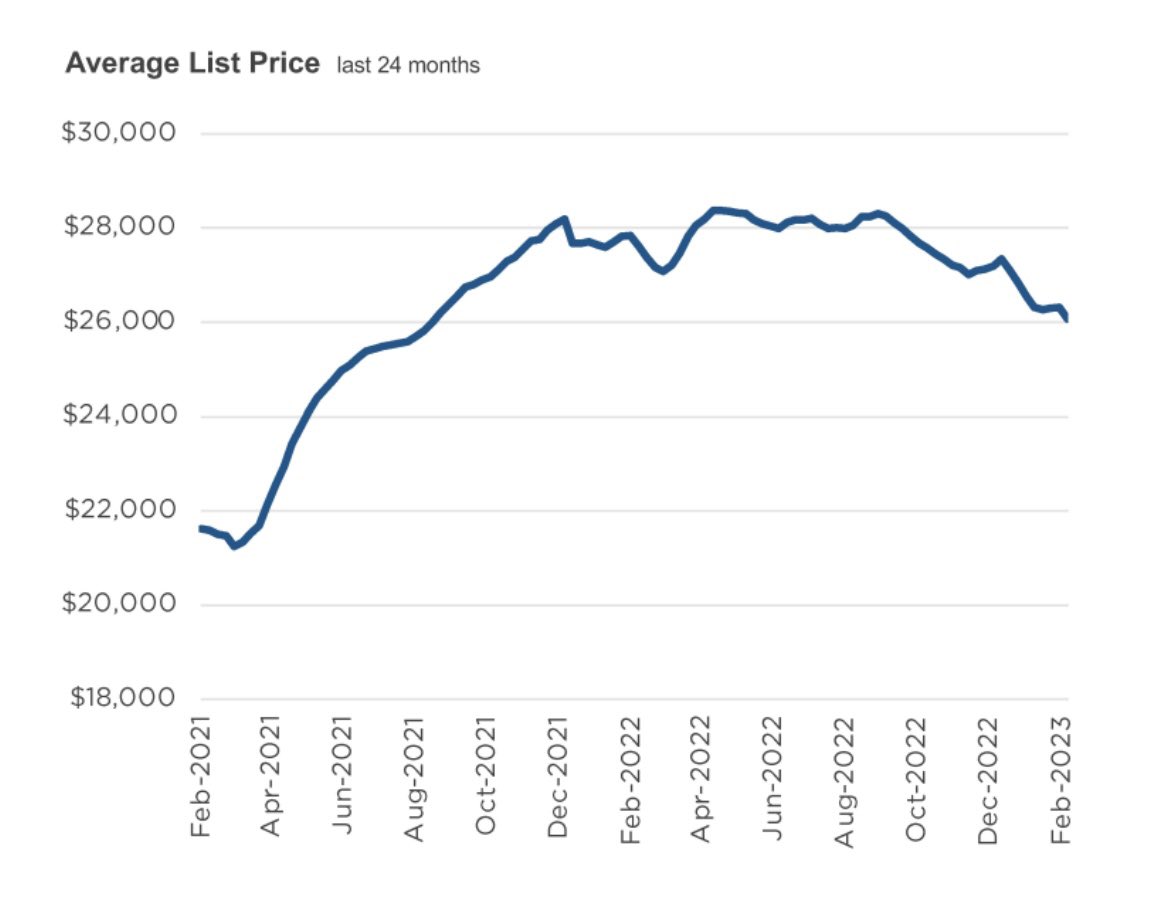
The post-pandemic car market has changed dramatically. During the supply chain crunch, low inventory gave dealers unusual pricing power. Vehicles sold quickly. Discounts shrank. Some buyers paid above sticker. Used car prices surged because new cars were scarce, and the entire market behaved like a game of musical chairs where every chair had heated seats and a market adjustment.
Inventory has improved, but affordability remains the central problem. New vehicle prices remain high, and the average buyer is facing a combination of expensive cars, elevated interest rates, insurance increases, and fewer truly cheap models. Compact and subcompact cars have lost share, while trucks, SUVs, and higher-end trims continue to influence average transaction prices. In other words, the market keeps saying “affordable transportation,” then handing shoppers a three-row SUV with 14 cupholders and a payment that requires emotional support.
This is one of the biggest lessons from Car Dealership Guy’s perspective: the sticker price is only one piece of the deal. The real cost of ownership includes financing, insurance, maintenance, depreciation, fuel or charging costs, registration, taxes, and the opportunity cost of tying up cash. A smart buyer does not ask only, “Can I afford the payment?” A smart buyer asks, “What is the total cost of this vehicle, and what risks am I accepting?”
Car Financing: The Monthly Payment Trap
Auto financing is where the car deal often becomes foggy. Dealers and lenders know many shoppers think in monthly payments. That is understandable. Households budget monthly. But focusing only on the payment can hide the full cost. A lower payment may come from a longer loan term, a larger down payment, a lower APR, a cheaper vehicle, or a combination of all four. Only some of those are good news.
Longer loan terms have become more common because buyers are trying to make expensive vehicles fit into real budgets. The problem is that stretching a loan can increase total interest paid and raise the risk of negative equity. Negative equity happens when the borrower owes more than the vehicle is worth. It is the financial equivalent of stepping into a hole and deciding the solution is to dig with better posture.
Car Dealership Guy’s usefulness comes from explaining these mechanics without making the buyer feel foolish. Most consumers are not finance professionals. They are trying to get to work. Still, the key rules are simple: know your credit score, get preapproved before visiting a dealership, compare APRs, understand the loan term, and negotiate the vehicle price separately from financing. If the conversation turns into “What monthly payment do you want?” too early, slow the process down.
Buying vs. Leasing: The Debate That Refuses to Die
Buying and leasing both have a place, but they serve different needs. Buying can make sense for drivers who keep cars for a long time, drive many miles, and want ownership flexibility. Leasing can work for people who prefer newer vehicles, drive predictable mileage, and want to avoid long-term repair uncertainty. Leasing is not automatically bad; buying is not automatically wise. The wrong structure for the wrong person is where the trouble begins.
One of the leasing concepts discussed in Car Dealership Guy-style conversations is the money factor, which is essentially the lease’s financing charge. Many shoppers understand APR but do not understand money factor, residual value, or capitalized cost. That knowledge gap can make leases difficult to compare. A lease with a low monthly payment may still be unattractive if the upfront fees, mileage limits, or residual assumptions are poor.
The best approach is to compare the full economic picture. How long will you keep the car? How many miles do you drive? Is the vehicle likely to depreciate quickly? Are incentives stronger on a lease than a purchase? Do you need flexibility? Leasing is like renting a very expensive pair of shoes: great if they fit your lifestyle, painful if you plan to run a marathon and return them covered in mud.
The Used Car Market Is Still Its Own Beast
Used cars used to be the obvious affordability escape hatch. Today, that hatch still exists, but it is smaller, heavier, and guarded by a dragon named Supply. Used vehicle prices remain sensitive to new car supply, lease returns, trade-in volume, interest rates, and consumer demand. When new cars become too expensive, more buyers shift to used vehicles, pushing up demand. When fewer new cars were sold in prior years, fewer late-model used cars arrive later. The result is a market where three-year-old vehicles can hold value surprisingly well.
For buyers, the used market requires discipline. Vehicle history reports matter. Pre-purchase inspections matter. Certified pre-owned programs may be worth considering, especially for buyers who want warranty protection. A cheaper car is not cheaper if it immediately needs tires, brakes, suspension work, and a transmission prayer circle.
For dealers, used cars are a major profit opportunity but also a risk. Inventory has to be acquired correctly, reconditioned efficiently, priced competitively, and turned before market values shift. A dealer holding overpriced used inventory is like a restaurant holding fish too long: eventually everyone can smell the problem.
Electric Vehicles, Hybrids, and the Consumer Reality Check
The electric vehicle market has become more complicated. EV adoption rose with incentives, new models, and consumer curiosity, but demand has been uneven as federal support changed, prices remained high, and charging concerns persisted. EVs are not going away, but the market has moved from hype to homework. Buyers now ask practical questions: Where will I charge? What is the real winter range? How fast does it charge? What happens to resale value? Will my apartment complex install chargers before my grandchildren retire?
Hybrids, meanwhile, have become a comfort-zone winner. They offer better fuel economy without requiring a charging routine. For many mainstream buyers, that matters. A hybrid lets consumers feel technologically responsible without needing to map every road trip around charging stations. It is not as futuristic as a full EV, but it is practical, and practical sells.
Car Dealership Guy’s lens is helpful here because dealers live where consumer enthusiasm meets actual paperwork. Online surveys may say shoppers want EVs. Dealership data shows what they buy, finance, lease, trade, and service. The gap between interest and purchase is where the real story lives.
Dealership Economics: The Showroom Is Only the Front Door
Many consumers assume dealerships make all their money selling cars. That is only partly true. New vehicle margins can be thin, especially as inventory normalizes and competition returns. Used vehicles, finance and insurance products, warranties, service contracts, maintenance, parts, collision relationships, and service departments all contribute to dealership economics.
Fixed operations, meaning service and parts, are especially important. Cars need maintenance, warranty work, recalls, tires, brakes, diagnostics, and repairs. Even when shoppers delay purchases, they still need to keep existing vehicles running. That gives dealerships a recurring revenue stream that can stabilize the business during slower sales cycles.
This is why the dealership model survives constant predictions of its death. Online retail changed the shopping journey, but local service, trade-ins, financing, state franchise laws, test drives, delivery logistics, and relationship-based selling still matter. The dealership is evolving, not vanishing. Like a minivan with Wi-Fi and captain’s chairs, it may not be glamorous, but it remains surprisingly useful.
Trust Is the Real Product
The car business has a trust problem. Some of it is earned, some of it is outdated, and some of it comes from the natural tension of negotiation. Consumers fear hidden fees, add-ons, confusing financing, and pressure tactics. Dealers fear unrealistic expectations, online misinformation, rate shoppers, bad reviews, and customers who expect wholesale pricing with concierge service.
The future belongs to dealers who make the process clearer. Transparent pricing, fast communication, honest trade-in explanations, clear finance menus, and simple digital tools can reduce friction. The best dealerships are not trying to “win” one transaction at the customer’s expense. They are trying to earn repeat business, referrals, service loyalty, and reputation. In a world where one bad experience can become a viral post, trust is not soft and fluffy. It is a profit center.
For consumers, trust does not mean being passive. It means being prepared. Research the vehicle, compare market prices, understand incentives, get financing options, read the contract, and ask questions about every fee. If something sounds confusing, pause. A good dealer will explain it. A bad dealer will rush you. The pause is your superpower.
What Buyers Can Learn From Car Dealership Guy
1. Separate the deal into parts
Negotiate the vehicle price, trade-in value, financing, and add-ons as separate pieces. When everything is blended into one monthly payment, it becomes harder to see where the profit is hiding.
2. Get preapproved
A preapproval gives you a benchmark. The dealership may beat it, which is great. But without a benchmark, you are comparing their offer to a feeling, and feelings are terrible loan officers.
3. Understand incentives
Manufacturer incentives can change monthly and may vary by region, model, trim, and financing structure. Sometimes a rebate and a higher APR may be worse than a lower APR without a rebate. Do the math.
4. Watch the loan term
A longer term can make the payment look manageable, but it may increase total cost and negative equity risk. The question is not only whether you can make the payment now; it is whether the loan still makes sense three, four, or five years from now.
5. Do not ignore service
The dealership relationship does not end at delivery. Service quality, warranty handling, parts availability, and convenience can matter as much as the final selling price, especially for families and commuters who depend on reliable transportation.
Why This Topic Appeals to Investors
Auto retail is a useful case study for investors because it combines cyclical demand, consumer credit, inventory management, local competition, brand power, technology disruption, and real estate. Public dealership groups, auto lenders, used car retailers, parts suppliers, auction platforms, software vendors, and manufacturers are all connected. A change in rates, incentives, supply, or consumer confidence can ripple through the entire ecosystem.
Car Dealership Guy’s media success also shows the value of niche expertise. He built attention by serving a specific audience with specific information. That is a business lesson far beyond cars. In a noisy media world, broad commentary is cheap. Credible, insider-level insight is valuable. The riches are often in the niches, especially when the niche happens to involve trillion-dollar consumer spending and everyone’s least favorite Saturday errand.
Experience Notes: What the Car Buying Journey Feels Like in Real Life
The most relatable part of Talk Your Book: Car Dealership Guy is that it describes a market people experience emotionally, not just financially. A buyer rarely walks into a dealership as a perfectly rational spreadsheet. More often, the buyer is tired, busy, slightly suspicious, and hoping the current car survives long enough to be traded in rather than towed in. That emotional backdrop matters.
Consider a typical shopper looking for a family SUV. Online, the process feels empowering. There are listings, reviews, payment calculators, trade-in estimates, and videos from people who somehow make cargo space sound thrilling. But once the shopper arrives at the dealership, the variables multiply. The advertised vehicle may have dealer-installed accessories. The trade-in value may be lower than expected. The monthly payment may change after taxes and fees. The desired trim may not qualify for the best incentive. Suddenly, the “simple” purchase becomes a decision tree.
This is where preparation changes the experience. A buyer who has already checked market prices, secured a credit union preapproval, estimated insurance, and decided on a maximum out-the-door price can stay calm. That buyer can say, “I’m focused on total price first,” instead of getting pulled into monthly-payment theater. The tone of the conversation changes. The salesperson realizes the customer is serious, informed, and not easily dazzled by floor mats.
On the dealership side, the experience is also more complex than consumers imagine. A salesperson may be juggling internet leads, appointment no-shows, inventory shortages, manager approvals, lender callbacks, trade appraisals, and a customer who wants champagne service on a tap-water budget. Good dealers train their teams to create clarity anyway. Bad dealers let confusion become strategy. The difference is obvious, and customers feel it.
The best real-world car buying experience usually has three qualities: transparency, pacing, and respect. Transparency means the buyer understands the numbers. Pacing means nobody is rushed into signing before reading. Respect means both sides recognize the other has a goal. The buyer wants a fair deal. The dealer needs to make money. A healthy transaction does not require one side to lose; it requires both sides to stop pretending the process is a magic show.
For anyone inspired by Car Dealership Guy’s advice, the practical takeaway is simple: shop like a professional, but behave like a human. Bring data, not hostility. Ask direct questions. Be willing to walk away, but do not treat every dealer as a villain in khakis. Many stores want long-term customers, not one-time victims. When buyers understand the business model, they become better negotiators. When dealers understand modern buyer expectations, they become better operators.
That is the real value of the Car Dealership Guy conversation. It turns confusion into context. It helps buyers see beyond the showroom and helps industry observers understand why cars are expensive, why financing matters, why dealerships still exist, and why the future of auto retail will be won by those who make a complicated purchase feel less like a trap and more like a transaction between adults. Revolutionary? Maybe. Necessary? Absolutely. Now, about that protection package…
Conclusion
Talk Your Book: Car Dealership Guy is more than a podcast topic. It is a smart entry point into one of America’s most important consumer markets. The conversation explains why car prices remain high, why financing has become harder, why used cars still matter, why EV demand is uneven, why hybrids are thriving, and why dealership economics are far deeper than the sales desk.
For buyers, the lesson is preparation. Understand the full cost, compare financing, separate the parts of the deal, and do not let a monthly payment become the whole conversation. For dealers, the lesson is trust. The stores that communicate clearly, price fairly, and respect the customer’s intelligence will have the advantage in a market where attention is public and reputation travels faster than a sports car on an empty freeway.
Car Dealership Guy became influential because he made the auto business understandable. In a world of expensive vehicles, stretched loans, changing technology, and confused shoppers, that kind of clarity is not just useful. It is horsepower.
Note: This article is written for informational and editorial purposes. It is based on publicly available automotive industry information, podcast discussions, and current market reporting, and it should not be treated as financial, legal, or car-buying advice.